BME 315 Exam 2 Terms
 Call Kai
 Learn
 Practice Test
 Spaced Repetition
 Match
 Flashcards
 Knowt Play
1/57

There's no tags or description
Looks like no tags are added yet.
58 Terms
Fourier Synthesis Summation
If N is infinite, we can synthesize virtually any periodic waveform
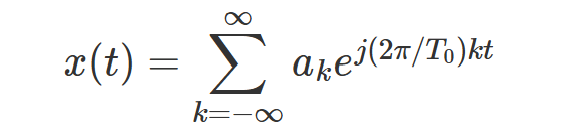
Fundamental frequency
Represents the lowest frequency of a periodic waveform
F0 = 1/T0 Hz

Complex exponents

What domains are x(t) and ak?
x(t) is the time domain
ak is the frequency domain
Fourier Analysis
Calculating ak from x(t)
Fourier Synthesis
Using ak and generating x(t)
Fourier Series Integral
ak for harmonic sum from x(t) using this integral

Full-Wave Rectified Sine Wave (FWRS)
Found in DC power supplies
Found in AC to DC converters
Approximate synthesis
recreating or modeling complex signals using finite sum of simpler, well behaved functions rather than an infinite series
Duty cycle, r
fraction of a complete period where the signal or system remains in an active or “on” state
Pulse wave
non-sinusoidal signal
rapidly goes from baseline value to different level, holds, and then returns to baseline
Square wave
non-sinusoidal signal
alternates abruptly and evenly between a fixed low state and a fixed high state
50% duty cycle
Sinc function
unnormalized: zeros occur and multiples of pi
normalized: zeros occur at non-zero integers
symmetric

Triangular wave
non-sinusoidal signal
linear rise and linear fall at the same rate
Half-Wave Rectified Sine (HWRS)
made by passing a standard sine wave through a half-wave rectifier
negative half-cycles change to zero
positive half-cycles remain unchanged

Analog signal
continuous-time physical signal whose amplitude can take on an infinite bumber of values within a specified range
Discrete-time signal (digital signal)
stepped, discrete values
not continuous
Sampling rate, fs
number of samples taken from a continuous analog signal per second
measured in Hz
Sampling period, Ts
fixed time interval between two measurement points when converting an analog signal into a digital signal
Sampling theorem
Nyquist
a continuous band-limited signal can be perfectly reconstructed from its discrete samples without information loss
only if fs is greater than 2*fmax of the signal
Bandlimited signal
signal whose frequency spectrum has no amplitude outside of a finite, bounded range
Reconstruction
recovering an analg signal x(t) from a sequence of equally spaced discrete-time signals x(nTs)
Aliasing
undersampled high-frequency signal is mistakenly reconstructed as a lower, false frequency
Folded Alias
high frequency components of an analog signal “fold back” into lower-frequency spectrum when signal is sampled at an insufficient rate
Nyquist rate
minimum fs required to convert an analog signal into a discrete time sequence without losing info or causing distortion
Frequency scaling
how compressing or expanding a signal in a time domain causes inverse compression or expansion in frequency domain
EMG
time varying signal that represent electrical activity by skeletal muscles

ECG (EKG)
record electrical voltage generated by heart muscle as a function of time

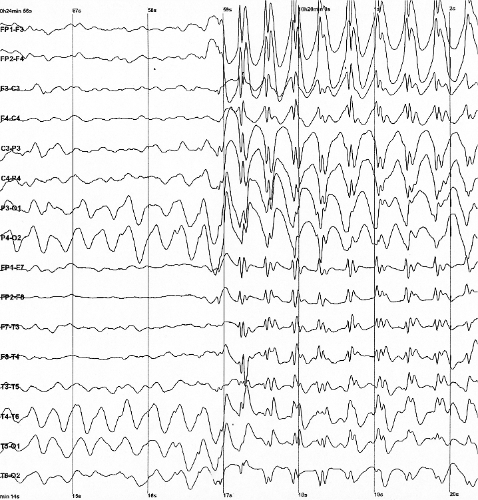
EEG
measures electrical potential on scalp to track activity of neurons
Pulse
rapid, short-duration change in amplitude of a signal from a baseline level, then returning to baseline
Interpolation
process of increasing sampling rate of a digital time signal or reconstructing an analog signal from a digital signal
Oversampling
process of sampling an analog signal at a frequency significantly higher than nyquist rate
Ideal pulse
theoretical waveform
switches instantly from a low baseline level to a high level
remains at a const amplitude for a fixed duration
switches back to baseline
has zero rise and fall times
Digital signal processors (DSP)
measures, filters, compresses, or manipulates an analog real-world signal after they have converted to digital signal
Filter
system or process that completely or partially suppresses unwanted components or features from a signal
Finite impulse response (FIR) filter
a linear time-invarient system whose impulse response drops to zero in a finite amount of time
Difference equation
relates current output of a digital system to past and present input signals and past output values
Support
set of points in the time or independent domain where a signal is non-zero
Causal filter
system whose current output depends only on past and present input values
Noncausal filter
system whose current output depends on past, present, and future input samples
Filter order
highest power of the variable in a filter’s transition function
or number of poles/zeros and energy storafe elements that make up system
Filter length
total number of coefficients in a FIR filter
Unit impulse sequence
digital time signal that equals 1 at the origin and 0 for all other int values
Unit impulse response h[n]
output produced by a system when the input is a unit impulse signal, assuming all initial conditions are zero
Zero-order hold
converts a digital signal into continuous signal by keeping each sample value constant until the next value arrives
First-order interpolation
converts digital signal into continuous signal by drawing straight lines between consecutive sample points
Unit delay system
digital system that delayed an input signal by exactly one sample period
shifts input signal forward
Convolution sum
find output signal y[n] when an input signal x[n] is combined with unit impulse response h[n]
Polynomial multiplication
multiplying two polynomials
mathematically identical to linear convolution of their coefficient sequences
Unit step signal
test signal that represent sudden change or switch turning on at 0
Unit delay operator
shifts an input signal forward by one sample period
Nodes
come back
Branches
come back
Feed forward difference equation
non-recursive
present output y[n] is computed from current and past values of the input signal x[n] without depending on past outputs
Time invariance
produces identical output, shape, and magnitude for a given input
input has a time shift, output has exact same time shift
Linearity
output is directly proportional to a weighted sum of the inputs
homogeneity and additivity
Linear time invariant systems (LTI)
mathematical output that processes an input signal into an output signal while satisfying both linearity and time-invariance
Cascaded LTI systems
cascade connection of two systems means the output of the first is the input to the second system
for LTI, order of systems can be rearranged and provide the same output