ch 11-3 jupiter magnetosphere moons ring
 Call Kai
 Learn
Learn Practice Test
 Spaced Repetition
 Match
Match Flashcards
 Knowt Play
1/28

There's no tags or description
Looks like no tags are added yet.
29 Terms
what is Jupiter surrounded by?
by belts of charged particles, much like the Van Allen belts but vastly larger
Jupiter’s Magnetosphere
strongest in solar system
extends past orbit of Saturn
outer magnetosphere is quiet unstable
electrically excited particles from Volcanoes of Ion moon
30 million km across
is the magnetic axis align with rotation axis?
not exactly but it is inclined to it at an angel of aprrox. 10°
Jupiter’s Auroras
more energetic than Earth
strongest
occur near poles
UV, X ray, Infrared (glow)
magnetic field grabs surrounding particles
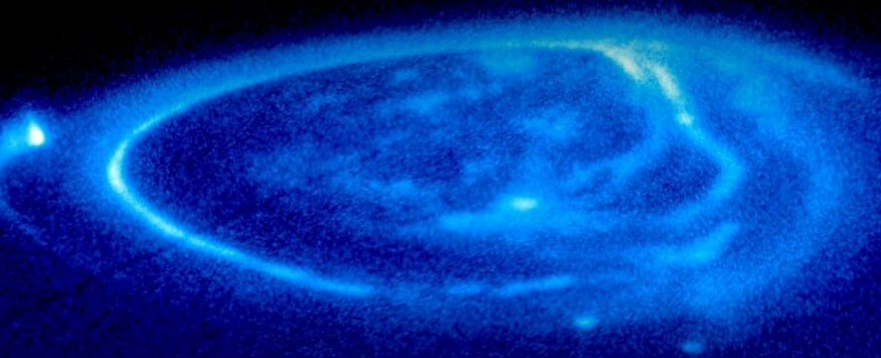
Galilean moons
Io
Europa
Ganymede
Castillo
(formation may have mimicked the formation of Sun and inner planets)
Jupiter’s outer moons
small and move in eccentric predominantly retrograde orbit far from planet
believed bodies were captured
size like asteroids
the moons of Juipter
locked into states of synchronous rotation by strong tidal field
115 official moons
Galilean moon: Ganymede
largest moon in solar system
many impact craters
weak magnetosphere
“slushy” interior
exceed Mercury in diameter
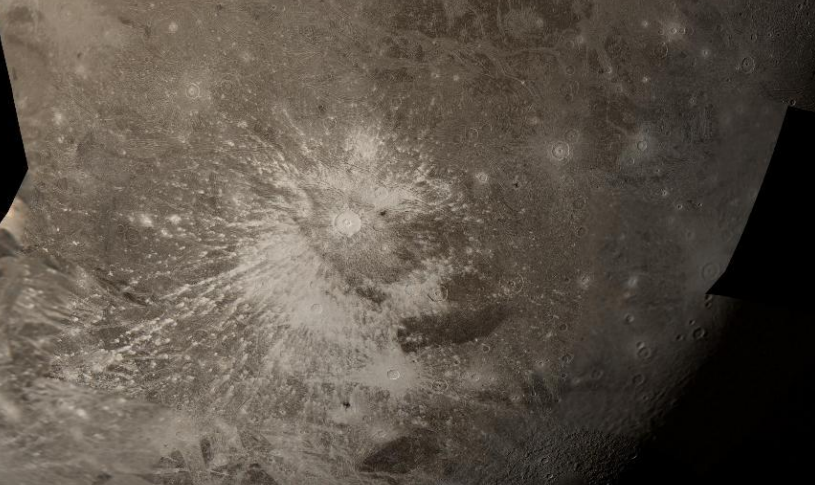
Ganymede bright and dark regions
dark
oldest parts
intense meteoritic bombardment caused by liquid water
light
younger
flooding and freezing
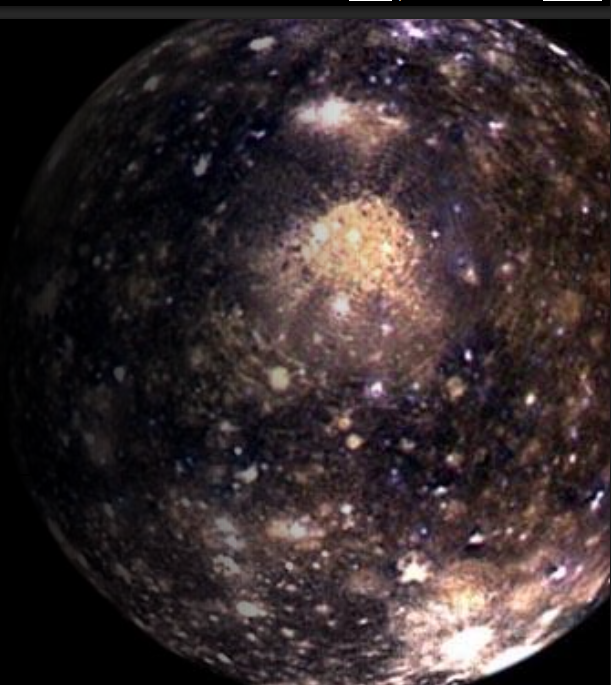
Galilean moon: Callisto
2nd largest (3rd in SS)
heavily cratered
impact craters (light)
old and quiet geological surface
may have been salty ocean beneath surface
Galilean moon: Io
most volcanically known
intense tidal heating (magma plumes and sulfur oceans)
yellow red black, green colour (sulfur compounds)
massive mountains
closest to Jupiter
constantly tugged by neighbor Eurpoa
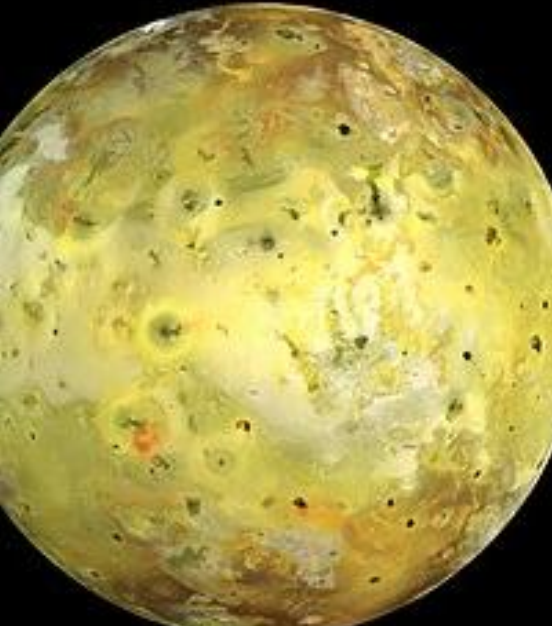
what is a unique feature of Io?
most geologically active object in entire solar system
no impact craters
youngest in solar system
what causes Volcanism on Io?
gravity
central forces tidal from
Galilean moon: Europa
smallest
primary target for E.T.
vast salt water oceans
may have chemical components of life
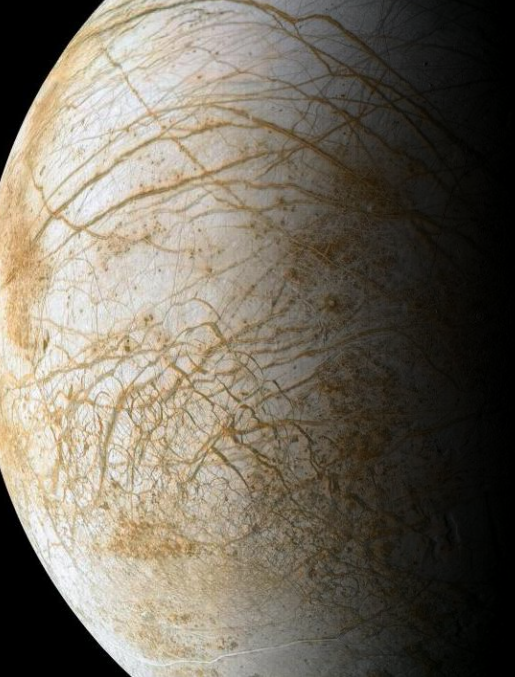
what does the heavily cracked surface of Europa indicate?
active geological region from tidal forces
no craters
water upwell, fill, and cracked
Europa and its water
liquid water locked in ice
surface ice may be several km thick with 100 km deep liquids ocean below it
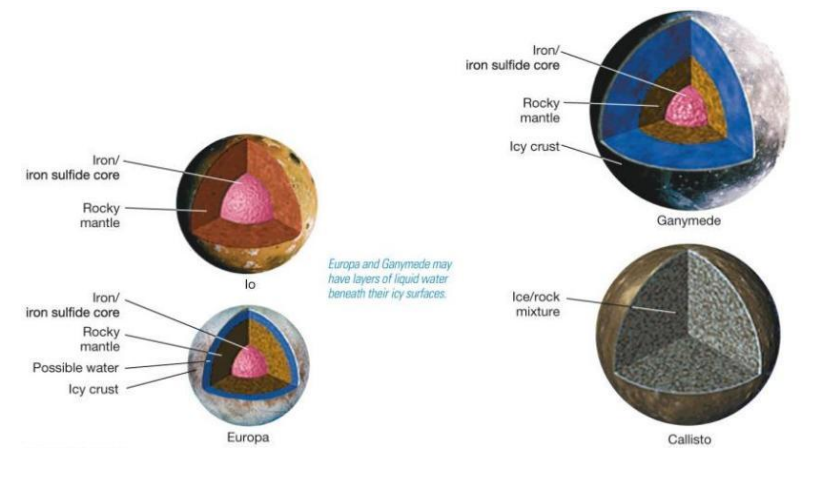
interiors of the Galilean moons
lower density
rocky metallic core to thin icey crust and small core to uniform rock and ice mix
order of the Galilean moons moving outward
Io
Europa
Ganymede
Calisto
Jupiter’s ring system
small and thin
3rd ring system discovered
what are Jupiter’s ring made of?
dust from meteor impact on nearby moons
where do Jupiter’s ring lie?
~50,000k above the top layer of the planet, inside the orbit of the inner most moon
outer edge is quite sharply defined
how does Jupiter rotate?
rapidly
pressure and density of atm. inceases with depth
atmosphere becomes liquid then “metallic”
Jupiter’s core
relatively small rocky core (but still 10x size of Earth)
how many moons does Jupiter have?
67 moons, 4 very large ones
Which two Jovian moons are often called the "fraternal twins"?
Ganymede and Callisto.
Why are Ganymede and Callisto called fraternal twins?
They are similar in size and composition but have very different geological histories.
What is unique about Ganymede?
It is the largest moon in the Solar System and has its own magnetic field.
How does Callisto differ from Ganymede?
Callisto is more heavily cratered and shows much less geological activity.