Anatomy Exam 3
 Call Kai
 Learn
 Practice Test
 Spaced Repetition
 Match
 Flashcards
 Knowt Play
1/66

There's no tags or description
Looks like no tags are added yet.
67 Terms

Sternoclavicular Joint
Scapulathoric Interface
Acromioclavicular Joint
Glenohumeral Joint


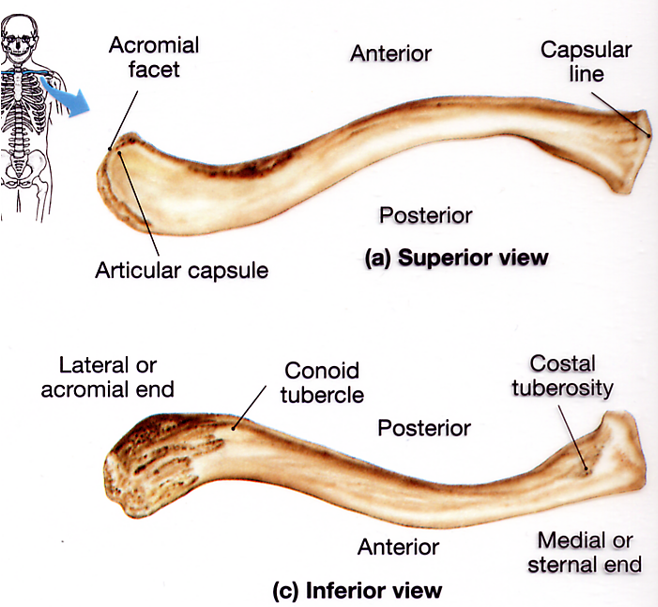
Shoulder Joint consists of:
_______________
_______________
_______________
Type of joint:
_______________
_______________
Shoulder Joint consists of:
Head of Humerus
Glenoid fossa of scapula
Clavicle
Type of joint:
Synovial
Ball and socket
Planes of abduction/adduction & flexation/extension

Glenohumeral Joint Supportive Structures
Glenoid labrum
Joint capsule
Ligaments
Muscles
Rotator cuff
Deltoid
Pectoralis major / minor

Glenohumeral Joint Supportive Structures → Glenoid Labrum
Glenoid Labrum
Ring of fibrous cartilage
Deepens joint


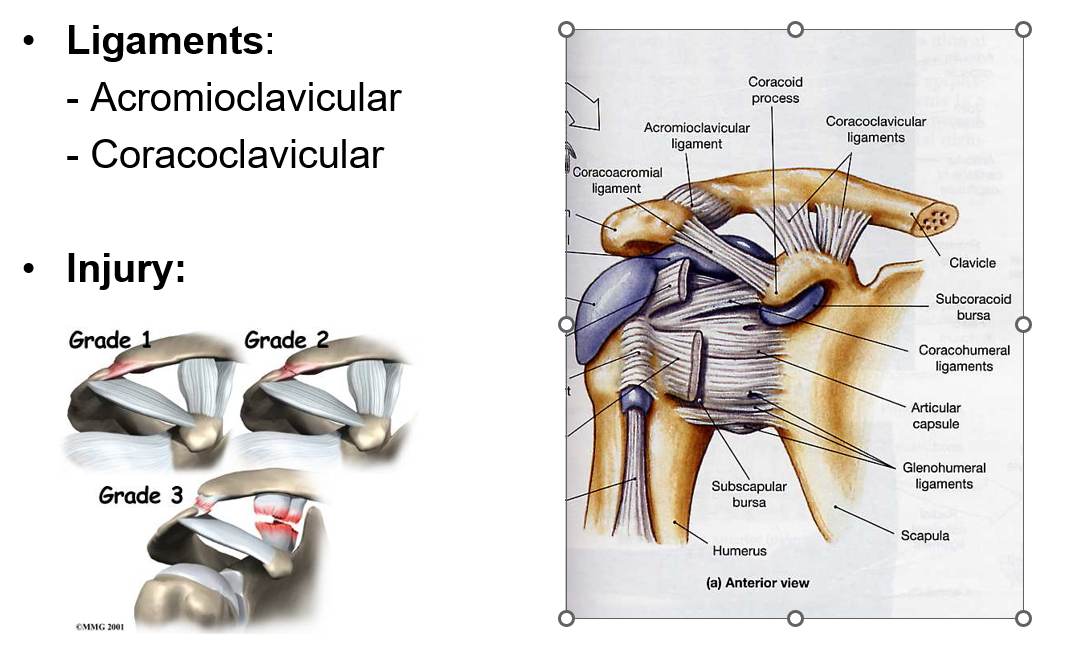
Shoulder Ligaments & Function

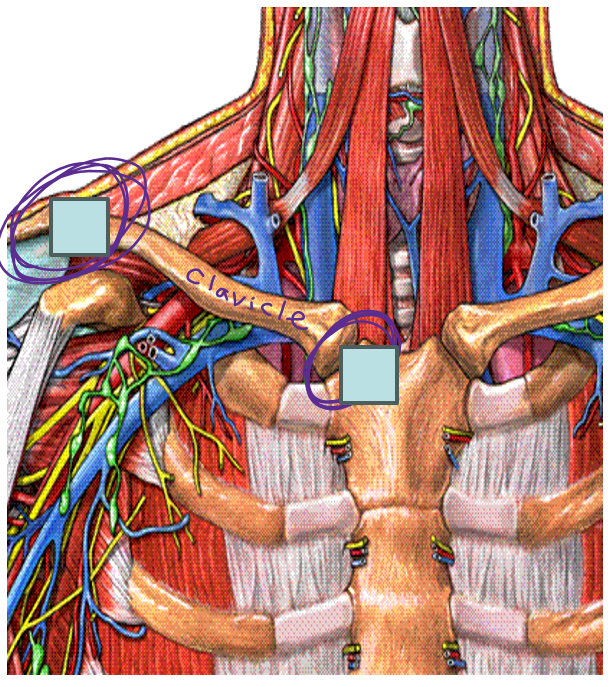
Label + joint type


Where is the Sternoclavicular Disc aka Articular Disk?

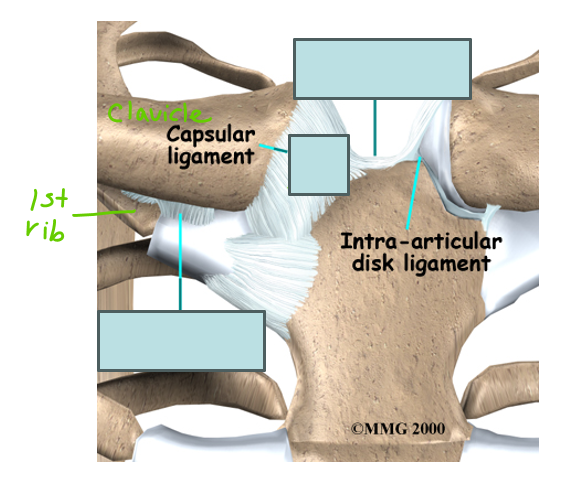
3 Sternoclavicular Joint Ligaments


2 Acromioclavicular Joint Ligaments & injury types
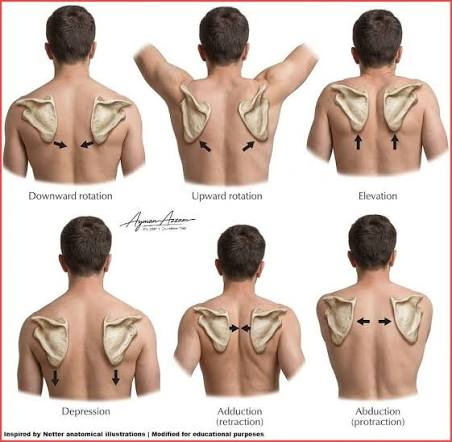
Scapulothoracic Joint Movements
Frontal Plane:
Transverse Plane:
Sagittal Plane:
Scapulothoracic Joint Movements
Frontal Plane: Upward / downward Rotation, Elevation / Depression
Up/down: Axis of Rotation is Anterior to Posterior
Transverse Plane: Protraction (abduction) / Retraction (adduction)
Sagittal Plane: Upward / Downward tilt
Upward tilt: When inferior angle pops up/off the ribs
Downward tilt: When inferior angle pushes down & in
The inferior angle is the reference

Force couple

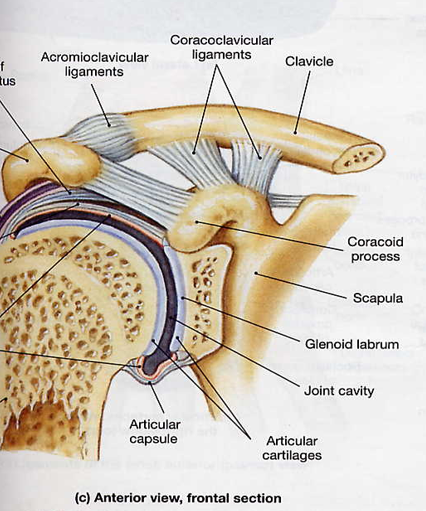
Clavicular Movements & reference points
Frontal Plane:
Upward swing/Downward swing aka elevation/depression
ref: acromial end
Transverse Plane:
Forward swing/Backward swing aka protraction/retraction
ref: acromial end
Sagittal Plane:
Anterior rotation/Posterior rotation
ref: superior surface

Humero-scapular Rhythm
The shoulder joint can move alone for the first (#) degrees.
Then, the ________ ________ moves with the shoulder joint movement to increase the overall movement of the arm.
Humero-scapular Rhythm
The shoulder joint can move alone for the first 60 degrees.
Then, the shoulder girdle moves with the shoulder joint movement to increase the overall movement of the arm.

Movements of the Shoulder Joint and Girdle


Elbow Joint
Bones:
Movements:
Joint Type:
2 Joints:
Elbow Joint
Bones: Humerus, Ulna, Radius
Movements: Flexion, Extension, Hyperextension
Joint Type: Synovial joint - hinge
2 Joints: Humeroulnar, Humeroradial


Label 3 Bones & 2 Joints

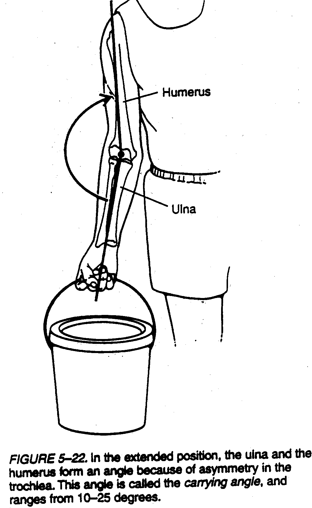
Carrying Angle
10-25 degree of lateral orientation (not a perfect vertical position) of ulna and radius relative to humerus
Evolutionarily thought to help with carrying, so things aren’t hitting our thigh

Elbow Joint Ligament


Elbow Joint Ligament

Radio-Ulnar Joint Movement
Supination: Cupped upward (holds soup)
Radius & Ulna are side by side
Midposition: Neutral
Pronation: Upside-down cup
The radius crosses over the ulna (x shape)
Ulna stays in place as radius rotates around


Annular Ligament


Where is the Annular Ligament
AL


Where are the biceps Brachii proximal attachments?


3 Radio-Ulnar Joints + Types
3 Radio-Ulnar Joints:
Proximal – synovial - pivot
Middle – fibrous
Interosseus membrane
Distal – synovial - pivot


Extensor Retinaculum
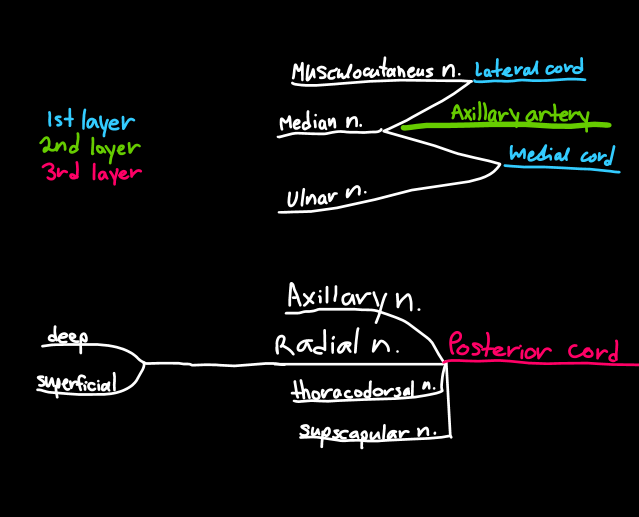
Order of Nerve Components
Randy: roots
Travis: trunks
Drinks: divisions
Cold: cords
Beer: branches


Category, ID, Action


Category, ID, Action

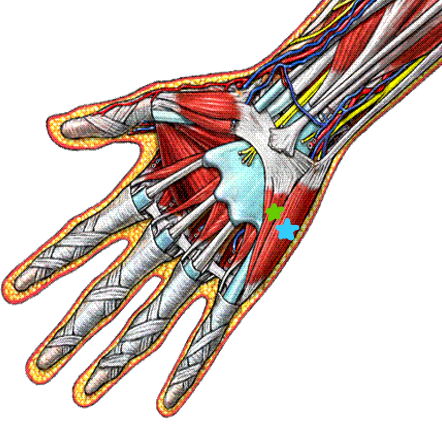
Category, ID, Action


Category, ID, Action
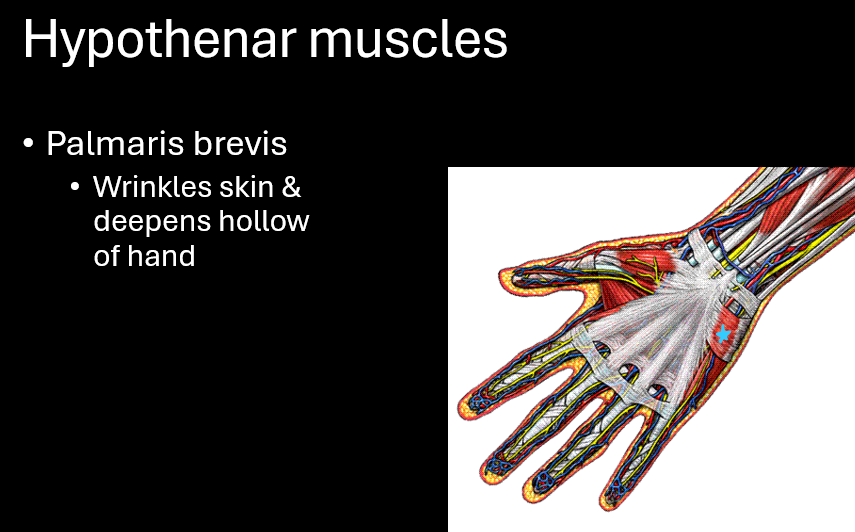


ID, Action

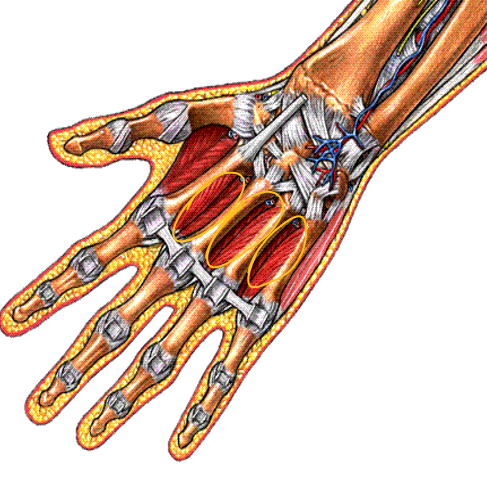
ID, Action


ID, Action
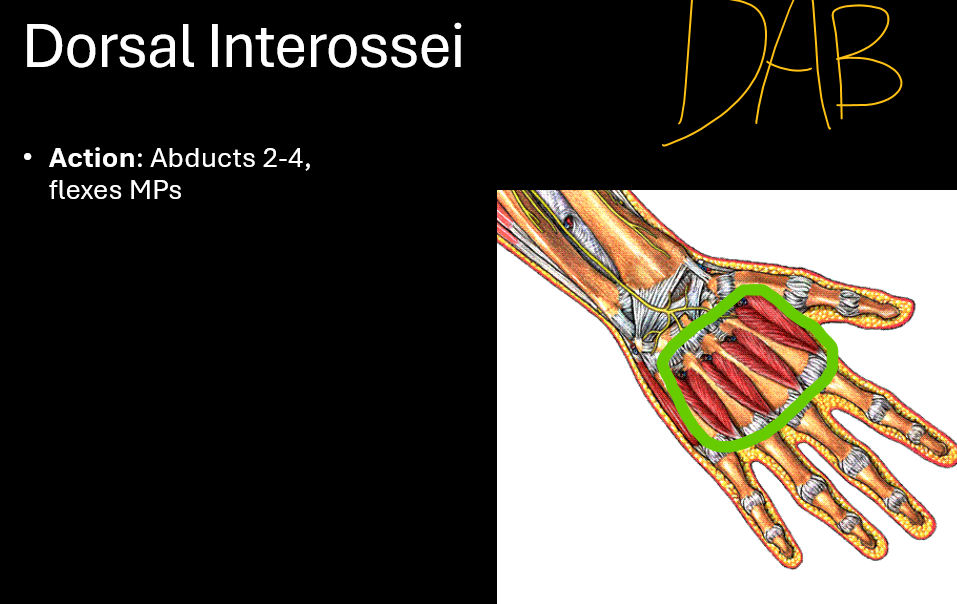

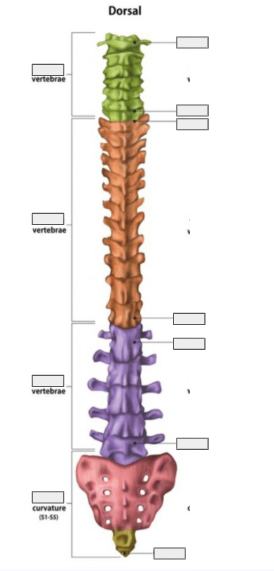
Vertebral Column
___ vertebrae
___ cervical
___ thoracic
___ lumbar
___ sacrum
___ coccyx
___ TOTAL
24 vertebrae
7 cervical
12 thoracic
5 lumbar
5 sacrum
3-5 coccyx
33 TOTAL
Vertebral Curves
Primary curves
_____
_____
Secondary
_____
_____
Primary curves
thoracic
sacral
Secondary
cervical
lumbar

Lordosis & kyphosis balance eachother out
Lord: Inward curve
Kyph: Outward curve


Vertebral/trunk Movements
Sagittal:
Flexion
Extension
Hyperextension
Frontal:
Lateral flexion right
Lateral Flexion
Transverse plane:
Rotation right
Rotation left
Vertebral/trunk Movements
Sagittal:
Flexion: bending to touch toes
Extension: standing back up
Hyperextension: bending backwards
Frontal:
Lateral flexion right: take right hand and slide it down right side
Lateral Flexion left: take left hand and slide it down left side
Transverse plane:
Rotation right: Twist shoulders right
Rotation left: Twist shoulders left
C1 and C2 Movements:
Atlas & Axis Movements:

Vertebral Articulations
Two types of joints:
Synovial joints
Gliding
50 joints!!
Cartilaginous joints
intervertebral discs
annulus fibrosus (outside)
nucleus pulposus (inside)
Annulus Fibrosus

Slipped or Herniated Disc

Discectomy
Discectomy (also called open discectomy) is the surgical removal of nucleus pulposus


Anterior & Posterior Longitudinal Ligaments
Both run down the length of the spine (opposite sides)


Ligament ID and Action
Interspinous Ligaments
limit forward flexion

Ligament ID & Action
Intertransverse (Costotransverse)
Lateral flexion
Thoracic Cage components
•Twelve Pairs of ribs
•1-7 true ribs
•8-12 false ribs
•11-12 floating ribs

Muscles of the Vertebral Column
Anterior Category:
Posterior Category:
Ant: Abdominal muscles
Pos: Deep Back muscles


Costovertebral Joints
•Ribs 1-10, bodies & transverse processes (40)
•Ribs 11-12, bodies (4)

Costochondral and Sternocostal Joints
Costochondral:
Ribs 1-10
Cartilaginous joints
Sternocostal:
Rib 1 - cartilaginous
Ribs 2-7 - synovial