Anthropology Mayan Culture
 Call Kai
 Learn
Learn Practice Test
 Spaced Repetition
 Match
Match Flashcards
 Knowt Play
1/106

Earn XP
Description and Tags
All you need to know about Mayan Culture!
Name | Mastery | Learn | Test | Matching | Spaced | Call with Kai | Chat |
|---|
No analytics yet
Send a link to your students to track their progress
107 Terms

Antiquarianism
Early interest in collecting ancient artifacts for their aesthetic, monetary, or curiosity value rather than systematic scientific study.
Professional archaeology (1900s-1950s)
The modern, systematic study of the human past through material remains is conducted by trained specialists following ethical and scientific standards, with interdisciplinarity and specialization.

Interdisciplinarity
The integration of multiple academic disciplines (such as biology, geology, chemistry, and history) to answer complex archaeological questions.

Culture history
An early 20th-century archaeological approach that emphasizes defining historical societies into distinct ethnic and spatial groupings based on material culture traits and chronologies.

Scientific method
1. Make observations
2. Ask a question
3. Establish a hypothesis
4. Experiment
5. Analyze the data
6. Make a conclusion
7. Reject, revise, or retest your
hypothesis
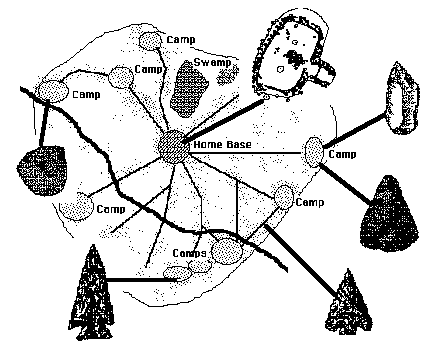
Archaeological record
The physical body of material evidence left behind by past human activities, including artifacts, features, and sites, is the complete record of the material remains of past societies.

Archaeological site
Any spatial location containing physical evidence of past human
activity, occupation, or use.

Artifacts
Portable objects made, modified, or used by humans (e.g., stone tools, pottery).

Ceramics
Objects made from fired clay, highly durable and crucial for relative dating and trade analysis.

Lithics
Stone tools and the debris resulting from their manufacture (chipped or ground stone).

Ecofacts
Unmodified organic and environmental remains that have cultural relevance (e.g., animal bones, plant seeds, pollens)

Features
Non-portable human-made modifications to the landscape, such as hearths, storage pits, post molds, or architecture.

Middens
Domestic trash heaps or deposits containing discarded food remains, broken pottery, and other refuse.

Stratigraphy
Layers of natural sediments and human deposits that reveal how the site was formed and how materials accumulated

Seriation
Orders artifacts based on the assumption that one cultural style slowly replaces earlier styles over time

Bioturbation
Post-depositional disturbance of archaeological sediments caused by biological agents like burrowing animals, plant roots, or insects.

Superposition
The geological principle is that in undeformed stratigraphic sequences, older layers lie beneath younger layers.

Bioarchaeology
The study of human skeletal remains from archaeological contexts to understand health, diet, demography, and social status.

Ethnocentrism
The judgmental practice of judging other cultures by the standards and values of one's own culture.

Civilization
Any complex, urbanized society organized as a state

The State
An autonomous political unit with:
• Inequality and distinct social classes
• Formal governmental institutions
→ bureaucracy
• Economic diversity
• Ethnic diversity
• Regional organization
• Populations in the thousands or
millions

Mesoamerica
A culture area stretching from central Mexico down through Central America, sharing cultural traits like intensive agriculture, monumental architecture, and a shared worldview.

Cenotes
Natural sinkholes formed by the collapse of limestone bedrock that provided vital water sources, especially in the northern Yucatán Peninsula

Bajos
Low-lying, seasonally flooded seasonal wetlands or seasonal swamps common in the southern Maya lowlands

Milpas
Traditional Mesoamerican agricultural plots were primarily cultivated with the "three sisters" crops (maize, beans, squash
• Field cycling
• Milpas
• Fallow fields
• Standing forest

Nixtamalization
The traditional process of boiling and soaking maize in an alkaline solution (like water mixed with lime/calcium hydroxide), which increases its nutritional availability (niacin/vitamin B3).

Olmec civilization
An early formative Mesoamerican civilization (c. 1200–400 BCE) centered on the Gulf Coast of Mexico, known for monumental head sculptures and foundational cultural patterns.

Codices
Folding books made of bark paper or animal skin containing hieroglyphic writing and pictographic records.

Low-density urbanism
A type of urban settlement pattern characterized by sprawling residential groups, gardens, and agricultural zones interspersed within urban centers (typical of the Classic Maya).

Household group
The fundamental social and economic residential unit of Maya society, often consisting of extended family structures around an open plaza
• Kitchen
• Storage rooms
• Sleeping areas
• Craft production areas
• Household shrines
• Burial of the dead
• Temascals: sweat baths
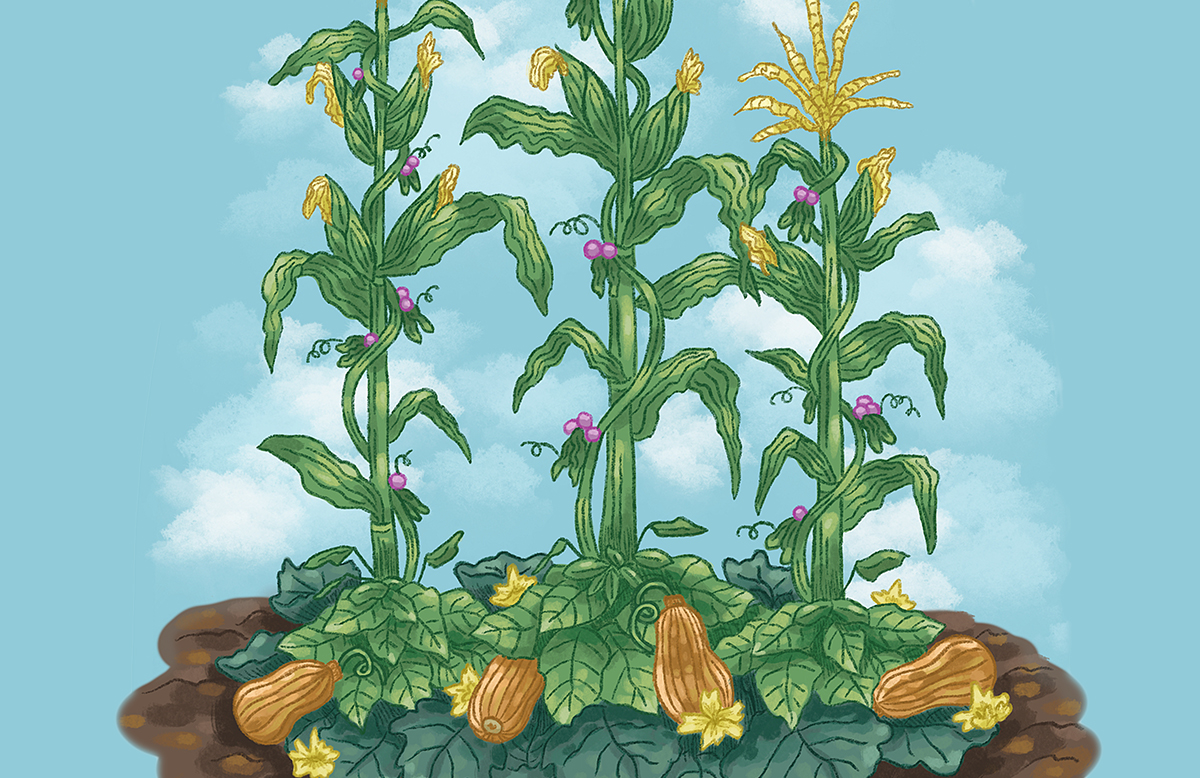
The "three sisters"
Maize, beans, and squash, which form a complementary agricultural triad providing balanced nutrition and soil maintenance.

How do the three sisters protect each other?
Corn: Grows tall and strong, serving as a natural living trellis or pole for the bean vines to climb.
Beans: Pull nitrogen from the air and fix it into the soil through their roots to feed the other plants, while also helping stabilize the corn stalks against heavy winds.
Squash: Spreads wide with large, prickly leaves that shade the ground, acting as a living mulch to retain soil moisture and block weeds

Swidden agriculture
Slash-and-burn shifting cultivation, where forests are cleared and burned to enrich soil for temporary farming before letting plots lie fallow.
• Rich carbon and ash deposits
• Soils exhausted after 2-3 years
• Fallow period of several years
• Limited land use = limited
productivity
• Left large trees standing
• Practicality
• Returns nutrients to soil during fallow
• Smaller dispersed plots
• Companion planting – milpa
• Keeps soil fertile longer than
monocropping

K'uhul Ajaw
A "divine lord" or sacred king who held supreme political and religious authority in Classic Maya polities.

Pakal the Great
• Ascended the throne at 13 during a low point in Palenque’s history
• Co-reigned with his mother Queen Sak Kuk for many years
• Reestablished the royal dynasty
• Makes strategic alliances with other city- states, including Tikal, to conquer enemy kings
• Builds most of the palaces and temples at Palenque
Pakal’s Sarcophagus – Iconography of K’uhul
Ajaw
• Pakal between the heavens and the underworld
• God-king at the center of the cosmos
• Connects the human and supernatural realms
• Ruler intercedes with supernatural and ancestors on behalf of subjects
• Generations of ancestors
Jade death mask

Eccentrics
Flaked chert or obsidian objects carved into unusual, highly stylized symbolic shapes (like crescents, serpents, or human profiles) used as elite ritual offerings

Popol Vuh
A foundational K'iche' Maya creation narrative recounting the exploits of the Hero Twins and the creation of humanity from maize.
• Most widespread Maya creation tale
• Hero Twins descent into Xibalba and miraculous rebirth
• Mirrors agricultural and astronomical cycles
• Annual rebirth of crops
• Daily rebirth of the sun and Venus
• Cyclical notion of time and creation
• Importance of blood as mechanism for death and rebirth
• Means of perpetuating cycle

Dresden Codex - 1200s
• Calculates astronomical positions
• Dates of astronomical phenomena
• Correct predictions through 18th century

Vigidecimal system
A base-20 mathematical system used by the Maya, incorporating a dot-and-bar notation and a symbol for zero

Calendar Round
A 52-year interlocking calendar cycle combining the 260-day sacred calendar (Tzolk'in) and the 365-day solar calendar (Haab)

Tzolk'in
• 260-day ritual calendar
• 13 repeating numbers
• 20 repeating days
• Used to name children

Haab
• 365-day solar calendar
• 18 months of 20 days
• 5-day month at end
• 5-day month compensates for leap years

Long Count
A linear, absolute calendar system used by the Maya to track elapsed time from a mythological starting point (August 11, 3114 BCE).

Multepal (Post Classic)
• System of governance by councils of lineage leaders
• “Mexicanized” conquest states
• Greater flexibility than K’uhul Ajaw
• Successful form of government

Smallpox
A devastating Old World epidemic disease introduced by Europeans that heavily decimated indigenous populations who lacked immunity.

Pedro Alvarado
A brutal Spanish conquistador who played a leading role in the conquest of Mexico and the subjugation of the Maya highlands (such as K'iche' domains).

Diego de Landa
A Spanish bishop of Yucatán whose writings (Relación de las cosas de Yucatán) preserved invaluable ethnographic details about the Maya, though he also infamously ordered the burning of Maya codices and idolatrous objects.

Encomienda system
A colonial labor system where the Spanish Crown granted colonists the right to demand tribute and forced labor from indigenous populations
• Maya forced labor in return for “conversion” to Christianity
• Ethnocentrism
• Mass killings, disease, terrible living conditions
• Spanish import African slaves to
Guatemala, Campeche, and Belize
• Need for additional labor source

Syncretism
The blending or fusion of different religious beliefs and practices, often seen in indigenous Mesoamerican Catholicism

Yucatán Caste Wars
A major mid-19th-century uprising (starting 1847) by the indigenous Maya of the Yucatán Peninsula against the Hispanic-Mexican population.
• Ladinos force Maya peoples to work on plantations and ranches under brutal conditions
• Replicate encomienda
• Maya peoples unite, rebel against ladinos
• Reclaim almost entire Yucatán Peninsula
• Ladinos retreat to Mérida
• Declare an independent Maya state: Chan Santa Cruz
• Miraculous Cruz Parlante – “Speaking Cross”
• Prophecies a holy war against ladinos
• Cruzo’ob → Mayan plural ending to Spanish “cruz”
• Any non-Maya entering jungle territory of Chan Santa Cruz risked being killed
• Regular raiding between Maya and ladino forces for 50 years
• Mexican army subdues Cruzo’ob by 1900 with modern weapons

The Great Terror (Guatemalan Civil War 1960 - 1966)
• US-backed coup overthrows democratically elected leftist government
• Installs right-wing military dictatorship
• Leftist rebel groups supported by rural poor
• Ethnically Maya indigenous peoples
• Ladino peasants
• Government-led genocide against Maya people
• Over 200,000 cases of forced disappearances and civilian executions
• Guatemalan army kidnapped, tortured, and murdered anyone suspected of helping rebel groups
• Terror and uncertainty
• 83% of disappeared were Maya
• Investigate and document human rights
violations
• Exhumation of clandestine mass graves
• Reunite Maya communities with remains of their loved ones
• Gather evidence to enable criminal prosecutions of perpetrators
• Led to first ever former head of state to be convicted of genocide and crimes against humanity

Neozapatista Uprising
• NAFTA further endangers Maya claims to communal lands
• Guerrilla force of Maya peoples form Zapatista Army of National Liberation (EZLN)
• Demand economic, political, and cultural rights for Chiapan Maya and ALL Mexican indigenous peoples
• In 1994 declare war on Mexican state
• Seize Chiapan state capital
• Armed resistance
• Still control large parts of Chiapan rainforest
• “Frozen conflict” today; move from guerrilla warfare to civil resistance
• Use internet to spread message

Phases of archaeological fieldwork
Phase I: Survey
-Goal: locate sites and other features on the ground
-Helps you decide where to dig
-Non-invasive and non-destructive
Phase II: Test Pits or Trenches
AKA vertical excavations
• Goal: collect limited amounts of data
• Determine if something is ancient
• Determine chronology and function of the area or feature
Phase III: Intensive Excavations
• AKA horizontal excavations
• Goal: completely expose and record a site, feature, or some locus of interest
• Obtain more fine-grained data
• Understand the internal organization of areas within sites (households, plazas, etc.)
Phase IV: Backfill
• Variable – site- and project specific
• Reburying excavated area
• Preservation

Importance of archaeological context
Context (provenience, matrix, and association) is paramount; an artifact stripped of its spatial context loses most of its historical and scientific value.

Archaeology and colonialism
Archaeology has historically been tied to colonial narratives, sometimes weaponized to justify subjugation or erase indigenous sovereignty

Archaeology as propaganda
The manipulation of archaeological interpretations, public exhibits, or heritage sites by modern political entities to legitimize power, nationalism, or ideological agendas.
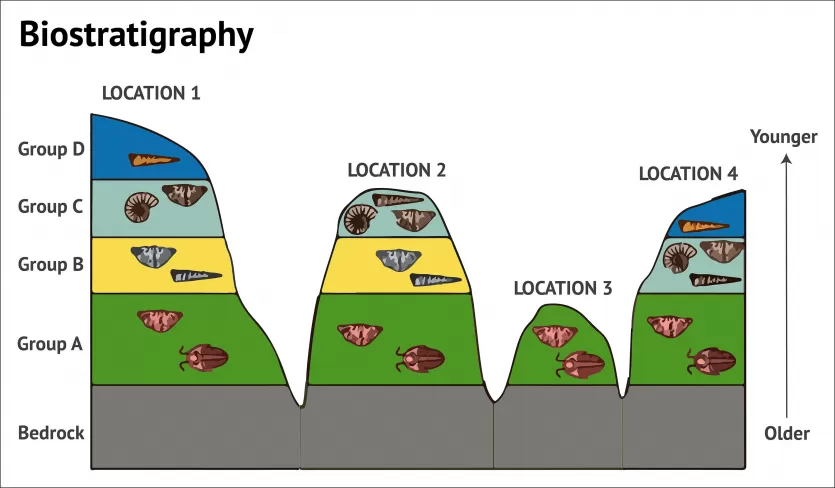
Relative dating
Places events or items in a sequence relative to one another (e.g., stratigraphy, seriation) without providing a calendar year.
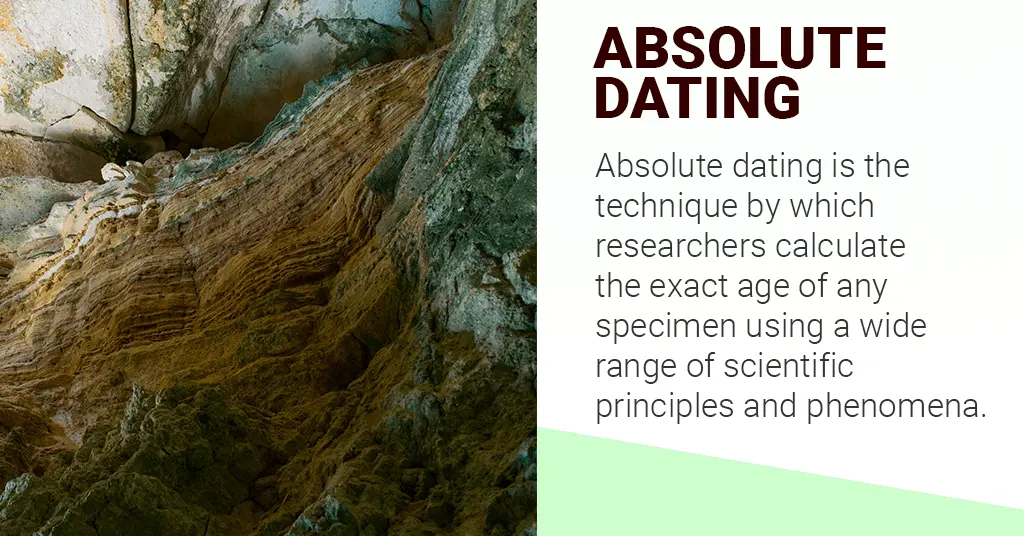
Absolute Dating
Assigns a specific calendar age or age range (e.g., radiocarbon dating, dendrochronology).

Unilineal
The belief that human societies evolved culturally along a single developmental trajectory

Multilineal
The theory that cultural change is complex and can take many different paths

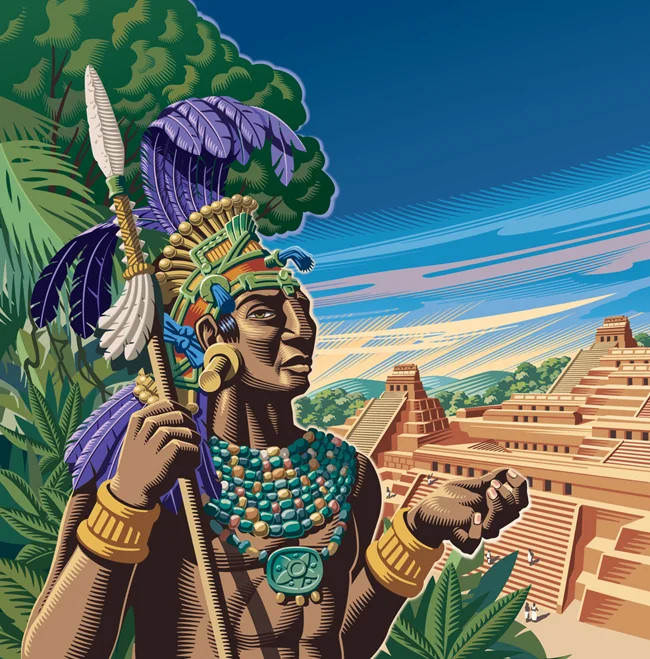
What three things does a state need to exist?
Agricultural surplus
Large sendentary populations
Stratified social structure
What three strategies do states use to maintain power?
Ideological power (religion, tradition, patriotism, and progress), economic power (assure economic well-being of masses, incentivize local officials to keep order and take heat, use financial resources to keep potential competitors at bay or divided), and coercive/military power (force is the last resource; military might, and it allows expansion).

City-state
A highly institutionalized and highly centralized micro- state consisting of one town with its immediate hinterland and settled with a stratified population.
Small size and territory
One major city or town
Population in the 1000s or 10,000s
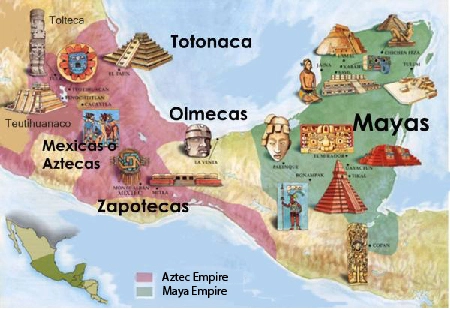
Empires
A large macro-state whose main characteristic is its constant, relatively successful effort to expand and to incorporate other regions, peoples, and polities, including other states
Huge territory
Has one major capital
Multiple large cities
Populations over 100,000s

Geography of the Maya region
Encompasses southern Mexico (Yucatán, Chiapas, Tabasco), Guatemala, Belize, Honduras, and El Salvador, divided ecologically into the southern highlands, tropical southern lowlands, and northern limestone lowlands.

Classic Maya political hierarchies
Decentralized network of competing city-states ruled by divine kings (K'uhul Ajaw) with regional hegemonic capitals (e.g., Tikal, Calakmul).

Dominant themes of Classic Maya inscriptions
Royal genealogies, military victories, ritual accessions, bloodletting, and diplomatic alliances carved on stelae, altars, and architectural panels.

Classic Maya social structure
Stratified hierarchy featuring the royal family at the top, followed by nobility (ajaw), scribes/artists, commoners (farmers, artisans), and enslaved individuals at the bottom

Human sacrifice among the Maya
Performed during major political accessions, dedications, or crises, often involving decapitation, heart extraction, or casting victims into cenotes.

Maya prestige goods
Elite items traded over long distances to cement political alliances and display status, including jade, obsidian, quetzal feathers, jaguar pelts, and cacao.

What is the vacant ceremonial center hypothesis and what's wrong with it?
An outdated theory claiming that Maya sites were empty religious shrines visited only temporarily for rituals while commoners lived far away. It is incorrect because extensive settlement archaeology reveals dense, continuous residential populations surrounding these centers.

Two-tiered Classic Maya economy
Elites controlled long-distance interregional exchange in exotic goods.
Local and regional subsistence and commodity economies fell outside elite power.

Role of ancestors in Maya ideology
Veneration was central; deceased family or royal lineage members were buried beneath house floors or temples to act as intermediaries between the living and the supernatural realm.
• Fundamental unit of Maya ideology
• Dead buried under house floors or in household group shrines
• Death is not the end of a social persona
• Ancestors act as mediators between the supernatural world and living
descendants
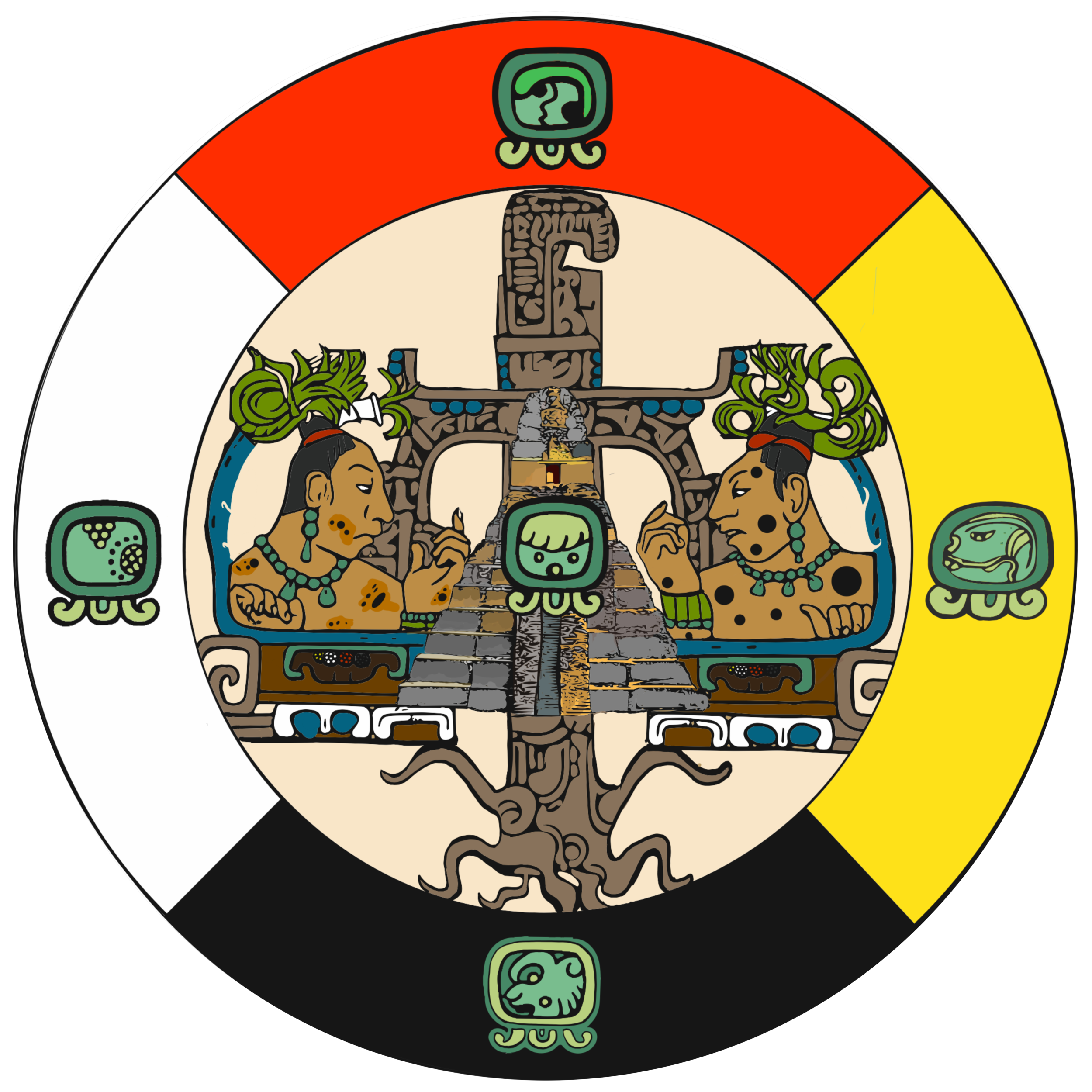
Maya cosmogram
• Highly structured
• 13 levels of the heavens
• Earthly plane
• 9 levels of the underworld (Xibalba)
• Each level associated with
specific deity
• Each plane has four “aspects” and colors
• Each plane has associations with astronomical bodies

Sacred elements of landscape
Caves (portals to the underworld), mountains (wits, often imitated in pyramid architecture), cenotes, and water sources viewed as animate, sacred spaces.

Role of auto-sacrifice in Maya ideology
Bloodletting rituals performed by rulers and elites using obsidian, stingray spines, or rope on sensitive body parts (tongue, ear lobes, genitals) to communicate with ancestors and gods.
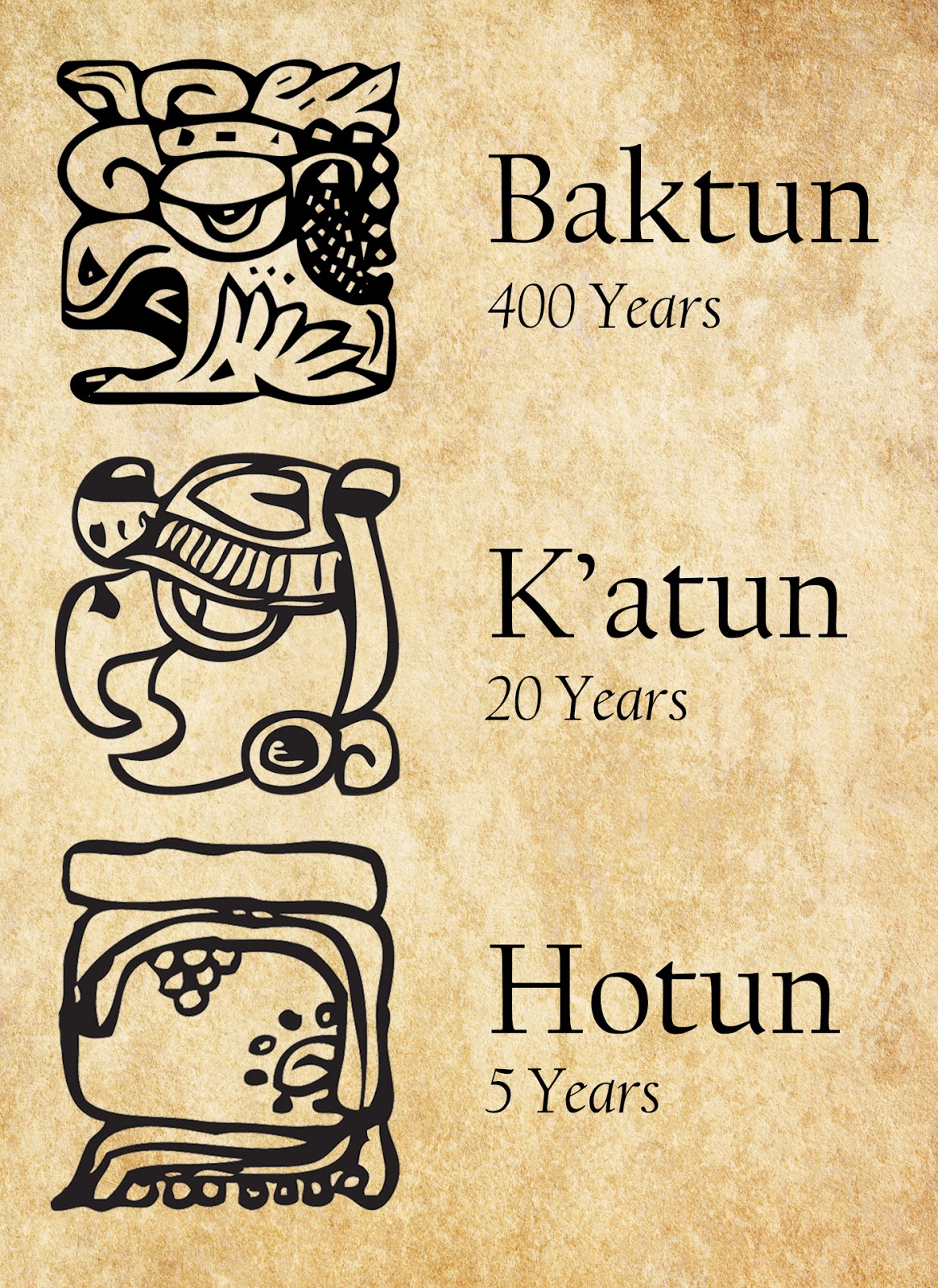
Units of the Long Count
Hierarchical base-20 groupings of days: Kin (days), Winal (20 days), Tun (360 days), Katun (7,200 days), and Baktun (144,000 days)

What was the "Maya Apocalypse" of 2012?
A widespread modern cultural misinterpretation claiming that the end of the 13th Baktun in the Maya Long Count calendar meant the physical end of the world, whereas Maya inscriptions viewed it merely as the completion of a major cyclical period.

Collapse
Collapse implies sudden political fragmentation and abandonment of major centers.

Resilience
Highlights how Maya populations adapted, reorganized, and relocated to other regions (such as the northern lowlands and coastal trading ports) rather than vanishing entirely.

Evidence of Classic Maya collapse
Abandonment of monumental construction, cessation of dated Long Count inscriptions, warfare intensification, and severe depopulation in the southern lowlands.
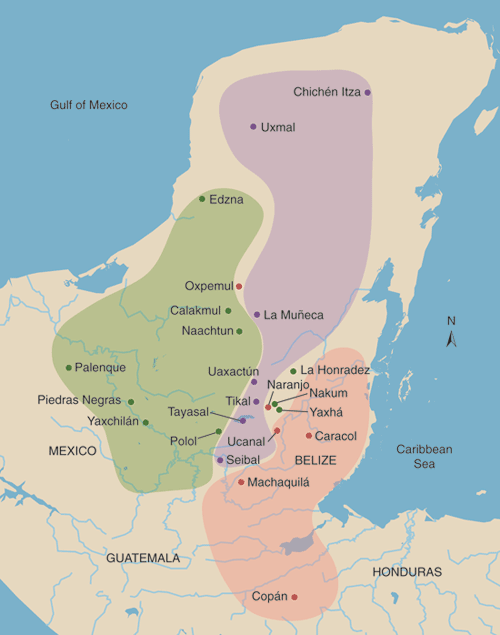
Regional trends in Classic period collapse
The southern lowlands suffered severe political disintegration and depopulation, while northern centers (like Chichen Itza) experienced temporary expansion or resilience during the Terminal Classic

Postclassic Maya political organization
Shifted toward more decentralized or joint-governance systems (multepal), coastal trade confederacies, and militaristic city-states.

Postclassic Maya trade networks
Dominated by expansive maritime and overland trade routes moving salt, obsidian, cacao, and textiles all along the coasts of Yucatán and Central America.

Factors contributing to the Spanish conquest of the Maya region
Political fragmentation of the Maya region preventing a unified defense, introduction of epidemic diseases (smallpox), indigenous alliances leveraged by the Spanish, and Spanish military tactics/technology.

Phases of the Spanish conquest
Stage 1: First Known Contact
• 1511 shipwreck in the Caribbean
• 11 survivors land on east coast of Yucatán Peninsula
• Seized by local Postclassic Maya city
• Scribe: Gerónimo de Aguilar
DISEASE: the most impactful consequence (Influenza, Small pox, Measles)
Stage 2: Expeditions of Conquest
Failed expeditions of 1517-1518
• From Cuba
• Postclassic Maya kingdoms effectively resist Spanish incursions
• Despite disease and political instability
• More effective than Aztec Empire*
• Spanish sustain heavy casualties
Hernán Cortes expedition of 1519
• To Honduras to deal with rebellious Spanish lieutenant
• Describes Postclassic Maya lowland kingdoms
• Kingdoms remain independent
Pedro Alvarado expeditions 1524-1527
• First Spanish successes
• Pits rival Postclassic highland kingdoms against each other
• Allies with Kaqchikel Maya to defeat K’iche’ and Tzutuil
• Conquers Lake Atitlán region
• Betrays Kaqchikel to seize their capital, Iximche’
• Establishes Iximche’ as first Spanish capital in Maya region
Stage 3: Resistance, Revolts, and Appeasement

San Lorenzo, Veracruz (1400 BCE- 900 BCE)
• Olmec civilization
• “Mother civilization” of Mesoamerica
• Earliest known state society in Mesoamerica
• Mesoamerica’s first urban capital
• Monumental public architecture
• Giant basalt sculptures
• Rectangular “altars” –actually thrones
• Were-jaguar iconography
• Jade artifacts
• Ritual bloodletting and sacrifice
• Earliest writing in the Americas
• Calendar and the concept of zero
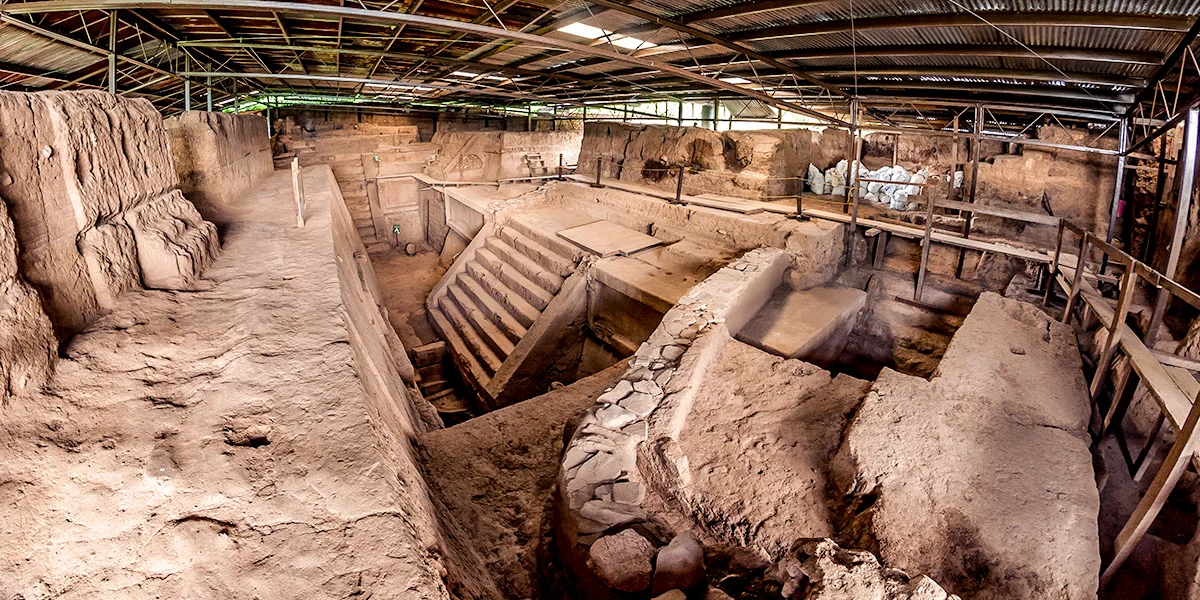
Kaminaljuyú (400 BCE - 250 CE)
• Late Preclassic Maya center in the highlands
• Occupied for much longer
1500 BCE – Classic and Postclassic
• Largest Preclassic site in the highlands
• Elaborate tombs of rulers
• Public monuments and pyramids
• Evidence of craft specialization in pottery and obsidian
• Large-scale irrigation and agricultural terracing

Palenque, Chiapas, Mexico (226 BCE - 799 CE)
• Southern lowlands
• Western frontier of the Maya world
• Along the Usumacinta River
• Medium-sized city
• Contains some of the most impressive examples of Classic Maya architecture and sculpture
Temple of the Inscriptions
• Tomb for most famous king, Pakal the Great
• Elaborate stone panels
• Second longest hieroglyphic Maya text
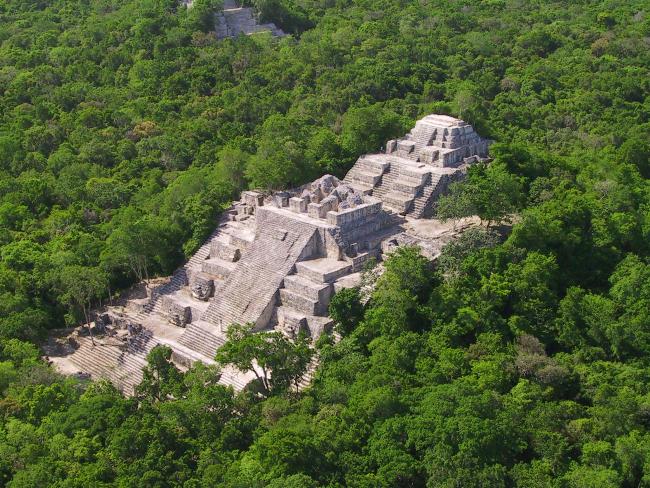
Calakmul
Petén basin, Campeche, Mexico; Classic period superpower; Tikal's primary geopolitical rival, featuring extensive monumental architecture and large numbers of stelae.

Joya de Cerén
• Maya highlands
• Small Maya farming community
• “Pompeii of the Americas”
• 595 CE eruption of Loma Caldera volcano
• Buried under 5-7 m of volcanic ash
• Discovered in 1976 by a bulldozer
Catastrophic Archaeological Site
• Abandoned quickly
• Earthquake?
• No human remains recovered from the site
• Left everything: artifacts, food, lit fires…
• Provides a snapshot of what daily life was like
Small Farming Community
• Estimated population ~200 people
• Wattle and daub household groups
• Each arranged around a central plaza
Specialized Structures
• Temascal sweat house
• Larger communal building
• Ritual artifacts: deer antlers, ceramic
figurines, shell fragments
• Divinatory activities
• Shaman or healer?
• Ritual at a local scale
Paleoethnobotanical Remains!
• Well preserved in ash deposit
• Milpa-style plots
• Maize and beans
• Kitchen garden → herbs and agaves
• Arboriculture: fruit trees
• All indicative of the Maya “managed mosaic”

Yaxchilán, Chiapas, Mexico (350 - 850 CE)
• Southern Lowlands
• One of most powerful Classic Maya cities along Usumacinta River
• Alliance with Calakmul
• Rivalries and wars with Palenque and Tikal
• Relief carvings of royals’ role in ritual bloodletting
Royal Auto-sacrifice
Step 1: Collect blood
• Lintel 24
Lady Xok pulls a thorny vine through her tongue
Blood collects below on the screenfold codex
Step 2: Burn blood
Step 3: Invoke vision
• Lintel 25
The Vision Serpent appears to
Lady Xok
Step 4: Divination
• Gain sacred knowledge
• Preserve world order
• Cyclical time
Step 5: Make sure you have an
audience
Lintel 15
Lady Wak Tuun invokes the Vision Serpent Basket of tools for bloodletting ritual
• Public ceremony and performance
Public placement of lintels
Royal auto-sacrifice and blood was the physical bond between power, prophecy, and the cycle of rebirth.

Aguateca (Guatemala, 200 BCE - 800 CE)
• Southern Lowlands
• Western Petén monsoon forest
• Allied with Tikal in regional conflict with Calakmu
• Volatile rises and falls among other city-states in the region
• One of several cities battling to become new royal seat of power
• By 750 CE, entire region consumed by endemic warfare
• Defensible hilltop location
• Massive fortification walls
• Population shifts to live in defensible locations
• Disrupts low-density urbanism settlement pattern
• Consequences for subsistence
• Warfare strains economy, demographics
• Overrun and burned by enemies shortly after 800 CE
• Depopulation
• Major centers never return to region
• Gradually repopulated with small hamlets during Postclassic
• Classic period city centers left unoccupied

Chichen Itza
Northern Lowlands
• Yucatán Peninsula – arid savannah
• Cenotes
• “At the mouth of the well of the Itzá”
• Arose (and declined) later than most Classic Maya cities
Adaptation!!!
“Mexicanization” of K’uhul Ajaw
• Militarism – conquest state
• Reliance on regional tribute
• Religious pilgrimage center
• Elite involvement in interregional trade with central Mexico
• By 900s, conquered kingdoms begin to decline
• Flow of resources and labor to Chichen Itzá cut off
• Begins Chichen Itzá’s ultimate decline

Mayapan (Yucatán, Mexico 1220 - 1440 CE)
• Northern Lowlands
• Western Yucatán Peninsula –arid
• Founded by Chichen Itzá’s Cocom lineage
Politics and Economy
• Multepal government council dominated by Cocóm lineage
• Ruled federation of states in northern Yucatán
• Control vast trade network
Conquest Warfare
• Walled city 1.6 sq miles
• 9 km stone wall
• 12 gates – controlled access
• Over 4,000 structures, mostly residences
• Most population lives inside city walls
• 40+ cenotes within city walls
• Contract mercenaries from Gulf Coast region to subdue Yucatec states
Social Organization
• Smaller temples and palaces
• All noble families from competing lineages live in city center
• Property walls!
• Residential compounds still organized around central plaza – household group
• Still haphazard “organic” city growth
• Eventually falls to a revolt of rival lineages
• Sacked and burned
• Alliance of Yucatec states fragmented into 18+ small kingdoms
• All still governed by multepal system
• Continued emphasis on interregional trade, K’atun ceremonies, warfare
• Inter-lineage hostilities continue

Tayasal
Petén lakes region, Guatemala; Late Postclassic to colonial period; the capital of the Itza Maya and the last independent indigenous Maya stronghold to fall to the Spanish in 1697.

Maya Highlands
• Over 1,000 masl
• Volcanic mountain ranges – Sierra Madre Sur
• Permanent rivers
• Río Motagua
• Usumacinta river system
• Cooler and drier climate
• Rich deep soils
• High population density
• Center of Preclassic Maya world

Southern Maya Lowlands
• Under 800 masl
• Hotter, drier climate
• Rivers
• Río Hondo system
• Usumacinta river system
• Lake Petén-Itza
• Lower population density than highlands

Northern Maya Lowlands
• Under 800 masl
• Flat, drier open savannah
• Yucatán Peninsula – massive limestone shelf
• Few standing rivers
• Cenotes