Bio 202: Lab Exam 2 - 4/24/2023 Armbruster
 Call Kai
 Learn
 Practice Test
 Spaced Repetition
 Match
 Flashcards
 Knowt Play
1/130

There's no tags or description
Looks like no tags are added yet.
131 Terms
nostrils

larynx

thyroid cartilage
red pin

cricoid cartilage
white pin
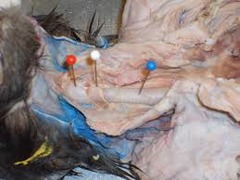
epiglottis

trachea

lungs

diaphragm

tongue

esophagus

stomach

Cardiac Region
yellow box

stomach fundus
Identify B
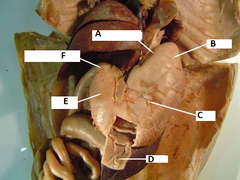
stomach body
red box

stomach pylorus
Identify E

stomach greater curvature
#7

stomach lesser curvature
Area between 18 & 4

pyloric sphincter
Identify F
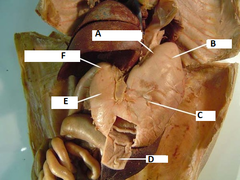
greater omentum

lesser omentum

mesentery

small intestine

duodenum
first part of the small intestine
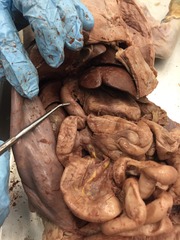
jejunum
blue area

ileum

ileocecal valve

large intestine
black arrow

cecum

liver
red line

falciform ligament
separates right and left lobes of the liver

liver right lobe

liver left lobe

quadrate lobe of liver
left red arrow (right side of body, top of right kidney)

caudate lobe of liver
right red arrow (left side of body, tongue like under diaphragm)
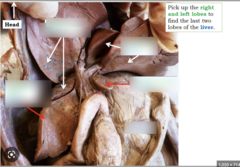
gallbladder
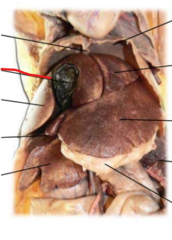
pancreas

spleen

peritoneum

kidneys

ureters

urinary bladder
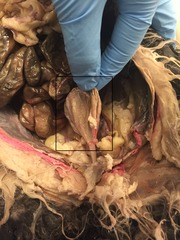
urethra

spermatic cord
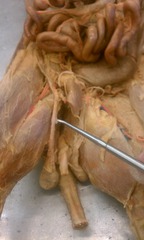
inguinal canal
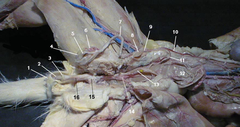
ductus deferens
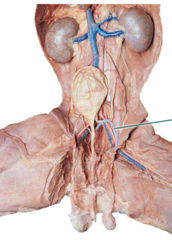
Epididymis
Stores sperm cells

uterine body (cat)
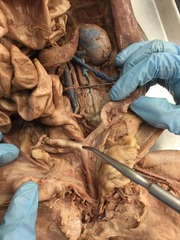
uterine horns

uterine tube

ovary

ovarian artery and vein
ovarian ligament
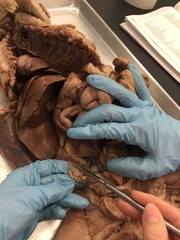
esophagus
what organ?

esophagus; mucosa; stratified squamous epithelium
What organ? What layer? What specific type?

esophagus submucosa
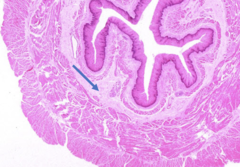
esophagus muscularis

esophagus adventitia

gastric pits of stomach
a

gastric glands of stomach
b
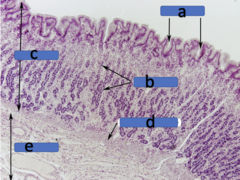
stomach mucosa
c
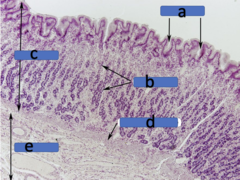
muscularis mucosae of stomach
d
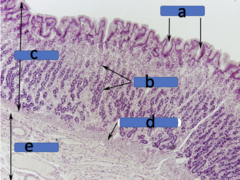
submucosa of stomach
e

chief cells
B

stomach pyloric
what slide?

parietal cells
A

Mucosa
A
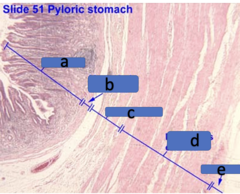
submucosa
C

muscularis externa
D

tongue / taste buds
identify structure and A
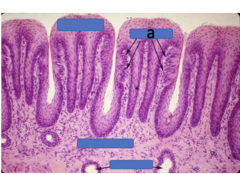
tongue papillae
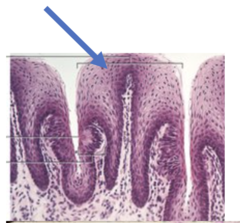
duodenum
Where do Brunner's glands only occur?
Brunner's glands of duodenum with goblet cells
arrow area
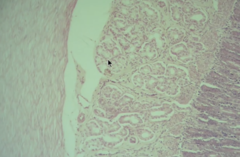
duodenum
what overall gland is this?
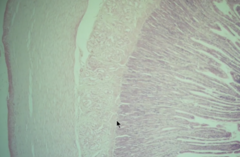
villi of duodenum
E (multiple of them)

jejunum
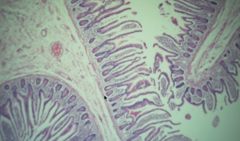
villi of the jejunum
B and the structure
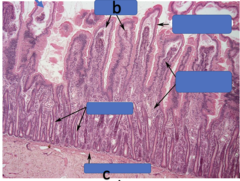
Crypts of Lieberkuhn in jejunum
E and the structure

mucosa of ileum
arrow
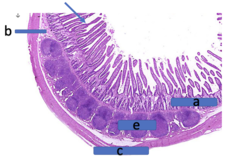
Peyer's patches (ileum)
E

submucosa of ileum
A

muscularis of ileum
B
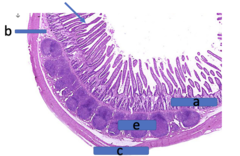
Serosa of ileum
C
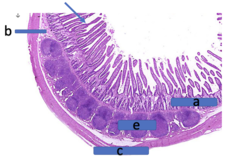
intestinal glands
What glands only occur in the colon?

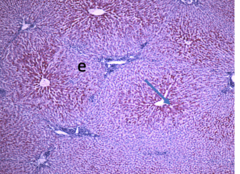
Liver
identify the organ

hepatocytes
E

Hepatic triad
arrow
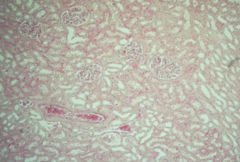
kidney; glomeruli; bowman's capsule; renal tubules
identify organ; round areas; space around round areas; white rice looking areas
sheep kidney; cortex; medulla with pyramids
Identify object; outer layer; area of utensil

calyx, renal pelvis, ureter
E, B, A

medulla with pyramids; calyx; renal pelvin; ureter
E, B, A, arrow

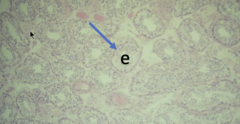
testis; Leydig cells; seminiferous tubules; spermatagonia
identify slide; black arrow, E, outer area of E identified by blue arrow
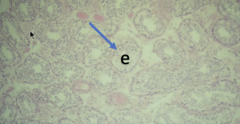
Leydig cells
What produce testosterone?
Inside the seminiferous tubules (inside E)
Where is sperm found?
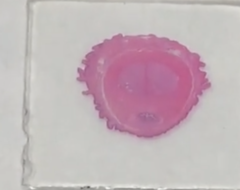
penis and urethra
Identify slide and jagged area noted by arrow

corpus cavernosum of penis

corpus cavernosum penis
what are the two eye looking areas?
corpus spongiosum penis

follicle in ovary
identify
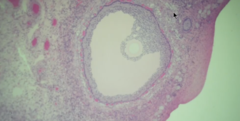
corpus luteum of ovary

spermatic cord
where her finger is
