FAH313 WEEK 1 + 2 - Intro to Greek Myth and Ancient Art + Origins of the Gods & Mortals
 Call Kai
 Learn
 Practice Test
 Spaced Repetition
 Match
 Flashcards
 Knowt Play
1/6

There's no tags or description
Looks like no tags are added yet.
7 Terms

Title: Procession of Twelve Gods
Date: ca. 100 BCE-100 CE
Medium: Pentelic Marble relief
Location: Tarentum, Italy
Significance: name attributes of each god
Zeus = thunderbolt + Sceptre
Artemis = bow
Apollo = lyre
Athena = helmet, owl, spear, aegis
Poseidon = Trident
Hermes = wearing Petasos (hat)
Demeter = holding wheat

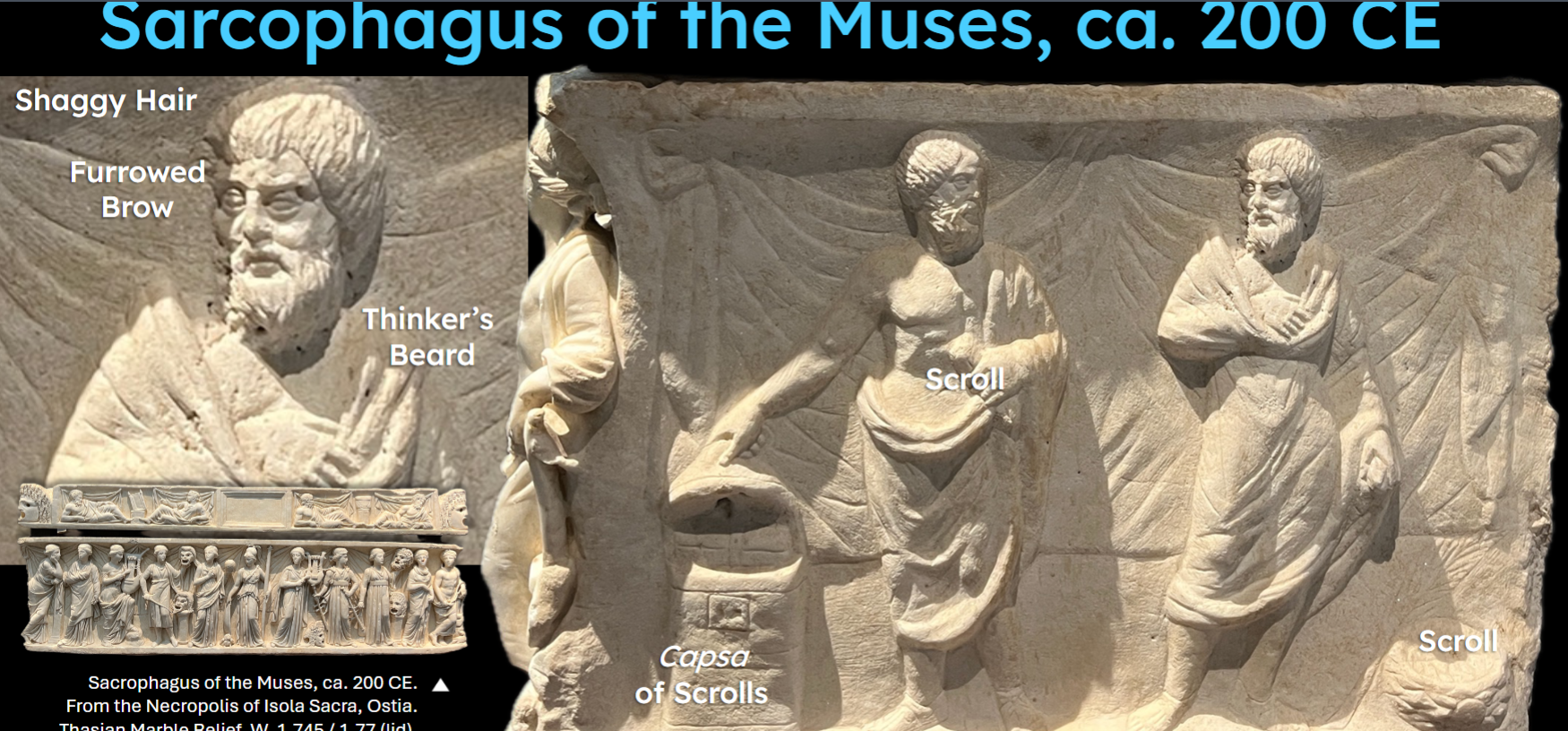
Title: Sarcophagus of the Muses
Date: ca. 200 CE
Medium:
Bottom Register = High relief marble sculpture
Top register = low relief marble sculpture
Location: Necropolis of Isola Sacra
Significance: sarcophagus of a small boy
Identifiable characters with attributes:
Bottom register:
Athena in the middle: shield, helmet, spear, owl
far right end = Apollo, leader of muses, laurel wreath + leaning on a lyre
Muses from right to left
Clio = history
Melpomene = Tragedy (Holding tragic Greek theatre mask)
Euterpe = Lyric poetry (holding a flute)
Erato = Love poetry (playing lyre)
Urania = Astronomy (holding a planet/ celestial orb/astrolabe —> map of the stars + zodiacs
stands out = Astronomy not considered an artistic domain
Thalia = Comedy (holding laughing theatre mask)
Terpsichore = dance (playing the lyre
Calliope = epic poetry
Polyhymnia = Sacred Hymns
Top register:
two poets seated/reclining at top
scroll between them
Short side:
2 philosophers —> uncover profound truths (making sense of wisdom that has been revealed to them) through divine inspiration from the Muses
physiological portraits:
Thinker’s beard, wrinkles, unkempt/shaggy hair, furrowed brow
Action:
opening Capsa of Scrolls = metal cylinder where scrolls are placed for protection against fires

Title: Rhea Gives Kronos the Swaddled Stone
Date: ca. 150 CE
Medium: Low-relief statue base
Location: Capitoline Museum, Rome
Significance: Hesiod, Theogony
Kronos seated on his throne
Wife Rhea handing him the stone for him to swallow, thinking it’s Zeus he’s being handed
Meanwhile, Zeus is growing up in a cave in Psychro Crete
IDEA: prophecy that one of Kronos’ children would overpower him. To solve this, he ate every child Rhea gave birth to. When Zeus was born, Rhea hid him in the Psychro Cave (Crete).
Rhea gave Kronos a swaddled stone instead —> omphalos (stone of the universe)
Result: vomits the stone along with all the previous children he swallowed
Zeus grows up and ends up defeating him —> prophecy is fulfilled.
Description of Art:
low relief sculpture
Kronos is sitting on his throne
Parts of the art are missing, but restoration shows
him holding a Scythe in his left hand
he’s almost reclining on his throne
Reaching with his right hand for the swaddled “baby”, handed to him by Rhea
has curly hair and a beard


Title: Prometheus and Atlas Amphoriskos
Date: ca. 560-550 BCE
Medium: Black figure amphoriskos
Location: Vatican city
Description of art:
Atlas and Prometheus are shown enduring their punishments bestowed on them by Zeus
Atlas on the left
holding up orb (EARTH) on his back + shoulders
body bent forward
holding his back, where a snack is seen and presumably is biting him
sign of being tired = holding his back
long hair, long beard
Prometheus on the right:
tied by his hands and feet to a pillar
eagle is torturing him, eating his liver, which grows back during the night and is eaten again
eagle = ZEUS (attribute)
he is clearly bleeding = blood pouring from his wounds
Significance: HESIOD’S THEOGONY
Atlas and Prometheus are titans
After winning the Titanomachy - Zeus punished both titans for siding with the titans
Atlas = condemned to holding up the world
got exiled by Zeus to western edge of Earth = The Land of the Hesperides
Snake in the amphoriskos = Ladon, guardian of the golden apples of the Hesperides
Creates link between Hercules + his task to retrieve the golden apples
Hercules takes Atlas’ place while the latter goes to get them for him
Prometheus = punished by getting his liver eaten
sided with titans + stole fire and gave it to humans
Zeus disapproved = believed fire in the hands of humans would make them powerful, self-sufficient, and capable of challenging the divine authority of the Olympian Gods.
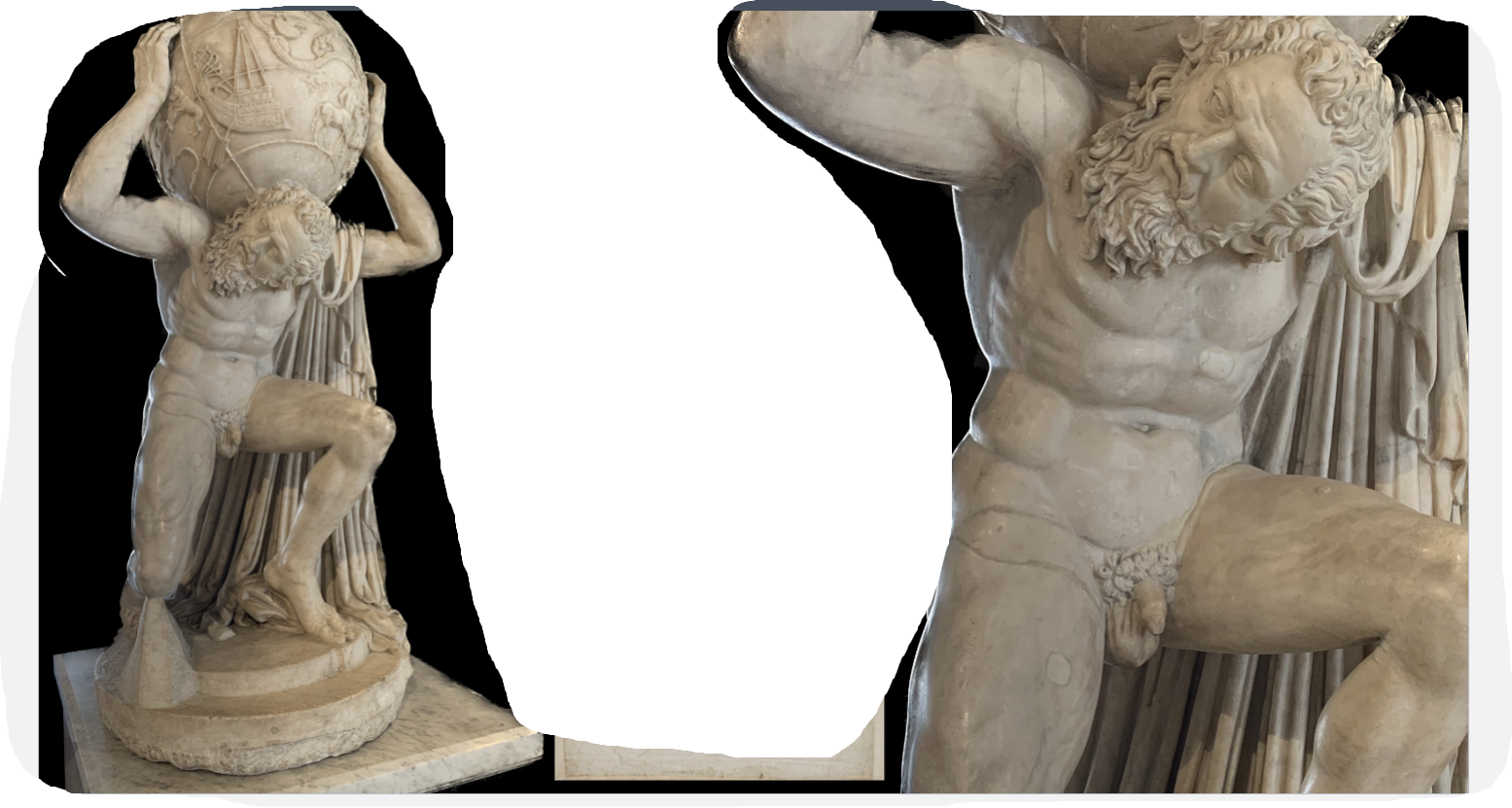
Title: Atlas Farnese
Date: ca. 100 CE
Medium: Marble sculpture
Location: Naples
Description of art:
Atlas kneeling, holding up orb (earth) on his back
both hands on the orb
Orb has lots of details on it —> zodiac signs, astrological symbols
looks tired/ in pain
strain in his muscles (abdomen, obliques, thighs)
Face:
creased forehead, deep cut nasal/labial lines
downturned lips/frowning face
deep set eyes with bags
dazed look
Crows feet
heavy upper eyelids
Significance: HESIOD’S THEOGONY
Showing Atlas being punished by Zeus for siding and leading the Titans during the Titanomachy.
Punishment: carry the heavens on his shoulders for eternity (celestial sphere) for eternity
despite his strength and wisdom, could not bear the weight, hence the depiction of being tired in art. Symbolizes the consequences of arrogance and rebellion against divine authority

Title: The Pandora Krater
Date: ca. 450 BCE
Medium: Apulian red figure Calyx-Krater
Location: London
Description of art:
Calyx-Krater = Krater shaped like the base of a flower:
krater = mixing vessel used for mixing wine with water
Calyx = outermost structure at the base of a flower, which supports the petals
SIDE A:
Top register:
Pandora = all gifted + Kalon Kakon (beautiful evil)
Pandora is acquiring her gifts
Athena = giving her a wreath
Zeus sitting on throne + holding thunderbolt
Poseidon standing and holding trident
Ares = to the left, holding spear, shield and wearing helmet.
Bottom register:
Musician playing double fluted aulos (wind instrument)
Satyrs on stage —> men dressed as them
wearing shorts with attached phallus + horns
playing comedies + dancing on stage
men dressed as satyrs appear ithyphallic.
SIDE B:
Top register:
another musician playing aulos
women dancing
Bottom register:
stage play
actual satyrs now depicted (no shorts with prosthetics, they have tails, short + realistic horns)
stage performers - hoop
Significance: HESIOD’S THEOGONY
Krater depicts the creation of Pandora as an event to be celebrated, and not as a negative thing
different from the way the event is described in the text.
Zeus ordered the creation of Pandora as a punishment for mankind after they acquired the stolen fire from Prometheus
Pandora = first mortal woman = goal of bringing misfortune to mankind
Aphrodite gave her beauty
Hermes gave her persuasive speech
Hera gave her curiosity
Overall = beautiful but dangerous being —> who would bring hardship when in her presence
Tone of the story DIFFERENT in the art, compared to the text
art = celebration + positivity
text (theogony) = punishment + negative
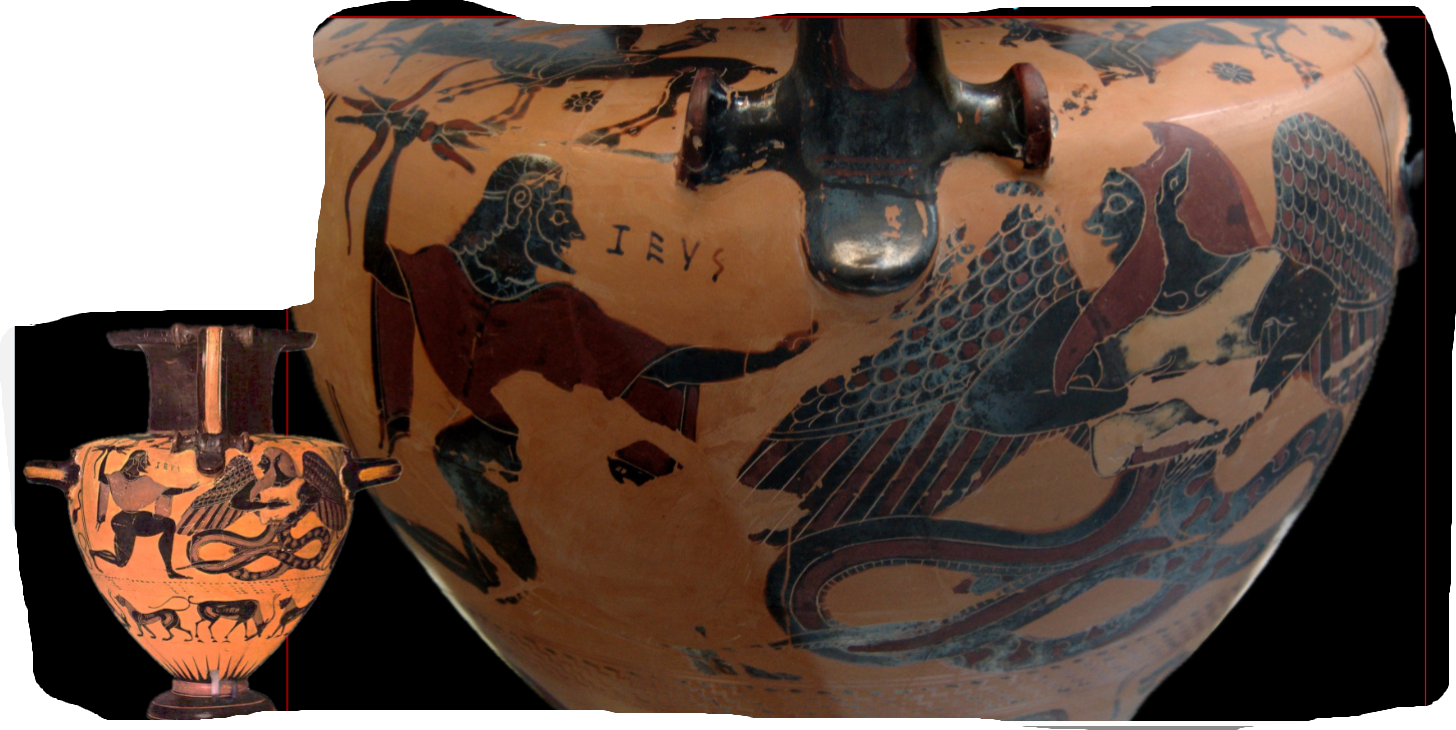
Title: Zeus and Typhon Hydria
Date: ca. 500 BCE
Medium: Chalcidian black-figure vase painting
Location: Munich
Description of art:
Zeus facing typhon
Zeus attributes:
Zeus holding thunderbolt —> aiming it at Typhon
ZEVS = ZEUS written in Greek beside the character
wearing aegis + fillet in his hair = identifies him as king + conqueror
classic beard'
poster = right arm above and behind his head, left arm aiming —> about to shoot bolt
Typhon:
In text = said to have several heads
described to be so large he reached the stars
in art = only 1 head + same size as Zeus (limited art space on hydria)
long red hair
pointed ears
large wings
snake legs = demonstrates he’s from the underworld
Significance: Hesiod’s Theogony
Description of the fight between Zeus and Typhon
Zeus defeats him and sentences him to Tartarus.