🫁 11 respiratory system
 Call Kai
 Learn
 Practice Test
 Spaced Repetition
 Match
 Flashcards
 Knowt Play
1/58

There's no tags or description
Looks like no tags are added yet.
59 Terms
four stages of respiration? (11.1)
breathing (inspiration/expiration), external respiration, internal respiration, cellular respiration
external respiration? (11.1)
exchange of oxygen and carbon dioxide between the inside of lungs and bloodstream

what is internal respiration between? (11.1)
exchange of carbon dioxide and oxygen between blood and every cell in your body
what happens in cellular respiration? (11.1)
a series of energy-releasing chemical reactions that take place within the cells (remember mitochondria)
glucose + oxygen —> carbon dioxide + water + energy
what stage of the respiratory process performs gas exchange? (11.1)
external respiration
what is gas exchange? (11.1)
delivery of oxygen from lungs to blood and elimination of carbon dioxide from blood to lungs
why is respiration important? (11.1)
it ensures that oxygen is brought into the body and made available to every cell that needs it, and that carbon dioxide leaves each cell and the body
main function of respiration? (11.1)
oxygen is brought into the body and made available to each cell that needs it
carbon dioxide leaves each cell and is removed from the body
this must be done at a rate that will sustain the life of the cells
the process of moving an oxygen-containing medium (water or air) over the respiratory surface (such as the gills, trachea, or lungs) is known as what? (11.1)
ventilation
two requirements for respiration? (11.1)
respiratory surface must be large enough to efficiently meet the demands of the organism
requires a moist surface (oxygen and carbon dioxide need to be dissolved in water)
purpose of hemoglobin? (11.1)
carries oxygen from lungs to tissues, and transports carbon dioxide from tissues to lungs

function of spirometer? (11.1)
measures the volume of air that is inhaled and exhaled over a period of time

what is tidal volume + where is it located on a spirograph? (11.1)
volume of air that is inhaled and exhaled in a normal breathing movement (body at rest)
~500mL

inspiratory vs expiratory reserve volume? where are they located on a spirograph? (11.1)
additional volume of air that can be taken into the lungs beyond a tidal inhalation (~3000mL in males and ~1900 in females)
same, but forced out (~1000mL M and ~700 mL F)
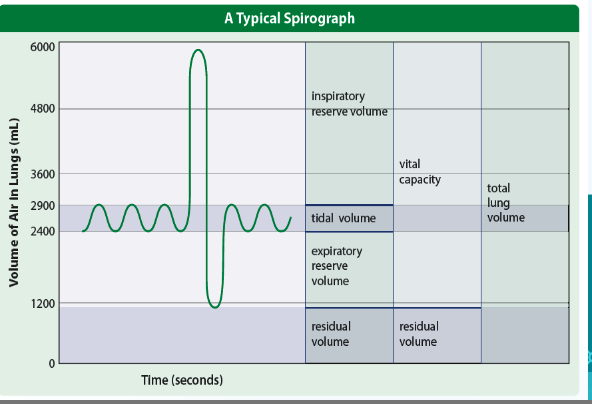
what is vital capacity and where can it be found on a spirograph? (11.1)
total lung volume capacity, total volume of gas that can be moved into or out of lungs
~4800 mL (M) and ~3100 mL (F)
TV + IRV + ERV = VC
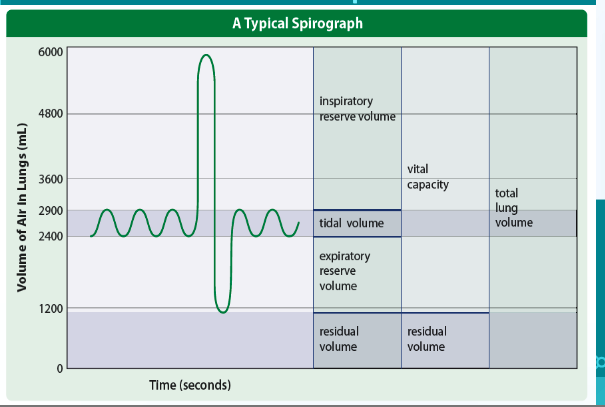
purpose of residual volume? (11.1)
amount of gas that remains in lungs and passageways of respiratory system even after full exhalation
keeps it from collapsing
~1200 mL (M) and ~1100 mL (F)

is oxygen concentration higher in lungs or blood? (11.1)
lungs (alveoli), so oxygen moves into blood
recall how diffusion makes gases move from high to lower concentrations
is carbon dioxide concentration higher in lungs or blood? (11.1)
blood, so it moves into lungs to be exhaled
is oxygen concentration higher in body cells or blood? (11.1)
blood, so it moves into cells to give them energy
is carbon dioxide concentration higher in body cells or blood? (11.1)
body cells (as waste), so it moves into the blood to be carried away
how is breathing regulated? (11.1)
medulla oblongata
this coordinates breathing movements, maintains an adequate breathing rate, monitors lung volume levels and ensures adequate gas levels are in the blood

how does outer skin work as a respiratory surface? (11.1)
oxygen diffuses into capillaries below skin and carbon dioxide diffuses out

how is outer skin “large” enough + how does it stay moist? (11.1)
high ratio of respiratory surface to body volume
lives in damp places or water

how are gills “large enough” and how do they stay moist? (11.1)
they increase surface area through which gases are exchanged
surrounded by water

description of tracheal system? (11.1)
internal system of branching respiratory tubes called tracheae
oxygen enters through spiracles and diffuses into tracheae
how is tracheal system “large enough”? (11.1)
tracheae connects body cells to the environment through spiracles

how are lungs “large enough” and how do they stay moist? (11.1)
folds in lining of lungs increase surface area for diffusion
lungs are lined with moist epithelium

process of exhalation? (11.1)
intercostal muscles and diaphragm relax
decrease volume, increase pressure in thoracic cavity
lungs are compressed —> decrease volume, increase pressure in lungs
air moves out of lungs

first step of inspiration? (11.1)
intercostal muscles and diaphragm contract
IMs move rib cage up and out
D moves down
does the volume of thoracic (chest) cavity increase or decrease (step 2 of inspiration)? (11.1)
increases, and pressure decreases
do lungs expand or contract in step 3 of inspiration? (11.1)
they expand —> walls of lungs (suspended in thoracic cavity) are drawn outward
volume increases and pressure decreases
what happens in step 4 of inhalation? (11.1)
low pressure inside lungs in contrast to high pressure in external environment
air rushes into lungs
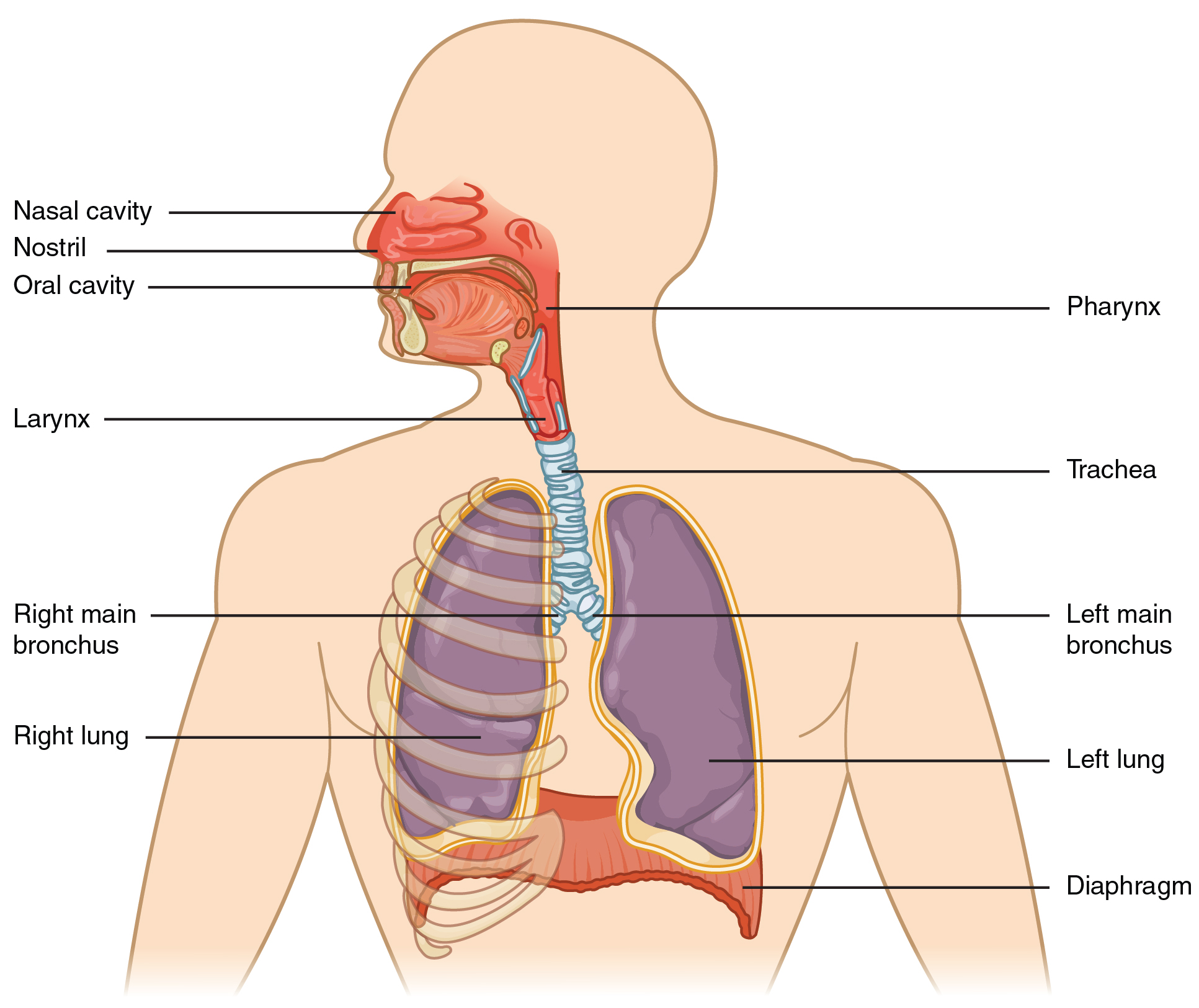
path of air? (11.2)
nose —> nasal cavity —> pharynx —> larynx —> trachea —> (bronchi —> bronchioles —> alveoli)
what is 99% of oxygen carried by? (11.2)
hemoglobin
the other 1% is dissolved in plasma

is carbon dioxide more commonly carried in hemoglobin or plasma? (11.2)
plasma —> 77%
other 23% can be found in hemoglobin
you are shown two samples of blood, one of which is a brighter shade of red than the other. what prediction can you make about the oxygen content in the two samples? (11.2)
the brighter red sample has a higher level of oxygen as most oxygenated blood is carried by hemoglobin
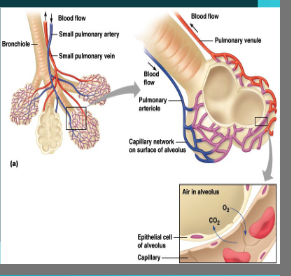
how does gas exchange in external respiration work? (11.2)
due to the walls of the alveoli and capillaries only being one cell thick, inspired oxygen can diffuse from lungs into blood and carbon dioxide can diffuse from blood into lungs
causes and symptoms of tonsillitis? (11.3)
bacterial / viral infection of tonsils located at the back of throat

🍫 can severe tonsillitis be dealt with? if so, how? (11.3)
yes, by removing all or part of the tonsils
how is laryngitis caused? (11.3)
infection/allergy by overstraining lungs (ex. prolonged yelling)
people affected may lose their voice or speak hoarsely
not serious and clears up in a few days
scientific explanation for pneumonia? (11.3)
alveoli fill with thick fluid, making gas exchange difficult

two types of pneumonia? (11.3)
Lobular pneumonia affects a lobe of the lungs, while bronchial pneumonia affects patches in both lungs

main causes of pneumonia? (11.3)
bacterial/viral infection, and pneumococcal vaccine can treat it
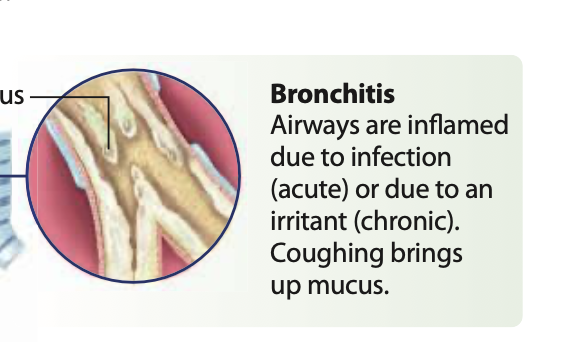
scientific explanation for bronchitis? (11.3)
airways are inflamed due to infection (acute) or irritant (chronic), brings up mucus
what causes acute bronchitis? (11.3)
bacterial infection, can be treated with antibiotics
how does chronic bronchitis occur and what is the deeper scientific explanation? (11.3)
regular inhalations of concentrations of dust / chemical compounds / smoke
cilia lining of bronchi gradually get destroyed
🍫 how do inhalers work for asthmatic people? (11.3)
they relax the bronchiole muscles and reduce inflammation, which opens up the airways

how does emphysema work? (11.3)
alveoli burst and fuse into enlargeed air spaces, and surface area for gas exchange is reduced

what is a cause of emphysema and is it curable? (11.3)
caused by smoking and it is not curable, but inhalers can manage it
exhaling becomes difficult because of closed airways
what does cystic fibrosis do? (11.3)
causes thick build-up of mucus in lungs —> infection, inflammation and damage to lung tissues
is cystic fibrosis curable? (11.3)
no, but it can be relieved by medicines that thin mucus and antibiotics that reduce bacterial infections
what is the spread of cancer from its original site called? (11.3)
metastasis (cells that do this are called metastatic cells)
why is lung cancer hard to detect and treat? (11.3)
they are deep in the thoracic cavity so it’s harder to detect at an earlier stage + x rays do not show tumours until they are currently large
🍫 what is computed axial tomography? (11.3)
(aka a CT scan) has a person lay on a bed and have a rotating x-ray device take images through 360 degrees, and it is used for imaging organs and other tissues

🍫 explain two-photon microscopy? (11.3)
(TPN) uses special microscopes that emit photons to penetrate samples of biological tissue
gives info about cell structure and reveals how biochemical processes take place in living cells
🍫 how does radiation combat lung cancer? (11.3)
uses x rays/other types of radiation to kill cancer cells
can be done internally or externally (high-dose radiation, while internal involves a thin tube inserted into the lungs during bronchoscopy)
🍫 how does chemotherapy work? (11.3)
utilizes drugs that are taken orally or injected into the body
used in more advanced stages of cancer, and the drugs slow the growth of the cells, however, they can harm healthy cells as well (hair loss is a common side effect)
🍫 why may radiation therapy and chemo be used after a tumour has been surgically removed? (11.3)
some metastatic cells may have spread after the operation
🍫 two benefits of spiral CT scanning over conventional CT scanning? (11.3)
it is faster (reduces the amount of time that the person is exposed to the rays) and is helpful for severe chest injuries (i.e. car accidents)