W2 Medical Billing & Coding
 Call Kai
 Learn
 Practice Test
 Spaced Repetition
 Match
 Flashcards
 Knowt Play
1/98

There's no tags or description
Looks like no tags are added yet.
99 Terms
Cell membrane
Structure surrounding and protecting the cell. It determines what enters and leaves the cell.

Nucleus
Control center of the cell. It contains chromosomes and directs the activities of the cell.

Chromosomes
Rod-shaped structures in the nucleus that contain regions of DNA called genes.

Cytoplasm
All of the material that is outside the nucleus and yet contained within the cell membrane.

Mitochondria
Mitocare small rod-shaped bodies that provide the principal source of energy for the cell

Endoplasmic reticulum
Manufacture proteins for the cell

Ribosomes
Ribosomes arrange amino acids on the endoplasmic reticulum to make proteins

Sperm cell
Espermatozoide - 23 chromosomes

Egg cell
Óvulo - 23 chromosomes

Karyotype
photograph of an individual’s chromosomes, arranged by size, shape, and number

Anabolism
Process of building up large proteins from small protein pieces called amino acids

Catabolism
Process whereby complex nutrients are broken down to simpler substances and energy is released

Muscle cell
Contains fibers that aid in contracting and relaxing

Epithelial cell
May be square and flat to provide protection

Nerve Cell
It’s long and have various fibrous extensions that aid in its job of carrying impulses

Fat cell
Contains large, empty spaces for fat storage

Histologist
Scientist who specializes in the study of tissues
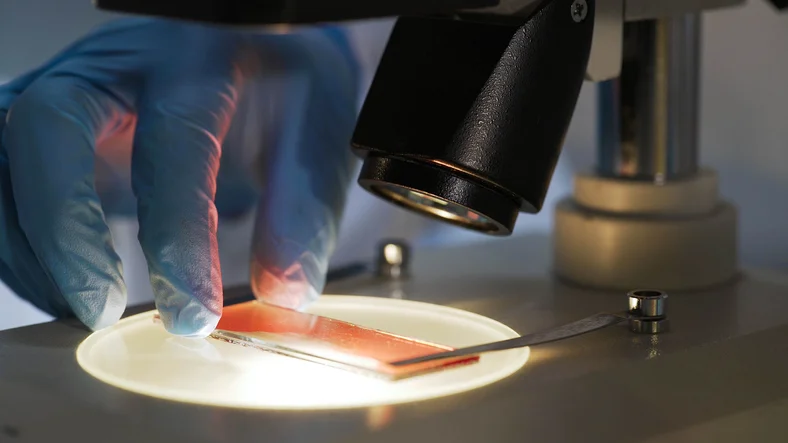
Hist/o
Tissue

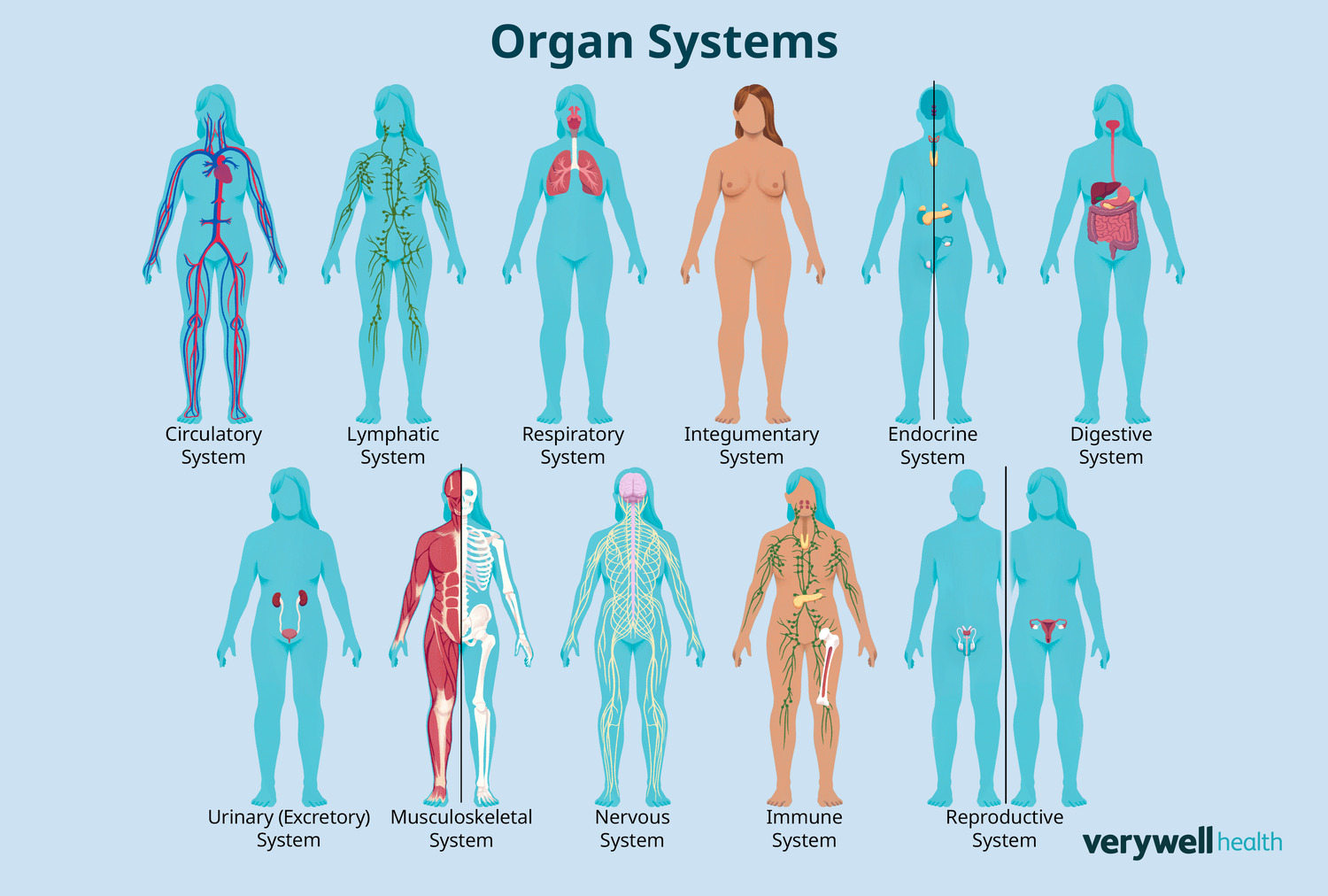
Organs
Groups of different tissues

Systems
Groups of different organs
Pharynx
Faringe

Gallbladder
Vesícula Biliar

Urethra
Uretra

Voice box
Larynx = Laringe

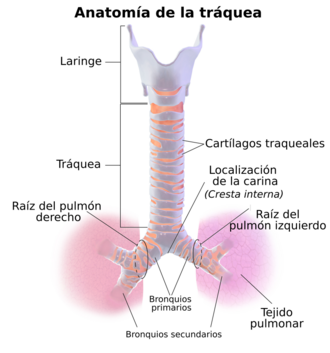
Windpipe
Tráquea
Lungs
Pulmones

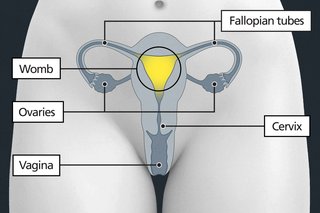
Womb
Uterus = Útero
Testes
Testículos

Penis
Pene

Pituitary Gland
Glándula Pituitaria

Adrenal Glands
Glándulas Suprarrenales

Parathyroid Glands
Glándulas Paratiroides

Spinal Cord
Médula Espinal

Blood Vessels
Vasos Sanguíneos
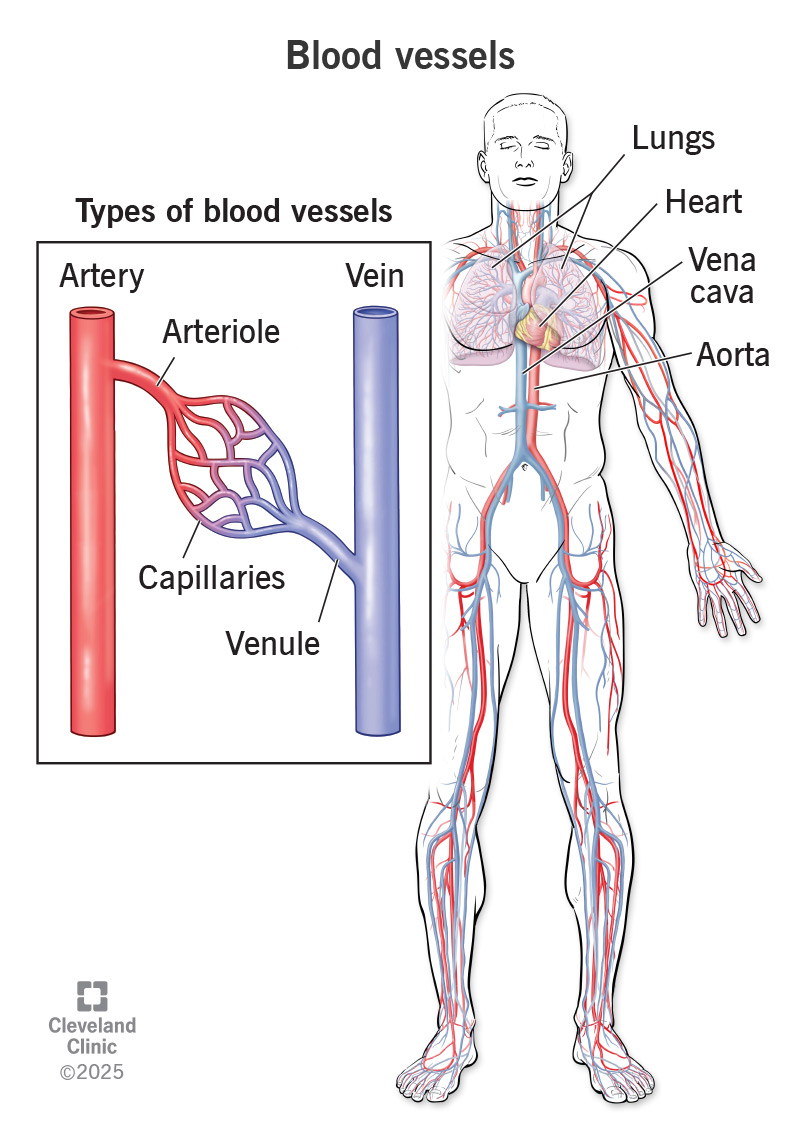
Lymphatic Vessels and Nodes
Vasos y Ganglios Linfáticos

Spleen
Bazo

Thymus Gland
Timo

Sweat Glands
Glándulas sudoríparas

Sebaceous glands
Glándulas sebáceas

Adipose Tissue
Collection of fat cells

Cartilage
Flexible connective tissue often attached to bones at joints

Viscera
Internal organs in the main cavities of the body, especially in the abdomen

Thoracic cavity
Lungs, heart, esophagus, trachea, bronchial tubes, thymus gland, aorta
Two parts: Pleural cavity and Mediastinum

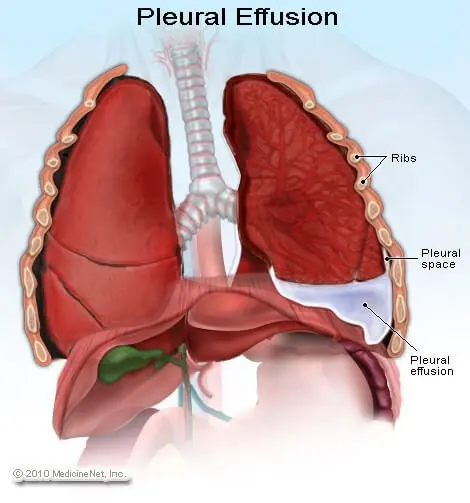
Pleural cavity
Double membrane that surrounds the lungs and protects them

Pleural effusion
Pleural inflamed, the cavity may fill with fluid
Mediastinum
Contains the heart, aorta, trachea, esophagus, thymus gland, bronchial tubes, and many lymph nodes

Cranial Cavity
Brain, pituitary gland.

Peritoneal cavity
Abdominal cavity contains the stomach, small and large intestines, spleen, pancreas, liver, and gallbladder.
Two parts: Peritoneum and diaphragm

Diaphragm
Muscular wall; divides the abdominal and thoracic cavities.
Moves up and down and aids in breathing.

Peritoneum
Double-folded membrane surrounding the abdominal cavity

Pelvic cavity
Rectum, urinary bladder, urethra, and ureters; uterus and vagina in the female and portions of the small and large intestine

Spinal cavity
Nerves of the spinal cord
Ascites
Disease of the abdominal organs, fluid may accumulate in the peritoneal cavity

Ventr/o
Belly = Barriga

Skull
Cráneo

Backbone
Columna vertebral

Disc
Disco

Spinal cavity
Cavidad espinal

Abdominopelvic Regions and Quadrants
9
Right hypochondriac region [1]
Right upper region below (hypo-) the cartilage (chondr/o) of the ribs that extend over the abdomen
Left hypochondriac region [2]
Left upper region below the rib cartilage
Epigastric region [3]
Region above the stomach
Right lumbar region [4]
Right middle region near the waist
Left lumbar region [5]
Left middle region near the waist
Umbilical region [6]
Region of the navel or umbilicus
Right inguinal region [7]
Right lower region near the groin (inguin/o = groin), which is the area where the legs join the trunk of the body. This region also is known as the right iliac region because it lies near the ilium (the upper portion of the hip bone).
Left inguinal region [8]
Left lower region near the groin. Also called the left iliac region.
Hypogastric region [9]
Middle lower region below the umbilical region.
Right upper quadrant (RUQ)
Contains the liver (right lobe), gallbladder, part of the pancreas, parts of the small and large intestines
Left upper quadrant (LUQ)
Contains the liver (left lobe), stomach, spleen, part of the pancreas, parts of the small and large intestines
Right lower quadrant (RLQ)
Contains parts of the small and large intestines, right ovary, right fallopian tube, appendix, right ureter
Left lower quadrant (LLQ)
Contains parts of the small and large intestines, left ovary, left fallopian tube, left ureter
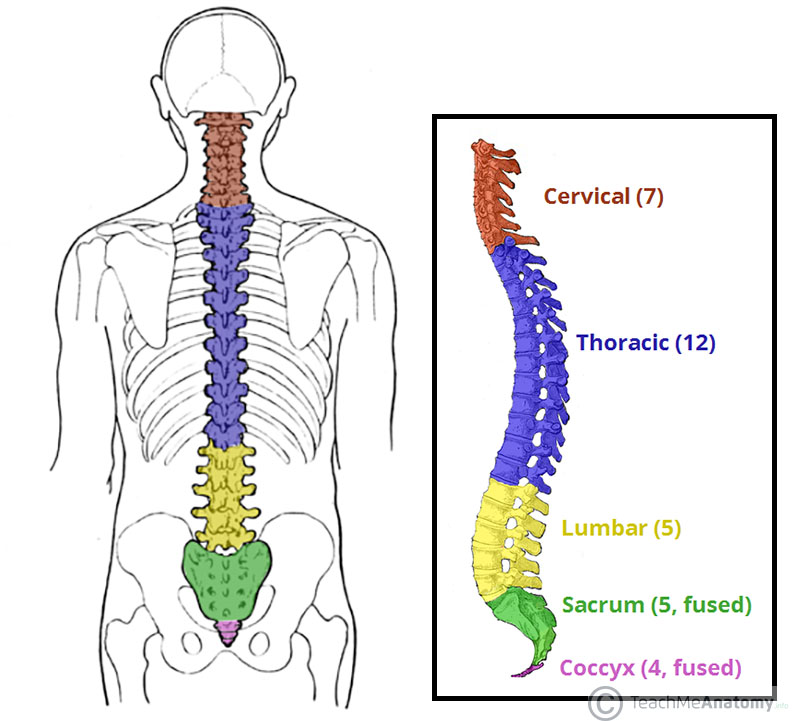
Cervical spine
Neck region. There are seven cervical vertebrae (C1 to C7)

Thoracic spine
Chest region. There are 12 thoracic vertebrae (T1 to T12). Each bone is joined to a rib.

Lumbar spine
Loin (waist) or flank region (between the ribs and the hip bone). There are five lumbar vertebrae (L1 to L5).

Sacral spine
Five bones (S1 to S5) are fused to form one bone, the sacrum.
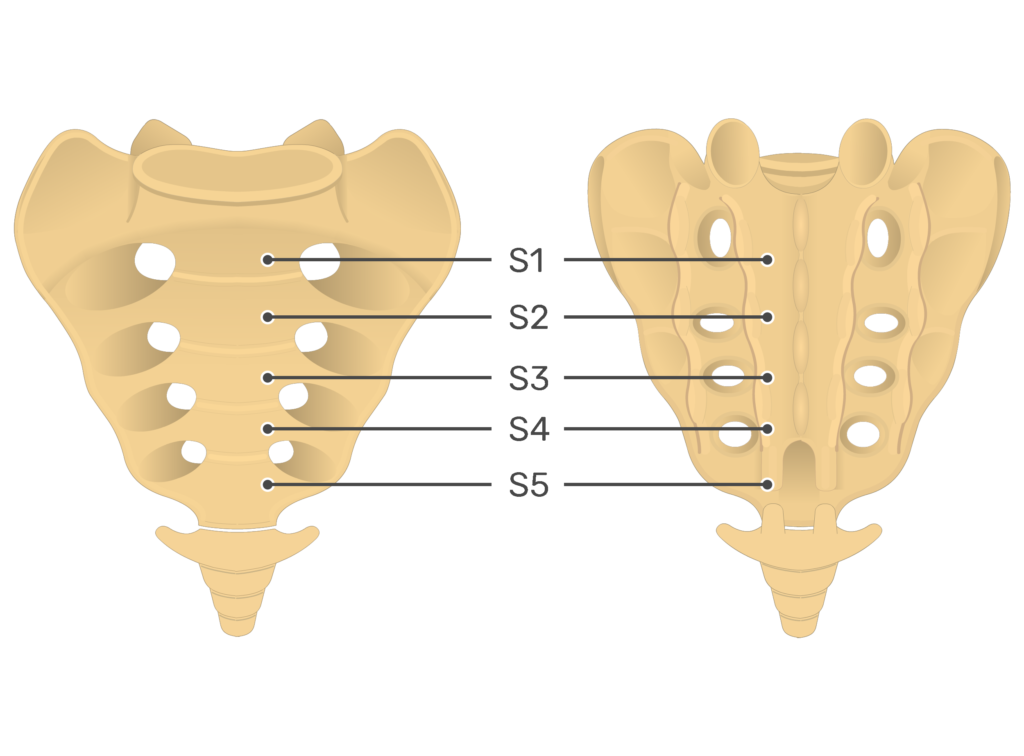
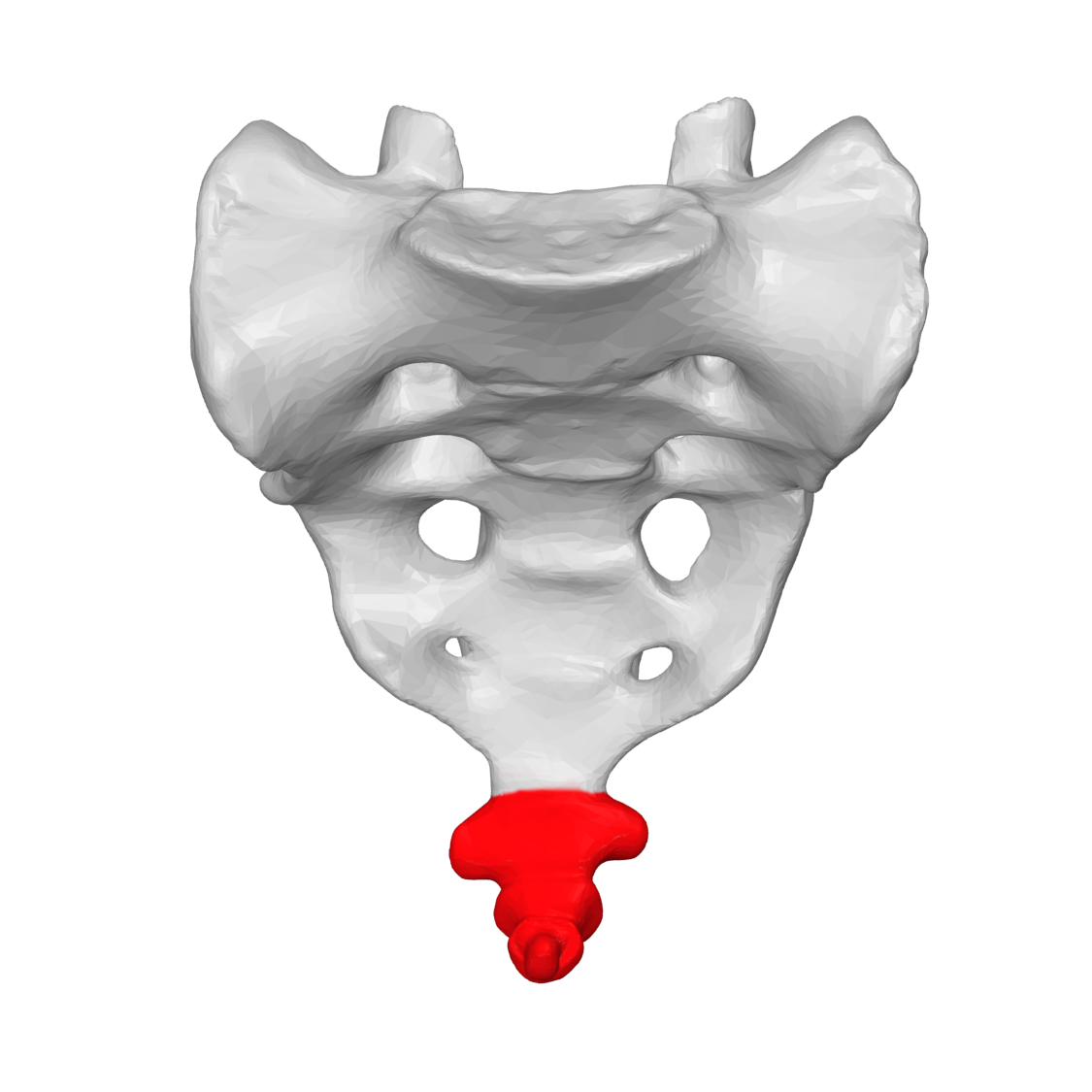
Coccygeal spine
The coccyx (tailbone) is a small bone composed of four fused pieces.
Anterior [1]
Front side of the body = Lado anterior del cuerpo
Posterior [2]
Back side of the body = Parte posterior del cuerpo
Deep [3]
Away from the surface = Lejos de la superficie
Superficial [4]
On the surface = En la superficie
Proximal [5]
Near the point of attachment to the trunk = Cerca del punto de unión al tronco
Near the beginning of a structure = Cerca del inicio de una estructura
Distal [6]
Far from the point of attachment to the trunk = Lejos del punto de unión al tronco
Far from the beginning of a structure = Lejos del inicio de una estructura
Inferior [7]
Below another structure = Debajo de otra estructura
Superior [8]
Above another structure = Encima de otra estructura
Medial [9]
Pertaining to the middle = Relativo a la parte media
Nearer the medial plane of the body = Más cercano al plano medial del cuerpo
Lateral [10]
Pertaining to the side = En relación con el lado
Supine [11]
Lying on the back = Tumbado boca arriba
Prone [12]
Lying on the belly = Tumbado boca abajo
Planes of the Body
3
Frontal / Coronal Plane [1]
Vertical plane dividing the body or structure into anterior and posterior portions

Sagittal / Lateral Plane [2]
Lengthwise vertical plane dividing the body or structure into right and left sides

Transverse (axial) plane [3]
Horizontal (cross-sectional) plane running across the body parallel to the ground

Cervic/o
Cervix

Chondr/o
Cartilage
Chromo/
Color
Lumb/o
Lower back =
_somes
bodies
