Art History midterm
 Call Kai
 Learn
 Practice Test
 Spaced Repetition
 Match
 Flashcards
 Knowt Play
1/99

There's no tags or description
Looks like no tags are added yet.
100 Terms
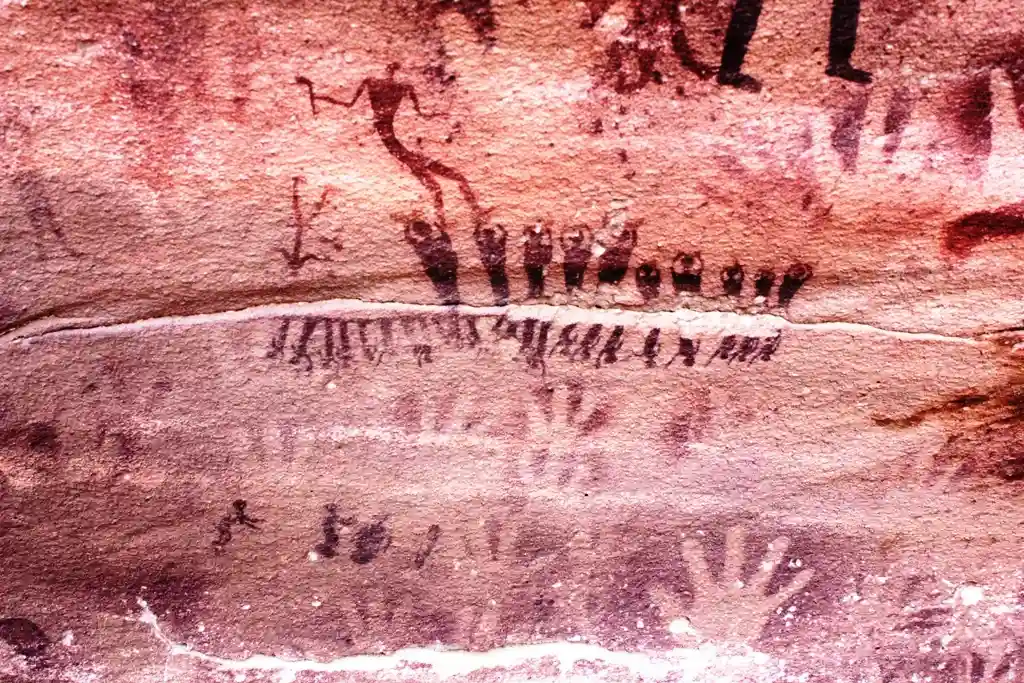
Who - prehistoric hunter/gatherer groups living in eastern Sahara
What - “Cave of the beasts“ rock art
Where - Gilf Kebir
When - early/mid holocene (6000-5500 BC)
Why - Serves as a vital ritual or ceremonial canvas reflecting early spiritual beliefs, shamanic or afterlife mythology, and human interaction with strange mythical creatures before the region dried into a desert.
overarching narratives - neolithic predynastic
asserting control over nature/nile valley
claim ownership over desert because of the precious resources/stones that come from it
appeal to strong animals
using dogs to control cattle, changing horns of domesticated cattle, etc.
(c. 3200-2667 BCE)
overarching narratives - early dynastic
simplification and standardization of power over nature
Narmer palette
hierarchy of scale
register lines
composite figures - typical “walk like an Egyptian” (no stick figures)
overarching narratives - old kingdom
monumentalization + innovating + archaeizing
heit el-Ghurab
Wadi al -Jarf papyrus
interpersonal connections
access + dispersal of power
more people have access to produce tombs/statuary resources
ka statues
overarching naratives - 1st intermediate period
pre-unification style that comes from 2nd style of old kingdom
overarching narratives - Middle Kingdom
Mentuhotep II
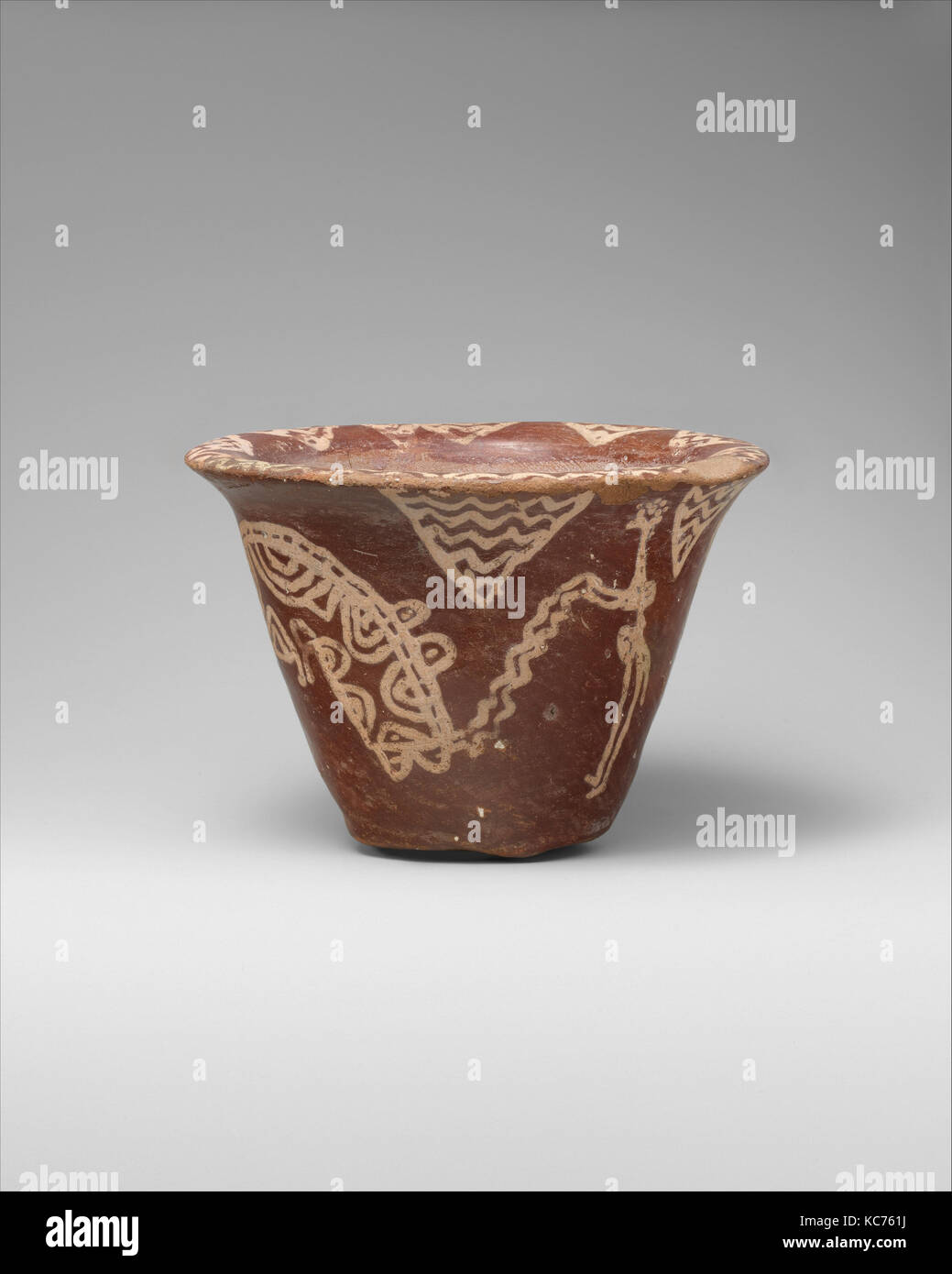
White-cross line ware “C-ware“
Who - 1. jar showing sprigs of wheat 2. beaker with Nilotic scene 3. beaker with a hippo hunt
What - made from clay from the nile
Where - upper egypt
When - Naqada I - early II
Why - 1. Focuses on symbols of the natural world 2. Holistic view of the Nile Valley, hippos and crocodiles being lined up and separated by nile reeds, this shows manipulation of nature 3. Male figure wearing a bulls tail hunting/controlling/harpooning a dangerous animal, hippo, on his own → power of nature

Slide ID
C-Ware Jar
Who - depicts a predynastic ruler with women next to him
What - clay from nile river
Where - Abydos Tomb U-239
When - Naqada II
Why - earliest known representation of smiting the enemies, as the ruler is holding a mace. bulls tail is being worn → power over nature

Slide ID
Decorative “D-ware“ jar
Who
depicts Nilotic ritual scene of female figure on a boast with male figure on her shoulder.
She has her hands up in a bull-like pose → power
shows a shrine on the boat and the nile with animals neatly lined up
What - marl clay
Where - upper egypt
When - Naqada II
Why
more emphasis on human action over environment
aserting over/ordering nature
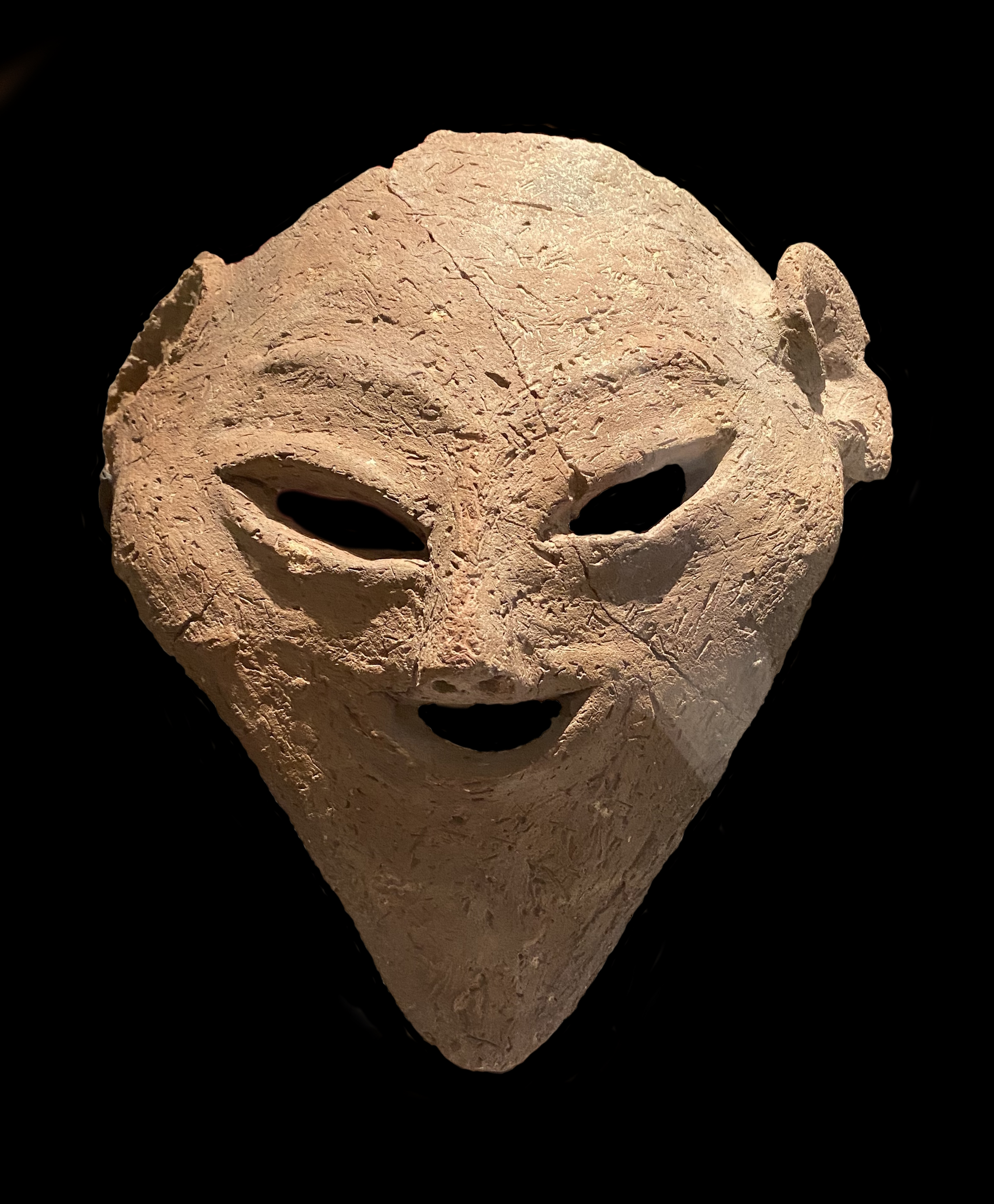
Slide ID
Funerary mask
Who - elite/unknown
What - Terracotta
Where - Tomb 16 at Hierakonpolis
When - Naqada IC-IIA 3650 BCE
Why
earliest statues fo “Rulers“
earliest known funerary mask
to be worn over deceased face or part of ritual

Hierakonpolis painted tomb 100
Who - unknown/elite ruler
What - tomb
Where - Hierakonpolis
When - Naqada IIC
Why
Earliest decorated tomb in Egypt
Connection to D-Ware imagery; only hyper-masculine.
Last of a tradition of representing rulers/elites in the Naqada “stick-figure” style
Depicts human control over nature - butchering/bounding animals
Master of beasts/smiling scenes

Narmer palette
Who - Narmer, first king widely attested in Egypt
What - Greywacke
Where - Hierakonpolis
When - 1st dynasty - reign of Narmer
Why
White vs. Red Crowns - victory/unification of the two lands
hierarchy of scales - warmer is depicted bigger than everyone else → power
Animal symbolism - animals being controlled/bull trampling foreigners/serpapart being a made up animal are all signs of control over nature
Use of Hieroglyphs - human figure is depicted in a hieroglyphic way
Serekh - displays kings name
Register Lines - organize events in clear/logical sequence/order over chaos
Composite human figure - profile head/legs with eyes/shoulders/torso front facing

Funerary label of Den showing him performing a ritual
Who - King Den
What - Ebony
Where - tomb of Den, Abydos
When - 1st dynasty
Why
creates memory of kings life on prestigious object (ebony)
first example of double crown - visual declaration of unified egypt
top register depicts him performing his hed-sed festival
funerary labels show goods/commodities in tomb and ritual activity

Funerary Label of Den ”smiting the Easterners.”
Who - King Den
What - Ivory
Where - tomb of Den, Abydos
When - 1st dynasty
Why
Serekh with Horus Falcon
first occasion of smiting Easterners
first depiction of Uraeus cobra/nemes headdress
serekh with Horus falcon
royal standards
jackal diety Wepwaut - “Opener of the Ways“

Slab stela of the lady Helwan
Who - Lady helwan
What - Limestone
Where - Helwan
When - 2nd dynasty
Why
changes funerary art → the offering stela
shows lady helwan seated surrounded by jars/food/funerary meals on stela to take into afterlife
intended for her ka to reside in stelae and enjoy offerings

Slide ID
Statue of the funerary priest Hetepdief
Who -funerary priest Hetepdief
What - Red granite
Where - Memphite region
When - Late 2nd dynasty
Why
transition of power - first private, non-royal official statue
earliest kneeling pose - prayer position
Contains a brief listing of the kings whom he served as priest
- Hotepsekhemwy
- Raneb
- Ninetjerdisplays first style of old kingdom with thick limbs, lack of musculature, tight curly helmet wig, looking up, no neck

Seated statue of Khasekhemwy wearing the Sed-Festival robe
Who - Khasekhemwy - last pharaoh of Egypts 2nd dynasty
What - limestone
Where - main deposit at hierakonpolis
When - 2nd dynasty
Why
one of the first statues of an Egyptian ruler
based of statue shows slain “northern rebels“ - showing his triumph and re-establishment of centralized control
wearing sed-festival robe - renewing his divine right to rule

seated statue of Djoser
Who - Djoser - successor of khasekhemwy
What - Limestone, plaster, and paint
Where - Serdab of the step pyramid, Saqara
When - Old Kingdom
Why
oldest known life-size royal statue - established standard, breaking from smaller/stylized carvings
wearing Heb-sed festival garment - authority to rule
wearing nemes headdress, ceremonial false beard, and heavy wig

Slide ID WILL BE ON MIDTERM
Relief depicting Djoser performing ritual activities
Who - Djoser
What - limestone, faience
Where - step pyramid complex, saqqara
When - 3rd dynasty, Old Kingdom
Why
Right: “Standing before the Shrine of Horus of Behdet (Edfu)
Left: Running between the boundary markers and “creating” a statue in the “Great Court of the South”
by being placed in tomb, he would perform this ritual in the afterlife, ensuring his authority/divinity to rule

relief depicting Gods Seth and Ash processing captured enemies towards a (lost) figure of the king
Who - Gods Seth and ash
What - limestone
Where - Causeway of Sahure
When - 5th dynasty Old kingdom
Why
register lines separate figures
hieroglyphs used for captions
hierarchy of scale: 2 divine figures leading procession of bound captives
God Seth with animal head mimicking staff
god of chaos being depicted as a protector

Slide ID
life-sized statue of Pepy I mentioning the first occasion of his sed festival
Who - Pepy I - 3rd pharaoh of 6th dynasty old kingdom
What - copper and wood
Where - secondary depositary within the temple of Horus, Hierakonpolis
When - 6th dynasty old kingdom
Why
proof of his long reign because it mentions his first sed festival
Established a royal presence within local temple precincts, and added revenue stream to the central admin

Slide ID
seated statue of Pepy I, wearing sed-festival garment with God Horus
Who - Pepy I
What - Calcite
Where - upper egypt
When - 6th dynasty old kingdom
Why
The inscription mentions the ”1st Occasion of the Sed Festival.
wearing white crown of upper egypt - emphasizing dominion over area
protection from god of kingship - Horus standing behind him

seated statue of peppy I and his mother, Ankhesen-meri-ra
Who - Pepy I
What - Calcite
Where - upper egypt
When - 6th dynasty old kingdom
Why
though Pepy I is a king and a man, he is depicted as smaller than his mother - hierarchy of proportions is opposite

Slide ID
Decorated west wall of the tomb chapel of Werirenptah, with a double false door
Who -Werirenptah - a priest from the Sun temple of Neferirkare and his wife Khentkaus
What - tomb wall
Where - Saqqara
When - 5th dynasty
Why
scenes of daily life abound
double false door - false door for wife showing high status of women within family

life sized Ka-statues of Ranefer as a young and old man
Who - Ranefer - high ranking priest of Ptah
What - painted limestone
Where - saqqary
When - early 5th dynasty old kingdom
Why
shows pre-unification style,
found in serdab, served as physical vessel for Ranefer
displays first style statuary - thick limbs, no musculature, no neck, tight curly helmet wig, looking up

Slide ID
Seated statue of Katep and his wife hetepheres
Who - Katep - priest of Khufu and his wife hetepheres
What - Painted limestone
Where - Giza
When - 4th/5th dynasty
Why
Hetepheres has her arm on his shoulder, showing affection
they are shown the same size/scale - unusual
Displays the differential access to craftsman and materials
displays first style statuary - thick limbs, no musculature, no neck, tight curly helmet wig, looking up

Seated statue of Shepsi, his wife Nikhauhathor and their son.
Who - Shepsi - elder in the court, his wife Nikhauhathor and their son
What - painted limestone
Where - saqqara
When - 5th dynasty
Why
Displays the differential access to craftsman and materials
wife is seen affectionately touching his shoulder but behind him - hierarchy of scale
displays first style statuary - thick limbs, no musculature, no neck, tight curly helmet wig, looking up

Striding statue of the seal-bearer Tjetji
Who - Tjetji - seal-bearer
What - ebony wood, obsidian, copper
Where -Akhmim
When - 6th dynasty
Why
Changes in form during the later Old Kingdom to the “Second Style”
Slender figures, often in wood.
Nudity becomes common
Represents influence from the provinces and the growing power of local centers along the Nile.

servant brewing beer
Who - servant
What - painted limestone
Where - tomb of Dash, saqqara
When - 5th dynasty
Why
Meant to provide services to the deceased in the afterlife: food preparation, craftsman, etc.
Yet another means of ensuring the provisioning of the deceased for the afterlife

Relief of a man leading an ox
Who - unknown
What - limestone
Where - tomb of Mereriqer. Dendera
When - 1st intermediate period
Why
Severing of contact with Memphite region led to the development of an Upper Egyptian style (>> Pre-Unification Style).
• Deep Sunken Relief / High Raised Relief
• Large Eyes
• High small of back
• Lack of musculature
• Skinny limbs

Slide ID
Fragment of a relief of the “royal favorite” Kemsit
Who - the “royal favorite" kemsit - wife of mentuhotep II
What - painted limestone
Where - Kemsit’s tomb chapel in funerary complex of mentuhotep II, Deir el-Bahri.
When - 11th dynasty Middle Kingdom, during reign of mentuhotep II
Why
Exhibits the Pre-Unification relief style

Slide ID
Relief of Mentuhotep II with his wife Kemsit
Who - Mentuhotep II and his wife Kemsit
What - painted limestone
Where - Kemsit’s funerary chapel within the royal mortuary complex at Dier el-Bahri
When - 11th dynasty middle kingdom
Why
Pre-Unification Style - exaggerated features and deep sunken

Slide ID
Relief of Mentuhotep II wearing the White Crown with the goddess Hathor
Who - Mentuhotep II and goddess Hathor
What - Painted Limestone
Where - his mortuary complex at Deir el-Bahri
When - Middle Kingdom 11th dynasty
Why
post-unification style - looking back at something old
shallow raised relief
less exaggerated proportions/facial features are more proportionate
shows himself in same art style as late 5th dynasty kings
doesn’t want to associate himself as being successor of 6th dynasty
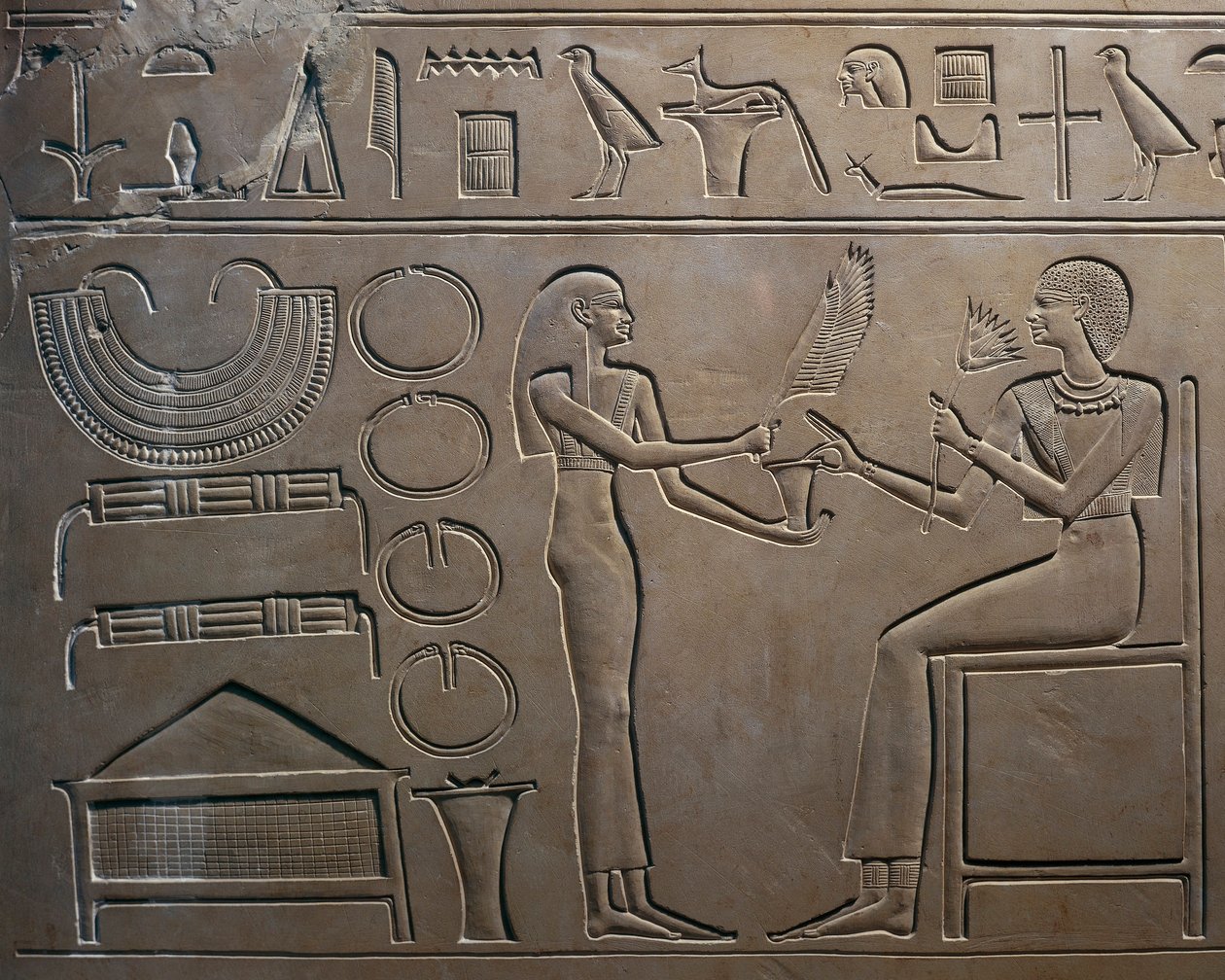
Slide ID
Reliefs showing the Queen taking ointment and sniffing a lotus flower.
Who - Queen Kawit
What - limestone
Where - the Sarcophagus of Queen Kawit, from deer el-Bahri mortuary complex of Mentuhotep II
When - 11th dynasty
Why
sunken releif
toiletry scenes/manicured
slim figure, high small back, lack of musculature, emphasis on eyes (inner can this), helmet wig w tight curls
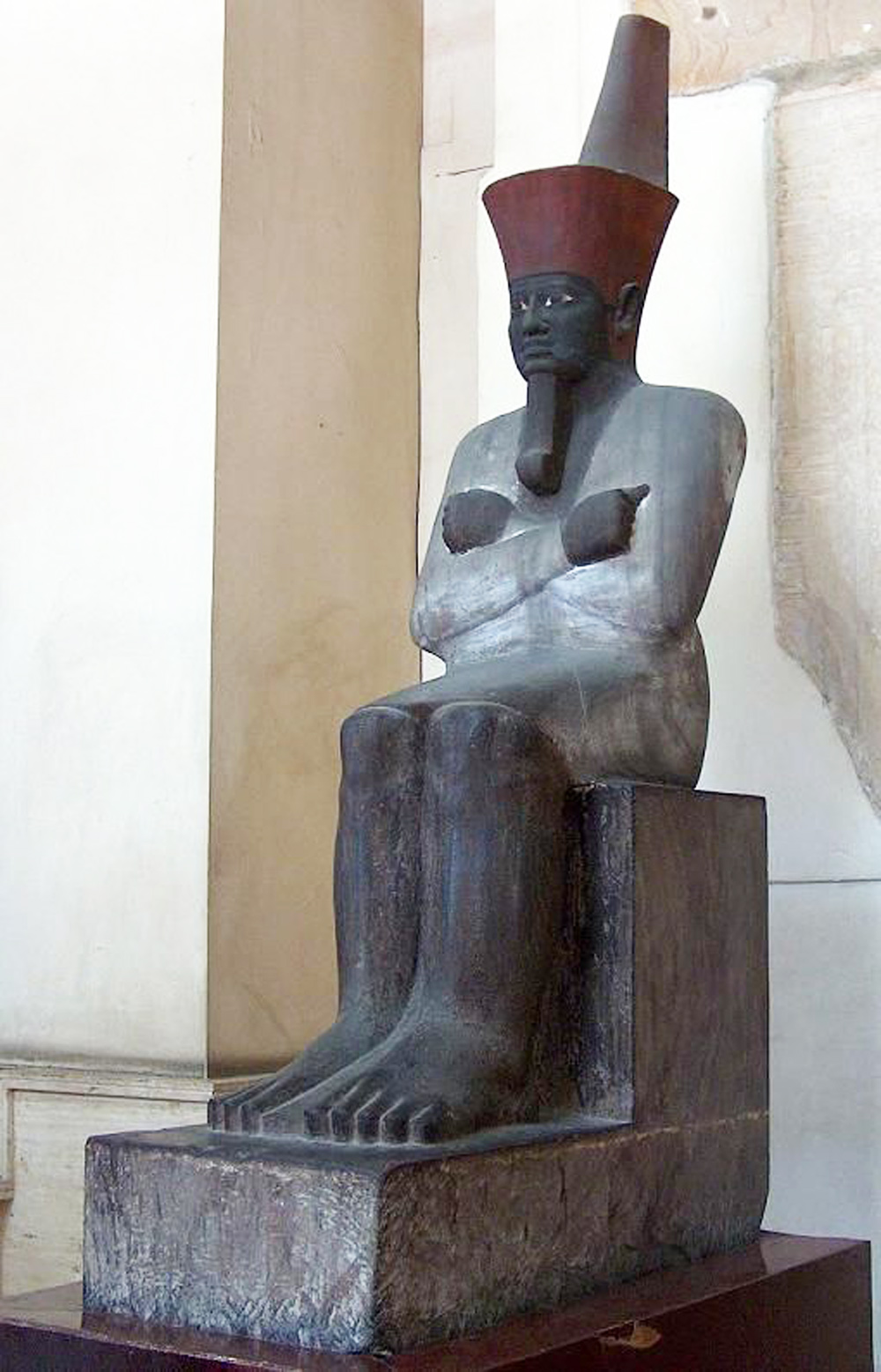
Slide ID
life sized Seated Osiride statue of Mentuhotep II showing the king wearing the festival garment, Red Crown, with black skin.
Who - Mentuhotep II
What - painted sandstone
Where - ritualistically cached in the bag el-Hosan at deer el-Bahri
When - 11th dynasty Middle Kingdom
Why
black skin is symbolism of nile - someone of the underworld
first style statuary - no negative space, thick limbs with no definition, looking up, no neck
statues go through less changes than relief carvings do
wearing sed festival garment

Slide ID
Standing Osiride Statue of Mentuhotep II
Who - Mentuhotep II
What - Painted sandstone
Where - Deir el-Bahri
When - 11th dynasty Middle Kingdom
Why
Mentuhotep wearing the Red Crown, with emplacements for a now-lost crook and flail
is osiride because wearing sed-festival garment, in mummified position, and has large chin beard
first style statuary
Upper Egypt vs. Lower Egypt
Upper Egypt (South)
Known as the "Red Land" or Ta Shemau.
Characterized by a narrow river valley and a desert climate.
Symbolized by the White Crown (Hedjet) and the vulture goddess Nekhbet.
Lower Egypt (North)
Known as the "Black Land" or Ta Mehu.
Characterized by a broad, fertile delta with rich soil and access to the sea.
Symbolized by the Red Crown (Deshret) and the cobra goddess Wadjet.
Nile
Creation Myths
Religions Thought / Practice
The Calendar – 365 Day Year - flooding, planting, harvesting
Trade/Commerce/travel
movement of resources
inundation left nutrient soil for agriculture
harvested papyrus and river mud
Nile inundation
deposited nutrient-rich silt - fertilizer
used as measurement to tell if year was going to be filled with famine (under-flood), homes were going to be destroyed (over-flood), or just right
shaped religious beliefs around rebirth
Deserts and Wadi systems
deserts
precious stones/resources for statuary, jewelry, etc.
wadi systems
dry river beds that occasionally flash flood
wadi hammamat - primary highway for trade that connected the Nile valley to the Red Sea
Nomes
Local Administrative Districts
Red crown vs white crown
lower Egypt vs upper Egypt
Double crown
combo of white and red crown
became standardized regalia by the reign of Den
Nemes headress
A cloth headdress worn when not participating in a ritual
signifies power
accompanies by Uraeus - a cobra that represents the goddess of lower Egypt (Wedjet)
symbol of protection/divinity
Seriation Dating
A technique that arranges artifacts, features, or sites into a chronological sequence based on changes in their style or frequency over time
Flinders Petrie
excavated many ofthe most important sites in Egypt
Stratigraphy
Seriation Dating Technique
Use of Photography
Believed in racial hierarchy and white supremacy
• “Dynastic Race Theory”
Neolithic - Merimde Beni Salam culture
400 years of settlement history (ca. 4900-4500 BCE)
Large site, ca. 20 hectares.
3 Main Phases of Settlement
• Phase I shows strong affinity to Chalcolithic Levantine cultures.
• Abandonment
• Phases II&III exhibit a much more local material culture. “Local FarmersContracted burials, w/o much investment. Near or within the Settlement
Neolithic - Badarian Culture
(c.4500-4000 BCE)
Middle Egypt > Sudan
Mostly known from cemetery sites separate from settlements
Body adornment/Modification
Jewelry: wrist, ankle, head, neck, arms
Pigments and Cosmetic Palettes
Objects of Daily Life
Contracted bodies, facing west
Large cemeteries: 200+ individuals common
Animal Burials: Cow Skulls
Predynastic - Buto-Maadi lower Egyptian culture
Naqada I-IIB
Affinity to the S. Levant (Chalcolithic)
• Both Culturally and EconomicallyCraft Specialization and Trade on the rise**
• Metallurgy – Ore*
• Red Sea Shell Trade
• Connections with the Levant and broader Mediterranean.
Funerary Evidence
Little Social Stratification Evident in Burials
• 1-8 ceramics
• Red-Sea Shells
• Black and Green Ore – Pigments?Simple Pit Burials, contracted position, sometimes wrapping in matting.
Predominantly facing East, some standardization.
Naqada IIC & cultural unification
Northward spread of Naqada cultural material
Naqada Culture becomes evident throughout Egypt
• Emphasis on the Body, Grave goods
• Social Stratification
• Use of Mudbrick in Burials
• CeramicsDecline at Naqada, eventually Hierakonpolis
Intensive Growth at Abydos
Minshat Abu Omar
case study that shows the gradual cultural shift of burial customs
Naqada IIA → Naqada IIC → MAO III → MAO IV
packed pit graves → spread out mudbrick burials with material wealth with hieroglyphs of royal names
Tomb U-j at Abydos
The tomb of a predynastic ruler (Scorpion I)
layout is symbolic of domestic structures (different rooms)
storage room with painted vessels with scorpion motifs
white vessels made in Lebanon and lined with pistachio resin to store wine
contained U-j Proto-Hieroglyphic Labels. Ivory. Abydos, Egypt. 3300 BCE
carved out of elephant ivory
first hieroglyphs, from king scorpion I
Year Labels
small flat rectangular tablets of ivory/ebony from the first dynasty
recorded pharaoh’s name, year of reign, and major political/economic events
vital administrative tools attached to royal goods like jars
Predynastic Funerary traditions
body adornment/modification
jewelry: wrist, ankle, head, neck, arms
pigments and cosmetic palettes
mummification
tattoos
painting
palettes
cosmetic implements (combs, palettes, hair pins)
tomb goods
objects of daily life
food
dynastic funerary traditions - mastabas
Mudbrick substructure, lined with cedar from Lebanon or red granite from Aswan
• Bipartite Complexes: Mastaba in the West, Funerary Enclosures near the floodplain
Dynastic funerary traditions - funerary enclosures
Part of the king’s funerary complex
• Palace Façade Design (>> Serekh)
• Close to the floodplain/temple
• Ritually dismantled by subsequent king
• Retainer burials and boat burials
dynastic funerary traditions - Gallery tombs
underground structures that housed the spirit of Ka, a space for the soul to reside, and recognize its body/offerings
sacred spaces between the living and divine, strictly for the gods
galleries and storage rooms for storing goods for the dead
dynastic funerary traditions - pyramids
step pyramids
mirrored reflection of the sun
acted as a ben-ben/primordial mound of creation
felt that this helped pharaoh transition safely to afterlife/better chance
dynastic funerary traditions - saff tombs
rock-cut elite burial structures from first intermediate period and 11th dynasty at Thebes
pillar façades that cut directly into the Theban cliff face
expansive open forecourts for public funerary rituals and elite processions
dynastic funerary traditions - royal and elite trends
early pit graves → mud brick mastabas → old kingdom pyramids → Middle Kingdom rock-cut tombs
early dynastic retainer/subsidiary burials → statuary/offering stelae to represent whatever wanted to be taken into afterlife
Early Dynastic Subsidiary Burials (Retainer Burials)
sacrificed court officials, servants, and craftsmans in small graves surrounding royal tomb
Serekh
palace façade design
palace walls adapted to symbolize royalty
economically and politically important
serdab
an enclosed portion of a tombs offering chapel located near the false door
Ka
a persons vital essence or life force
lives on after death in tombs/ka statues
ka statues
funerary statue used as physical home/vessel for Ka
often housed in a serdar
false doors
sacred gateway allowing for ka to move between underworld and living world
stone often carved into western wall of tomb
Helwan and slab/ceiling stela
evolution of funerary art/offerings
depicts lady Helwan with jars, food, and funerary meals on stela
instead of physical items/people being left in tombs, a stela with the carvings of offerings and the deceased allow for ka to inhabit stelae and enjoy carved offerings
Narmer and the Dynastic Artistic Conventions
resister lines
hierarchy of scale
how large they are represents their power
composite bodies
use of hieroglyphic captions
Djoser’s Step Pyramid Complex and Significance
first pyramid of Egypt
started as a small mastaba,
Northward-facing focus of the Step Pyramid Complex
• Reflects one (earlier?) idea of deceased king’s journey to a celestial afterlife
pyramid texts
Beginning with Unas (final 5th Dynasty king), the burial chambers of the royal pyramids become covered with ritual funerary texts (hence: Pyramid Texts)
They are the earliest corpus of ritual texts extant from Egypt.
Detail cosmologies, divine mythology, and aspects of the liturgy of royal funerary ritual.
Appearance of the god Osiris and Amun!
First iteration of a corpus of funerary texts that are utilized throughout the dynastic period (>Coffin Texts (MK) > Book(s) of the Dead (NK)
5th/6th dynasty innovations
Pyramid Texts
burial chambers of the royal pyramids become covered with ritual, funeral texts
Administrative Changes
Provincial Royal Ka-Chapels and Diffusion of Power
Chapel's to the cult of a king at local sanctuaries throughout the country
Added revenue stream to the central admin
Climactic Changes
Sun Temples and the emergence of Ra
Close administrative connections between a Kings pyramid and Sun Temple complex
Similar architecture to pyramid complexes with decorative variations recording the seasons
Masonary obelisk resembling the Ben Ben
Called kingdom statuary (royal and private)
Royal statuary
Statue cult of the king in Ka-Chapels
Established a royal presence within local temple precincts, And added revenue stream to central admin
Private statuary
Elite mastaba tombs always contained some version of a 3D image of their owners.
Often such ka statues were housed in a serdab, an enclosed portion of a tomb’s offering chapel located near the false door.
Sometimes the tomb owner in different stages of his life, also with family.
Vast majority are under 50 cm
Displays the differential access to craftsman and materials
Second style sculpture
Changes in form during the later old kingdom
Slender figures, often in wood.
Nudity becomes common
Represents influence from the provinces and the growing power of local centers along the Nile.
1st intermediate period - biography of Ankhtifi
Nomarcs adapting royal language (“leader“, “without equal“, etc.)
Ankhtifi claims Horus brought him to reestablish Edfu
Offhandedly referred to himself as king by mentioning horus; God of kingship
Warfare between Thebes and Herakleopolis
References to climatic troubles, especially drought and famine
Mentuhotep II and his Horus names
Changes in his Horus name reflect stages in war with Herakleopolis
Phase 1 (regnal years 1-20): ambition to rule over united Egypt
“He who enlivens the heart of the Two Lands”
Phase 2 (regnal years 20-39): Upper Egypt conquered
“Divine holder of the White Crown”
Phase 3 (regnal years 39-51): Egypt reunited under one ruler
“Uniter of the Two Lands”
Pre-unification style reliefs
Deep Sunken Relief / High Raised Relief
Large Eyes
High small of back
Lack of musculature
Skinny limbs
post-unification style reliefs
shallow raised releif
less exaggerated proportions/facial features are more proportionate to one another
cosmological concepts - ben-ben stone
Primeval Mound of Creation
• First Land that comes out of Nun
Myths surrounding the “Ben-Ben”
• Somethings are left behind on top of the land, like frogs/snakes/reptiles.
• Something grows on top of the land, like a lotus/seed/egg
• Sunlight illuminates land for the first time – solar creation myths.
cosmological concepts - solar cycle
Nut
sky diety births and eats sun everyday
sun god starts off as dung beetle - pushing his poop ball (morning)
then a sun disk (Re) (afternoon)
end with Atum “to complete“ ram
cosmological concepts - primordial waters (nun)
What existed before creation
• Contained everything, but was inert (njnj)
• The Creator God exists within Nun
Visualized as Water
• “Waters of Chaos” = God Nun
• Connection to the Inundation of the Nile
Nun always exists, just on the edges of the universe.
cosmological concepts - boat symbology
represents
that daily journey of the sun god Ra
the triumph of order out of chaos
the souls passage through the afterlife
links the Earth, the sky, and the underworld
divinities - Ra
sun, order, and sky creation
depicted as a hawk-headed man with a solar disc
Memphis/heliopolis
divinities - Horus
sky, kingship, and protection
king in life
song of Osiris
depicted as a falcon or falcon-headed man
Edfu
Divinities - Osiris
underworld, death, and resurection
king in death
father of Horus
depicted as a mummified king with green or black skin
Abydos
Divinities - Amun
King of Gods and hidden creator
depicted as a man with a double-plumed crown
luxor/Thebes/valley of the kings
Divinities - Nekhbet
goddess of upper egypt
depicted as vulture
Divinities - Wadjet
goddess of lower Egypt
depicted as cobra
Heit el-Ghurab (HeG)
settlement that housed, fed, and organized the thousands of laborers, craftsman, and administrators who build the pyramids of Giza
4th dynasty old kingdom urban settlement
“lost-city“ of the pyramid builders
Phyles and their importance
work gang
served as core rotation and organization units that disciplined, housed, and provisioned laborers
Wadi al-Jarf papyrus
Found in the Red Sea coast of heit el-Ghurab
belonged to Merer
day log of Merers work days
talks about Phyle
contains shipment information of limestone from the turn quarries used for casing the pyramids of Giza
reveled interpersonal connections between kings brothers/cousins and workforce
Old Kingdom
Hierakonpolis
sacred falcon city to the god Horus
Naqada I-IIC: major elite cemetary
painted tomb (tomb 100) - last of stick figure style
narmer palette
primary capital of upper Egypt during predynastic and early dynastic periods
Hierakonpolis main deposit
Cult Center and Temple of the god Horus
Major source of information for the Early Kings of Egypt
namer palette
Abydos (esp. umm el-qaab)
necropolis, cult center
primary cult center for Osiris
cemetery U
burial of Egypts earliest Pharaohs
umm el-qaab
primary royal necropolis for Egypts predynastic protocol kings (Narmer, Djer, Den)
Ebony tags/labels - earliest known Egyptian hieroglyphs
“mother of pots“ - millions of pots left by pilgrims as offering vessels for the dead and gods
Tomb of Osiris
Memphis
first national capital of unified Egypt
funerary remains from saqqara and Helwan are sole evidence of early dynastic Memphis
origins of pyramid ideology
Saqqara
royal necropolis of memphis
super elite (royal) funerary remains
North cemetary
Large mastaba tombs from the reign of Horus-Aha onward.
Mudbrick, niched palace façade decoration.
Painted to resemble hanging, woven textiles.
housed step pyramid of Djoser (3rd dynasty)
pyramid of Unas (5th dynasty) contains oldest known royal funerary and religious texts - pyramid texts
Giza
premier royal necropolis of ancient Egypts old kingdom (c. 2600–2500 BCE)
pyramids of Khufu, khafre, and menkaure
Abusir
primary burial grounds for 5th dynasty pharaohs
houses at least 6 kings construct temples to the god Ra, only three are known (Userkaf, Sahure, and Niuserra)
Sed-festival
celebration of jubilee festival/anniversary of kings coronation every 30th year of kings reign
king takes off sed-festival garment and runs around barriers
symbolizes cycle of sun, control of upper and lower egypt, and vigor to continue ruling
3 essential parts of temples
the valley - touching the Nile
causeway - walkway
royal mortuary complex - houses pyramid and temple attached to pyramid
sometimes mastabas-like tomb instead of pyramid
imitates ben-ben stone/primordial/creation mound