Ecology: Predation and Herbivory
 Call Kai
 Learn
 Practice Test
 Spaced Repetition
 Match
 Flashcards
 Knowt Play
1/26

Earn XP
Description and Tags
Comprehensive vocabulary flashcards covering the core concepts, models, equations, and ecological dynamics of predation and herbivory from BIOL 3370.
27 Terms
Introduced Species
A species that is introduced to a region of the world where it has not historically existed (also known as an exotic or non-native species).

Invasive Species
An introduced species that spreads rapidly and has negative effects on other species, human recreation, or human economies.

Biological Control
The introduction of one species to help control the abundance of another species.

Top Predators
Predators that typically consume both herbivores and mesopredators.
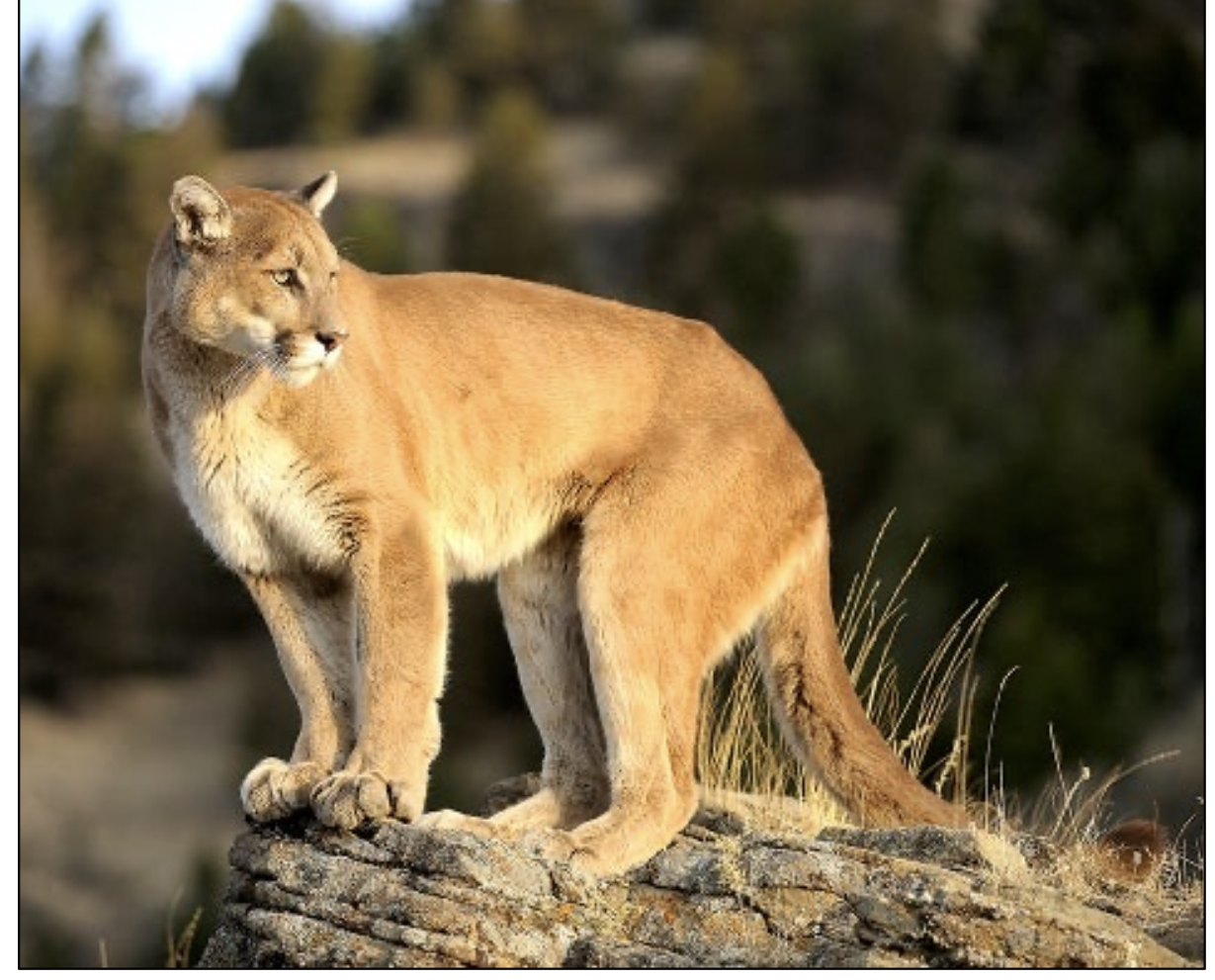
Mesopredators
Relatively small carnivores that consume herbivores.
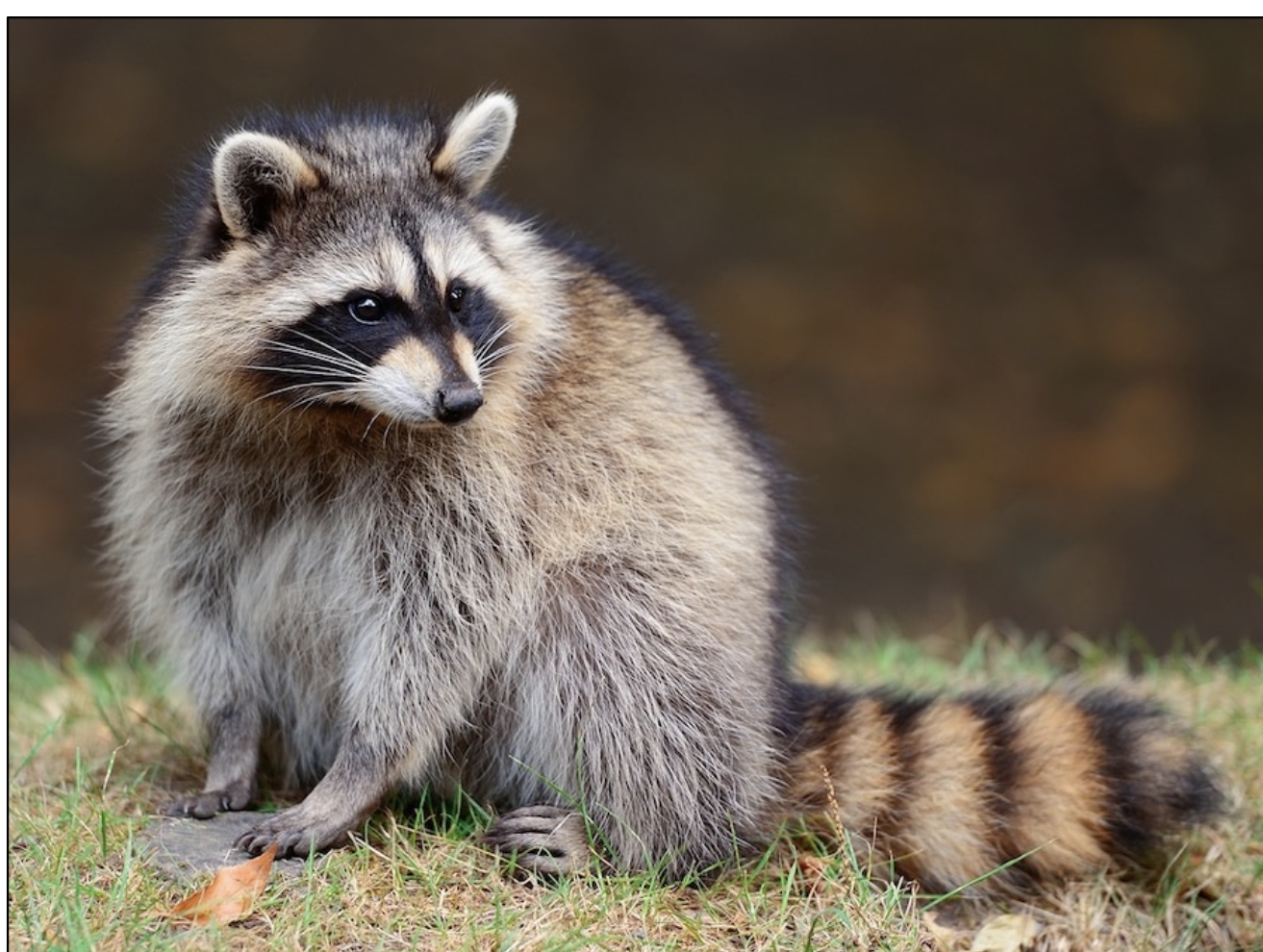

Lotka-Volterra Model
A model of predator-prey interactions that incorporates oscillations in the abundances of predator and prey populations and shows predator numbers lagging behind those of their prey.
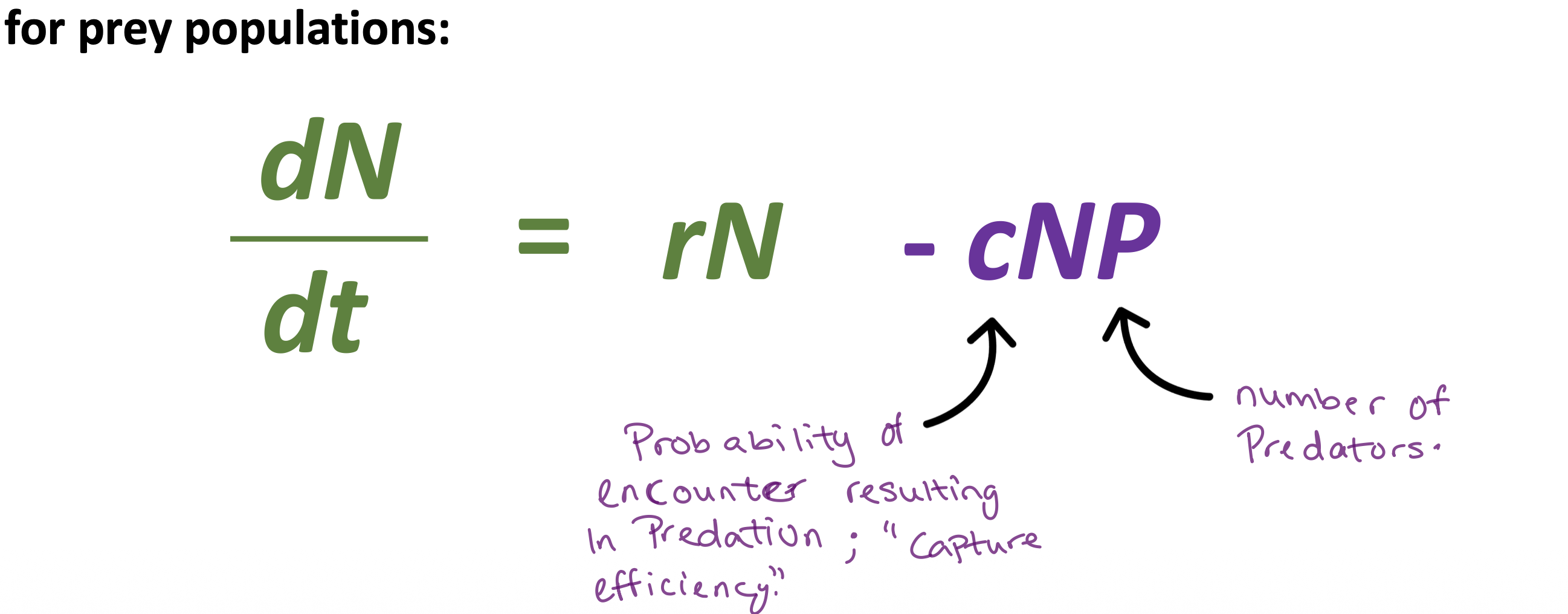
Lotka-Volterra Prey Growth Equation
The differential equation expressing the rate of change in prey population size: dtdN=rN−cNP, where N is the number of prey, r is intrinsic growth rate, c is capture efficiency, and P is the number of predators.

Capture Efficiency (c)
In the Lotka-Volterra model, the probability of an encounter between a predator and a prey individual that results in predation.
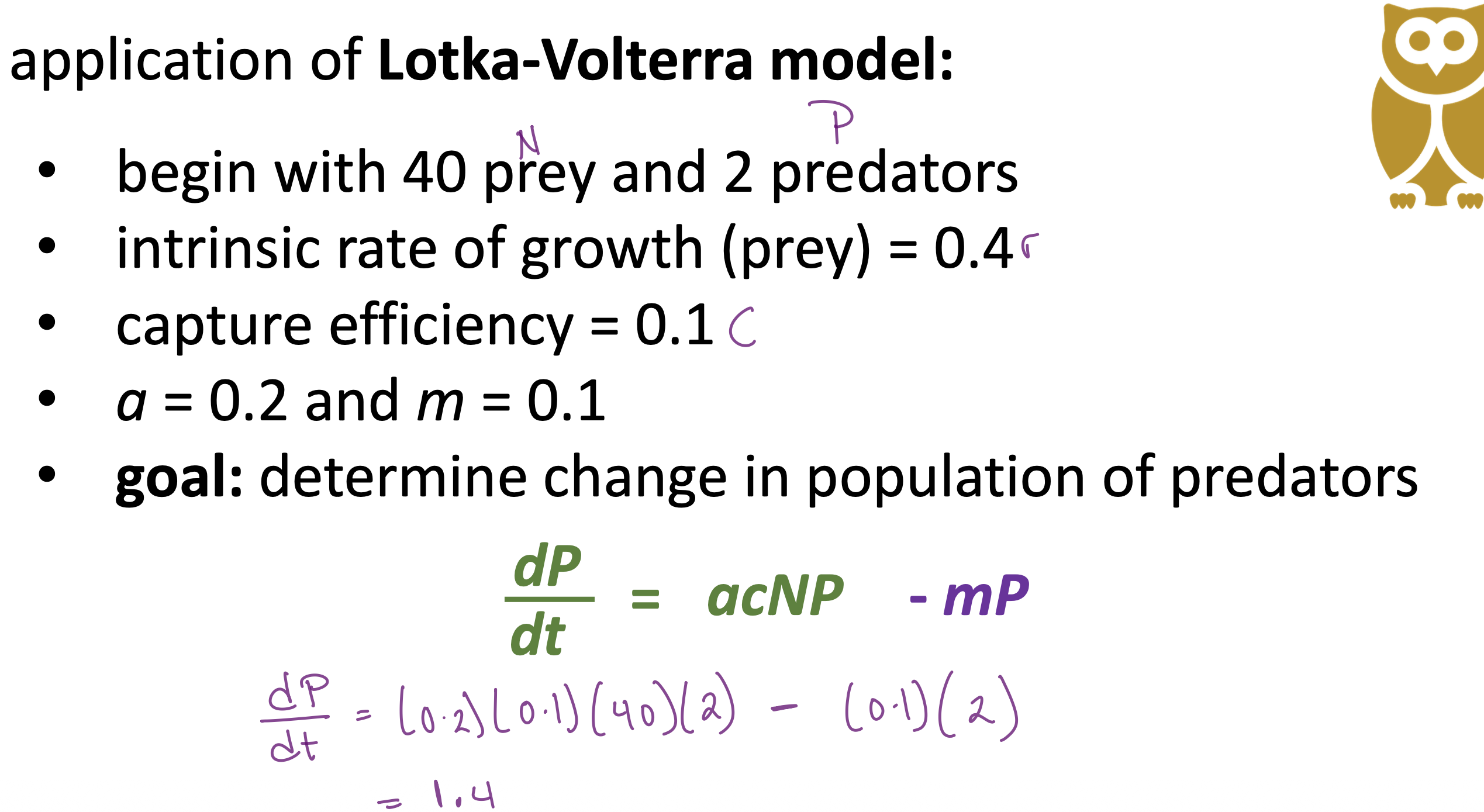
Lotka-Volterra Predator Growth Equation
The differential equation expressing the rate of change in predator population size: dtdP=acNP−mP, where a is conversion efficiency, c is capture efficiency, N is prey abundance, m is per capita predator mortality, and P is predator abundance.

Conversion Efficiency (a)
The coefficient in the Lotka-Volterra predator equation that represents the efficiency of converting consumed prey into predator offspring.
Equilibrium Isocline
The population size of one species that causes the population of another species to be stable (also known as a zero-growth isocline).

Joint Population Trajectory
The simultaneous trajectory of predator and prey populations plotted over time or across isoclines in phase space.

Joint Equilibrium Point
The intersection point of the prey zero-growth isocline (P=cr) and predator zero-growth isocline (N=acm) where both predator and prey population sizes remain unchanged.

Functional Response
The relationship between the density of prey and an individual predator's rate of food consumption.

Type I Functional Response
A functional response in which a predator's rate of prey consumption increases linearly with an increase in prey density until satiation occurs.

Type II Functional Response
A functional response in which a predator's rate of prey consumption begins to slow down as prey density increases and plateaus when satiation occurs.


Type III Functional Response
A functional response in which a predator exhibits low prey consumption under low prey densities, rapid consumption under moderate densities, and slowing prey consumption under high prey densities.

Numerical Response
A change in the number of predators through population growth or population movement due to immigration or emigration.
Predator Hunting Sequence
The series of events involved in predation: detection, pursuit, capture, handling, and consuming.
Behavioral Defenses
Prey defense strategies involving alterations in behavior to avoid predators, such as reducing overall activity levels when predators are present.
Crypsis
Camouflage that either allows an individual to match its environment or breaks up the outline of an individual to blend in better with the background environment.
Chemical Defenses
Defensive mechanisms that use noxious, irritant, or toxic chemicals to deter predators, such as spray from skunks or boiling-hot discharge from bombardier beetles.
Warning Coloration
A defensive strategy (aposematism) in which distastefulness, toxicity, or danger is advertised to potential predators through conspicuous, bright coloration.
Batesian Mimicry
A form of mimicry in which palatable (harmless) species evolve warning coloration that resembles unpalatable (harmful) species.

Müllerian Mimicry
A form of mimicry in which several unpalatable species evolve a similar pattern of warning coloration.

Coevolution
A process where two or more species affect each other's evolution.
Structural Defenses (Plants)
Physical adaptations evolved by plants, such as prickles, spines, or thorns, that deter herbivores from consuming them.