bald man 4
 Call Kai
 Learn
 Practice Test
 Spaced Repetition
 Match
 Flashcards
 Knowt Play
1/22

There's no tags or description
Looks like no tags are added yet.
23 Terms
Two main divisions of the human skeleton
The axial skeleton and the appendicular skeleton
Axial skeleton
Division comprising the skull, vertebral column, and rib cage that supports and protects vital organs

Appendicular skeleton
Division consisting of the limbs and girdles that facilitates movement and environmental interaction
Primary functions of the skeletal system
Providing structural support, protecting vital organs, and facilitating movement as levers for muscles
Cervical vertebrae (C1-C7)
Seven neck vertebrae that support the skull and allow for head mobility

Atlas
The cervical vertebra, which directly supports the skull
Axis (C2)
The second cervical vertebra, which allows head rotation
Thoracic vertebrae (T1-T12)
Twelve vertebrae that articulate with the ribs to provide upper-back stability
Lumbar vertebrae (L1-L5) (Lower)
lower-back vertebrae that bear the majority of the body's weight
True ribs (ribs 1-7)
Rib pairs that attach directly to the sternum through their own individual costal cartilage


False ribs (ribs 8-10)
Rib pairs that attach indirectly to the sternum by connecting to cartilage above them

Floating ribs (ribs 11-12)
Rib pairs that lack any attachment to the sternum, permitting greater movement
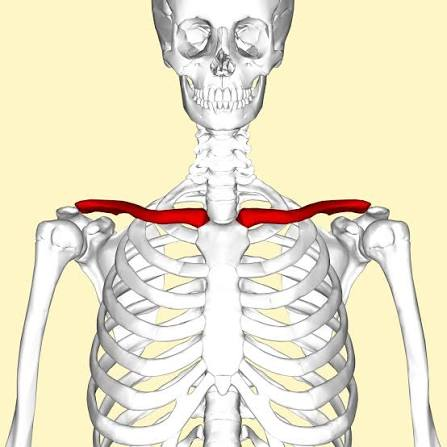
Clavicle
The clavicle (commonly known as the collarbone) is a long, S-shaped bone located horizontally at the front of the shoulder girdle that connects the arm to the trunk of the body, articulating with the sternum
Scapula
The shoulder blade, providing muscle attachment points and enabling arm mobility
Humerus
Upper arm bone allowing a wide range of motion at the shoulder and elbow
Femur
The longest bone in the body, designed to support weight during standing and walking
Tibia
The larger bone of the lower leg, essential for bearing the body's weight

Fibula
The smaller bone of the lower leg, primarily providing lateral stability

Foramen magnum
Large cranial opening through which the brainstem and spinal cord pass
Acetabulum
The hip bone socket that articulates with the head of the femur

Hyoid bone
A U-shaped neck bone supporting the tongue that does not articulate directly with other bones
Articular cartilage
Smooth connective tissue on bone ends at synovial joints that reduces friction and absorbs shock

Ligaments
Fibrous bands connecting bone to bone that stabilize joints and prevent excessive motion