MESAS 241 test 1
 Call Kai
 Learn
 Practice Test
 Spaced Repetition
 Match
 Flashcards
 Knowt Play
1/60

There's no tags or description
Looks like no tags are added yet.
Name | Mastery | Learn | Test | Matching | Spaced | Call with Kai | Chat |
|---|
No analytics yet
Send a link to your students to track their progress
61 Terms
Archaeology
The study of past societies and humans based on their material culture
“Near Eastern” Archaeology
Traditionally the area bounded by Iran in the east, Egypt in the west, Arabian Peninsula in the south, and the Caucasus/Turkiye in the north.
Behistun Inscription
Trilingual cuneiform inscription in Akkadian, Elamite, and Old Persian. Ahura Mazda, Cyrus the Great, Persian dominance.

Artifact
An object that has been altered or created by human processes
Context
relative date, relation to surrounding architecture and other features, relation to other artifacts, site of origin, deposition, etc.
in situ
literally “in context” – if an artifact has not yet been moved from its findspot, it is in situ
Archaeological Survey
Assessing a site or landscape from the ground surface
Regional surveys
Aerial remote sensing, unsystematic survey (usually), place-name evidence, surface collection
Local/Site-specific surveys
Systematic survey (squares, transects), geophysical remote sensing, surface collection
Why Excavate
• Adds a measured temporal limit to activities uncovered – both for
analyzing a particular time AND for observing changes between
periods.
• Horizontal dimension is for working with one phase
• Vertical dimension is for working with temporal changes through
multiple phases
• Remember: excavation is a destructive scientific practice – it
cannot be repeated!
Strata
different levels created by occupation phases or events
Relative Dating
Stratigraphy + seriation and sequencing
• Dating things by understanding their chronological order
Absolute Dating
Identifying an absolute date for an archaeological artifact/feature/etc.
• Can be accomplished through scientific analyses and comparative material
Radiocarbon dating
Measuring the degradation of the C14 isotope in an organic sample
Dendrochronology
tree ring dating
southern mesopotamia
Based on the floodplain
• Marshland environment
• Coastline changes (used to be higher)
-Missing timber, stone, metals

Southern Mesopotamian resources
Fish, fowl, game, reeds, sediment, mud, agriculture is possible but the floods are unpredictable.
Marshland architecture-mud brick
Mud brick-

mudhif
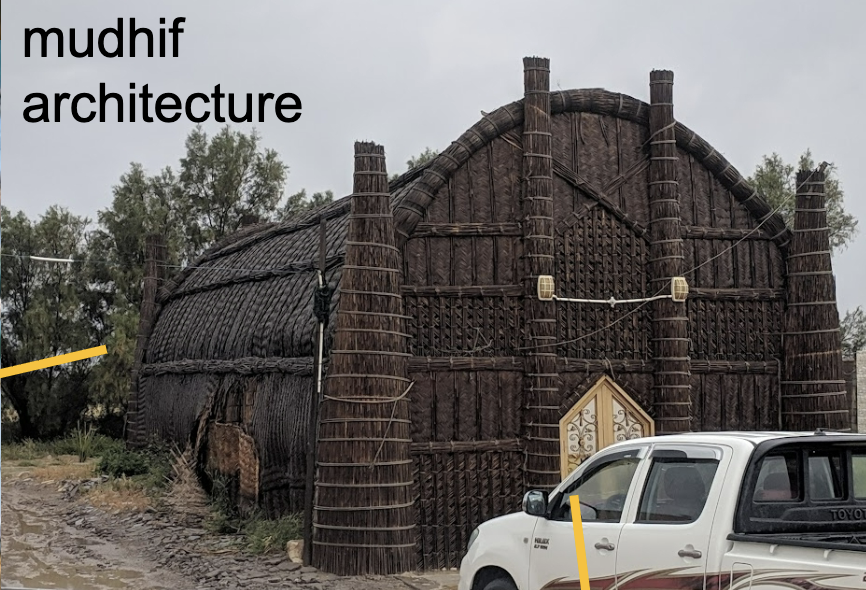
Northern Mesopotamia
Steppeland and access to surrounding
mountains
• Less extreme climate than the south
• Resources include those that can be found in
mountains: rock, lumber, copper, tin, good
pastureland, etc.
• Rainfall agriculture is possible (mostly)
Natufian and Pre-Pottery Neolithic
not just Mesopotamia-specific, but for the whole “Fertile Crescent” area.

The Natufians c. 12,500-9500 BCE
Settled in the Fertile Crescent
and eventually spread
• Predates agriculture – no domestication, but cultivation
• Oldest known bread-making; oldest known beer-brewing
• No woven fabrics, but spun thread

Cultivation
purposefully utilizing and growing “wild” plants
Domestication
genetically-altering plants (by ‘choosing’ for certain aspects) to provide more benefits for human harvesting/consumption
Wheat and Barley
domestication=choosing for non shattering, 8,000 bce in the levant
Animal domestication
choosing for more desirable features. Used things like Onagers and donkeys for transportation, caprids, cattle, pigs, and fowl for food.
Nomadism
way of life where people do not live continuously in the same place but move cyclically or periodically (NOT migration)
Sedentism
the practice of living in one place for a long period of time
semi-nomadism
practicing seasonal migration but having a “base camp” at which some crops are cultivated
Younger Dryas
abrupt period of cooling and drying in northern hemisphere c. 11,000-9500 BCE
• Sometimes linked to the Neolithic Revolution (adoption of agriculture), though this is debated
• Also possible it forced populations to become more mobile at end of Natufian period
PPNA+B dates
PPNA: c. 9500–8500 BCE
PPNB: c. 8500–6500 BCE
PPNA+B features
Main characteristic: “Neolithic Revolution”
• Increased use of cultivation and increased nomadism/semi-nomadism at beginning (PPNA)
• Still mostly relied upon hunting and foraging. However:
• PPNA = herd animal domestication
• PPNB = first agriculture (cereals)
• Small round and square houses
Göbekli Tepe - PPNA
• Evidence for communal labor
• Likely used by semi- nomadic groups
• World’s first “temple” –first true evidence of collective religion and ritual

Çatalhöyük – c. 7500-6000 BCE (PPNB)
• First evidence of large sedentary site
• Est. pop. 5,000-10,000
• Agriculture practiced with evidence for surplus
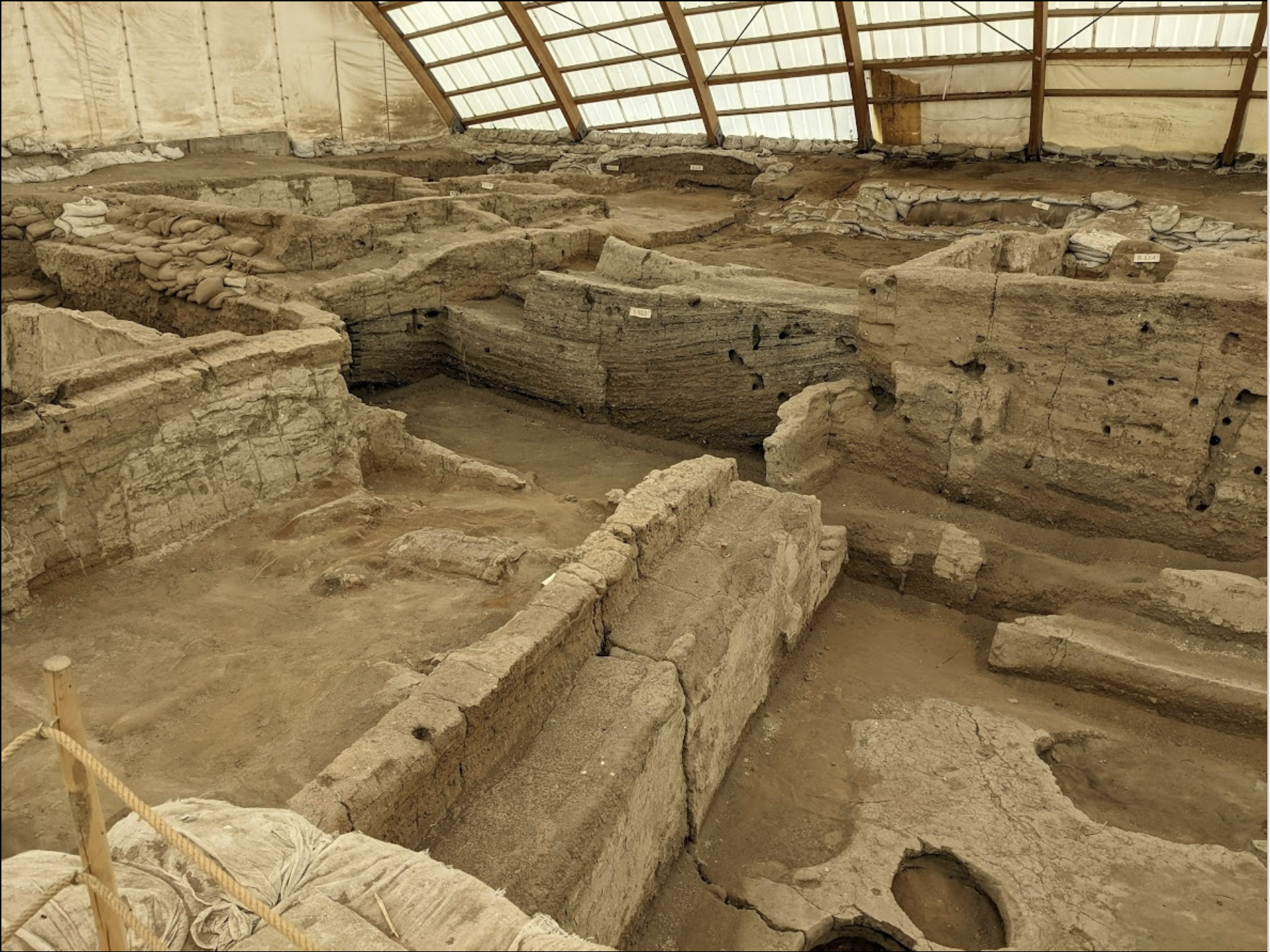
What does storage and surplus lead to?
population growth, craft specialization, settlement size and density, social hierarchy
Natufian and PPN Characteristics
Permanent houses and settlements
• Burials under house floors – special treatment of remains

Abu Hureyra
Natufian-PPNB site with most important evidence for plant and animal domestication in Mesopotamia b/c of continuous occupation. Abu Hureyra is located on Euphrates
chalcolithic
“Copper-stone” age
Ubaid Period c. 6200-4000 BCE
Wheel made ceramics, Early Ubaid starts in Southern Mesopotamia, Ubaid is the test site. Late Ubais spreads to all of mesopotamia and levant.
Ubaid Administrative technology
Specialized craft production + concern with producing more efficiently
• Long-distance procurement
• Increasing social stratification
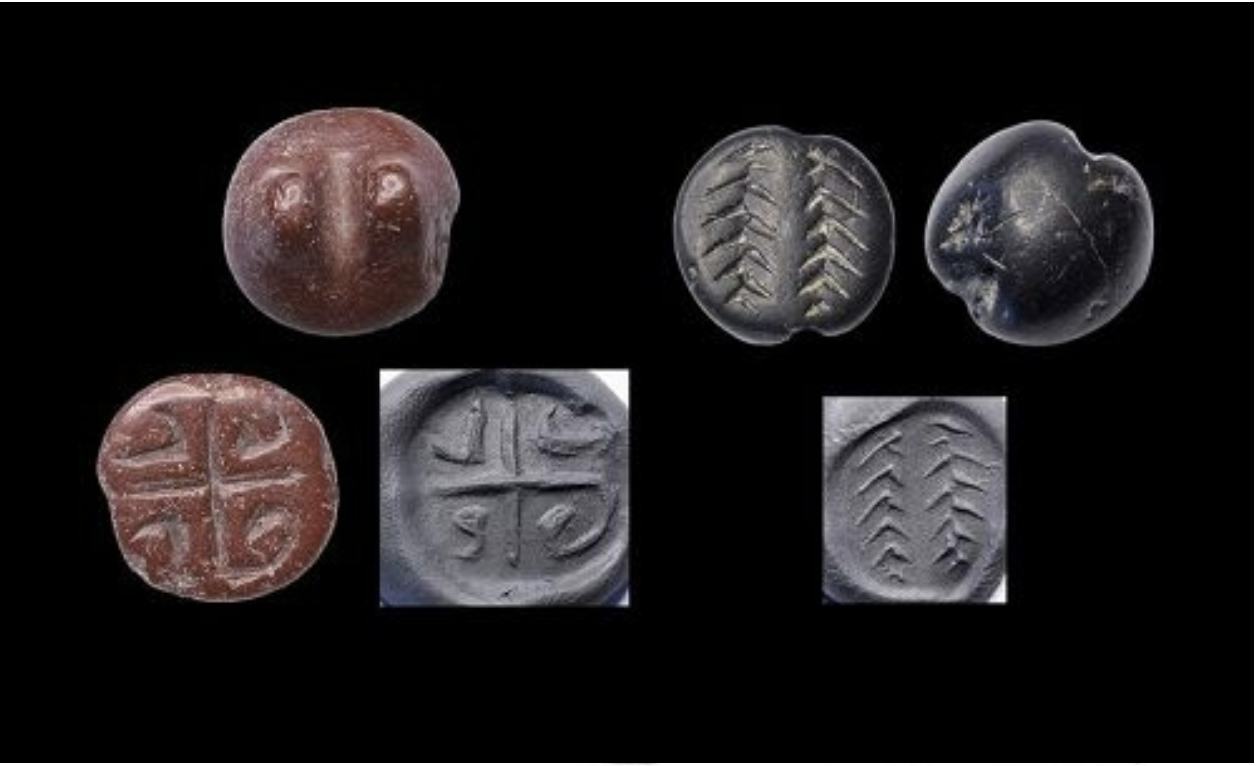
Tokens, seals and sealings
Ubaid Tokens

Ubaid sealings
Samarra/Hassuna figurines

Ubaid Figurines
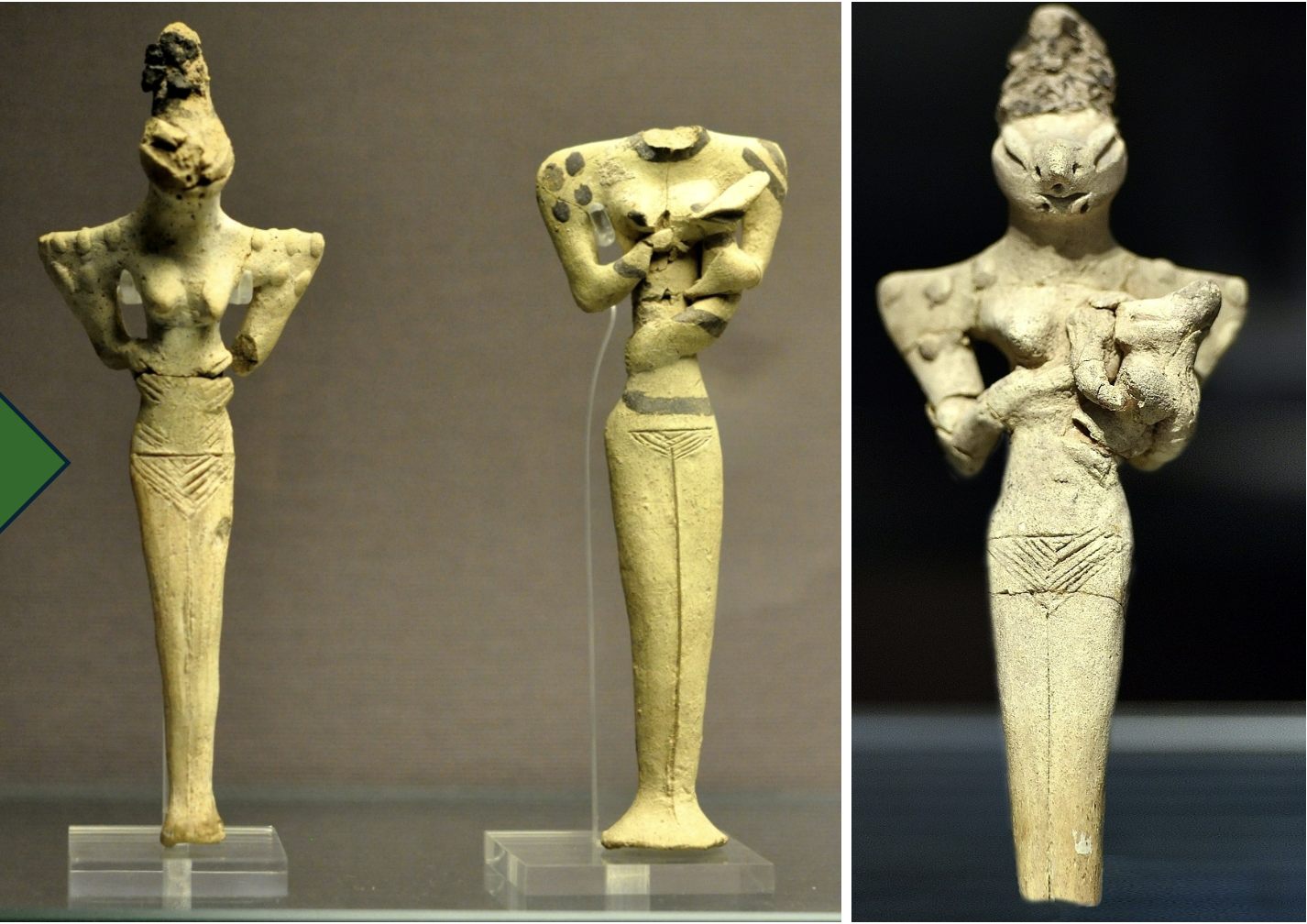
Wengrow’s Model
Tripartite house-division of labor into multiple sections=extended metaphor
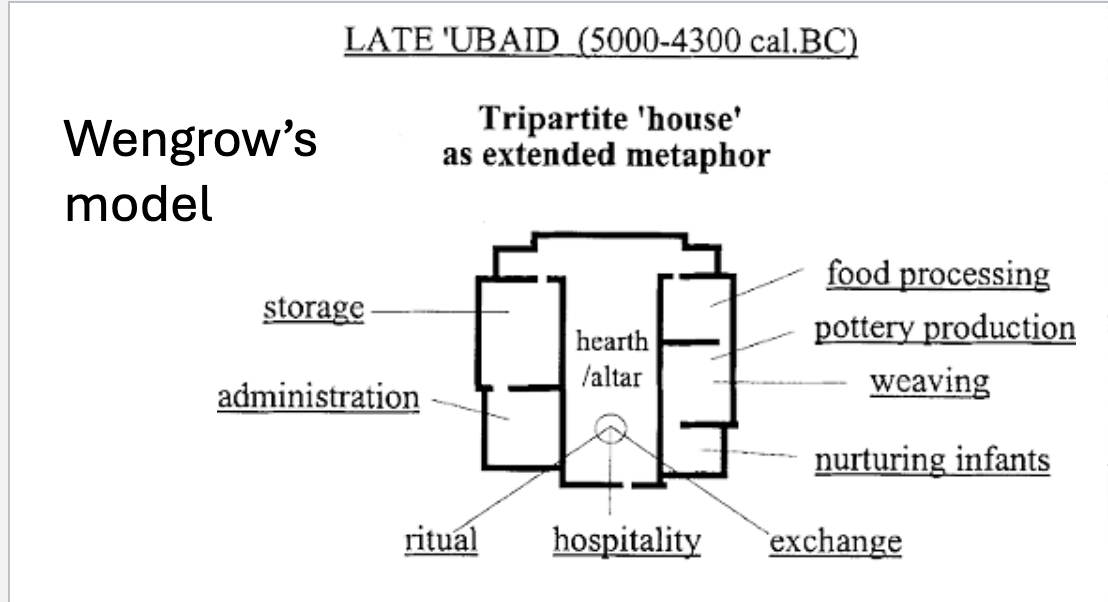
1st temple architecture
Modelled after tripartite house plans: temple institution related to domestic structure
Uruk Period-4000-3100
First founded c. 4800 BCE
• Grew to huge size in Urukperiod (c.4000-3100)
• The “Urban Revolution”
old ideas about city formation
Old ideas: cities grew up around public institutions (temple economies) and spread out
• K.S. Wittfogel – believed that hierarchical power resulted from the need for large-scale irrigation projects

new ideas about city formation
cities intensified from pre-existing, disparate villages
• “Energized crowding”: social change arising as the byproduct of interactions among individuals

tell Brak
• First city in northern Mesopotamia
• c. 4200-3400 BCE
• Rainfall agriculture
• Along a main tributary of the Euphrates
river in the Khabur River Valley
• Near steppe and foothills
Eye temple of tell brak
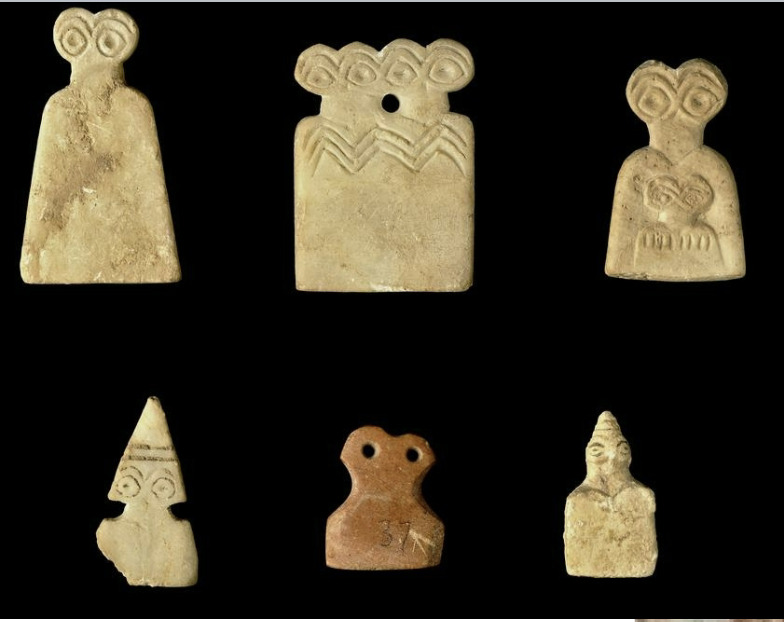
“Temple Economy”
E-DINGIR – lit. “house of the god”
• Organized as a large household with the deity as its head
• Owned large tracts of land and employed thousands
• Palaces also existed, but still controlled less than temples did
• Central redistribution point in cities
bevel rimmed bowls

Warka Vase
Evidence for layered society

solid footed goblets

Wing-lugged jars

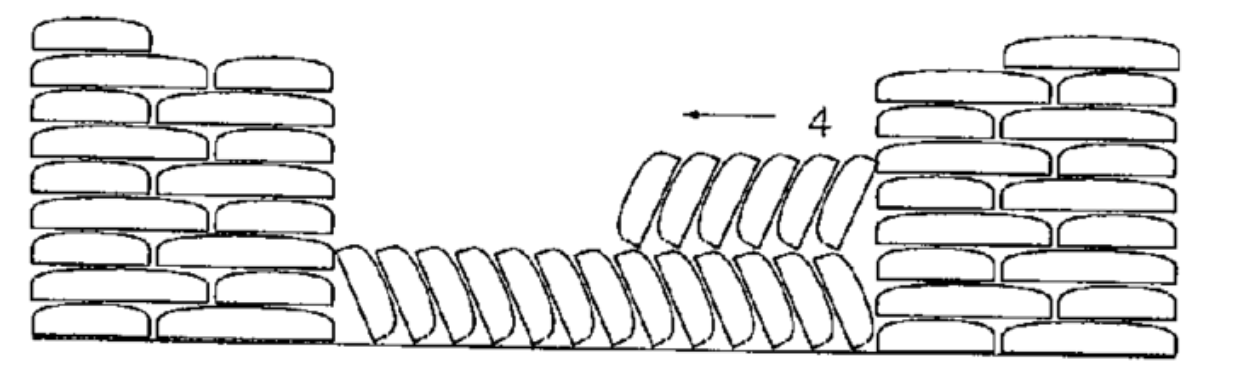
Early Dynastic Architecture
Plano-convex bricks!
• Tripartite structure starting to change, but all buildings are still
centered on an open courtyard
The standard of Ur

Stele of the Vultures
Eannatum of lagash triumphing over Forces from Umma

Statue of Manishtushu
