Ch 12 OB Practice Questions
 Call Kai
 Learn
Learn Practice Test
 Spaced Repetition
 Match
Match Flashcards
 Knowt Play
1/18

There's no tags or description
Looks like no tags are added yet.
Name | Mastery | Learn | Test | Matching | Spaced | Call with Kai | Chat |
|---|
No analytics yet
Send a link to your students to track their progress
19 Terms

1 an increase in oxytocin release related to the newborn suckling

4 to prevent uterine inversion

3 ask the pt to void

2 a description of the lochia as being red in color
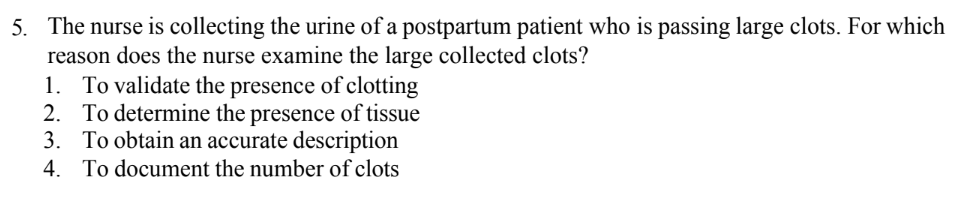
2 to determine the presence of tissue
6) The nurse is preparing a postpartum pt for discharge. Which patient teaching is most important for the nurse to provide?
the s/s of uterine infection
the s/s of secondary hemorrhage
the s/s of postpartum depression
the s/s of a baggy uterus
2 the s/s of secondary hemorrhage
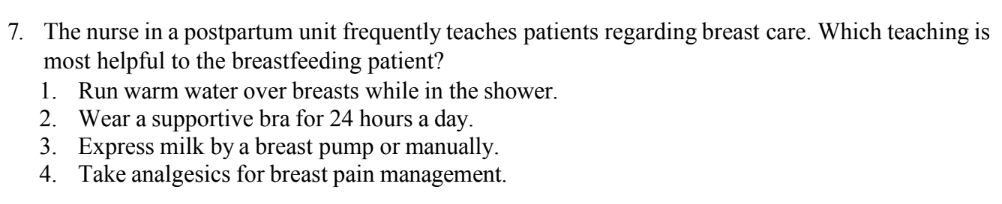
3 express milk by a breast pump or manually

2 WBC laboratory level of 30,000/mm a few hours after delivery

2 vaccinating the mother will protect the neonate from serious illnesses

4 a saturated cotton ball is placed in a “hat” on the toilet
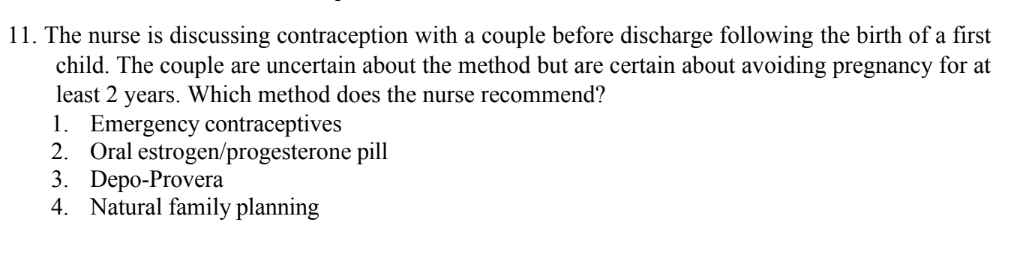
3 depo-provera
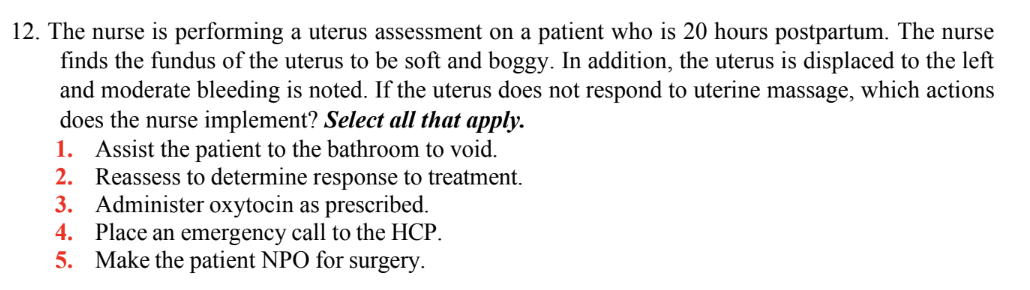
1 2 3 5
assist the pt to the bathroom to void
reassess to determine response to tx
admin oxytocin as prescribed
make the patient NPO for surgery
1 2 3 5
perineal coloration
suture line appearance
amt of swelling
soft tissue trauma

1 2 3 4 5
uterine contractions
perineal trauma
breast engorgement
hemorrhoids
general soreness

1 2 5
the pt who was placed on bedrest for threatened abortion
the pt with preeclampsia treated with magnesium sulfate
the pt who received large amts of IV fluid d/t blood loss

1 2 5
the risks to the fetuses of any future pregnancies
the pt will need to be immunized before discharge
pregnancy should be avoided for 4 wks
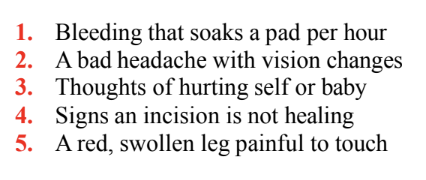
In an attempt to improve the effectiveness of postpartum teaching, the nurse uses the AWHONN acronym POST BIRTH. Which teaching points require the pt to call for 911 assistance? Select all that apply.
3 thoughts of hurting self or baby

1 2
increase caloric intake by 500 to 1,000 per day
drink 2 to 3 liters of fluid each day
After pregnancy and birth, a mother may notice a condition called diastasis recti abdominis, which is a(n) ___________ of the rectus muscle.
separation