Praxis 5205 Kathleen Jasper Review
 Call Kai
 Learn
 Practice Test
 Spaced Repetition
 Match
 Flashcards
 Knowt Play
1/185

There's no tags or description
Looks like no tags are added yet.
186 Terms
Phonological Awareness
overarching skill that includes identifying and manipulating units of oral lang, including parts of words, syllables, onsets, and rimes. Includes 2 subskills--phonemic awareness and phonics.
Phonemic Awareness
understanding the individual sounds/phonemes in words. Think of SOUNDS--auditory.
Phonics
understanding the relationship between sounds and the spelling patterns/graphemes representing those sounds. Think of SEEING/WRITTEN LANG/PRINT--visual and auditory.
Teaching Phonological Awareness
Blending
Onsets and Rimes
Rhyming
Segmentation
Isolation
Deletion
Substitution
Phonological Awareness Continuum
Rhymes
Alliteration
Sentence segmentation: segment sentences into words
Syllables segmentation
Onset and rime blending and segmenting
Phoneme manipulation
Phonemic Awareness Continuum
Phoneme isolation
Blending
Segmenting
Addition
Deletion
Substitution
Listening Vocabulary
the words we need to know to understand what we hear. Part of receptive vocab.
Listening Comprehension
student can understand a story that's being read aloud. Developed before reading comprehension.
Speaking Vocabulary
the words used when speaking. Part of expressive vocab.
Reading Vocabulary
the words we need to know to understand what we read. Receptive vocab.
Writing Vocabulary
the words we use in writing. Expressive vocab.
Environmental Print
written text that's observable in one's surroundings, such as signs, labels, stickers, billboards, and brand names. The print of everyday life.
Print Concepts
understanding the difference between letters, words, punctuation, front/back (layout), words vs pics and letters vs words (differentiation), and directionality.
Alphabetic Principle
the idea that letters and letter patterns represent the sounds of spoken language
Alphabetic Principle Phases
pre-alphabetic, partial alphabetic, full alphabetic, consolidated alphabetic
Oral Language
Phonology: organization of sounds in lang.
Vocabulary
Morphology: smallest units of meaning in words.
Grammar
Pragmatics: social cues or norms in lang.
Discourse: speaking an listening skills in lang--dialogue.
Explicit Phonics Instruction
method of teaching students how to connect the graphemes/letters with phonemes/sounds and how to use this letter-sound relationship to read and spell words.
Systematic Phonics Instruction
using a logical and specific scope and sequence that's developmentally appropriate to teach the major letters and sounds.
Recursive Phonics Instruction
lessons build on previous ones and students have to use that knowledge gleaned from prior lessons. Simple to complex.
Decoding
sounding out words while reading--phonics generalizations, letter-sound correspondence, and phonological awareness.
Encoding
process of hearing a word and spelling it based on sounds and phonics. Usually assessed with a spelling test.
Doublets
uses two of the same letter to spell a consonant phoneme (ff, ll, ss, zz)
Digraphs
two letters that represent one speech sound, such as "ch" for /ch/ in chin, th in digraph, or "ea" for /e/ in bread.
Trigraphs
Three-letter combinations that create one phoneme (tch, dge)
Diphthong
sounds formed by the combo of 2 vowels in a single syllable, in which the sound begins as 1 vowel and moves toward another. Exs: aisle, coin, loud.
Consonant Blends
two or three graphemes and the consonant sounds are separate and identifiable. Ex: s-c-r in scrape, b-l-e in blend, c-l in clean, and l-k in milk.
Silent Letter Combination
A letter combination where one or more letters is silent (i.e., does not represent the phoneme) but another letter does represent the phoneme (e.g., kn in knock, wrestle, gnat).
Combination Qu
These two letters always go together and make a /kw/ sound (quickly)
Vowel Teams
combinations of two, three, or four letters that stand for a vowel sound. Short vowels: head, hook. Long vowels: boat, rain, weight. Diphthongs: soil, bout.
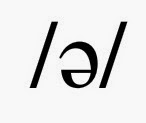
Schwa Sound
a vowel sound in an unstressed syllable where a vowel doesn't make its long or short vowel sound. "Lazy" sound. A in balloon, e in problem, I in family, o in bottom, u in support, and y in analysis
Morphology
the study of word parts and their meanings. Morphemes: smallest units of meaning in a word.
Use compound words, root words, prefixes, suffixes.
Etymology
the study of word origins and how they've changed over time.
Structural Analysis
the process of using familiar word parts (base words, prefixes, and suffixes) to determine the meaning of unfamiliar words.
Free Morphemes
can stand alone because they mean something in and of themselves. Close in closely.
Bound Morphemes
only have meaning when connected to another morpheme. Ly in closely
Syllable Types
There are six syllable types:
1. Closed: cat, cobweb
2. Open: he, silo
3. Vowel-consonant-e: like, milestone
4. Consonant-l-e: candle, juggle (second syllable)
5. R-controlled: star, corner,
6. Vowel pairs: count, rainbow
Common Activities to Teach Syllables
Syllable clapping.
Syllable lists/
Multisyllabic word manipulation.
Syllable scoop.
Decodable Texts
carefully sequenced to progressively incorporate words that are consistent with the letter-sound relationships that have been taught to the new reader.
Authentic and Shared Reading Tasks
interactive reading experience where teacher guides students as they read text. Teacher explicitly models the skills of proficient readers, including reding with fluency.
Whisper Reading
all students whisper read the text independently. The teacher listens to the students read individually in order-- to provide support and feedback.
Word Walls
consists of words posted on classroom walls as a means of immersing students in language, students add new words as they come in contact with them.
Interactive Writing
Students and teachers collaborate on constructing a written work and write it together.
Cueing Systems
1. Graphophonic- letters/sounds & visual clues/ What would you expect to see?
2. Semantics- sense, meaning/ Does it make sense?
3. Syntax- structure, grammar/ Can we say it that way?
Word Consciousness
Awareness of words and their meanings as well as interest in their usage. Motivated to learn new words and able to use them skillfully.
Homophones
words that SOUND (phone) the same but are spelled differently. Exs: pair/pear, plain/plane, their/they're/there, to/too/two.
Homographs
words that are WRITTEN/SPELLED (graph) the same but have different sounds and meanings. Exs: tear coming from my eye/tear the page out. Bass type of fish/bass type of low tone or musical instrument.
Tier I Words
high-frequency words used in everyday speech. Learned in convo and rarely require direct instruction.
Tier II Words
occur across context and enhance comprehension of text. Best used for targeted explicit vocab instruction.
Tier III Words
low-frequency words and limited to specific domains/pertain to a specific content area. Best learned within the content of lesson/subject matter.
Context Clue
a form of info that appears near a word or phrase and offers direct or indirect suggestions about its meaning.
Synonym/Restatement Clue
context clues that restate the meaning of the word using a synonym (sentence essentially says same thing x2).
Antonym/Contrast Clue
context clues that state the opposite of the word in question.
Inference Clues
subtle context clues that drop hints to what the word in question is.
Fluency
The ability to read with speed, accuracy, and proper expression. Needed for comprehension--supports cognitive endurance.
Prosody
timing, phrasing, emphasis, and intonation that readers use to help convey aspects of meaning and to make their speech lively. Stopping at periods, pausing at commas, reading with inflection, and reading with expression.
Automaticity
fast, effortless word recognition that comes with repeated reading practice. When reading with greater than 95% accuracy.
Accuracy
the number of words a student reads correctly. Measured by having student read aloud during a fluency read/running record. Student reads and teacher marks miscues.
Rate
the speed at which students read words correctly. Typically expressed in correct words per minute (cwpm).
Choral Reading
reading aloud in unison with a whole class or group of students. Choral reading helps build students' fluency, self-confidence, and motivation.
Unison
Refrain: 1 reads narrative part and rest reads the refrain
Antiphon: class divided into 2 groups--1 group reads a part and the other group reads the other
Repeated Reading
Reading passages again and again, aiming to read more words correctly per minute each time. Automaticity is focus. (Independent level usually).
Running Records
Following along as a student reads and marking when he or she makes a mistake or miscues. Teacher counts how many cwpm student read.
Miscue Analysis
A way of acquiring insight into children's reading strategies by studying the mistakes they make when reading aloud. Analyze miscues and then come up ith instructional strategies.
Basal Reading
Leveled reading books
Reader's Theater
fluency; engages students by having students read parts of a script.
Echo Reading
Reading of a text where an adult or experienced reader reads a line of text, and the student repeats the line. Good technique for Emergent and Early Readers to build fluency and expression.
Phrase-Cued Reading
a written passage that's divided according to natural pauses that occur in and between sentences. Pauses help students, whose reading lacks prosody, with expression and pacing. Also help students group words together for fluent reading.
Independent Reading Level
The level at which a reader can read text with 95% accuracy (i.e., no more than one error per 20 words read). Independent reading level is relatively easy text for the reader.
Instructional Reading Level
The level of reading material that a student can read with teacher support and instruction with 90-94% accuracy.
Frustration Reading Level
the level at which a reader reads at less than 90% accuracy; difficult text for the reader
Supporting Listening Comprehension
Listening Centers
Active Listening
Partner Conversations
Group Story
Activating Prior Knowledge
KWL chart and other graphic organizers
Whole-group discussions
Guiding questions
Text to Self
Pre-reading strategies
Pre-teach difficult vocab
Jigsaw
A cooperative learning structure for lessons in which instructional materials are divided and then studied by individuals or pairs of students. After students become "experts" on their sections of information, they share the information with the group.
Chunking
breaking down a difficult text into manageable pieces.
Close Reading
A careful reading that is attentive to organization, figurative language, sentence structure, vocabulary, and other literary and structural elements of a text.
Think-Pair-Share (TPS)
a collaborative strategy in which students work together to solve a problem or answer a question about an assigned reading; this technique requires students to (a) think individually about a topic or answer to a question then (b) share ideas with classmates; discussing an answer with a partner serves to maximize participation, focus attention and engage students in comprehending the reading material
Reading Response Journals
A writing activity where students use journals to react to what they read by expressing how they feel and asking questions about the text.
Evidence-Based Discussion
Setting the expectation that students use evidence in the text to support claims they make during the discussion.
Literature Circles
Students read common texts and have discussions about the shared reading to increase critical thinking and response to text. Often with set roles (discussion director, mind image creator, question asker, etc.)
Reciprocal Teaching
Approach to teaching reading and listening comprehension in which students take turns asking teacher-like questions of classmates.
Question-Answer Relationship (QAR)
Strategy describes four types of questions: right there, think and search, author and you, and on your own.
SQ3R
a study method incorporating five steps:
Survey: scan titles, headings, charts, graphs, etc.
Question: as surveying, turn headings into questions.
Read: read the text for comprehension.
Retrieve: answer questions they made.
Review: summarize what they've read.
Metacognition
"Thinking about thinking" or the ability to evaluate a cognitive task to determine how best to accomplish it, and then to monitor and adjust one's performance on that task.
Venn Diagram
compares and contrasts
Story Map
organizes elements of the story including characters, plot, sequence, major events.
Timeline
organizes events in chronological order
Sequence Map
sequences story's main events
Genres
Categories of artistic compositions characterized by similarities in form, style or subject matter.
Realistic Fiction
fictional stories that could be true
Historical Fiction
fictional stories set during a real event or time during history.
Science Fiction
fictional stories based on scientific possibilities
Fantasy
fictional stories that include fantastical elements--monsters, fairies, magic, etc.
Informational Text
nonfiction text that informs the reader
Biographies
nonfiction text that tells the life of another person.
Autobiographies
the nonfictional story of a person's life, told by that person
expository nonfiction
Text that informs the reader. The author is objective.
Narrative Nonficiton
text that presents a true story written in a style more closely associated with fiction.
Limerick
humorous verse of 3 long and 2 short lines rhyming (aabba)
Sonnet
a poem of fourteen lines using any of a number of formal rhyme schemes, in English typically having ten syllables per line.
Epic
A long narrative poem telling of a hero's deeds
Haiku
A Japanese form of poetry, consisting of three unrhymed lines of five, seven, and five syllables