EXAM 1: CHEM 3653
 Call Kai
 Learn
Learn Practice Test
 Spaced Repetition
 Match
Match Flashcards
 Knowt Play
1/478

There's no tags or description
Looks like no tags are added yet.
Name | Mastery | Learn | Test | Matching | Spaced | Call with Kai | Chat |
|---|
No analytics yet
Send a link to your students to track their progress
479 Terms

The reaction A + B ⇌ C + D has a ΔG'° of –4.78 kcal/mol at 25°C. Starting under biochemical standard-state conditions, one can predict that:
At equilibrium, the concentrations of C and D will be greater than the concentrations of A and B.
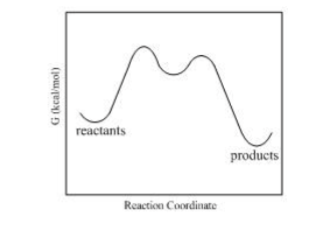
The adjacent figure represents which of the following?
an exergonic two-step reaction

Which of the double-headed arrows in the adjacent figure indicates ∆G‡ for reaction 2?
b
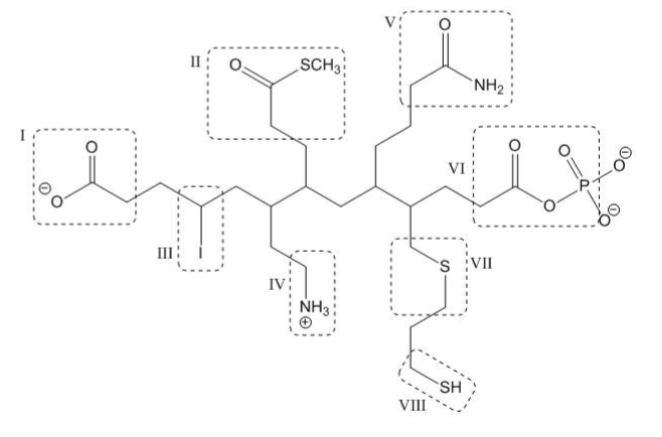
The functional group in the adjacent molecule indicated by Roman numeral VII is a ____________________ functional group.
thioether

What is the approximate bond angle about the phosphorus in the above figure? VII
109.5°
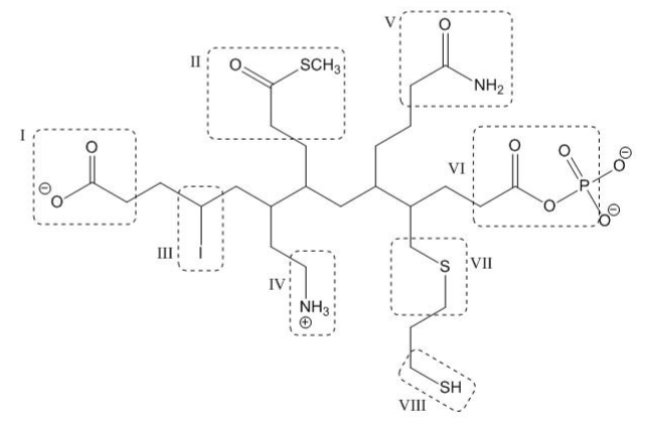
What is the hybridization (if any) of the carbonyl carbon that is part of the functional group indicated by box V in the above figure? VII
sp²
By convention, is it correct to say that the molecular mass of a protein is 43,720 g/mol?
Yes, it is correct to say that.
If a result suggests a particularly exciting idea, honesty demands that: ______________. (Choose the best answer.)
the next experiment conducted be the one most likely to disprove that idea.
Match the molecule below with the phrase that best describes its hydrogen-bonding character. You may use the description choices more than once or not at all.
methylamine (CH3NH2)
hydrogen bond donor and acceptor
Match the molecule below with the phrase that best describes its hydrogen-bonding character. You may use the description choices more than once or not at all.
ethanol (CH3CH2OH)
hydrogen bond donor and acceptor
Match the molecule below with the phrase that best describes its hydrogen-bonding character. You may use the description choices more than once or not at all.
formaldehyde (HCHO)
hydrogen bond acceptor only
If the equilibrium constant for the reaction H2O + CO2 ⇌ H2CO3 is 3.0 10−3, and if the equilibrium constant for the reaction H2CO3 ⇌ H+ + HCO3− is 2.7 x 10⁻⁴ (at 37ºC), then what would be the pH of the blood when the bicarbonate concentration is 23.4 mM, and the dissolved carbon dioxide concentration (due to the partial pressure of CO2(g)) is 1.11mM? Enter your answer to the nearest hundredth of a unit.
pH = pKoverall + log (HCO3-/CO2)
7.42
Propane and 1-propanol differ in their molecular makeup by only one atom, yet 1-propanol is much more soluble in water than propane. In fact, 1-propanol is infinitely soluble in water, meaning the two can be mixed in any proportion and will always form a true solution. Which of the features of 1-propanol make it more water soluble than propane? Select all that apply.
Intermolecular interactions attributable to the polar portion of 1-propanol (the hydroxyl group) dominate those attributable to the nonpolar portion. 1-propanol participates in hydrogen bonding.
The strong attractive forces that non-polar molecules have for each other is the primary reason that oil separates from water.
The statement is false
Which intermolecular forces will glyceraldehyde (2,3-dihydroxypropanal) molecules exhibit with each other?
I. dipole-dipole
II. hydrogen bonding
III. London-dispersion
IV. ion-dipole
I, II, and III only
An aqueous solution contains a weak acid (HA) at a concentration of 0.09 M. If the weak acid has a pKa of 4.03, what is the pH of this solution to the nearest hundredth?
pH = ½ (pKa - log10 [HA])
2.54
To the nearest thousandth, what is the value of the reaction quotient (Q) for the generalized reaction A ⇌ B + C, provided that the initial concentrations of A, B, and C are 1.3 mM, 2.4 mM, and 4.8 mM, respectively? Recall that the reaction quotient is dimensionless and that we generally assume the given concentrations are reasonably representative of the activities of each of these species (i.e., we assume the activity coefficients are unity).
Q = [B][C]/[A]
answer = Q/1000
0.009
A researcher has 100. mL of a 0.10 M solution of the polyprotic acid H3A. The pKas of this polyprotic acid are 2.11, 7.18, and 12.44. She wishes to titrate this solution by adding 1.7 equivalents of a 0.10 M KOH solution. To the nearest hundredth, what will be the pH of the solution after she has added the specified amount of the hydroxide solution? (Assume full stirring such that a uniform solution is obtained.)
pH = pKa2+log(HA2-/H2A-)
7.55
An amino acid has an alpha-carboxyl, an alpha-aminium group, and a delta-carboxyl group. The respective pKas of these three groups are 2.14, 9.77, and 4.21. What is the average, net charge of this amino acid when the pH equals pK2 (the pKa of the alpha-aminium group)?
-1.5
Consider the adjacent peptide shown (possibly in a very unusual protonation state). What is the amino acid sequence of this peptide? Use the one-letter code to express your answer, and recall that there should be no spaces or dashes between the letters.
FVAGP
What would be the approximate net charge of the adjacent peptide at pH = 0? To facilitate answering this question, assume that the N-terminal aminium group has a pKa of 8, the C-terminal carboxyl group has a pKa of 3.5, and that the ionizable side chains have pKas as follows: Asp = 4.0, Glu = 4.0, His = 6, Cys = 8.4, Tyr = 10, Lys = 10, and Arg = 12.5. Also, assume that if the pH is at least two units above or below the pKa of a particular group, then that group is completely unprotonated or protonated, as the case may be.
+2
At physiological pH, in the side chain only of arginine, how many carbons, hydrogens, and nitrogens are predominantly present?
4 carbons, 11 hydrogens, and 3 nitrogens
A pentapeptide is subjected to amino acid analysis and the following amino acids were detected: alanine, methionine, arginine, lysine, and phenylalanine. Incubation of the intact pentapeptide with chymotrypsin yielded free phenylalanine and a tetrapeptide. Incubation of the intact pentapeptide with trypsin yielded a tripeptide and a dipeptide. The dipeptide contained arginine and phenylalanine. Incubation of the intact pentapeptide with cyanogen bromide yielded free lysine and a tetrapeptide. Given this information, what is the amino acid sequence of the pentapeptide. Use the one-letter code to record your answer.
FRAMK
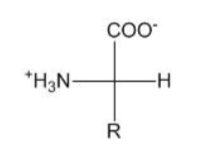
The adjacent structure is that of a generalized amino acid. Assuming the R group is not H and has lower priority than the carboxylate group, what is the relative configuration (D or L) of the structure shown? Note that the ∂-carbon is at the intersection of the two lines; the horizontal bonds project toward the viewer, and the vertical bonds project away from the viewer.
L

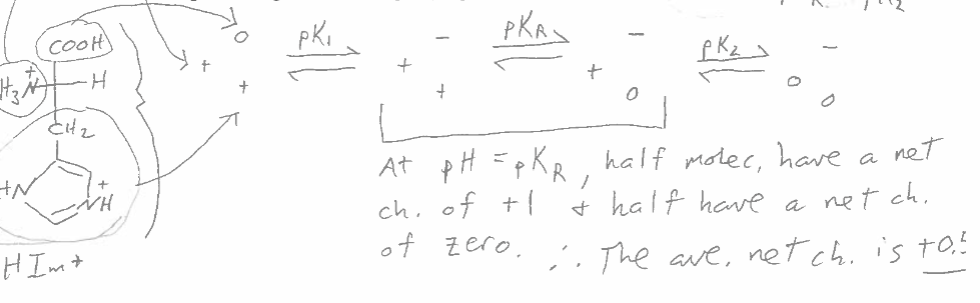
The adjacent figure shows the titration curve of the amino acid L-histidine. What species predominates when 2.0 equivalents of hydroxide have been added? Note that ~NH3+/NH2, ~COOH/COO−, and ~CH2-HIm+/Im refer to the ∂-aminium/amino, ∂-carboxyl/carboxylate, and side-chain imidazolium/imidazole groups, respectively.
S
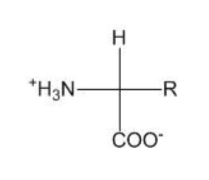
The adjacent structure is that of a generalized amino acid. Assuming that the R group is not H and that it has a lower priority than the carboxylate group, then what is the absolute configuration (R or S) of the structure that is shown? Note that the ∂-carbon is at the intersection of the two lines, the horizontal bonds are understood to be projecting toward the viewer, and the vertical bonds are projecting away from the viewer.
“all” ~NH₃⁺, ~COO⁻, and ~CH₂-Im
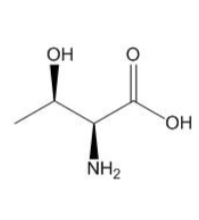
Is the adjacent structure that of L-threonine? Note that the protonation state (as shown) is unusual.
Yes, the structure has the absolute configuration 2S, 3R, so it is L-threonine.

What is the absolute configuration (R or S) and the relative configuration (D or L) of the adjacent amino acid? Note that the alpha carbon is at the intersection of the two lines, the horizontal bonds are projecting out of the plane of the paper (or screen), and the vertical bonds are projecting behind the plane of the paper (or screen).
S,D
The two pKa values of a simple amino acid (i.e., the side chain does not ionize) are 1.97 and 9.59 for the α-carboxyl and α-aminium groups, respectively. At pH 9.49, what percentage of amino acid molecules are in the zwitterion form? Enter your answer to the nearest whole number.
pH = pKa + log([conjugate base]/[weak acid])
56%
Imagine that a single-subunit protein (i.e., a monomeric protein) has folded such that the side chains of an arginine residue and a histidine residue end up close to each other (e.g., ~3 – 4 Å apart). Given the pKa values for these same side chains in free amino acids, which of the following choices is the best description of the likely effect on these pKa values? Assume that no other potentially charged groups are near the two indicated amino acid residues.
The pKa of the side chain of the histidine residue would likely be perturbed to a lower value compared to that of the same free amino acid.
The following question is offered in anticipation of our chapters on metabolism: Assuming that the average weight of an adult is 180 lbs, how many molecules of oxygen arrive each second at a mitochondrion of an average active person? Assume that oxygen consumption is 43 mL per minute per kilogram of body weight, adults have about 1.0 x 10¹² cells, and there are 900 mitochondria per cell. Report your answer to seven figures.
Molecules per second per mitochondrion = WX C1b→kg X Ro, X NA/ 60 × Vm X Ncells X Nmito
about 1.75 × 10⁶ O₂ molecules/second/mitochondrion
Two structures of glycine can be drawn that have a net charge of zero, but the predominant form of glycine at its pI is zwitterionic. Why is glycine predominantly zwitterionic rather than completely uncharged at its pI? What percent of glycine molecules would be in the completely uncharged form at the pI?
Explain why gelatin, which is mostly collagen, is nutritionally inferior to other types of protein.
Radioactively labeled [14 C]-proline is incorporated into collagen in cultured fibroblasts. The radioactivity is detected in the collagen protein. But collagen synthesized in the presence of [14 C]-hydroxyproline is not radiolabeled. Explain why.
Approximately how many grams of monosodium succinate (FW = 140 g/mol; succinic acid pK2 =5.64) and disodium succinate (FW = 162 g/mol) must be added to water to produce a 1-L solution that has a pH of 6.18 and a total solute concentration of 100 mM. (Answer in grams monosodium succinate, grams disodium succinate)
3.13 g monosodium succinate + 12.57 g disodium succinate
A compound has two carboxyls and one amino group. The pKa s of the groups are 1.8, 4.2, and 9.1, respectively. A biochemist has 80 mL of a 0.14 M solution of this compound at a pH of 4.9. She adds 25 mL of 0.12 M NaOH. What will be the final pH of the solution after the addition of the NaOH? Report answer to two significant figures.
pH = 8.2

Which set of binding data (Set A or Set B) is likely to represent cooperative ligand binding to an oligomeric protein? You may want to graph the data to help you answer the question. Write “A” or “B” to indicate your answer or “C” for neither set.
Set B

Use the equation shown below to make the following calculations. Calculate Y in the lungs when p50 = 24 torr, n = 3.1, and pO2 = 100 torr. Then calculate Y in the capillaries, where pO2 is 25 torr, n = 3.1, and p50 = 24 torr. What is the overall efficiency, which is the difference (expressed as a percent) between the fractional saturation in the lungs minus the fractional saturation in the tissues?
Lungs: Y = 0.988; tissues: Y = 0.532; efficiency = 45.7%
Use the same values reported for the problem above, but this time let n=1 instead of 3.1. Calculate Y in the lungs, Y in the capillaries. What is the overall efficiency, which is the difference (expressed as a percent) between the fractional saturation in the lungs minus the fractional saturation in the tissues?
Lungs: Y = 0.988; tissues: Y = 0.532; efficiency = 45.7%
Protein A has a binding site for ligand X with a Kd of 10 -6 M. Protein B has a binding site for ligand X with a Kd of 10 -9 M. Which protein has a higher affinity for ligand X? Why? Hint: You may want to convert Kd to Kassoc for both proteins.
Protein B has higher affinity because its Kd is smaller. A: Kassoc = 10⁶ M⁻¹; B: Kassoc = 10⁹ M⁻¹
The protein calcineurin binds to the protein calmodulin with an association rate (kon) of 8.9*10 3 M -1 s-1 and an overall dissociation constant Kd of 10 nM. Calculate the dissociation or off-rate (koff), including appropriate units.
koff = 8.9 × 10⁻⁵ s⁻¹
An Fab fragment of an antibody binds to an antigen with a Kd of 5*10 -8 M. At what concentration of antigen will Y be 0.2? 0.5? 0.6? and 0.8?
Y=0.2: 1.25×10⁻⁸ M
Y=0.5: 5.0×10⁻⁸ M
Y=0.6: 7.5×10⁻⁸ M
Y=0.8: 2.0×10⁻⁷ M
While most humans are able to hold their breath for only a minute or two, crocodiles can stay submerged under water for an hour or longer. This adaptation allows the crocodiles to kill their prey by drowning. In 1995, Nagai and colleagues suggested that bicarbonate (HCO3–) binds to crocodile hemoglobin to promote oxygen dissociation in a manner similar to BPG in humans and, in so doing, promotes delivery of a large fraction of bound oxygen to tissues. Consider the hypothesis that bicarbonate serves as an allosteric modulator of oxygen binding to hemoglobin in crocodiles. What is the source of HCO3– in crocodile tissues?
Draw oxygen-binding curves for crocodile hemoglobin in the presence and absence of bicarbonate. Which conditions increase the p50 value for crocodile hemoglobin? What does this tell you about the oxygen-binding affinity of hemoglobin under those conditions?
The drug hydroxyurea can be used to treat sickle cell anemia, although it is not used often because of undesirable side effects. Hydroxyurea is thought to function by stimulating the afflicted person's synthesis of fetal hemoglobin. In a clinical study, patients who took hydroxyurea showed a 50% reduction in frequency of hospital admissions for severe pain, and there was also a decrease in the frequency of fever and abnormal chest X-rays. Why would this drug alleviate the symptoms of sickle cell anemia?
The bicarbonate buffer system of the blood is very efficient because
carbon dioxide is rapidly eliminated through the lungs.
Atoms are isotopes of each other only if
their atomic numbers are the same, but their mass numbers differ.
Absence of which of the following blood enzymes drastically reduces blood CO2 carrying capacity?
Carbonic anhydrase
Which of the following BEST explains why proteins are able to buffer physiologic solutions over a wide range of pH?
They contain many functional groups with differing pKs.
A physiologic buffer functions to
minimize the increase in hydrogen ion concentration that accompanies cellular acid production.
All of the following function in buffer systems in the blood EXCEPT
NaCl
The buffer system most important in maintaining the physiological pH of plasma is
carbonic acid/bicarbonate
Treatment of a decapeptide with Sanger's reagent reveals that the N-terminal residue is glycine. The intact decapeptide is then subjected to partial hydrolysis to give peptides whose amino acid compositions are shown below. Based on these data, what is the sequence of the decapeptide? Enter your answer using the one-letter code. Please note that in the choices below, the commas that separate amino acids are meant to convey what amino acids were present in the peptide, but no order is implied. For example, the dipeptide in choice a could be AW or WA.
A, W
V, P, D
P, V
A, E
W, A, R
R, G
E, A, L
M, P, L, E
GRWAELMPVD
What would be the order of release of labeled amino acids (first to last) when Edman degradation is run on the following hexapeptide: GHIVSD? (Enter your answer using the one-letter code.)
GHIVSD
A pentapeptide obtained from treatment of a protein with trypsin was shown to contain R, D, L, S, and Y. To determine the amino acid sequence, the peptide was cycled through the Edman degradation procedure three times. The composition of the peptide remaining after each cycling was as follows: After cycle 1: R, D, L, S After cycle 2: R, D, S After cycle 3: R, S What is the sequence of the pentapeptide? Enter your answer using the one-letter code.
YLDSR
A South American beetle produces a substance that extracts gold from seawater, and you desire to know its structure in order to carry out its large-scale synthesis. Analysis gives a composition of one each of Lys, His, Arg, Phe, Ala, Tyr, Ser. Reaction with FDNB gives no products, unless the material is first reacted with chymotrypsin, in which case both FDNB-Ser and FDNB-Lys are formed from peptides with compositions: (1) Ala, Tyr, Ser and (2) His, Phe, Lys, Arg. Reaction with trypsin also produces two peptides, with compositions: (1) Arg, His and (2) Phe, Tyr, Lys, Ser, Ala. What is the sequence and structure of this peptide?
cyclic KHRFSAY

Amino acid analysis of a heptapeptide gave: Asp, Leu, Lys, Met, Trp, and Tyr. The following results were observed:
Trypsin had no apparent effect
The first round of Edman degradation yielded the adjacent structure:
Brief chymotrypsin treatment yielded several products, including a dipeptide and a tetrapeptide. The tetrapeptide contained Leu, Lys, and Met.
Cyanogen bromide treatment yielded a dipeptide, a tetrapeptide, and free Lys.
Given the above information, what is the sequence of the heptapeptide? Use the one-letter code to report your answer.
WMYDLMK
To the nearest unit, calculate the axial length (in angstroms, Å) of an a-helix that contains 24 amino acids.
36Å
To the nearest unit, calculate the length (in angstroms, Å) of a fully extended ß-strand that contains 24 amino acids.
84Å
If a peptide made up exclusively of aspartate residues (of sufficient length to form an α-helix) was in a solution at pH 9, would it likely form an α-helix? You should be able to explain the “why” of your answer.
No, it likely would not form an a-helix
In the α-helix the hydrogen bonds:
are roughly parallel to the axis of the helix
Which of the 20 standard amino acid side chains are charged at pH 2?
H, R, K
Which of the 20 standard amino acid side chains are charged at pH 7?
E, D, some H, R, K, some C
Which of the 20 standard amino acid side chains are charged at pH 13?
E, D, C, Y, some R
What is the hierarchy of protein structural organization? In other words, what are the levels of protein structure?
Primary → Secondary → Tertiary → Quaternary
Which is more stable, a right-handed or left-handed a-helix of polyglycine? You should be able to explain the “why” of your answer.
Equal stability — glycine is achiral, so neither handedness is favored
The hemagglutinin protein in influenza virus contains a remarkably long -helix, with 53 residues.
How many turns does this a-helix have?
14.7
The hemagglutinin protein in influenza virus contains a remarkably long -helix, with 53 residues.
How many intra-alpha-helical hydrogen bonds would this a-helix have?
49 H-bonds, because H-bonds occur between and n+4th reside.
Assume the Earth has 1010 people. If, by a miracle, a world of people sprang up for each person, how would the resulting number compare to a mole? In other words, how many times bigger (or smaller) is a mole compared to the “miracle” world described above?
6022 (6.0×10³)
If hair grows at a rate of 18 cm per year, then what is the rate of peptide bond synthesis (peptide bonds per second) that would account for the observed growth of hair? Assume that biosynthesis of a-helical keratin chains is the rate-limiting factor for the growth of hair, and use the conversion factors: (one peptide bond/residue) * (3.5 residues/5.4 Å). Also, to simplify this problem, consider the growth of one keratin alpha-helix only. Record your answer to two significant figures. Note that we are using 3.5 residues per 5.4 Å rather than the usual 3.6 residues per 5.4 Å because the twisting of the twisting of the two a-helices to make the coiled-coil (i.e., supercoil) distorts the individual a-helices slightly.
37 peptide bonds
Imagine that inside a cell the [ATP] = 3.0 mM, the [ADP] = 0.8 mM, and [Pi] = 4.0 mM. Furthermore, imagine that the pH inside the cell is 7.3. Given that delta Gº’ for ATP hydrolysis is −7.3 kcal/mol, what is the delta G for ATP hydrolysis inside the above-described cell, which is at 37ºC? Report your answer in kcal/mol to the nearest tenths. Hint: you might wish to consult the handout that discusses (among other things) important relationships you need to know regarding thermodynamics.
-11.9 kcal/mol
A molecule has two aminium groups with pKas of 8.7 and 10.2, and it has a carboxyl group with a pKa of 3.8. A biochemist has 100 mL of a 0.1 M solution of this compound at a pH of 6.5. She adds 40. mL of 0.1 M HCl. What is the pH of the resulting solution? Report your answer to the nearest tenth.
pH = 4.0
A biochemist prepares two stocks of sodium phosphate buffer by titrating phosphoric acid with sodium hydroxide. She prepares a 0.10 M solution of sodium phosphate buffer at pH 2.15, and she prepares a 0.10 M solution of sodium phosphate buffer at pH 7.20. If she mixes 30. mL of the pH 2.15 buffer with 50. mL of the pH 7.20 buffer, what will be the pH of the resulting solution to the nearest hundredth? Also, comment on whether the resulting solution would be a more effective buffer against added acid or added base. Recall that the pKas of phosphoric acid are 2.15, 7.20, and 12.35.
Hint: stoichiometry, stoichiometry, stoichiometry.
pH = 6.35
Which of the following characterizes endergonic reactions?
Positive free energy change
Which of the following characterizes an asymmetric carbon?
A carbon atom with four different groups attached to it
Which of the following solutions has an osmotic pressure different from all the others?
1 M glucose
If the pH becomes higher than the isoelectric point of a protein, then how will the protein respond in an electrophoretic system? It will
migrate to the positive pole
Which of the following statements is correct concerning the reaction shown below under conditions where the pH is increased (i.e., becomes more basic)?
CH3COOH(aq) ⇌ H+(aq) + CH3COO−(aq
A new Keq is reached that favors the products
Consider the two hydrolysis reactions shown below and determine which of the following values represents the free energy change for converting glucose to glucose-6-phosphate, with ATP as the phosphoryl-group donor. Recall that Pi represents inorganic phosphate (predominantly HPO4− at cellular pH).
ATP + H2O ⇌ ADP + Pi + H+
∆G°′ = −7.30 kcal/mol
glucose-6-phosphate + H2O ⇌ glucose + Pi
∆G°′ = −3.35 kcal/mol
−3.95 kcal/mol
The intermolecular attractive forces between methylaminium ion (CH3NH3+) and acetate ion (CH3COO−) will be greater in methanol than in water because ____________________.
methanol has a lower dielectric constant than water
Which of the following macromolecules would yield only one type of monomer after complete hydrolysis?
Glycogen
The reaction shown below is an oxidation-reduction (i.e., redox) reaction. Which of the species shown below acts as the reducing agent? isocitrate + NAD+ → α-ketoglutarate + CO2 + NADH
isocitrate
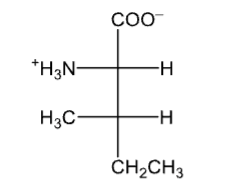
Consider the representation of the amino acid shown below. What is the relative configuration (D or L) of the ∂-carbon?
L
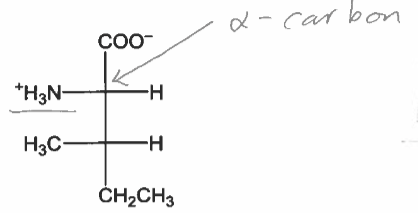

Consider the representation of the amino acid shown below. What is the absolute configuration (R or S) of the ∂-carbon?
S

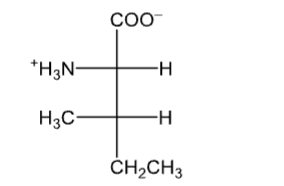
Consider the representation of the amino acid shown below. Does the molecule have any other chiral carbons? If so, what is/are the absolute configuration(s) (R or S) of this/these other carbon(s)?
S at the other chiral carbon

The two pKa’s of leucine are 2.33 and 9.74. At pH 2.33, what percentage of leucine molecules are in the zwitterion form?
50%

What is the average net charge of the amino acid aspartate at pKa2 (the pKa of its α-aminium group)?
-1.5

What is the average, net charge of histidine at pKR (the pKa of its side-chain imidazolium group)?
+0.5
A compound is discovered and determined to have two carboxyl groups and one guanidinium functional group (like the side chain of arginine). The pKas of the three groups are 2.3, 4.7, and 12.3, respectively. Estimate the pI of this compound? Report your answer to two figures.
pl = 3.5

A compound is discovered and determined to have two carboxyl groups and one guanidinium functional group (like the side chain of arginine). The pKas of the three groups are 2.3, 4.7, and 12.3, respectively. What is the net charge of this molecule at pH = 2.3? Report your answer to one figure.
+0.5
The pK2 of serine is 9.21. At pH 8.61, what percent of serine molecules would have their amino group in the basic (~NH2) form? Enter your answer to two figures.
20%
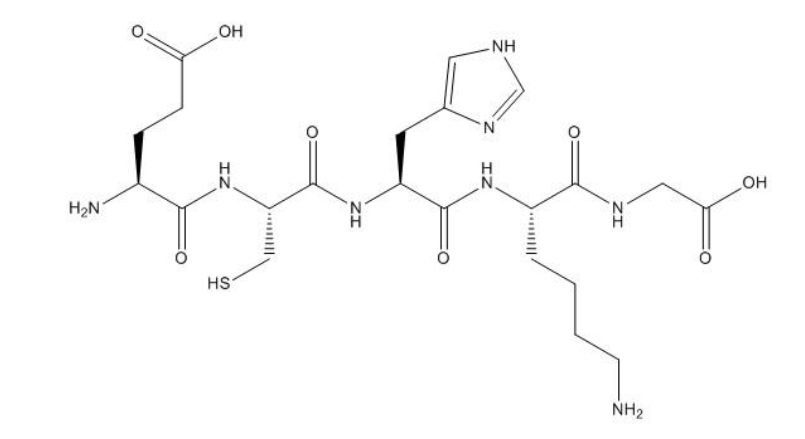
Name the following peptide as one long word.
Glutamylcysteinylhistidyllysylglycine

Name the following peptide using the three-letter code.
Glu-Cys-His-Lys-Gly

Name the following peptide using the one-letter code.
ECHKG

What are the absolute configurations of the chiral centers?
Glu S
Cys R
His S
Lys S
Gly achiral
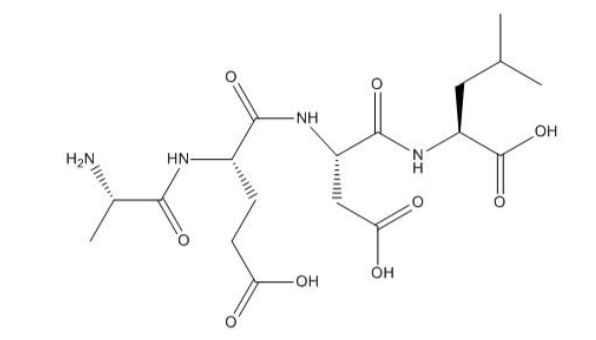
The following peptide is shown in a “folded” conformation and in an unusual protonation state. Name the peptide the same three ways as above and determine the absolute configurations of the chiral centers. Also, consider the three adjacent carboxyl side chains. If the one closest to the N-terminus has a pKa of 3.9, and if the C-terminal one has a pKa of 3.3, what would you predict for the pKa of the middle one? Would it be higher or lower than the pKas of the above-noted groups?
Alanylglutamylaspartylvaline; Ala-Glu-Asp-Val; AEDV. Configurations: S, S, S, S. Middle carboxyl pKa would be higher than 3.9 and 3.3 because nearby negative charges make its deprotonation less favorable.


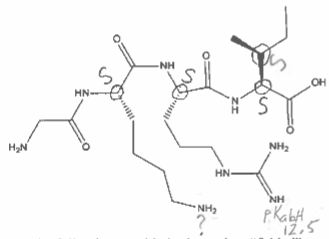
The following peptide is shown in a “folded” conformation and in an unusual protonation state. Name the peptide the same three ways as above and determine the absolute configurations of the chiral centers. Also, consider the side chains of the two adjacent, internal amino acid residues. If the one that occurs later in the sequence has a pKabH (pKa of the conjugate acid of the form shown) of 12.5, what would you predict for the pKabH of the one that occurs earlier in the sequence? Would it be higher or lower than the pKabH of the side chain of the corresponding free amino acid?
Glycyllysylarginylisoleucine; Gly-Lys-Arg-Ile; GKRI. Gly achiral; Lys S, Arg S, Ile 2S,3S. Earlier Lys side-chain pKabH would be lower than free Lys (~10.4) due to positive-charge repulsion.

The following peptide is shown in a “folded” conformation and in an unusual protonation state. Name the peptide the same three ways as above and determine the absolute configurations of the chiral centers. Also, consider the side chains of the two adjacent, internal amino acid residues. If the one that occurs later in the sequence has a pKa of 3.9, what would you predict for the pKabH (pKa of the conjugate acid of the form shown) of the one that occurs earlier in the sequence? Would it be higher or lower than the pKabH of the side chain of the corresponding free amino acid?
Prolylhistidylaspartylmethionine; Pro-His-Asp-Met; PHDM. Configurations: S, S, S, S. His pKabH would be higher than free His (~6.0) because His⁺ is stabilized by nearby Asp⁻.

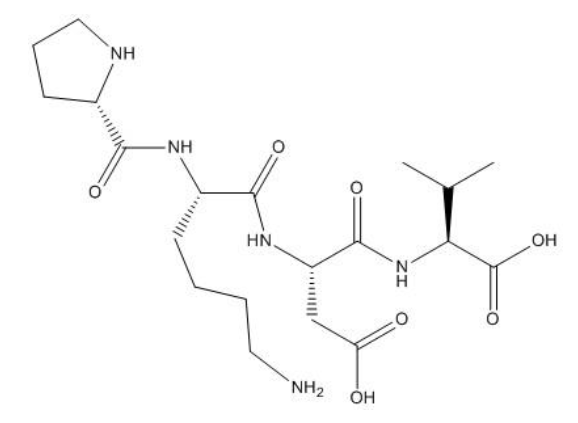
The following peptide is shown in a “folded” conformation and in an unusual protonation state. Name the peptide using the one-letter code and determine the absolute configurations of the chiral centers. Also, consider the side chains of the two adjacent, internal amino acid residues. If the one that occurs later in the sequence has a pKa of 3.9, what would you predict for the pKabH (pKa of the conjugate acid of the form shown) of the one that occurs earlier in the sequence? Would it be higher or lower than the pKabH of the side chain of the corresponding free amino acid?
PKDV. Configurations: S, S, S, S. Lys pKabH would be higher than free Lys (~10.4) because Lys⁺ is stabilized by nearby Asp⁻.

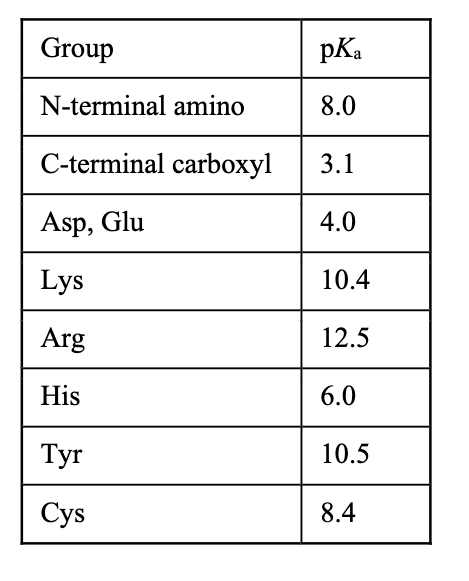
Determine the net charge of the following peptide at pH 4.7: AGLCEK. Use the pKa values in the table below. Report your answer to three figures. Recall that we will consider a group to be fully protonated (or unprotonated) if the separation between the pH and the pKa of the group being considered is 2 units or greater. This approximation will greatly simplify the math.
+0.191