Classification of Fatty acids and Triacylglycerols + Key Reactions
 Call Kai
 Learn
 Practice Test
 Spaced Repetition
 Match
 Flashcards
 Knowt Play
1/17

There's no tags or description
Looks like no tags are added yet.
18 Terms
1823
fats were identified to be esters of glycerol with fatty acids
1929
essential fatty acids identified to be important for infant growth
1940-1950
infants identified to have severe eczema and other skin disorders with diets having insufficient fatty acids
What is a fatty acid?
Simplest of all lipid classes
Hydrocarbon chain with a methyl group at one end and carboxylic acid group at the other
The carboxylic acid end is hydrophilic while the rest is fully hydrophobic
Usually even # carbons, but odd # exist
Can be saturated or unsaturated (with one [mono-] or more [poly-] unsaturations)
Unsaturated Fatty Acid Isomerism
Most naturally occurring (mono-/poly-) unsaturated fatty acids exhibit a cis configuration of its enoyl bond (or carbon-carbon double bond)
its hydrogens are on the same side of the double bond (bend in a U-like formation)
Trans configurations sometimes occur naturally but they typically occur through hydrogenation reactions
its hydrogens are on opposite sides of the double bond (linear formation)
Fatty Acid Chain Length and Nomenclature
Fatty acid chain length is based on the number of carbons in its structure:
Four types:
Short chained: 2-6 carbons
Medium chained: 8-10 carbons
Long chained: 12-20 carbons
Very long-chained: 22 carbons and longer
Fatty acids can be named (ie. palmitate) or assigned a number representing length and unsaturation (ie. 16:0)
Linoleic acid (18:2n-6)
α-Linolenic acid (18:3n-3)
Fatty acids can also be represented by the position of double bonds from the carboxylic acid end:
The “delta system”: Δa,b,c
a,b,c; position of unsaturation from carboxylic acid group
Number of carbons
Number of double bonds
Linoleic acid (18:2 Δ9,12)
Fatty acids: what can we make?
Fatty acid synthase makes palmitate (16:0), using acetyl-CoA and malonyl-CoA
Palmitate is used to make stearate (18:0).
Stearate is the precursor in mammals for at least 13 other fatty acids
Fatty acids: what can we not make?
We cannot make essential fatty acids
Plants have the ability to generate linoleate or linoleic acid (18:2n-6) and α- linolenic (18:3n-3) fatty acids from oleate (18:1n-9)
“omega-6” and “omega-3”, respectively
We can obtain these from plants and aquatic species, & we (as well as plants and aquatic species) can metabolize these further
Linoleic (18:2) → arachidonic (20:4) → eicosanoids
α- linolenic (18:3) → EPA (20:5) → DHA (22:6)
Fatty Acid Storage: Triglycerides
Triglycerides (also called triacylglycerides or triacylglycerols), abbreviated as TG or TAG, act as storage molecules for fatty acids
TG’s can be stored in lipid droplets within cells, and they can be carried through the circulation in lipoproteins
The TG structure is a glycerol with 3 esterified fatty acids
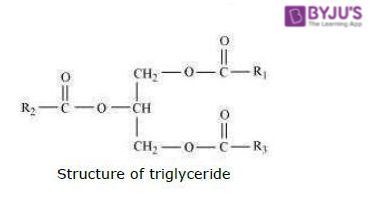
Simplified view of TG synthesis from glycerol and fatty acids:
The addition of 3 different fatty acids onto glycerol to generate a TG is essentially a dehydration reaction whereby a water is generated with the addition of each fatty acid
However, the fatty acids need to be “activated” – (CoA added onto carboxyl end)
The synthesis of TG’s…
Requires:
glycerol or dihydroxyacetone phosphate (DHAP)
NADH
“activated” fatty acids
ATP
5 enzymes
DHAP can be formed via two routes:
Glycolysis
Gluconeogenesis
TG and phospholipid synthesis share common steps:
Most glycerol 3-phosphate comes from dihydroxyacetone phosphate (DHAP) from glycolysis/gluconeogenesis.
Some glycerol 3-phosphate is made from glycerol via glycerol kinase – a minor pathway in liver and kidney
Phosphatidic acid is the precursor to TGs and phospholipids.
Advantage of making phosphatidic acid is it can then be made into triacylglycerol OR phospholipid.
TG Storage
The major tissue for TG storage is adipose:
Can be subcutaneous (or below the skin), or visceral (or around internal organs)
Storage is needed but it can also be detrimental:
Epicardial fat is visceral fat located directly between the heart's outer muscle layer and the inner layer of the heart sac

Adipose TG can be used in the body when needed:
Stored TG is hydrolyzed into glycerol and fatty acids for transport in the bloodstream
Fatty acids at destination tissues can be used for acetyl-CoA synthesis via β-oxidation
Acetyl-CoA from fatty acids can be used by the Krebs cycle or for ketone body synthesis
Glycerol can be used toward pyruvate or glucose synthesis
β-Oxidation
Requires “activation” of a fatty acid, subsequent exchange of CoA with carnitine to allow transport into mitochondria, and re- exchange of carnitine with CoA
Ketone Body Synthesis
Takes place in liver mitochondria during long-term fasting, using acetyl-CoA as the starting point
Three molecules collectively are defined as being a ketone body:
Acetoacetate (synthesized from HMG-CoA)
β-hydroxybutyrate (synthesized from reduction of acetoacetate)
Acetone (synthesized from decarboxylation of acetoacetate)