oral health and prevention - unit 4
 Call Kai
 Learn
 Practice Test
 Spaced Repetition
 Match
 Flashcards
 Knowt Play
1/25

Earn XP
Description and Tags
stains
26 Terms
What is the significance of stain removal in relation to dental disease?
It creates rough surfaces which encourage plaque to attach
Allows surfaces to be examined more accurately

Define extrinsic stains and where it is located
Forms on outer surface of enamel, cementum, dentin.
Potentially be removed by professional tooth polishing
Can incorporate into calculus
Amount & thickness related to poor OH
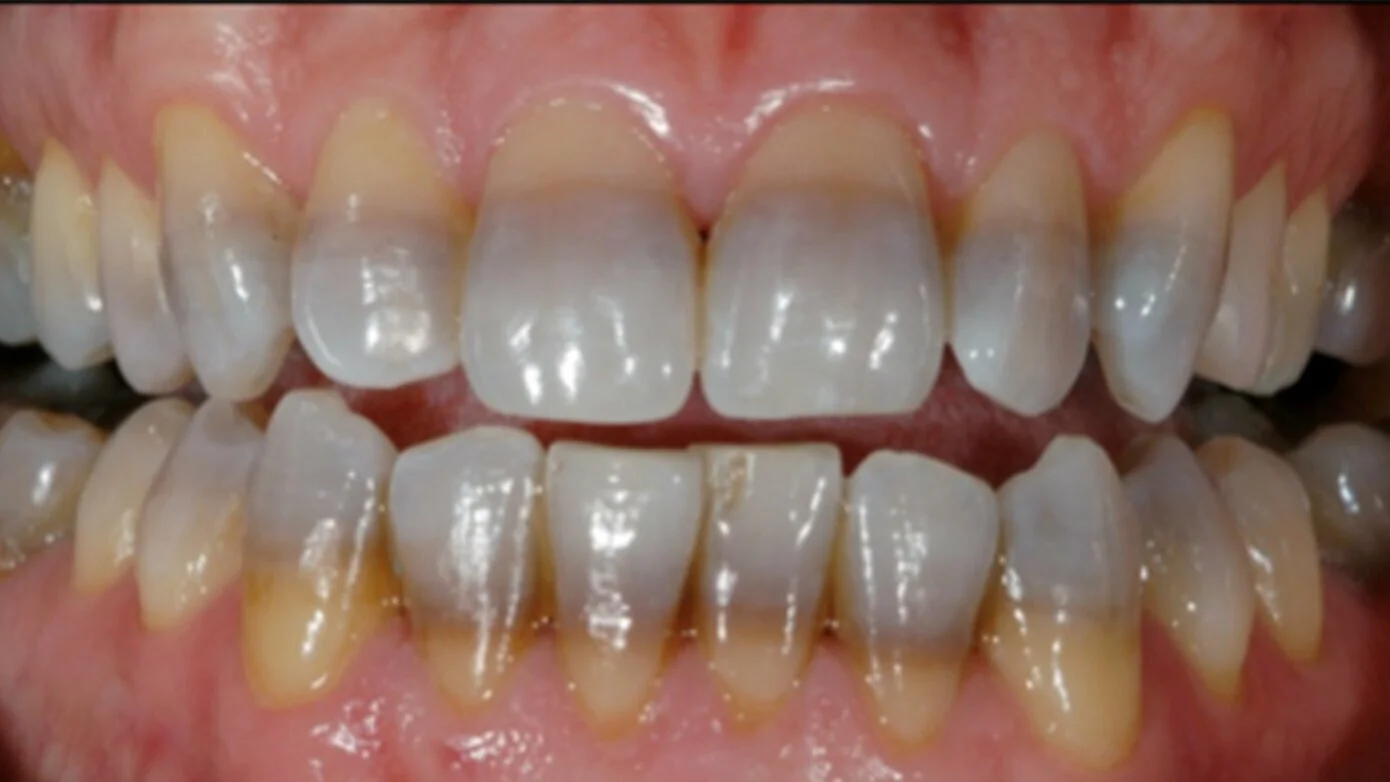
Define intrinsic stains and where it is located
Incorporated “within” the structure of the tooth
Cannot be removed with polish or scaling
Extrinsic (surface) stains can become intrinsic
Define exogenous stains and where it is located
Stains that come from sources OUTSIDE (environmental agents) of the body.
Food, drinks, drugs
Further classified as intrinsic or extrinsic (depending on ability of removing stain)
Define endogenous stains and where it is located
Stains that come from sources WITHIN the body.
These stains occur during tooth development
Further classified as intrinsic
How does food and drinks cause light brown/yellow stains? (extrinsic exogenous)
Poor oral hygiene
Pigments in food and drinks are left behind
How does tobacco cause light brown/dark brown/black stains? (extrinsic exogenous)
From the tars and resins in tobacco
Chewing tobacco
stains the darkest
How does chromogenic bacteria cause black line stains? (extrinsic exogenous)
Natural tendencies, unknown origin
Could be linked to iron in saliva or gingival fluid
How does chromogenic types cause yellowish to dark green stains? (extrinsic exogenous)
Chromogenic bacteria
Cannabis smoking
Decalcification of enamel
Unknown causes
How does Chlorhexidine (a rinse to control plaque and gingivitis) cause yellow/brown/red stains?
(extrinsic exogenous)
Interaction of the antiseptic and food
develops within 2-3 days of using the rinse
How does stannous fluoride cause light brown stains? (extrinsic exogenous)
Tin ions from a topical stannous fluoride
How does silver amalgam cause light to dark gray stains? (intrinsic exogenous)
Metallic ions in amalgam migrate from enamel into dentin
How does aged enamel cause yellowish brown stains? (intrinsic exogenous)
Older teeth often appear from dentin exposure
How does non-vital teeth cause gray to bluish stains? (intrinsic endogenous)
Blood pigments stagnate in the pulp chamber when a tooth dies
How does tetracycline cause yellowish gray or gray-brown stains? (intrinsic endogenous)
If antibiotic is ingested during tooth development (beyond the 2nd trimester of pregnancy or given to a young child)
Higher dose = stain more severe, more teeth affected, affects tooth shape
How does Imperfect Tooth Development cause yellowish brown or translucent stains? (intrinsic endogenous)
Genetic or inherited disorders may result in no enamel or no dentin
Define Hypoplasia
Lack of quantity of enamel (most common)
Define Hypocalcification
Lack of quality of enamel, but has the proper amount
White areas on enamel
Enamel is softer and weaker
Define Decalcification
Loss of minerals from enamel after tooth erupts
Intrinsic exogenous stain
Usually due to plaque
Chalky white stains, beginning of cavities
What are the four main educational responsibilities of a Dental Assistant regarding stain prevention?
Educate clients on the source of their stains
Teach the best oral hygiene practices
Caution clients against abrasive toothpastes
Educate clients on whitening options (noting that professional stain removal is a necessary first step)
What should a Dental Assistant always do first before teaching a client where their plaque is accumulating?
Disclose first (use a plaque-disclosing agent)

What is the function of rubber cup polish (coronal polishing)?
Removal of surface stains and plaque above the gingival margin
What is the function of prophylaxis (prophy)?
Removal of calculus, stains and plaque from all surfaces above and below gingival margin
NOT A DA ROLE
What are the three main benefits of Coronal Polishing?
Provides a smooth enamel surface that is easier to keep clean
Motivates the client to take better care in keeping their teeth clean
Often required prior to other procedures
What are the contraindications for coronal polishing?
If there is no stain present
If the client has a lot of white spot lesions
On newly erupted tooth surfaces
When and why is pumice used instead of a standard polishing paste?
It is used prior to etching enamel
specifically before applying sealants and orthodontic brackets