VMA Chemical Formulas
 Call Kai
 Learn
 Practice Test
 Spaced Repetition
 Match
 Flashcards
 Knowt Play
1/27

There's no tags or description
Looks like no tags are added yet.
28 Terms
Chemical Formula
A combination of chemical symbols and numbers used to represent a compound or indicate the atoms present in a molecule.

Naming Compounds
Similar but different compounds have different names: Example Iron Oxides
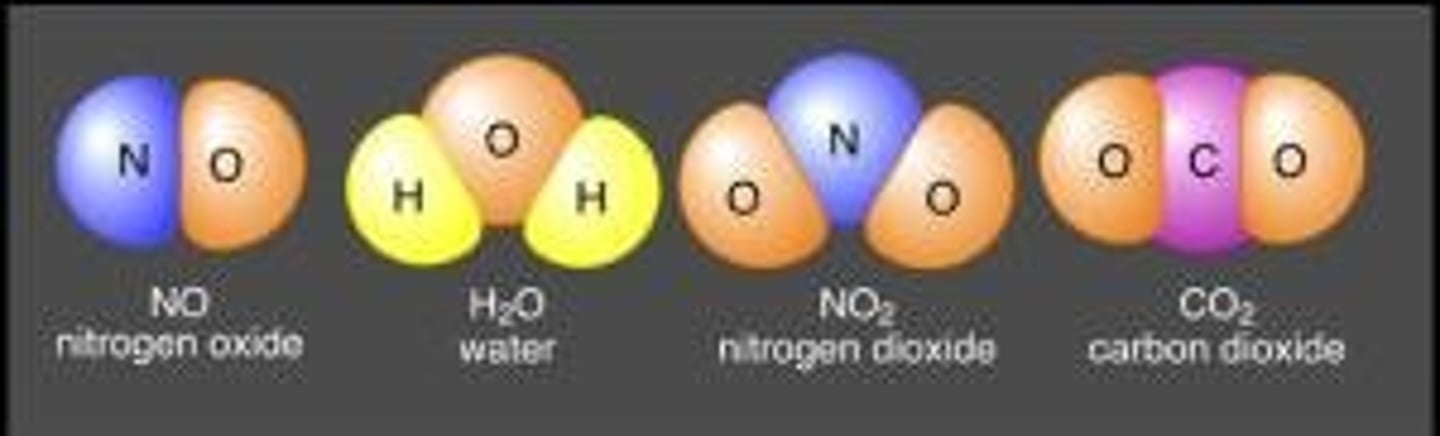
If the molecules has a metal atom
Metal first (sodium), Nonmetal root second (chlor-) add -ide suffix at the end (chlor-ide), Combine the two: (sodium chloride)
If both atoms are nonmetals:
First comes the one that is furthest to the left of the table (carbon), (In case of tie, start with the highest atomic #), After comes the root of the second atom -ox-, With a prefix according to the number of atoms, and the same -ide suffix as before
Chemical Equation
Chemical reactions with chemical symbols and formulas
Reactants
The substances that will react together, the compounds present before the chemical reaction
Products
The substances that you get from the chemical reaction
Chemical Bond
Strong force of attraction that holds the atoms of a substance together - There are three types
-covalent
-Ionic
-Metallic
Valence Electrons
Electrons on the outer orbit of an atom that form bonds
The rule of 8: Octet rule
If the outer layer has 8 electrons (or 4 pairs), it is stable and will not react. Other things want to tend towards having 8 electrons on the valence layer.
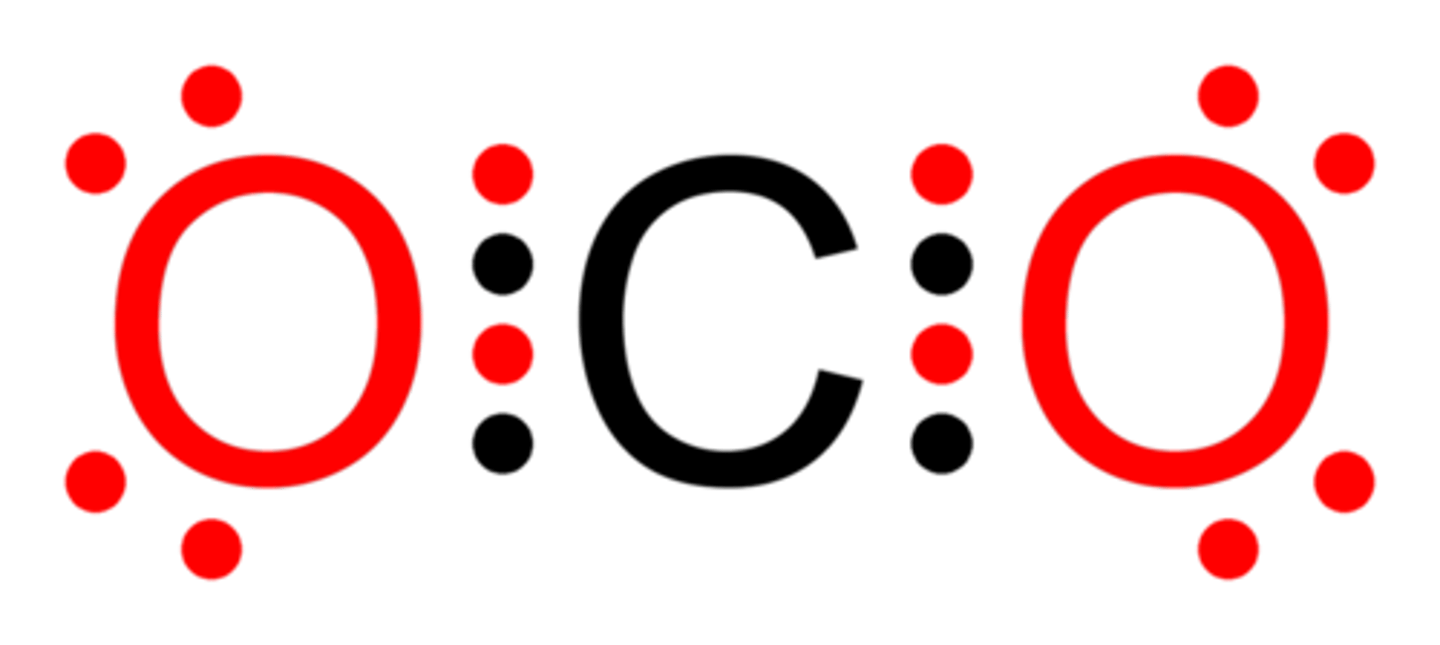
Nobles Gases
They always have a full octet, so they are inert (inactive chemically)
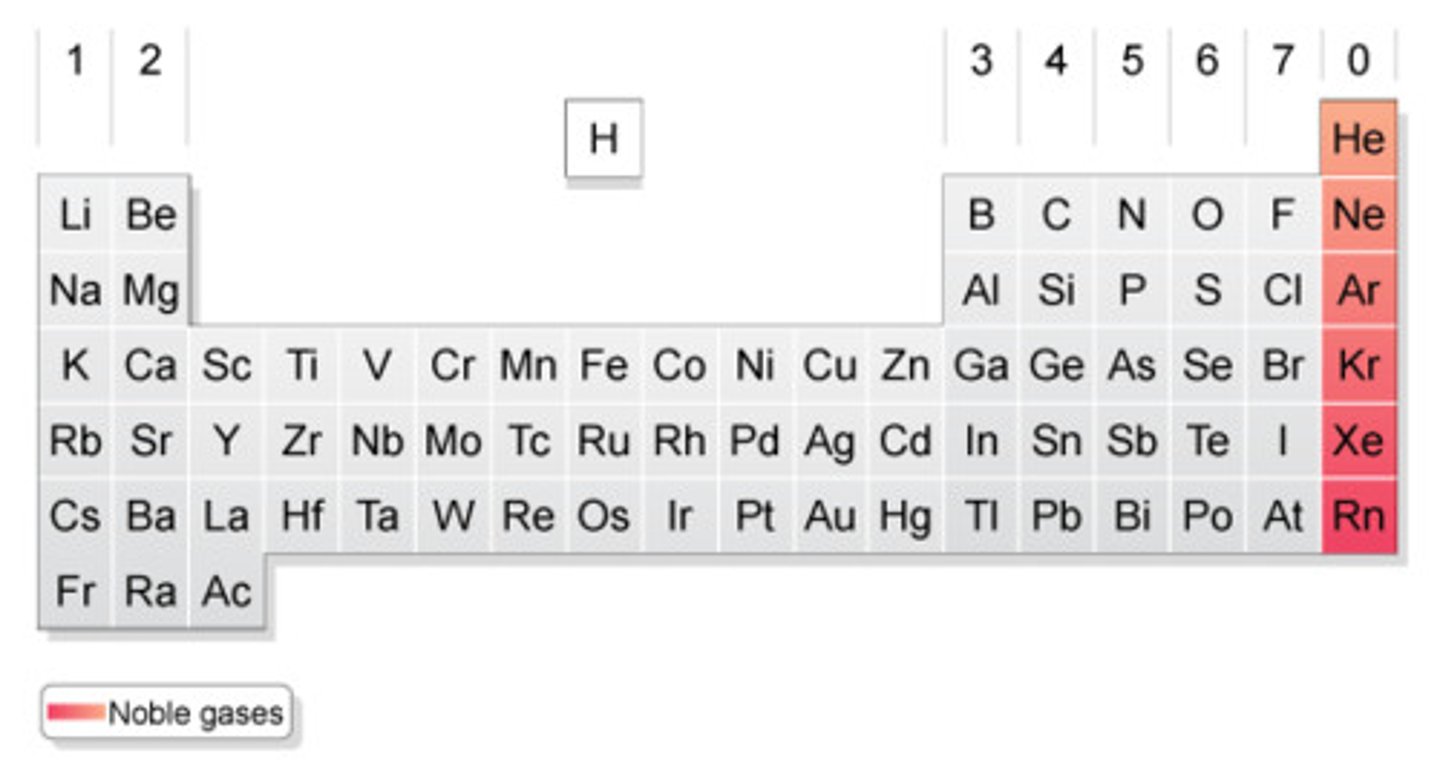
1. Covalent Bonds
Bond that is formed when 2 atoms share electrons from the valence electron layer
2. Covalent Bonds
Allows atoms to form molecules.
A molecule is the smallest part of a covalently bonded substance that still has the properties of that substance.
diatomic molecule
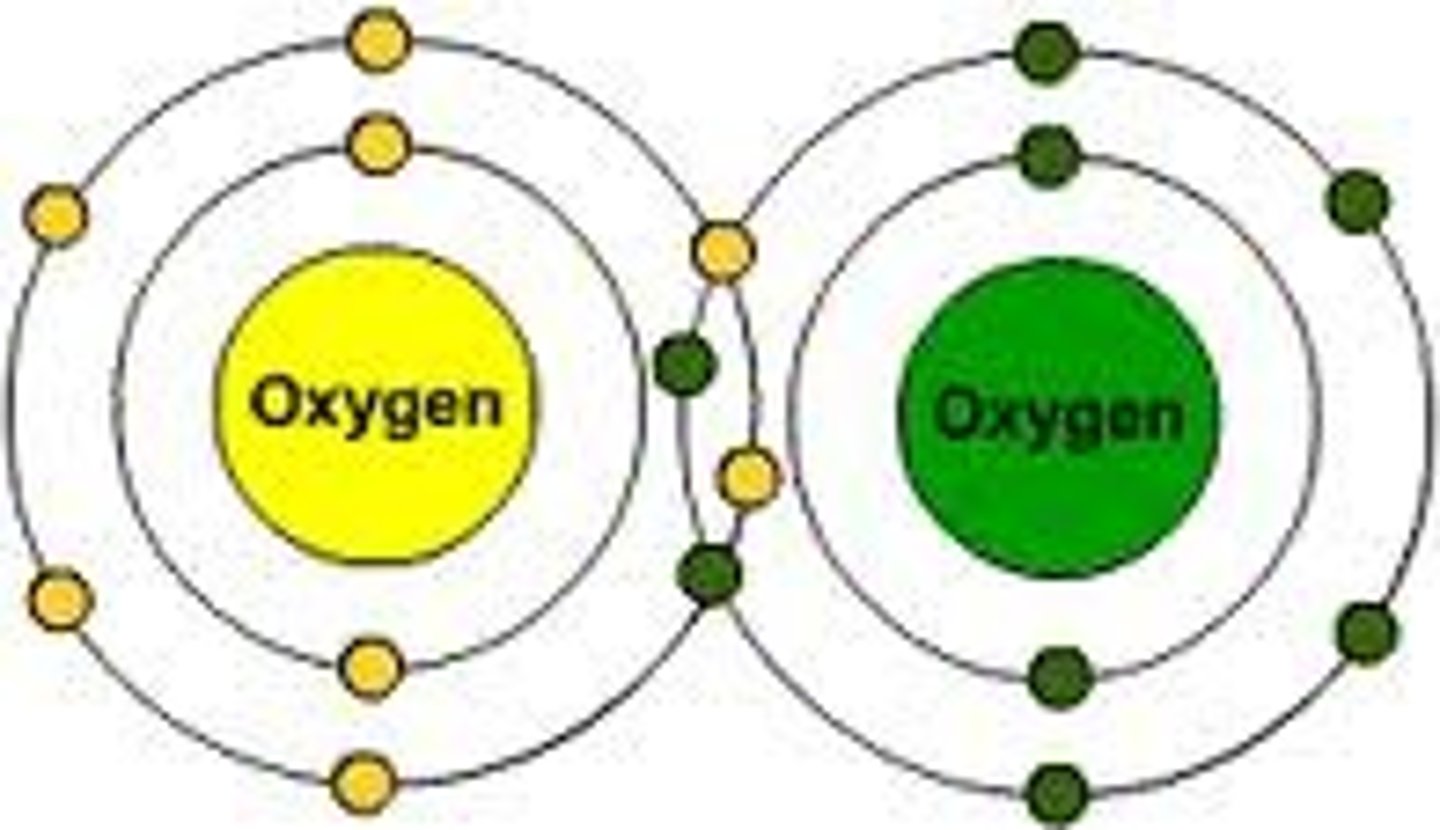
molecule made out of only 2 atoms. if they are made out of identical atoms, they are called homonuclear (same as nucleus) Hydrogen, halogens, oxygen
Electron dot diagrams
a way to represent the electrons on the valence layer. they can be used to represent covalent bonds
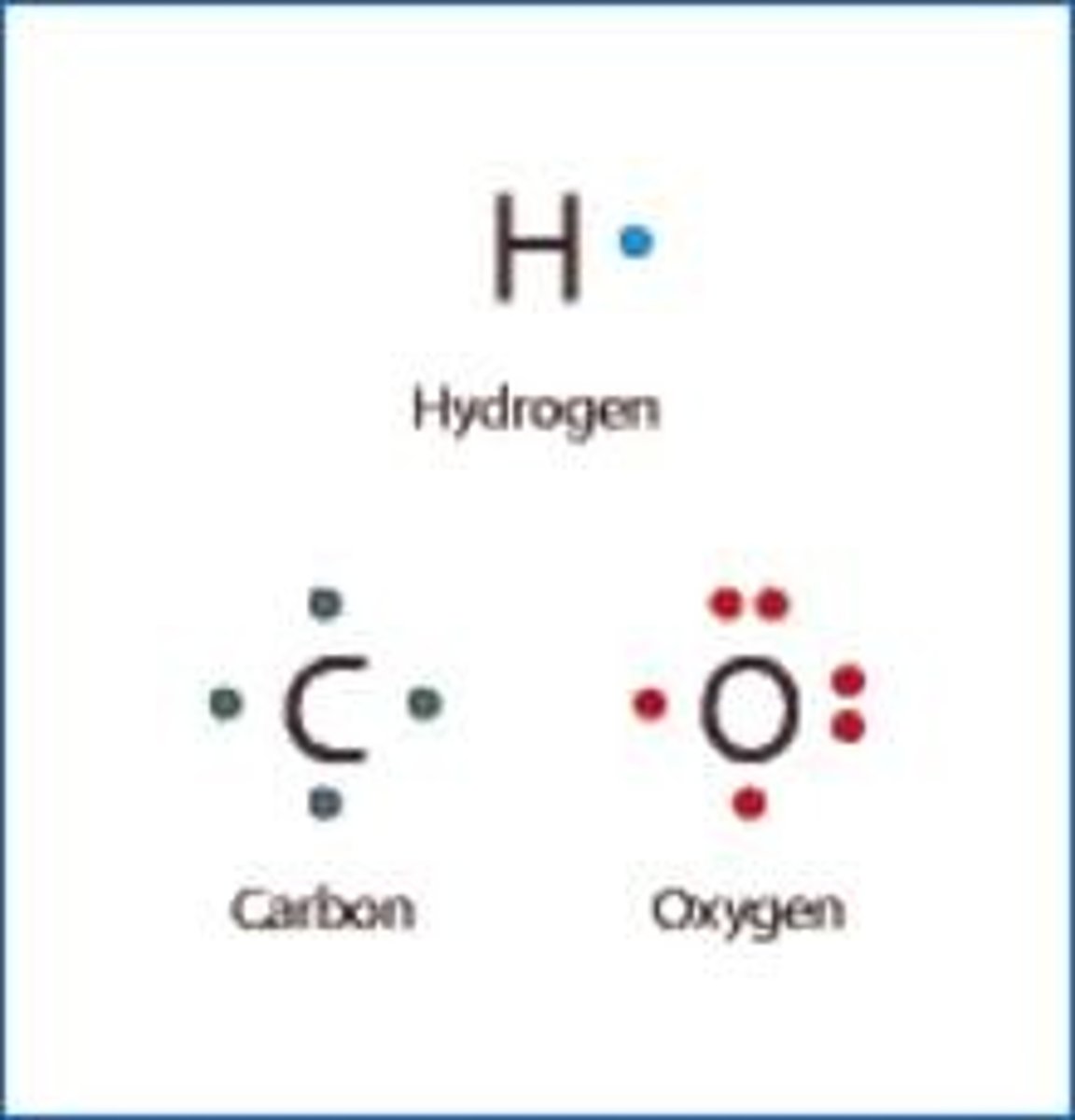
Single bond
bonds between two atoms that share one pair of valence electrons
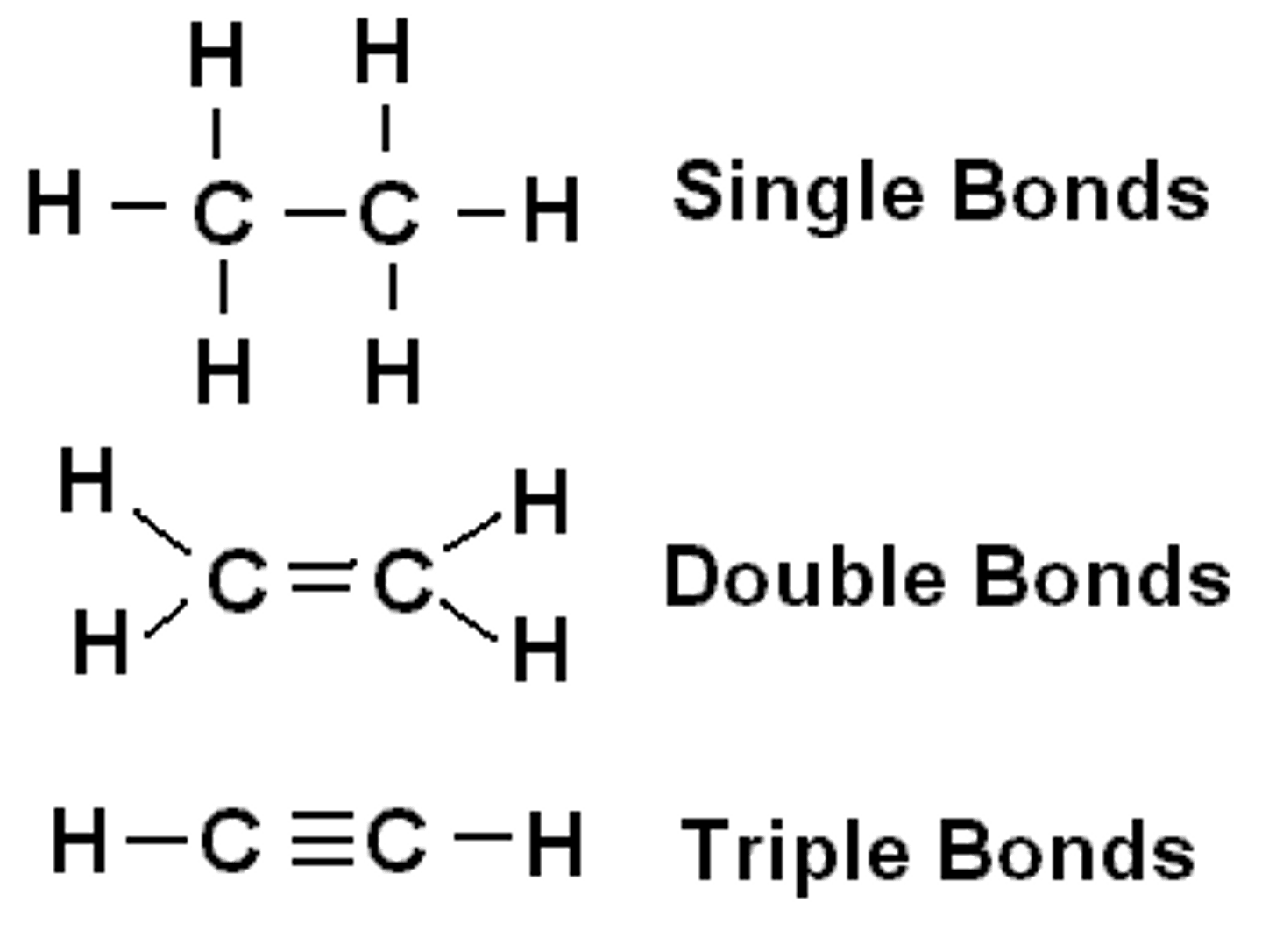
Double bonds
bonds between two atoms that share two pairs of valence elctrons
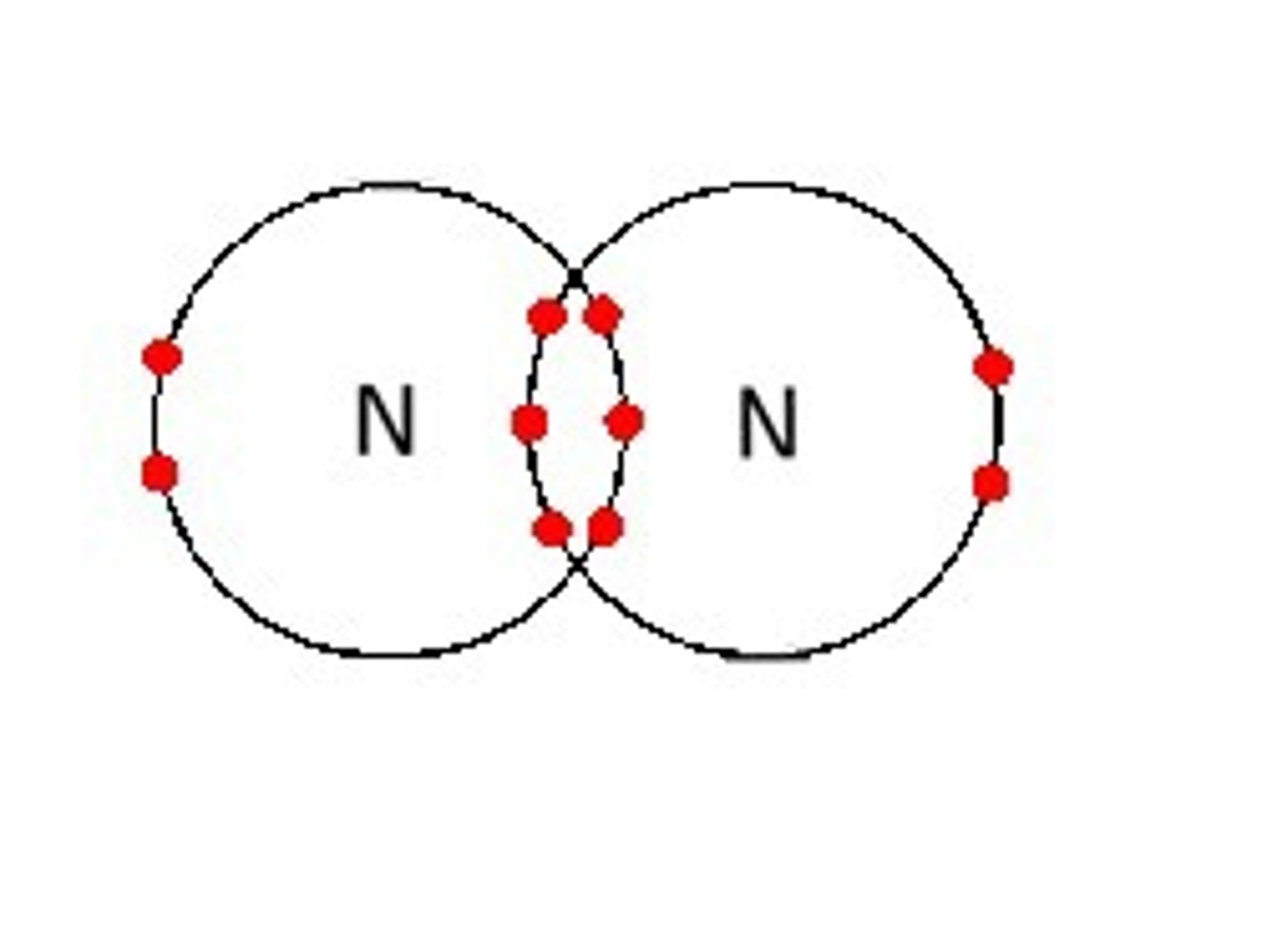
Triple Bonds
bonds between 2 atoms that share 3 pairs of valence electrons
Ion
a charged particle, either positive or negative
Metal atoms tend to lose their electrons to other atoms to be more stable
Halogen atoms tend to gain another electron from other atoms to be more stable
Ionic Bonds
When you put a metal and non-metal atom together. One atom becomes positively charged, the other negatively charged
What happens to ionic compound in solution (dissolved)
they conduct electricity
Metallic Bonds
the force of attraction between valence electrons and the metal atoms
Metallic Bonds Properties
strength, ductile, malleable, conducting and resisting properties, opaque, luster
ductile
ability of metals to be drawn into wires

malleable
capable of being shaped
opaque
Impossible to see through; preventing the passage of light
luster
The way a mineral reflects light
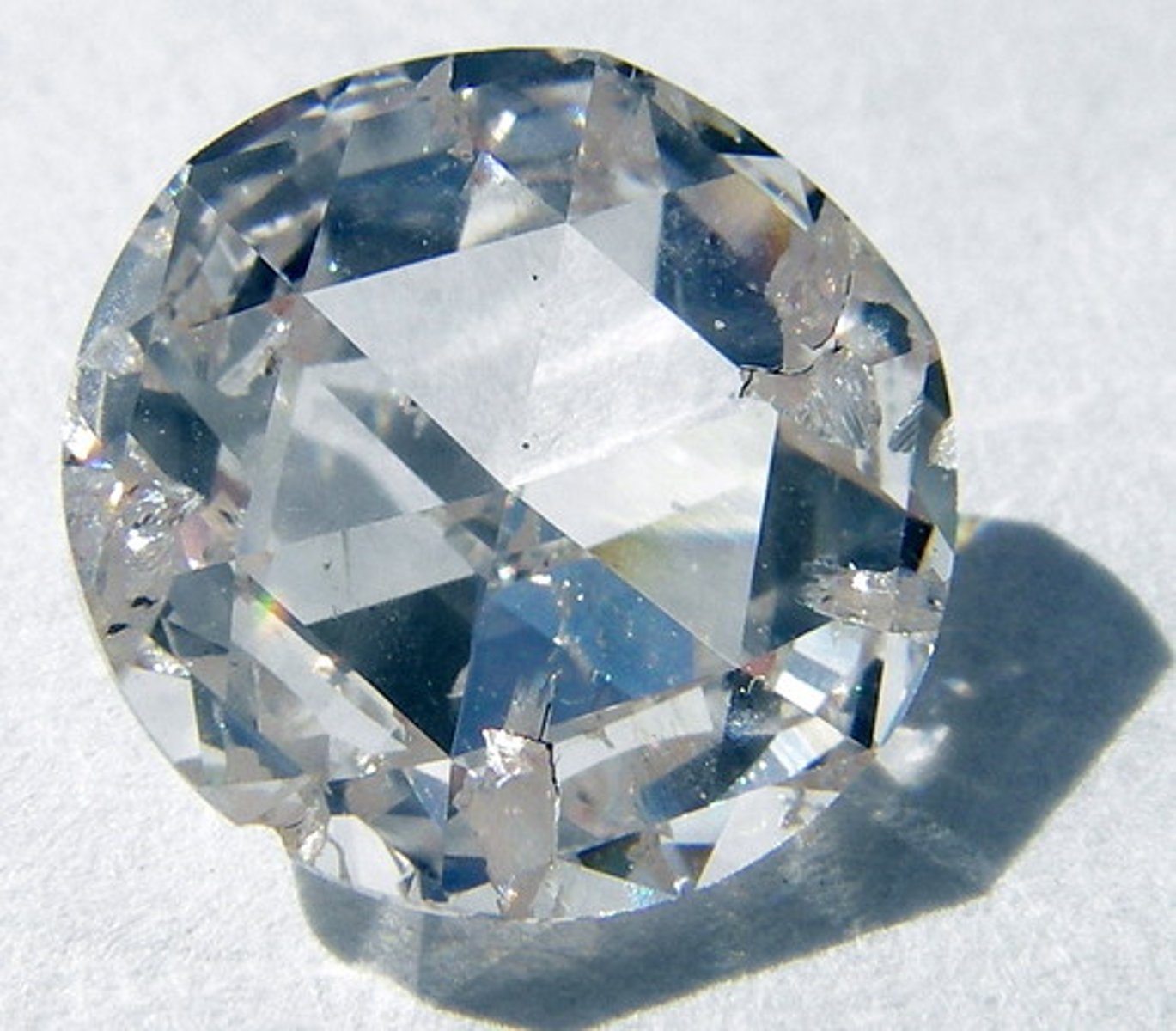
Allotropes
Different physical forms of the same element