Genetics Exam 3
 Call Kai
 Learn
 Practice Test
 Spaced Repetition
 Match
 Flashcards
 Knowt Play
1/158

There's no tags or description
Looks like no tags are added yet.
159 Terms
Gene Cloning
Insert gene into self-replicating chromosome (recombinant DNA)
Amplify the DNA (cloning)

Restriction Endonucleases
facilitates ‘insertion’ of DNA
cut DNA at specific sequences (palindromes)
usually 4-6bp recognition sequence
blunt or ‘sticky’ cuts
named after bacteria it produces
protection from invading DNAs

T/F restriction enzymes are named after the bacteria that produce them
True
cloning vectors
3 characteristics
origin of replication
dominant selectable marker
unique restriction endonuclease sits (s)

shuttle vectors
special cloning vectors that can replicate in prokaryotes and eukaryotes

Polymerase Chain Reaction (PCR)
in vitro process that amplifies DNA sequence
requires knowledge of flanking sequences
error-prone or high fidelity to suite your needs
not useful for generating long products (>35kb)
3 Main steps of PCR
denaturation
Annealation
Extension
repeats over and over, doubling each time
denaturation of PCR
95C for 15 seconds
Annealation of PCR
oligonucleotide primers
55C for 30 seconds
Extension
70C for 1.5 minutes
primers extended with Taq polymerase
DNA Libraries
Genomic DNA Library
cDNA library
Genomic DNA Library
series of DNA clones collectively containing the entire genome
genome broken into fragments of DNA which was once all together
cDNA library
contains only transcribed regions of genes (RNA) made of complementary DNA (cDNA)
converted to cDNA to stabilize and store the genes

Southern blots
DNA
run DNA on gel; transfer to filter paper; hybridize to labeled nucleic acid probe
northern blots
RNA
Western blots
proteins
blots
bind to specific molecules, DNA, RNA or proteins
Restriction Enzyme Mapping
reflect true physical distance (unlike genetic maps)
DNA Sequencing
technique used to determine exact nucleotide sequences
fluorescent dyes are used for detection using chain terminators for each nucleotides
steps for DNA sequencing
set up DNA polymerization reaction containing template and primer strand labeled with fluorescent dyes
incubate rxn mixture. synthesized chains terminating with their terminants
denature products and separate by polyacrylamide capillary gel electrophoresis
record sequence with a scanning laser, fluorescence detector and computer
genome
complete copy of the genetic info or one complete set of chromosomes of an organism
genomics
mapping, sequencing, and analyzing the functions of entire genomes
structural genomics
study of genome structure
location of genes (genetic, cytological and physical maps)
ex. gene x and y are 80cM away so how can we determine this distance? - need other markers in between

restriction fragment-length polymorphisms (RFLPs)
uses markers and variants
genetic map
markers in RFLPs
variation in location of restriction enzyme sites in chromosomes
variants
vary between individuals and are classified as single-nucleotide polymorphisms (SNPs)
Variable number tandem repeats (VNTRs)
regions of the genome contain short sequences that are present in tandem repeats
differ in their length of the restriction digests or the PCR that is produced
these regions (when analyzed together) can produce a genetic fingerprint
used for forensic analysis/pathology because every persons patterns are different but will match closer to relatives
cytological map
In this VNTR, who is related?
mom to D1, D2 and S1
Dad to D1 and S1
S2 has different parents completely
physical map
combination of genomic and cytological map
restriction maps are made of individual fragments of DNA (clones)
computer analysis matches patterns between overlapping clones (clones containing similar DNA)
overlapping genomic regions = contig
history of sequencing the human genome
1990
Celera and Collins/HGP Consortium were racing
Findings of the sequencing of the human genome
25-30K protein-coding genes
protein-coding exons only 1.1% of genome (rest is noncoding)
functional genomics
study of gene products - mRNA and protein
microarray tech examine expression of genomes (transcriptome)
limited to known genes
applied to cell-, development-, drug-specific scenarios
Microarray data expression sequence
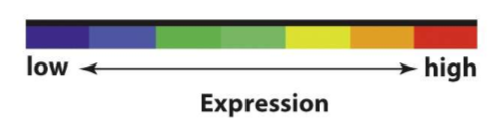
next generation RNA sequencing
sequences all RNA transcripts in a sample, even novel
steps of next generation RNA sequencing
isolate RNA from sample
Fragment RNA into short segment
convert RNA fragments into cDNA
ligate adapters and amplify
perform NGS sequencing
map sequencing reads to the transcriptome/genome
proteome
entire protein make-up of a cell
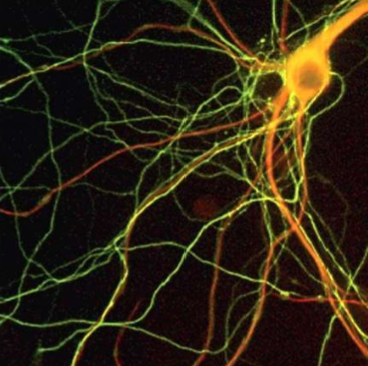
green fluorescent proteins (GFP) allow examination of proteins in their cellular context
Green fluorescent protein (GFP)
allows for the visualization of the protein product in the cell
comparative genomics
study of genome evolution
ex. bioinformatics
paralogues
sequence similar within species
ex. hemoglobin/myoglobin
orthologues
sequence similar between different species
ex. Hb in humans vs horses
bioinformatics
information from DNA sequences
can provide protein data (ID’s similar proteins with known functions)
predict RNA or protein structures based on sequence
conservation of certain genes across species
can provide RNA data
information on splice variants and regulatory elements
Huntington’s disease
autosomal dominant
progressive degeneration of CNS beginning at age 30-50
one of the first human genes shown to be tightly linked to RFLP (positional cloning)
gene contains 11-34 copies of CAG repeat
contain 42-100 copies forming a polyglutamine region
predicted AA sequences provided little functional info
Cystic fibrosis
autosomal recessive - 4% allelic freq in Caucasians
lungs, pancreas, liver clogged with mucus that facilitates chronic bacterial infections
like HD, also found by positional cloning technique
preceded by 3 CpG islands
conserved between different species; similarity with ion channel proteins
Wt comparison resulted in F508 mutation that can be tested by Southern blotting
Molecular diagnosis of human disease
PCR length (trinucleotide repeats)
Allele-specific oligonucleotides for southern blot (CF)
restriction digestion (sickle cell betaglobin gene)
sickle-cell detection using restriction enzymes

Gene therapy
involves adding a wt cope of a gene to the genome of an individual carrying defective copies of the gene
transgene
gene introduced into an organism
transgenic
organism carrying the introduced gene
somatic cell gene therapy
treats symptoms
gene therapy vectors
viruses = good at infection and integration
use viral vectors to transport/integrate wt genes
viral vectors
added to explant cells for gene therapy
patients cells removed, repaired and replaced
‘repaired’ explant cells can be selected
Gene therapy for ADA-SCID
rare autosomal disease that affects the immune system
first human disease treated with disease therapy

obstacles to gene therapy
integrations can break genes and influence neighboring genes
viruses can result in immune response
although transgene is stable, expression is not
gene replacements > gene addition
DNA fingerprinting
no two individuals have the same DNA (Except identical twins)
SNPs and VNTRs can be used to produce specific banding patterns for each individual
useful for paternity tests and forensic studies
use of VNTRs in preparing DNA fingerprints

commercial genetics
human gene products can be made from bacteria (insulin and blood-clotting factors)
industrial applications
agricultural applications
industrial applications of commercial genetics
proteases (cleaning aids etc.)
amylases and glucose isomerase (sweeteners)
rennin (cheese)
Agricultural applications of commercial genetics
GMOs
pigs (meat), cows (milk), crops (yield, resistance)
gene expression regulation in prokaryotes
all gene products are not needed at all times
more energy efficient if they’re made when needed and turned off when not
housekeeping genes
continuously expressed
rRNAs, structural proteins, tRNAs
regulated genes
usually for specific functions
growth, defense mechanism
induced genes
characteristics of catabolic (degradative) pathways
lactose, galactose, arabinose utilization
repressed genes
characteristic of anabolic (biosynthetic) pathways
tryptophan biosynthesis
regulator genes
control the expression of these induced/repressed genes
activator
regulator gene product
turns on gene expression in pos control mechanism
positive control of gene regulation
activator turns on gene expression
activator binding
influenced by effector molecules that cause a conformational change in the activator
effector molecules
inducers and co-repressors
positive control + inducer = ?
activated transcription

positive control + co-repressor =?
repressed transcription

repressor
regulator gene product
negative control of gene regulation
repressor is involved in turning OFF gene expression
repressor binding is influenced by what
effector molecules
negative control + co-repressor = ?
repressed transcription

negative control + inducer = ?
derepressed transcription

operons
prokaryotes
genes with related functions
consists of promoter, operator, structural genes
regulated by a repressor that binds to the operator and prevents polymerase from transcribing the genes
promoter
binding site for RNA pol
operator
binding site for repressor
structural genes
genes being regulated
lac operon
regulates genes that breakdown lactose
negatively controlled inducible operon
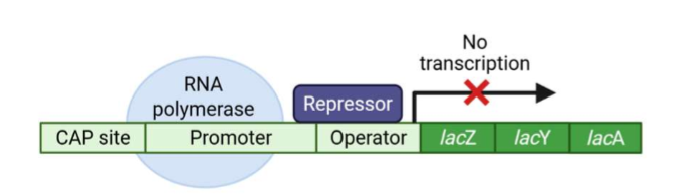
lacI binds to operator and represses genes
in presence of lactose, transcription is turned on and makes genes Z, Y and A
repressor gene for the lac operon
lacI
what happens to the lac operon with no lactose
the lac repressor binds tightly to the operator preventing txn by RNA polymerase
what happens to the lac operon with lactose
lactose breaks down into allolactose which binds to the repressor and separates it from the operator
allows transcription by RNA polymerase

positive control of the lac operon
glucose is metabolized first when glucose is present and inhibits the activation of the lac operon
regulated by CAP protein and its inducer cAMP that binds to the lac operon promoter
together they get rid of glucose and have positive control over the lac operon transcription

how much cAMP is made in low glucose conditions of the lac operon
lots
how much cAMP is make in high glucose conditions of the lac operon
adenylcyclase is inhibited = low cAMP
low glucose levels in the lac operon
cAMP and CAP bind to operon and help RNA polymerase bind to the promoter = high transcription levels

high glucose levels in the lac operon
no cAMP is made and CAP can’t bind the operon, transcription happens at a low level

best working conditions for the lac operon
lactose present and glucose absent
Trp operon
regulates genes that make tryptophan
negatively controlled repressible operon
without co-repressor, trpR (repressor) is inactive and structural genes are transcribed
with co-repressor (tryptophan), trpR binds to operator and represses the operon
repressor of the trp operon
trpR
low tryptophan in the trp operon
trp repressor is inactive allowing rNA polymerase to transcribe the trp gene
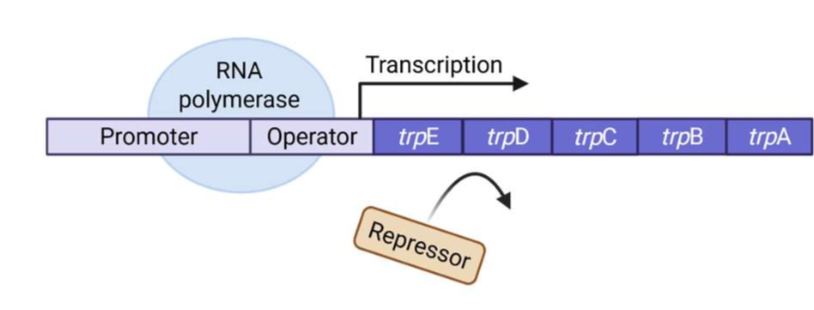
high tryptophan in the trp operon
tryptophan binds to the trp repressor and activates it; consequently transcription does not occur
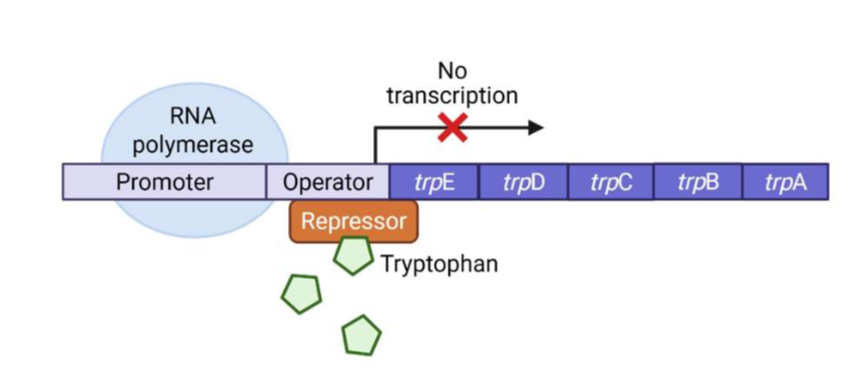
attenuation of the Trp operon
trpR mutated and tryptophan is present, trp operon is still reduced
low tryptophan attenuator sequence of trpL region
ribosomes stall at Trp codons
allows regions 2 and 3 to pair, preventing ¾ terminator hairpin
Transcription
high tryptophan attenuator sequence of trpL region
ribosome proceeds past Trp codons
disrupts base pairing of regions 2 and 3, allowing ¾ to pair
Attenuation
trpL
contains four regions that can form alternate hairpin structures: regions 1-4
regions 3 and 4 can form a transcription-terminator (G-C rich followed by uracils)
where does transcription stop at with high levels of tryptophan in the trp operon
the attenuator sequence
regulation of proteins from the same transcript
unequal efficiencies of translational initiation
altered efficiencies of ribosome movement through intergenic regions
differential rates of degradation of specific regions of mRNA molecules