Disorders of Female Reproductive System
 Call Kai
 Learn
 Practice Test
 Spaced Repetition
 Match
 Flashcards
 Knowt Play
1/38

There's no tags or description
Looks like no tags are added yet.
39 Terms
Sexuality
____ can influence every aspect of life
Perceptions about ___ begin early in life
Influence of gender identity and ____
careers
partners
friends
interest
self image
35-45% of women experience some type of ___ disorder in their lifetime, most frequently low sex drive
Female Anatomy
Name this

Ovaries
Name this

Uterine tubes, uterus, vagina
Name these

Female Breasts
Disorders of the _____
range from benign, noncancerous lesions to malignant tumors
detected by palpating or imaging
most women have breast changes throughout their life
usually noncancerous and not life threatening
related to age, hormones, or certain meds
Local breast changes
palpable mass
changes in skin appearance
nipple discharge of fluid
Female breast
Name this

Benign Breast Disease (BBD)
Etiology and Pathogenesis
All noncancerous ailments of breast tissue
Common = fibrocystic disease, fibroadenoma, intraductal papilloma, and abscess
Proliferative = INC cell production and INC risk of cancer
Nonproliferative = NO inc in cell production and NO inc in risk of cancer
Clinical Manifestations
Pain in breasts
Palpable mass
Nipple discharge
Diagnosis
Visualization and palpation
Ultrasound
Mammography
Biopsy

Mastitis
Etiology and Pathogenesis
Erythema and painful inflammation of breast
Most common in breastfeeding
may be triggered by nipple irritation, tissue trauma, or chafing from ineffective infant latch
Clinical Manifestations
Most often appear within 4-6 wks after childbirth
Local tenderness, swelling, warmth, erythema, and consistent or intermittent pain in one breast while breastfeeding
Flu like symptoms, fevers, chills, body aches, headaches, loss of appetite
Treatment
Improving breastfeeding technique
Adequate rest, healthy diet
Lancing and drainage PRN

Galactorrhea
Discharge of milk or milk like substance from breast in absence of pregnancy or >6mth postpartum in woman who did not breastfeed
Etiologies
Meds = oral contraceptives, psych meds, codeine or morphine
Pituitary tumors = (most common cause) Production of prolactin or blockage of dopamine channel from hypothalamus
Thyroid disorders = (rare but can be seen in hypothyroidism)
INC thyrotropin-releasing hormones
Chronic renal failure
Impacts up to 30% of clients
INC prolactin from impaired kidney clearance
Clinical Manifestations
Discharge of milk or milk like substance from the breast
Systemic findings may include: headache, changes in weight/appetite, visual changes
Diagnosis
Prolactin levels (>5 X normal)
Thyroxine (T4) and TSH: elevated CT
MRI

Breast Cancer
Risk factors
age, gender
Family history in a 1st degree relative under the age of 50
BRCA 1 or BRCA2 gene mutation
Menarche before age 12
Menopause after 55
Previous breast issues such as BBD or breast cancer
Proliferation of breast cells that do not die at normal rate
Cancer occurs in normal cells with damaged DNA that do not die
Classification based on presence or absence of estrogen receptors, progesterone receptors, and human epidural growth factor receptor 2 (HER 2)
Clinical Manifestations
Changes in size or shape of breast, skin changes (dimpling, inverted nipple thickening of skin, red and scaly rash)
Blood tinged nipple discharge, red and scaly nipples, ulceration of breast tissue
Mass felt in breast or axillary tissue that is hard, fixed, and non mobile

Menstrual
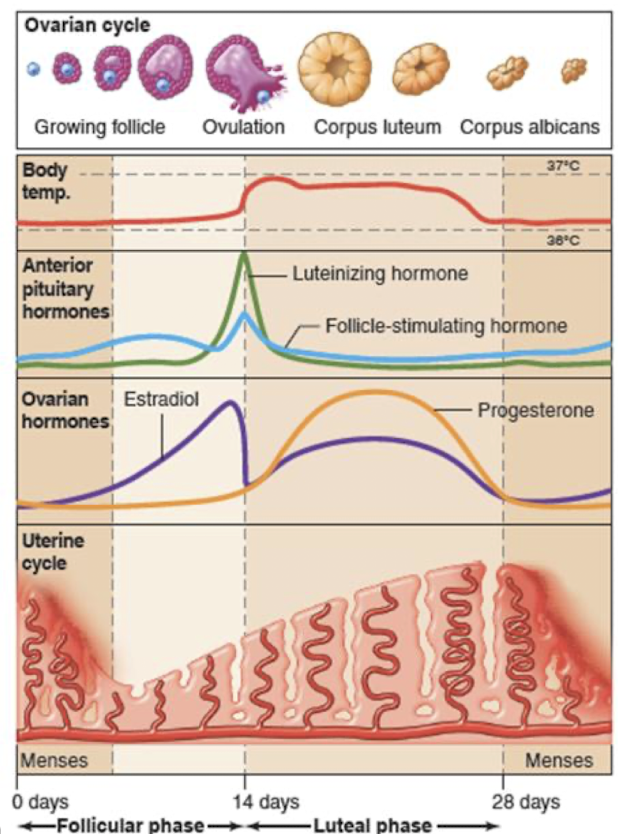
The normal ___ cycle
Monthly cycle of changes in the ovaries and uterus
Is the endpoint of this cycle if the egg is not fertilized
Definition
blood and mucosal lining that has built up in the uterus is discharged through the vagina
Dysmenorrhea
Etiology and Pathogenesis
Primary = painful menstrual cycle in absence of pelvic disease
Secondary = result of underlying disease, like endometriosis or PID
pain from primary caused by increased prostaglandin levels
Clinical Manifestation
Primary = usually occurs within 6 mths of menarche
High intensity cramping with menstruation
Low back pain with radiation to upper back or thighs
Secondary = usually in 20s or 30s
Heavy irregular flow, painful intercourse, vaginal discharge, poor response to med
Diagnosis
visualization and palpation
Ultrasound
Mammography
Biopsy
Amenorrhea
Etiology and Pathogenesis
Absence of spontaneous menstruation in women of reproductive age
Primary = absence of menarche by age 15
Secondary = cessation of regular menstruation for at least 3 mths in absence of pregnancy, lactation, hormone med, or menopause
May be caused by any disruption of normal cycle
Contributing factors
PCOS, high stress, excessive exercise, malnutrition, obesity, OCPs, antipsychotic meds
Clinical Manifestation
reports absence of menstruation
Diagnosis
History and physical\
Primary = no labs
Secondary = labs to rule out infection or pregnancy
Dysfunctional Uterine Bleeding
Etiology and Pathogenesis
any abnormal bleeding from the uterus not associated with tumor, inflammation, or pregnancy
Hormonal insufficiency caused by increase in endogenous or exogenous estrogen production
Most common in women who have just started their menstrual cycle and those who are perimenopausal or menopausal
Left untreated, may lead to hyperplasia and malignancy
Clinical Manifestation
6 categories: menorrhagia, intermenstrual bleeding, metrorrhagia, menometrorrhagia, polymenorrhea, dysmenorrhea
Diagnosis
CBC, HCG, testosterone, TSH labs, U/S, biopsy, CT, MRI
Adnexal Space
Area between the lateral pelvic wall and the cornu of the uterus (upper lateral point where the fallopian tubes (oviducts) connect to the body of the uterus)
anatomical region adjacent to the uterus
Ovaries, fallopian tubes, upper portion of the broad ligament, remnant of embryonic Mullerian duct

Polycystic Ovary Syndrome (PCOS)
Etiology and Pathogenesis
Results from an abnormal function of the hypothalmaic-piturtary-ovarian axis
Elevated hormones or androgens cause symptoms
Clinical Manifestation
Menstrual dysfunction
Anovulation
ovaries fail to release an egg (oocyte) during a menstrual cycle
Hyperandrogenism
hirsutism
condition in women that causes the growth of dark, coarse, or thick hair in a male-like pattern
acne
Additional symptoms
infertility, irregular menses, obesity, metabolic syndrome, diabetes, obstructive sleep apnea OSA
Diagnosis
physical exam (excess facial hair, acne)
Exclusion of other disorders

Benign Ovarian Cysts
Etiology and Pathogenesis
Follicular cysts
Form during follicular phase, form when the ovum fails to be released
Corpus luteal cysts
Form in the absence of pregnancy; corpus luteum fails to dissolve after 14 days
Lutein Cysts
form from excessive amounts of HCG and result from multiple gestations or ovarian hyperstimulation
Clinical Manifestations
Pelvic or abdominal pain
painful intercourse
abnormal menstruation
sensation of abdominal pressure
Polyuria or urgency of urination
Reduction of appetite or feeling full without eating
Diagnosis
Physical exam
Ultrasound
Labs —> CA-125 lab to rule out malignancy

Ectopic Pregnancy
Any gestation that occurs outside of the endometrial lining, most frequently in the fallopian tube
Risk Factors
Damage to fallopian tubes, previous ectopic pregnancy, smoking, infertility meds, multiple sex partners, advanced maternal age, history of STI
Clinical Manifestation
Triad of symptoms
Abdominal pain, amenorrhea, and vaginal bleeding
Additional symptoms
dizziness, weakness, fever, vomiting, syncope, cardiac arrest (rare)
Diagnosis
Serum HCG
hormone produced primarily by cells surrounding a growing embryo (trophoblasts) and later by the placenta
Ultrasound

Ovary Cancer
Precise cause is unknown
Most common cause of gynecologic cancer death in US
Clinical Manifestation
Minimal, nonspecific or asymptomatic
Abdominal bloating, pelvic or abdominal pain, trouble eating but feeling full, urinary frequency, painful intercourse, back pain, constipation, weight loss
Diagnosis
Physical exam, ultrasound and labs
CA-125 lab
measures the level of cancer antigen 125 protein in a blood sample to monitor treatment for ovarian, endometrial, peritoneal, and fallopian tube cancers, or to check for cancer recurrence
Staging of disease

Endometrial Polyps
Hyperplastic growth of endometrial glands and stoma
Exact etiology unknown
Thought to be result of imbalance of estrogen and progesterone
Clinical Manifestation
Abnormally heavy uterine bleeding
Abdominal pain
Bleeding after menopause
Infertility or history of miscarriage
Diagnosis
Ultrasound or hysteroscopy with biopsy

Adenomyosis
Invasion of glandular endometrial tissue into the uterine myometrium
Exact etiology unknown
Though that invasive procedures like C-section and D&C (cervix is gently widened (dilated) so that the lining of the uterus can be cleared or sampled using a scraping or suction instrument) allow endometrial tissue to invade the uterine myometrium
Clinical Manifestations
Usually between age 30-50, obese, have multiple kids, early onset menstruation, or history of uterine surgery
Menorrhagia (heavy cycle), pelvic pain, pain with intercourse, dysmenorrhea (pain)
Diagnosis
History and physical, labs, CT, ultrasound, MRI

Leiomyomas
Exact etiology unknown
Estrogen and progesterone promote growth of these fibroids (noncancerous growths made of smooth muscle and fibrous connective tissue that develop in or on the wall of the uterus)
Most common in reproductive years and regress in menopause
Clinical Manifestations
Usually between 30-50, obese, have multiple kids, early onset menstruation, or history of uterine surgery
Menorrhagia, pelvic pain, pain with intercourse, and dysmenorrhea
Diagnosis
History and physical, labs, CT, ultrasound, MRI

Endometriosis
Exact cause unknown
Thought that endometrial cells move from the uterus and implant outside the uterus
Increased incidence with 1st degree relative having disorder
Clinical Manifestations
Pelvic pain most likely before or during menstruation and during intercourse
Infertility
Bleeding between periods
Diagnosis
Biopsy of endometrial tissue
Ultrasound, barium enema, CT, MRI
Staging (I-IV)

Endometrial Cancer
Cancer of the endometrial lining of uterus
Type I: estrogen-dominated
Type II: Non-hormone related
Risk Factors
obesity, diabetes, high fat diet, increased exposure to estrogen, early onset menarche, history of anovulation, infertility, and nulliparity (never given birth or carried a pregnancy)
Clinical Manifestations
most have vaginal bleeding
Abnormal vaginal discharge
Pelvic pain
Feeling of fullness in pelvis
Weight loss w/o dieting
Diagnosis
Transvaginal ultrasound or endometrial tissue biopsy
Staging (I-IV)

External
The ___ organs of female repro system

Vaginitis
Inflammation of the vagina resulting in a change from the normal flora
May also result from decreased estrogen after menopause
Clinical Manifestation
Discharge, itching, pain
Diagnosis
Clinical Symptoms
Vulvovestibulitis
pain in the vestibule, the area surround the vaginal opening
Primary = pain during initiation of intercourse
Secondary = Develops after period of time with no symptoms
Clinical Manifestations
Pain, redness, burning to vestibule
Diagnosis
pelvic exam reveals severe pain
Bartholinitis
Inflammation of the Bartholin gland, which plays a major role in vaginal lubrication and mucus secretion
A buildup of fluid causes a cyst and creates discomfort
Clinical Manifestation
Unitlateral mass of the labia minora, with or w/o pain
Diagnosis
unilateral mass of labia minora

Cervical Cancer
Etiology and Pathogenesis
Except in rare cases, HPV is the cause
Risk Factors
sexual contact at young age, multiple sex partners, history of STIs
Manifestations
Abnormal vaginal bleeding, malodorous discharge (foul smelling), dysuria, general abdominal pain
Diagnosis
Pap Smear
Vaginal Cancer
Etiology and Pathogenesis
Rare cancer of vagina
Most often in women >60 who have had HPV
Squamous cell carcinoma = usually slow to spread but may metastasize to liver or lungs
Adenocarcinoma = Affects glandular cells of vaginal lining, more likely to metastasize to lungs and lymph nodes
Manifestations
Abnormal vaginal bleeding, dysuria, pain with intercourse, pain in back or legs, leg swelling, vaginal lump
Diagnosis
Pap smear, biopsy, colposcopy
Vulvar Cancer
Etiology and Pathogenesis
Cancer of outer surface of female genitalia
Most common in age >70
Manifestations
Lump or sore on the vulva, causing itching
Diagnosis
Biopsy, CT, MRI
Estrogen
Can be released from fat
sex hormone (Female)
Regulates the menstrual cycle, thickens the uterine lining, and supports egg follicle growth
Inhibits cells that break down bone, helping preserve density and prevent osteoporosis
Influences neurotransmitters like serotonin, impacting energy, concentration, and emotional well-being. [1, 2]
Helps keep blood vessels flexible and supports healthy cholesterol levels by raising HDL ("good") cholesterol and lowering LDL ("bad") cholesterol
Progesterone
Hormone of pregnancy, released during luteal phase
Thickens myometrium
Produced primarily by the corpus luteum in the ovaries after ovulation, progesterone thickens the uterine lining (endometrium) to prepare for a potential fertilized egg. If pregnancy does not occur, levels drop and trigger menstruation
embryo implants, the corpus luteum (and later the placenta) continues producing high levels of progesterone to maintain the uterine lining, prevent further ovulation, and suppress uterine contraction
interacting with GABA receptors to promote calm, sleep, and anxiety relie
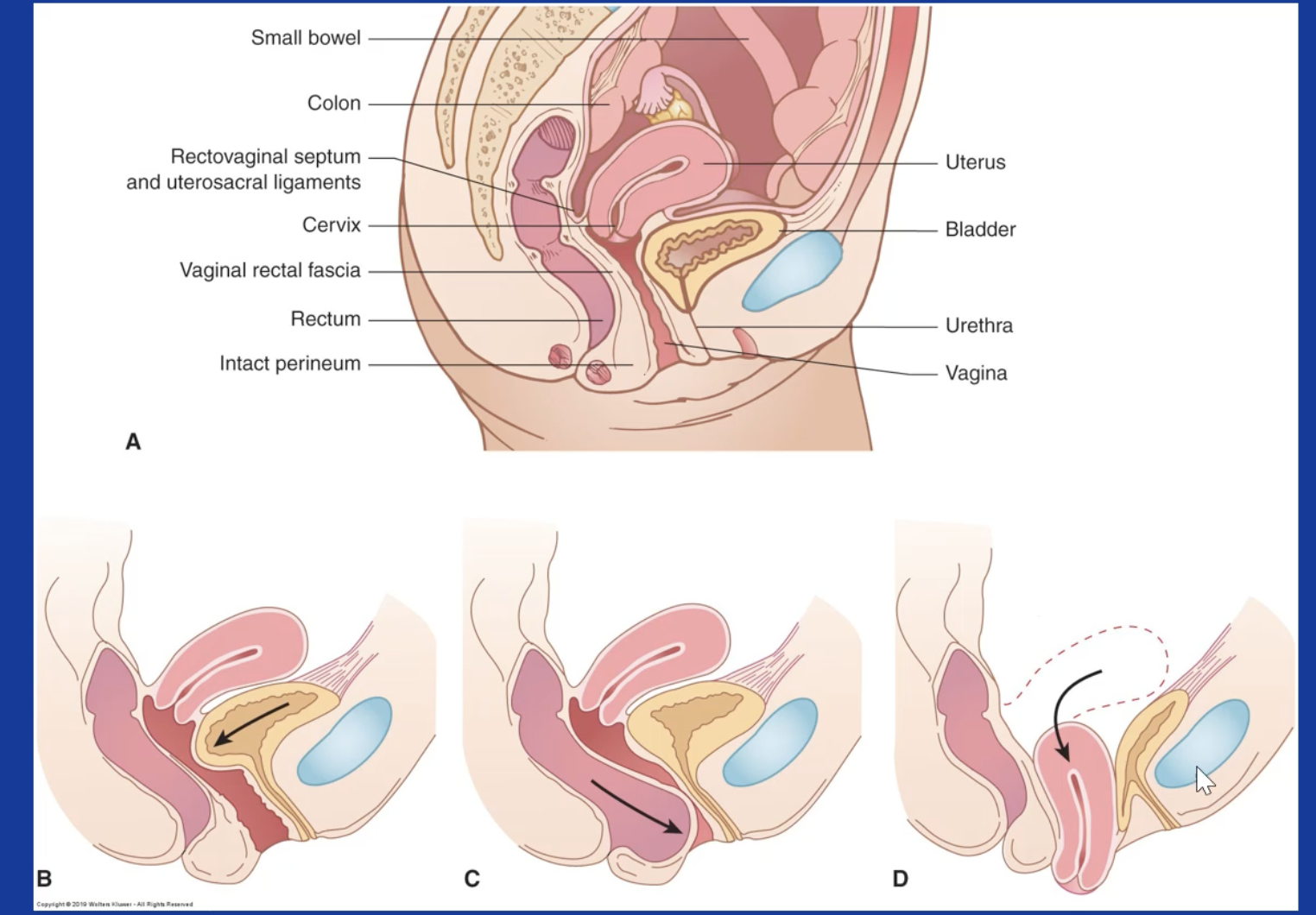
Cystocele and Rectocele
When the bladder or rectum bulge into the vaginal canal causing incontinences
menorrhagia
heavy menstrual bleeding—is a medical condition defined by menstrual periods with an excessively heavy flow or a prolonged duration
Blood loss: Exceeding 80 milliliters per cycle (compared to a normal average of 30 to 40 mL)
Duration: Menses lasting longer than 7 days
intermenstrual bleeding
vaginal bleeding that happens at times other than your normal monthly period. It ranges from light pink or brown spotting to a heavier flow
metrorrhagia
any vaginal bleeding that occurs at irregular intervals between normal menstrual periods
similar to intermenstrual bleeding
menometrorrhagia
polymenorrhea