Antidepressants
 Call Kai
 Learn
Learn Practice Test
 Spaced Repetition
 Match
Match Flashcards
 Knowt Play
1/20

There's no tags or description
Looks like no tags are added yet.
Name | Mastery | Learn | Test | Matching | Spaced | Call with Kai | Chat |
|---|
No analytics yet
Send a link to your students to track their progress
21 Terms
review key NT for CNS
-Acetylcholine (Alzheimer’s Disease)
•Role in cognition and memory
•Inactivated by acetylcholinesterase
-Dopamine (Parkinson’s Disease, Psychosis)
•Regulate motor control in basal ganglia
•Important in mood and emotion with effect on hypothalamus
-Norepinephrine and serotonin (Depression)
-GABA (Anxiety, Seizures)

which PT patients may have depression?
-Recent life changing illness/injury
-Chronic illness
-Loss of job due to illness/injury
depression: generel
-Affective disorder
-Due to decreased levels of norepinephrine and serotonin in the brain
-Disturbance in
Amine neurotransmitters [NT]
Serotonin, norepinephrine & dopamine
-Drug goal: increase neurotransmitter transmission
-Categories of Drugs
1) First Generation (*not much bc SE)
2) Second Generation (SSRI)
antidepressants: more effective w/ what + onset of action
-Medications are more effective with aerobic exercises
-~4-6 weeks to see effects of medication [correct medication & dose]
•Physical symptoms (ex. energy, sleep) may improve before affective symptoms
•Maximal responses can take up to 12 weeks
•Discuss with patient [don’t stop drug early]
*issue=takes awhile!
Antidepressant dosage
-Dosage: start low, slow increase
Tricyclic Antidepressants (TCA)
LAST RESORT [1st generation]
-Amitriptyline (Elavil), Clomipramine (Anafranil
-MOA
•Thought to inhibit NE and serotonin reuptake
•Causes direct blockade of receptors for histamine, Ach & NE
•*narrow therapeutic window (*toxic easily, blood test)
-Clinical Use: Depression, neuropathic pain, fibromyalgia, post-herpetic neuralgia
-Side Effects
•Orthostatic hypotension esp elderly
•Drowsiness, Sedation
•Significant Anticholinergic effects (xerostomia, dizziness, constipation, blurred vision, etc.)
-Adverse Effects: Cardiac toxicity—ventricular arrhythmias, QT prolongation, AV block
Monoamine Oxidase Inhibitors (MAOI)
LAST RESORT [1st generation]
-Isocarboxazid (Marplan), Phenelzine (Nardil), Selegiline, Emsam [transdermal patch]
-MOA
•Non-selectively inhibits monoamine oxidase
•MAO inactives NTs (NE, serotonin, dopamine)
-Clinical use: Depression
-Side Effects: Drowsiness, dizziness, HA, nausea, xerostomia
-Adverse Effects: Hypertensive crisis (MI and CVA), seizures
•CNS excitation – restlessness, irritability agitation sleep loss
•Anticholinergic effects
•Increased BP
-Serious food and drug interactions
•Tyramine food: Fermented foods and wines (Beer, Chianti wine), Some aged cheeses, Fava bean
MAO Inhibitors and Tyramine
-MAO breaks down norepinephrine and serotonin in the brain
-MAO also breaks down tyramine in the intestine
-→ stroke
Selective Serotonin Reuptake Inhibitors (SSRI)
1st Line
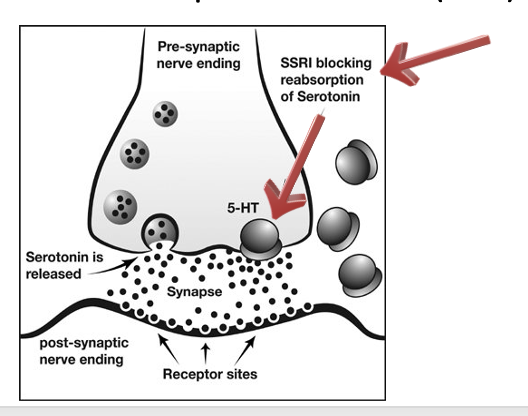
*effects reuptake seretonon; have low seretonin so block reuptake
-Drugs: Fluoxetine (Prozac) Paroxetine (Paxil) Citalopram (Celexa) Escitalopram (Lexapro) Sertraline (Zoloft)
-MOA: Selectively works at synapses that use serotonin
Block enzyme responsible for reuptake
↑’ed concentration of synaptic serotonin
-Clinical use: Major Depressive Disorder, General Anxiety Disorder
*+additional uses
-Side Effects d/t serotonin levels
GI complaints: N/V/D; Insomnia; Restlessness; Headache; Sexual dysfunction
Serotonin Syndrome
Caused by overactivation of serotonin or impaired serotonin metabolism
Usually occurs 2-72 hours after Rx onset
Mental status changes: hallucinations, agitation, coma
Autonomic instability: tachycardia, hyperthermia, changes in BP
Neuromuscular hyperactivity: hyperreflexia, incoordination, clonus, tremors,
GI disturbances: N/V/D
-Black Box Warning: may cause suicidal ideation/plans (<24 years of age)
Serotonin Norepinephrine Reuptake Inhibitors (SNRI) 1st Line
-MOA
Prevents reuptake of serotonin & norepinephrine not dopamine
↑’ed concentration
-Adverse Effects
Serotonin syndrome (< SSRI)
Norepinephrine Dopamine Reuptake Inhibitor (NDRI)
1st line
-MOA
•Inhibits dopamine and NE reuptake
•Does NOT act on serotonin
•↑’ed concentration of synaptic dopamine and norepinephrine
-Adverse Effects
•Increased risk of seizures due to lowering seizure threshold
Alpha 2 Antagonist 1st Line
-Mirtazapine (Remeron)
-MOA
•Exact mechanism unknown
•Alpha-2 adrenergic receptor antagonist AND affects serotonin receptors
-Adverse Effects (*not reuptake but effects receptors)
•Serotonin syndrome
•Agranulocytosis
•Neutropenia
APTA antidepressents

Antidepressants & Chronic Pain
-Pain: neuropathic, fibromyalgia, chronic LBP
-Decreases depression from having chronic pain
-Influence monoamine transmission
•Serotonin is important in inhibition of pain
Bipolar Disorders
-Symptoms: periods of mood swings with depression and manic episodes
-Cause: imbalance in NT (serotonin, GABA, norepinephrine, dopamine, glutamate & aspartate)
Drugs:
-Prevent mood swings by preventing manic episodes, mood stabilizers or antimanic drug
-Medications [Drugs may include antipsychotics, antidepressants and anticonvulsants given in conjunction with lithium]
-Lithium
•Adverse Effects (table 7-5)
•Toxicity due to accumulation in body
•CNS - GI - CV - Renal
key takeaway biopoplar disorders
patients with bipolar disorders may be on multiple medications leading to multiplied SE
APTA bipopplar disorders
combo drugs effect cognition
*tardive dyskinsia, CV

Therapy Considerations
•Participation in treatment may be improved
•Consider need for 1 month of treatment before improvement in symptoms evident
•Side Effects can affect therapy sessions – sedation & hypotension
*pt should be able to engage; CV problems
•Adverse Effects Serotonin syndrome & Hypertensive crisis
•Onset of action - 4-6 weeks
*then particpate more
•Assess for suicidal thoughts
•Provide nonpharmacological interventions
*PT!
Therapy Implication
-Schedule therapy sessions [if possible] when drugs are effective (4-6 wks)
•Increase focus and effectiveness of learning during interventions
•If patient is sedated, therapy may not be effective [provider notification]
-Drugs are assoc. with falls in older adults
•PTs identify patients at risk, history of instability or falls, intervene with balance training, environment modifications
-PTs – promote nonpharmacological treatment by promoting exercise, massage, relaxation, yoga, sleep habits and counseling
-Assess for signs and symptoms of anxiety/depression/suicide [provider notification]
•You spend most time with patient
•Know side effects and adverse reactions
Kahoot
-all of the following medications have Serotononin Syndrome as a side effect except
-side effects/adverse reactions of Benzodiazepines include all of the following except: sedation, watery eyes, respiratory depression, psychomotor slowing
-T/F: antianxiety medicatiosn are curative
-T/F: NT GABA is primary inhibitory and Glutamate is excitatory
-norepinephrine dopamine reuptake inhibitor
-watery eyes
-False
-True