Biology Chapter 5 | Cellular Energy
 Call Kai
 Learn
 Practice Test
 Spaced Repetition
 Match
 Flashcards
 Knowt Play
1/15

Earn XP
Description and Tags
These will be updated as we take notes in class.
16 Terms
What is potential energy?
Energy that is the stored energy in an object due to its position or state. It has the potential to be converted into kinetic energy when the object is set into motion.
What is kinetic energy?
The type of energy of an object in motion, defined as the work needed to accelerate it to a given speed. It depends on the object's mass and the square of its velocity.
What type of energy do we need?
ATP is the primary energy carrier in cells, providing energy for biochemical processes.
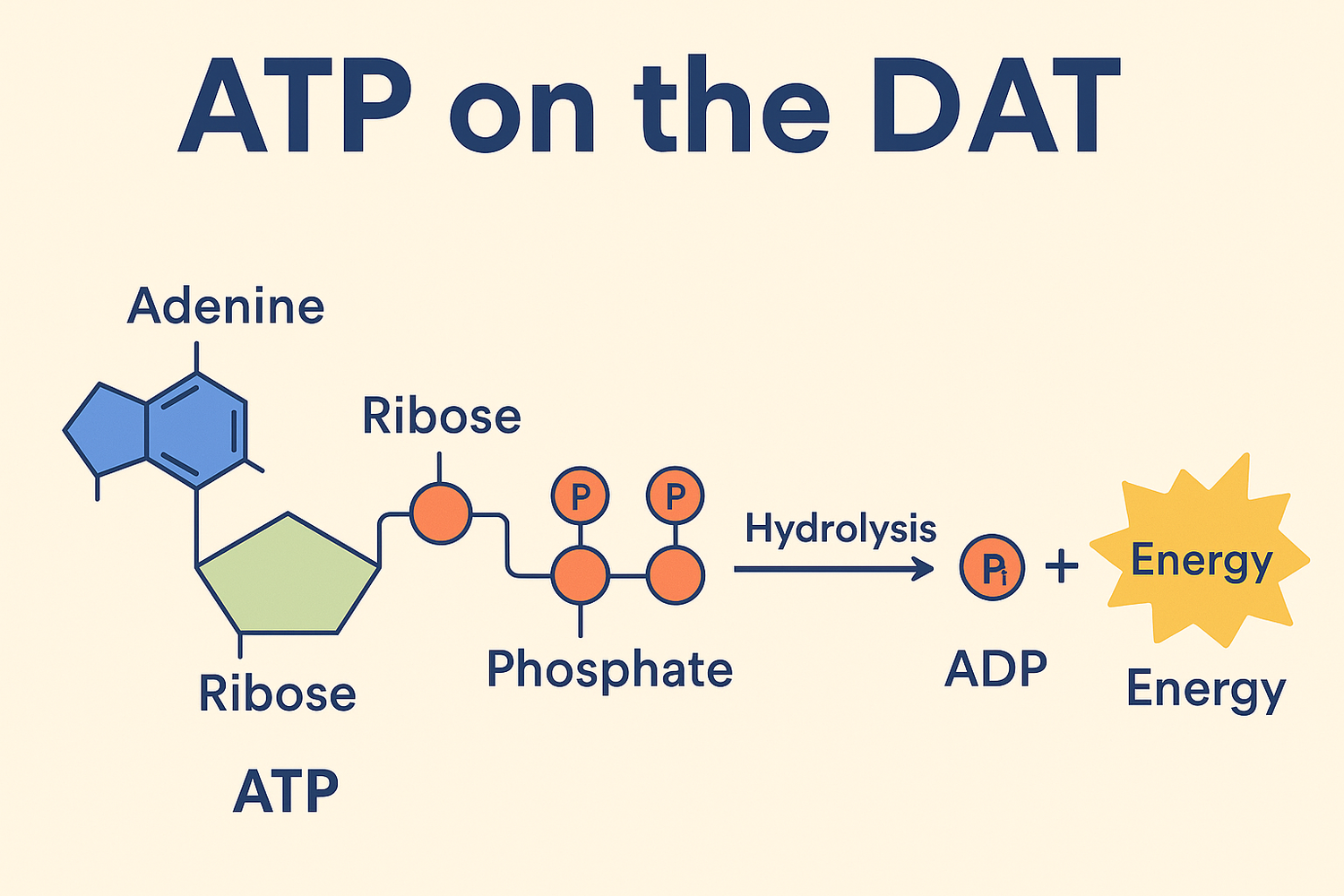
Where is the high energy stored?
In the last P bond of the ATP molecule.
How many grams (g) of ATP do our bodies have?
Our bodies have less than (<) 1g of ATP throughout the body. So, our bodies MUST recycle ATP.

How do we recycle ATP?
We use the energy in glucose to reattach phosphates to ATP via cellular respiration.
Where in the cell does recycling take place?
In the cytoplasm & mitochondria.
How many ATP is 1 glucose?
1 glucose = 38 ATP.
What are the 4 stages of Cellular Respiration?
Clycolysis
Transition Reaction
Citric Acid Cycle
Electron Transport Chain
What is Glycolysis?
It is when glucose (6-carbon chain) is broken down into 2 pyruvates (3-carbon chains)
What is the cost of glycolysis?
It costs 2 ATPs, but produces 4 ATPs →Net gain of 2 ATP. | In this process 2 H* ions combine with NAD* to form NADH molecules (which carries electrons) - Net gain of 2 NADH as well.
What happens in the Transition Reaction step? (it’s the 2nd step)
2 pyruvates (3 carbon chains) react with coenzyme A (CoA) to form 2 acetyl CoA (2 carbon chains)
What is CoA like?
It’s kinda like a trailer loading up carbon to get into the mitochondria
What is the output and net gain (+) in the Transition Reaction step?
Output: 2 Co2
Net Gain: 2 NADH
What happens in the Citric Acid Cycle step? (it’s the 3rd step)
CoA drops off 2-chain, which combines with a 4-C compound to form a 6-Chain