rhetoric in civic life (rcl) terms
 Call Kai
 Learn
 Practice Test
 Spaced Repetition
 Match
 Flashcards
 Knowt Play
1/94

There's no tags or description
Looks like no tags are added yet.
95 Terms
rhetoric
the use of symbols (words & images) to share ideas, enabling people to work together to make decisions about matters of common concern, create identity, and construct social reality
rhetor
any person, group, or institution that uses rhetoric
rhetorician
a person who studies rhetoric
symbol
an arbitrary representation of something else
a word, an image, or an artifact that represents a thing, thought, or action
verbal symbols
symbols found in language (whether spoken or written)
visual symbols
symbols such as pictures, images, objects, artifacts, and embodied actions
symbolic action
expressive human action, the rhetorical mobilization of symbols to act in and affect the world
identification
a communicative process through which people are unified into a whole on the basis of common interests or characteristics
constitutive rhetoric
the art of constituting character, community, and culture in language
(constituting = forming/creating)
social reality
reality as understood through the symbols humans use to represent it
civic engagement
people’s participation in individual or collective action to construct identity and develop solutions to social, economic, and political challenges in their communities, states, nations, and world
stranger relationality
a willingness to communicate with others to develop collective self-understanding that acknowledges mutual interdependence with strangers and in ways that focus on the public good instead of simply seeing one’s self as seeking to maximize individual power through purchasing and economic decisions
rhetorical agency
the capacity to act, that is, to have the competence to speak or write [or engage in any form of symbolic action] in a way that will be recognized or heeded by others in one’s community
posthumanist theory of agency
a theory that “rejects the human agent as the primary source of change but redeems that agent as a participant in the larger network of which [they are] a part
political friendship
a set of habits people use in civic spaces to interact and make decisions with people who might be strangers or who have different identities, interests, or needs
argument
to refer to a rhetorical form that provides data for a claim
argumentation
the process of exchanging arguments
Interactive (a process), cooperative, & contingent (occurs under conditions of uncertainty)
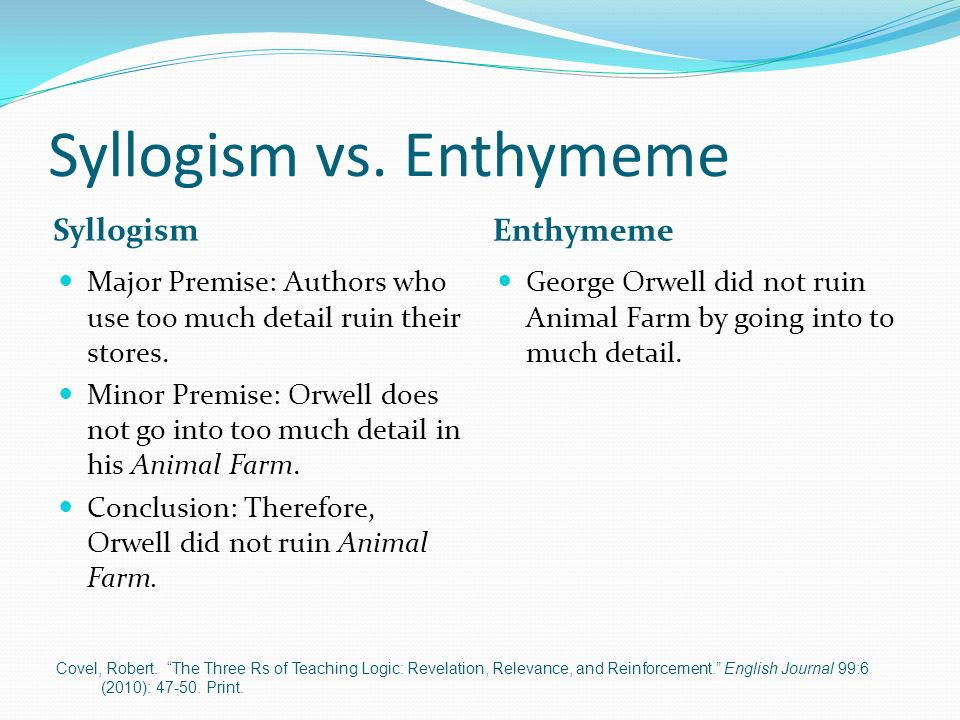
syllogism
a statement in which a conclusion is inferred from the truth of two premises
Major premise — speaks to universal truth
Minor premise — speaks to a specific example of the universal
Conclusion — the result of combining the two premises
enthymeme
a syllogism based on probabilities, signs, and examples, whose function is rhetorical persuasion whose successful construction is accomplished through the joint efforts of the speaker and audience, and this is its essential character
claim — fact, definition, value, policy
the conclusion whose merits we are seeking to establish
what the rhetor is trying to persuade the audience to believe
Claim of fact: a claim that advances an empirically verifiable statement
Claim of definition: a claim that identifies how a concept or term should be defined
Claim of value: a claim that advances a statement about what is worthy
Claim of policy: a claim that addresses what should be done
data
the information on which the claim is based
warrants
bridges, or the generalizable rules and principles that link data to claims
shows jump from data to conclusion is reasonable/warranted
conditions of rebuttal
circumstances in which the general authority of the warrant should be set aside
qualifier
a statement indicating the strength conferred by the warrant
backing
an assurance that the warrant is authoritative/current
ad hominem attacks
arguments against the person making the claim that are irrelevant to the claim
spheres of argument
branches of activity—the grounds upon which arguments are built and the authorities to which arguers appeal
grounds
the core assumptions about how the world is organized and the basic premises on which arguments are built
authorities
the sources of evidence that are accepted or the people who are allowed to speak as experts in that sphere
personal sphere argument
informal argument among a small number of people, involving limited demands for proof, and often about topics that matter only to those involved in the conversation
technical sphere argument
argument that has explicit rules and is judged by those with specific expertise in the subject
public sphere argument
argument that exists to handle disagreements transcending personal and technical disputes
stock issues
recurring argument themes necessary to justify assent: significance, inherency, solvency, and desirability
confirmation bias
the tendency for people to search for or interpret information in a manner that favors their current beliefs
disconfirmation bias
when people do not look for, favorably interpret, or recall evidence that is contrary to their beliefs
alternative facts
claims by political leaders that are false or made without any data
vertical reading
a person stays w/in a website to evaluate its reliability
lateral reading
leaving a site after a quick scan and opening up new browser tabs in order to judge the credibility of the original site
semiotics
the relationship among signs, meanings, and referents
recognizes a relationship between a sign and a referent
denotation
the literal, commonsense meaning of a sign, ostensibly value-free and objective
connotation
the emotional or cultural meaning attached to a sign
it is what is signified
theory of linguistic relativity
the idea that the structure of a language influences the way people perceive the world
dramatism
an idea that is premised on two interlocking assumptions — (1) language is primarily a species of action rather than an instrument of definition, and (2) the best way to understand human relations and motives is through an analysis of symbolic action
terministic screen
a screen composed of terms through which humans perceive the world, and that directs attention away from some interpretations and toward others
public vocabulary
the culturally established and sanctioned terms that compose people’s taken-for-granted understanding of the world
ideograph
represents an ordinary language term found in political discourse
high order abstraction representing collective commitment to a particular but equivocal and ill-defined normative goal
warrants the use of power, excuses behavior and belief into channels easily recognized by a community as acceptable or laudable
Ex: freedom & security
characterization
the labels and descriptions rhetors attach to acts, agencies, agents, scenes, and purposes
Act: what took place, in thought or deed
Scene: the background of the act, the situation in which it occurred
Agent: the person or kind of person who performed the act
Agency: the means by which the act was accomplished
Purpose: the justification for the act
metaphor
a figure of speech in which two dissimilar things are said to be similar, offering a new perspective on a known issue
discursive symbolism
language use w/ a linear structure that operates through reason and not intuition
presentational symbolism
a direct presentation of an individual object that widens our conception of rationality far beyond the traditional boundaries, yet never breaks faith w/ logic in the strictest sense
gestalt
a pattern or structure whose parts are so integrated that one cannot really describe the pattern simply by referring to the parts
condensation symbol
a name, word, phrase, or maxim which stirs vivid impressions involving the listener’s most basic values and readies the listener for action
god terms
expression[s] about which all other expressions are ranked as subordinate and that have the capacity to demand sacrifice
devil terms
terms of repulsion
resignification
a process in which people reject the connotation of a symbol, expose how the meaning of the symbol is constructed, and attempt to change its connotation (and maybe even its denotation)
doublespeak
language used in the real world to confuse or deliberately distort its actual meaning rather than to achieve understanding
Makes the bad seem good
Language that pretends to communicate but really doesn’t
2 types: euphemism & inflated language
euphemism
a word used to denote a thing in a way that avoids connotations of harshness or unpleasantness
inflated language
language designed to make the ordinary seem extraordinary
to make everyday things seem impressive
to give an air of important to people, situations, or things that would not normally be considered important
to make the simple seem complex
truncated passives
sentences that use a passive verb (to be form) in order to delete the agent of action
dramatism
Burke’s theory of rhetoric and the theories related to it; the study of how language and other symbol systems create the rhetorical world in which we lived
motion
nonsymbolic
action
based on symbols/rhetoric
identification
A is not identical w/ his colleague, B, but insofar as their interests are joined, A is identified w/ B or he may identify himself w/ B even when their interests are not joined, if he assumes that they are, or is persuaded to believe so
real or perceived overlap of two individuals’ perspectives or ways of seeing the world
pentad
a tool of analysis that lets us trace how our worlds are constructed through rhetoric
Act: what happens/takes place
Scene: context/background of the action
Agent: person or persons who perform the act
Agency: means through which the action takes place
Purpose: reason an action took place
ratio
relationship between two pentadic terms
terms for order
humans tend to naturally seek order, given our drive for perfection & hierarchy
the stages through which tragic redemption occurs including guilt, purification, and redemption
mortification
guilty party admits guilt & asks for forgiveness
scapegoat
the representative or vessel of certain unwanted evils, the sacrificial animal upon whose back the burden of these evils is ritualistically loaded
narrative probability
asks whether the story is consistent w/ itself
one of the standards by which receivers evaluated narrative rhetoric (includes structural, material, and characterological coherence)
narrative fidelity
evaluates the degree to which the individual components of the story ring true w/ the audience
the standard used to evaluate the validity of the individual elements of narrative rhetoric
structural coherence
whether the story contradicts itself
material coherence
how well the story accounts for facts that are known to be true
chronological coherence
questions the reliability of the characters in the story
fidelity
the individual components of stories and the degree to which these components make sense to the audience
five concepts to understand fidelity
fact, relevance, consequence, consistency, and transcendent issue
Question of fact: explored the values that are embedded in a story
Question of relevance: concerns the appropriateness of the values to the nature of the decision
Question of consequence: examines the effects of adhering to a particular value set when making a decision
Question of consistency: asks if the values of the story confirm one’s personal experience
Question of transcendent issue: asks if the values in question constitute the ideal basis for human conduct
fantasies
very real events that happen to people and groups
a shared experience between people; stories shared by groups of people
fantasy theme
contents of stories that are retold by group members
shared experiences or stories retold among a group of people
fantasy types
fantasies that have similar plot outlines, scenes, and characters and that are repeated patterns of exchange
common stories told over and over again
chaining out
the process by which fantasy themes or types are spread through a group or culture
rhetorical vision
the result of fantasy sharing, in which members of a culture, community, or group share a similar way of understanding reality
narrative (by Gerald Prince, professor)
the representation of at least two real or fictive events or situations in a time sequence, neither of which presupposes or entails the other
Referential, meaning narrative depicts/describes events
personal memory
the manner in which individuals remember their own pasts
collective memory (by Maurice Halbwachs)
a shared and constructed creation of a group or nation
public memory
a particular type of collective memory that combines the memories of the dominant culture and fragments of the memories of marginalized groups, and that enables people to make sense of the past, present and future
myth (Martha Cooper, comm scholar)
a particular form of narrative that is a dramatic vision that serves to organize everyday experience and give meaning to life
Teach cultural values as they structure how you think about yourself, other people, society, and the world around you
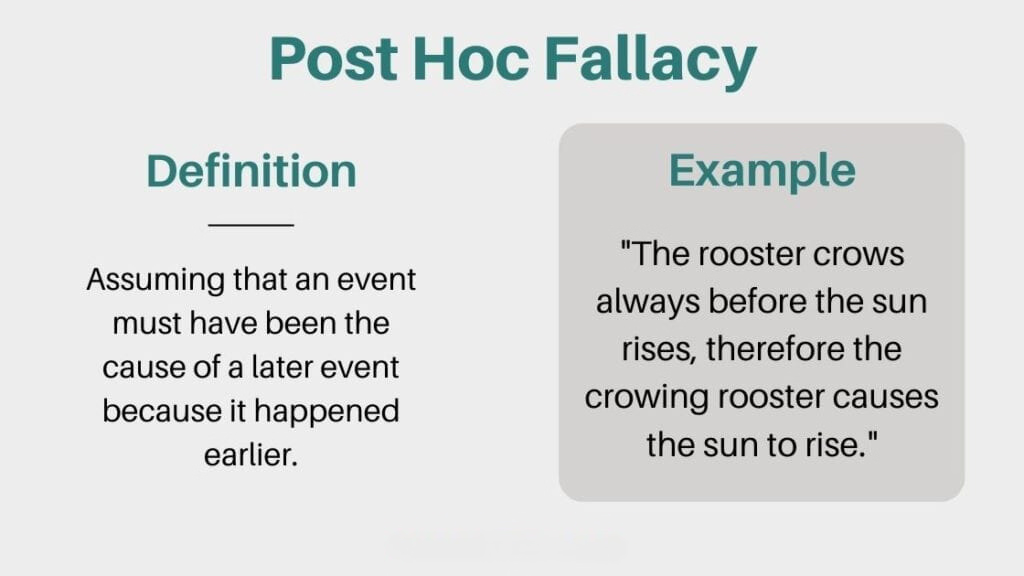
post hoc ergo propter hoc fallacy
a fallacy that occurs when reasoning takes the form of after this therefore because of this
vivacity
a sense of immediacy or presence created through the use of descriptions, imagery, and colorful language that make an idea come alive
one way to create presence in verbal texts
plot
the chain of causation of events w/in a narrative
relates the meaning of the events in the narrative by laying out a story line a.k.a. the arc of the story
Good plot captures attention by providing mechanism for understanding how narrator selected various events & connected them to each other
character development
the process of describing the actions of and relationships among actors w/in the story
Characters should conform to behaviors audience expects
social truth
those beliefs and values that do not refer to some objective reality, but to social reality
those beliefs about what is right that people have arrived at together
Social truth lies in meaning of story
narrative fidelity
asks whether the events included in the story correspond to the audience’s experiences and understanding of reality
narrative probability
asks the question what constitutes a coherent story or, more simply, does the story hang together
representative anecdote (by Kenneth Burke, theorist/critic)
a narrative that summarizes a person, thing, or situation
Appropriate representative anecdote will contain the essence of the item being represented
comic frame
a viewpoint that would have you see others as mistaken rather than as evil
Solution is to correct them
tragic frame
a viewpoint that would have you see others as vicious and evil rather than as mistaken
Destruction is the only possible solution