BIOL 1510 Chapter 11
 Call Kai
 Learn
 Practice Test
 Spaced Repetition
 Match
 Flashcards
 Knowt Play
1/87

There's no tags or description
Looks like no tags are added yet.
88 Terms
Fluid mosaic model
a model of cell membranes that states that membranes are made up of a diverse array of molecules, including proteins and lipids, which can diffuse laterally throughout the membrane
Protein-lipid interactions
Proteins can recognize specific lipids within a membrane, and can recruit other proteins to that site
Importance of protein-lipid interactions
signaling and asymmetrical division
What happens when lipids are placed in an aqeuous solution?
They spontaneously form micelles, vesicles, and bilayers
Why do lipids spontaneously self assemble into structures?
It is thermodynamically favorable→even if micelles/vesicles are more ordered, the surrounding water gains disorder which is favorable
What types of lipids for micelles?
Conical lipids

What types of lipids for bilayers and vesicles?
Cylindrical lipids
form bilayers first but then in order to hide the exposed sides they self assemble into vessicles

How can one study protein-lipid interactions in the lab?
Can create artificial membranes using DOPC, and incorporate proteins of interest into artificial membranes
Features of biological membranes
sheet-like enclosed spaces
made of lipids and proteins
lipids are mostly amphipathic
proteins mediate unique functions
membranes are not freely permeable
sheets self assemble, driven by hydrophobic interactions'
lipids and proteins are asymmetrically divided across membrane surfaces
membranes allow proteins to float in two dimensions
How do inner and outer membranes differ?
contain different lipids and proteins. Can differ in electrochemical composition/gradients
What lipids can induce curvature?
cardiolipin
What lipids can signal danger?
Phosphatidyl serine, if exposed to the outer membrane, signals danger
What organelle is enriched with cardiolypin?
Mitochondria→due to endosymbiotic origin
Peripheral proteins
Proteins found on one side of the plasma membrane
How do you isolate peripheral proteins from membranes?
Wash off with high salt or pH changes, which disrupts electrostatic interactions
Integral proteins
proteins embedded in membrane
How do you isolate integral proteins from membranes?
Must use detergents to solubilize
Lipid-linked proteins
Proteins tethered to the membrane through lipid linkages
How do you isolate lipid-linked proteins from membranes?
Use detergent or cleave off with enzyme
Types of lipid linkages
GPI
farnesyl
palmitoyl
miristoyl
Hydropathy plots
plot amino acid residues on x axis
plot hydropathy index on y axis
look at the free energy change of putting an amino acid in an aqueous solution to determine hydrophobic vs hydrophilic parts of proteins

Are hydrophobic amino acids positive or negative on hydropathy plots?
They’re positive and above the x-axis→signify transmembrane residues!
Are hydrophilic amino acids positive or negative on hydropathy plots?
Negative and below the x axis→signify cytosolic or extracellular residues
What types of residues are found in the transmembrane portion of proteins?
hydrophobic
What types of residues are found in the cytosolic/extracellular portion of proteins?
charged residues
What types of residues are found at the interface of transmembrane and cytosolic portions of proteins?
hydrophilic but not charged→alcohol and amine amino acids
Common structure of pore-forming proteins
beta barrels
Why alpha-toxin is toxic
Form beta barrels in bacterial membranes, forming pores and allowing cell contents to leak out
What determine whether membranes or crystallized or fluid?
temperature and chain length, as well as presence of cholesterol
Are membranes usually highly ordered or disordered?
Usually disordered but can have ordered segments called lipid rafts
Can lipids diffuse laterally? Can the flip?
Lipids can easily diffuse laterally across the membrane
Flipping across the bilayers is very hard
Enzymes that help flip lipids across the bilayers
flippases
flopasses
scramblases
Flippases
Moves phosphatidyl ethamine and phosphatidyl serine lipids from the outer leaflet to the cytosolic leaflet in an ATP dependent manner
Floppases
ABC transporters that move lipids from cytosolic to outer leaflet in ATP dependent manner
Scramblases
move lipids either to cytosolic OR extracellular leaflet but always in the direction of equilibrium. No ATP needed
Human and mouse experiment that proved protein diffusion within a membrane
Fuse GFP-labeled mouse and human embryonic cells
See that proteins are divided cleanly down the middle
After time, proteins are evenly interspersed across the plasma membrane
Fluorescence resonance after photobleaching (FRAP)
label lipids with GFP fluorescence
Zap a small section of membrane with laser to bleach some GFP-labeled lipids
Watch the recovery of fluorescence to see lipid diffusion
Can all proteins freely diffuse within the plasma membrane? Why or why not?
No, not all. Some proteins are anchored in one spot via cytoskeleton elements
Lipid rafts
Areas of highly ordered plasma membrane, often enriched in cholesterol, glycosphingolipids, scaffolding proteins, caveolin, and GPI-linked proteins
Do proteins in lipid rafts usually freely diffuse?
Usually no. Anchored in place
Types of solute transport
simple diffusion
facilitated diffusion
primary active transport
secondary active transport
ion channels
ionophore mediated ion transport
Simple diffusion
Molecules diffuse straight across the plasma membrane without a protein and without any energy input
How are transporters like enzymes?
Transporters lower the Ea barrier for transport
They only work for specific substrates
Follow M/M kinetics
Can be saturated

How exactly is Activation energy lowered?
Paid for by binding energy
Facilitated diffusion
Pores that allow molecules to flow down concentration gradient with no energy input
Aquaporins
Transport water into/out of cell via simple diffusion
Is facilitated diffusion exergonic or endergonic?
Exergonic
Important amino acid residues in aquaporins
His
Arg
Asn
Function of His in aquaporins
Act as a size exclusion gate, restricting the size of the substrate ONLY to water
Function of Arg in aquaporins
Arg residues act in a repulsive fashion to orient water and break up H-bonding in order to prevent proton hopping
Function of Asn residues in aquaporins
reorient water dipoles
GLUT1 transporter
transports glucose down concentration gradient
Steps of glucose transport via GLUT1 transporter
binding of glucose to GLUT1 in stereospecific manner infuces a conformational change on the transport protein
Glucose is released into the cytosol
Transporter revers back to original conformation
Is glucose transporter via GLUT1 reversible?
In principle yes, but glucose is phosphorylated to G6P so it can’t exit
Primary active transport
Hydrolyze ATP to move molecules up concentration gradient
Secondary active transport
Utilize an electrochemical gradient to move a molecule up its concentration gradient while allowing another to fall down its concentration gradient
Types of cotransport/secondary active transport
symporters
antiporters
Calculating deltaG of transporting a neutral molecule
C2 is concentration of molecules at a destination
C1 is concentration of molecules at the original spot

Calculating deltaG of transporting a charged molecule
C2 is concentration of molecules at a destination
C1 is concentration of molecules at the original spot
Z charge of ion
Psi is the transmembrane potential
If deltaG is positive…
going against gradient
If deltaG is negative
going with gradient
if Psi is positive…
going against gradient
If Psi is negative…
going with gradient
Can transport be exergonic if its going against the concentration/charge gradient?
Yes!
Calculating deltaG total of primary active transport
Get deltaG_transport from deltaG=RTln(C2/C1)


Calculating deltaG total secondary active transport
one should be exergonic, the other should be endergonic
get deltaG from deltaG=RTln(C2/C1)
4 basic types of transporters
P-type
F-type
V-type
ABC
P-type transport
Uses ATP to transport molecule against a concentration gradient. They key is that the intermediate is a phosphorylated transporter protein
Inhibitor of P-type active tranport
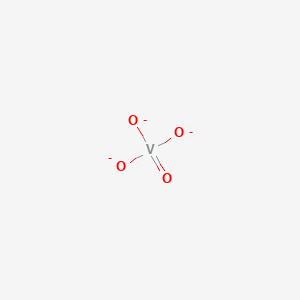
Vanadate→mimicks the transition state
Example of P-type transporter
sodium potassium ATPase
F-type transport
Pump protons to create ATP
Example of F-type transporter
ATP synthase
V-type transporters
pump protons in an ATP dependent manner in order to acidify a compartment
not phosphorylated as an intermediate
What organelle are v-type transporters important for?
Lysosomes
ABC transporters
Proteins with an intracellular ATP binding domain that are responsible for shuttling various molecules across the membrane
change conformation to let molecules in/out
Example of ABC transporter and its function
MDR1→ comes up in chemoresistant cancer tumors and is used to pump chemotherapy drugs out. Can also show up on BBB to pump toxic compounds out of brain’s circulation
Putting transporters together in glucose transport from the intestinal lumen
Na+/K+ ATPase sets up sodium and potassium electrochemical gradient by pumping 3 sodium out and 2 potassium in
glucose/Na+ symporter drives glucose up its concentration gradient from the intestinal lumen to the intestinal epithelial cell
glucose exits the blood via GLUT2 uniporter down its concentration gradient
Ligand gated ion channel
small molecule binds to a receptor, inducing a conformational change which allows ions to flow down their concentration gradient
Voltage gated ion channel
A change in transmembrane electrical potential induces a conformational change, opening the channel and allowing ions to flow down concentration gradient
What limits facilitated diffusion?
The rate is limited by the maximum rate of diffusion
How can you measure the transport of charged molecules?
Patch-clamp technique
Would a liquid-ordered or liquid-disordered state be favored when the hydrocarbon chains of fatty acids are shortened?
liquid-disordered
Would a liquid-ordered or liquid-disordered state be favored when cholesterol and sphingolipid content is increased?
liquid ordered
Do organelle membranes often contain glycolipids?
No!
What anchors integral proteins in the membrane?
Hydrophobic interactions
If an inhibitor prevented the hydrolysis of the terminal phosphate off of sodium potassium ATPase, what would be the effect on transport?
Na would bind but would not be released
What kinds of proteins will addition of urea remove?
peripheral→breaks H-bonds that anchor them to the plasma membrane
What kinds of proteins will the addition of phospholipase C remove?
Anchored proteins