AHS3307L: Lab 3 - Introduction to Fluid Therapy & Drug Solutions
 Call Kai
 Learn
 Practice Test
 Spaced Repetition
 Match
 Flashcards
 Knowt Play
1/31

There's no tags or description
Looks like no tags are added yet.
32 Terms
Fluid Therapy:
GOAL to REPLACE water/electrolytes
Indications:
Shock
Dehydration (vomiting, diarrhea, etc.)
Acid/Base disturbances
IV medications
Surgical/Hospitalization support
Toxicity support
Maintenance
Water Balance:
Body consists of 50-70% water
Water loss with disease
Must replace water deficit
Water resides in the intracellular space, extracellular space, interstitial space, plasma, other fluid
Fluid move back & forth between spaces between semi-permeable cell membranes
Dose based on LEAN BODY MASS
Sources of water:
Drinking, Food, Metabolic water
Loss of water:
Urine, Feces, Panting, Sweating (horses)
Abnormal Fluid Loss:
Vomiting, diarrhea, trauma, ascites, effusions
Fluid Therapy:
Fluids administered through a variety of routes:
Oral
Subcutaneous
Intravenous
Intraossesous
Rectal
Intraperitoneal
Rehydration Volumes
Maintenance Fluid Volumes (AAHA)
Dogs- 2-6 ml/kg/hr
Cats- 2-3 ml/kg/hr
Large animal- 40ml/kg/hr
Ongoing Fluid Loss Volimes
Calculation:
Weight (k) x Fluid Dose Rate (ml/kg/hr) = Fluid Rate (ml/hr)
Fluid Rate: depends on LEVEL of DEHYDRATION
Usually based on clinical judgement
General Rules:
Fluids replaced rapidly initially in cases of shock & tapered to maintenance doses
Rate of replacement of the deficit depends on the cardiovascular & renal status of the patient
Fluid input does not necessarily equal output, especially initially
Practice Problem - What is the Fluid Rate:

Fluid Therapy - Changes in Fluid Volumes:
Hypovolemia - DECREASE in CIRCULATING FLUID volume/vascular space fluid
Dehydration - WHOLE body fluid loss
Assessed with physical exam, bloodwork
Hypervolemia - EXCESS of circulating fluid volume - FLUID OVERLOAD
Fluid Therapy - Patient Evaluation:
History
Chief complaint
PE - 5% dehydration to see sign of dehydration
Look at skin turgor, mucous membranes, capillary refill times, sunken eyes, cool distal limbs, reduced urine output, HR/weak pulses -SUBJECTIVE
Labwork - Increased plasma protein & increased packed cell volume may INDICATE DEHYDRATION
Increased urine specific gravity (concentration)
Fluid therapy plan
Fluid Therapy - Administration:
Fluid Bags
Drip Administration Sets
Fluid Infusion Pumps
Calculating Fluid Dose Rates:
Fluid dose rate - ml/kg/hr
Bolus - a RAPID INFUSION of fluids into a vein over a short period of time to provide immediate support to the body
VTBI (Volume To Be Infused) - the AMOUNT of fluid or medication that an infusion pump is programmed to deliver to a patient over a set period of time
Formula:
VTBI (ml) = Volume of fluid given per hour (ml/hr) x Time (hr)
Practice Problem - What is the VTBI?
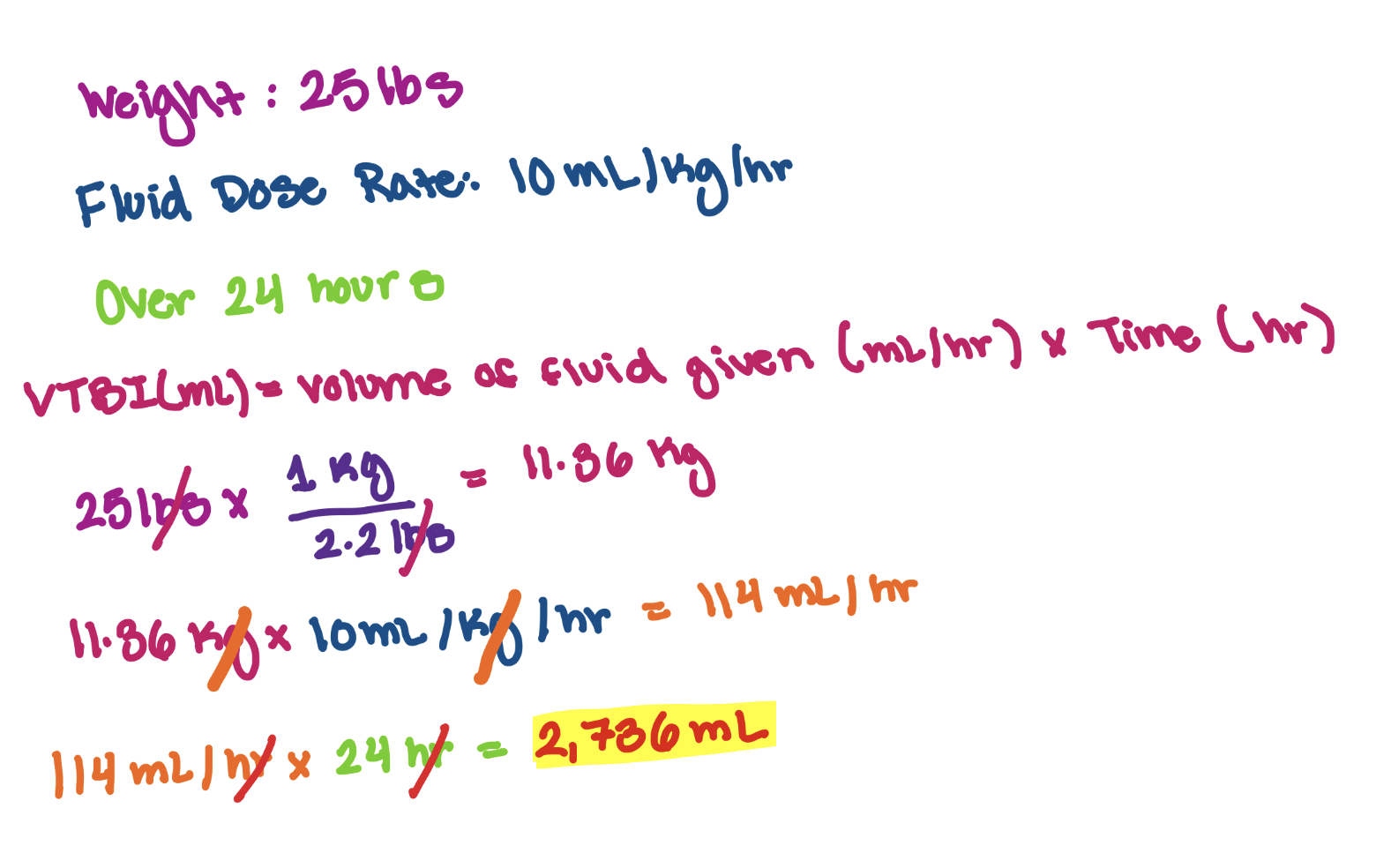
Practice Problem - What is the Fluid Dose Rate & VTBI?

Solutions:
Solutions - MIXTURES of substances NOT chemically combined with each other
Solvent -The DISSOLVING substance of a solution & is usually a LIQUID
Solute -The DISSOLVED substance of a solution & is usually the SOLID or particulate part of the mixture
Calculating Parts Ratio to % - Example:

What is % Concentration Mean?
Formula:
% concentration = # grams/100 mL
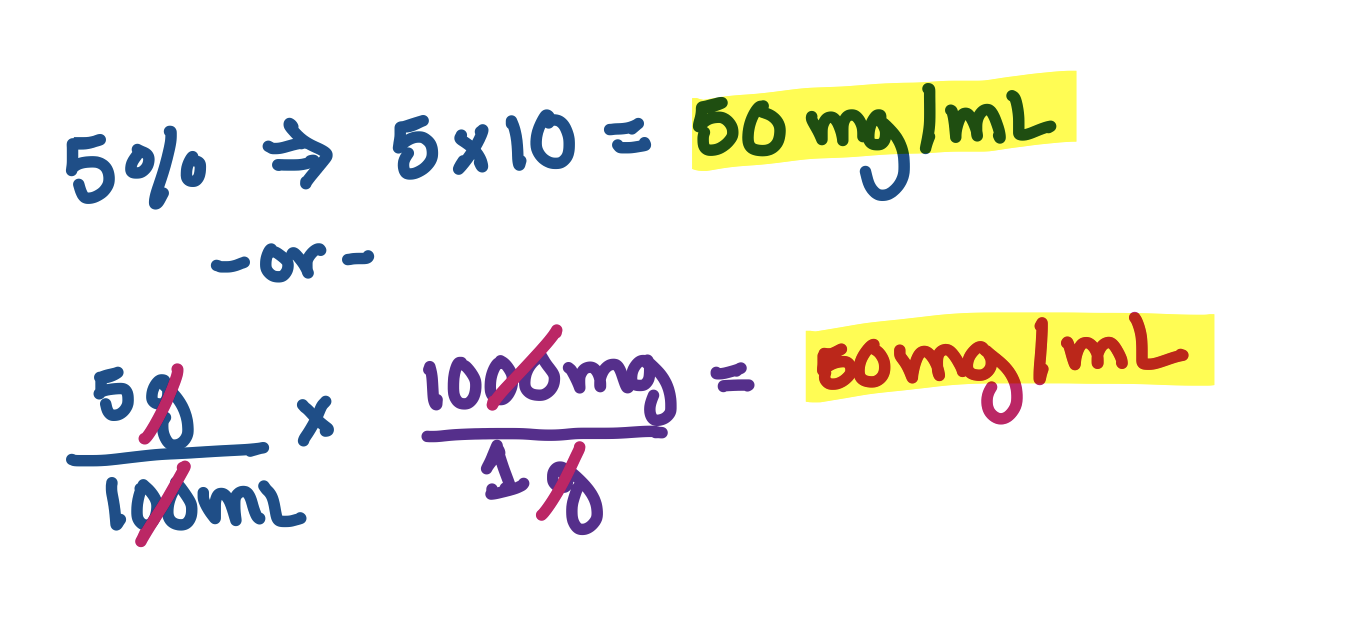
Percent Concentrations Calculations:
Pure drug - substances in SOLID or LIQUID form that are 100% PURE
Stock solution - relatively CONCENTRATED solution from which MORE DILUTE (weaker solutions) are made
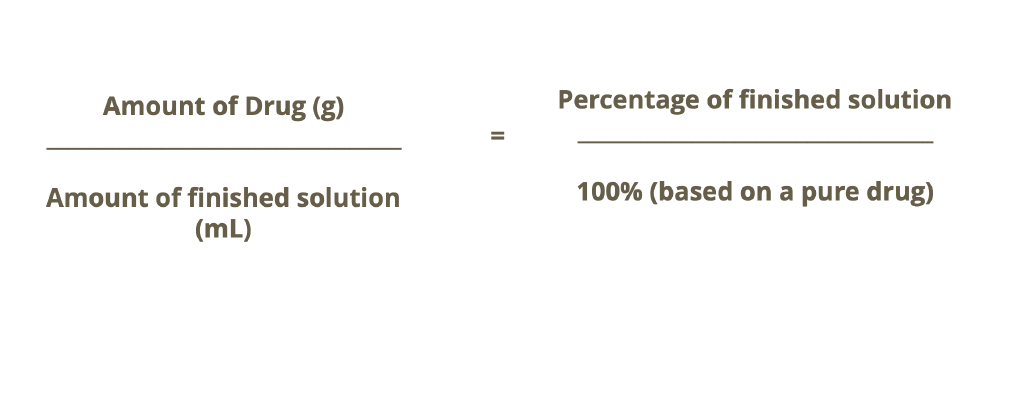
Formula - Ratio Method:
Practice Problem - Ratio Method:
How much NACl is needed to make 500 mL of a 0.9% solution?
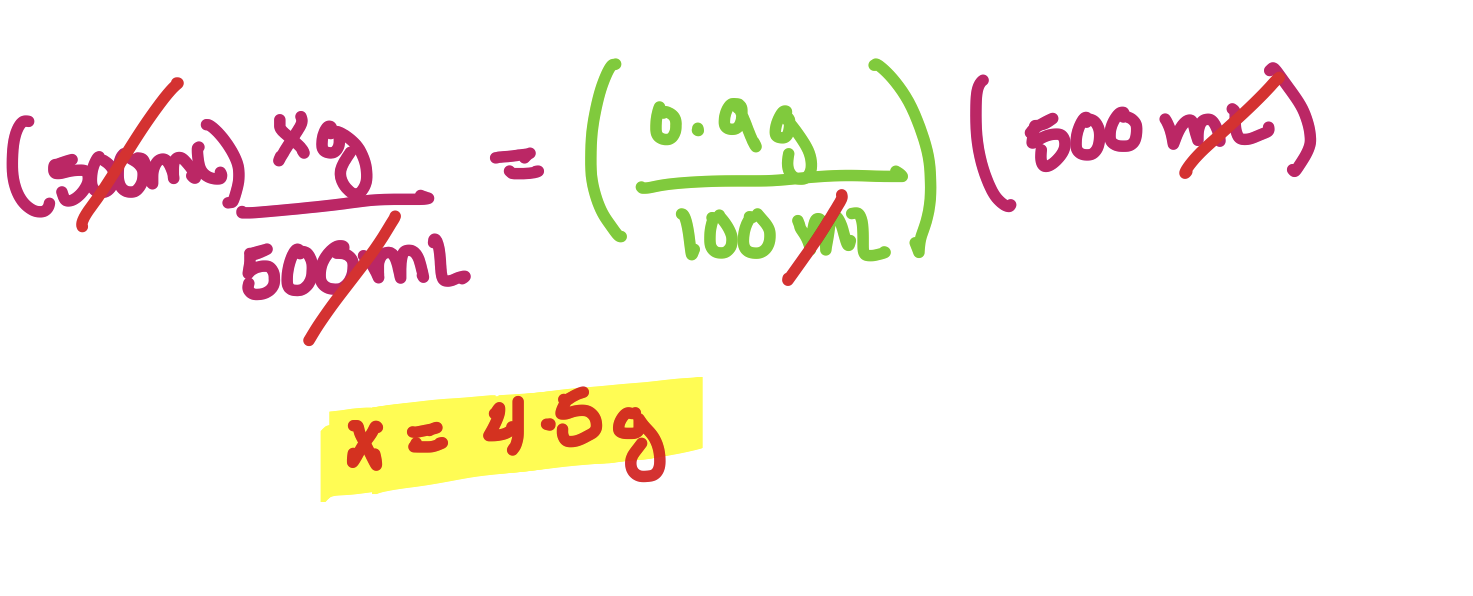
Percent Concentrations Calculations - Dry Drug/Stock Volume Considerations:
The amount of drug used to prepare a solution ADDS to volume of the solvent
The amount of volume contributed by a dry drug varies by its individual structure & is usually not accounted for when preparing a solution
To determine the MOVEMENT of SOLVENT needs to make the FINISHED SOLUTION, SUBTRACT the volume of liquid drug from the amount of finished solution
Percent Concentrations Calculations - Concentration Method:
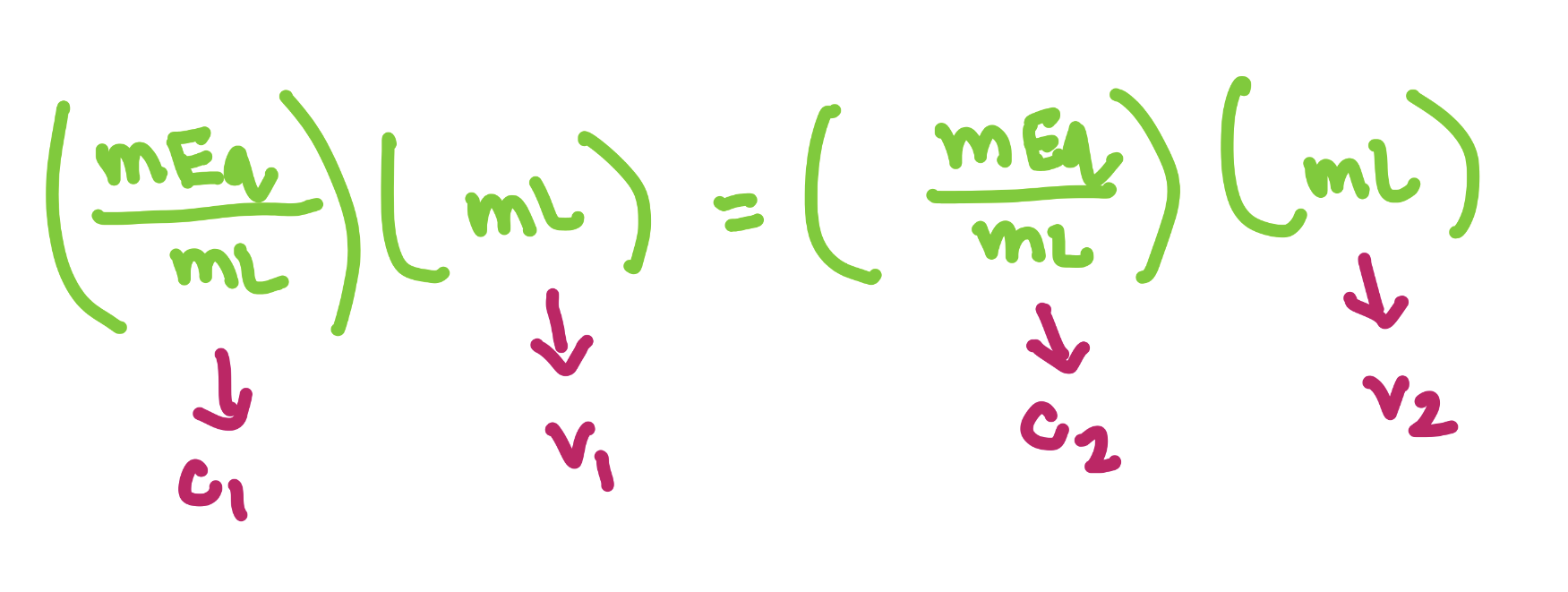
C1 = CONCENTRATION of the BEGINNING or stock solution
V1= VOLUME of the BEGINNING or stock solution
C2 = CONCENTRATION of the FINAL solution
V2 =VOLUME of the FINAL solution
Formula:
C1 V1 = C2 V2
Ex:

Practice Problems :
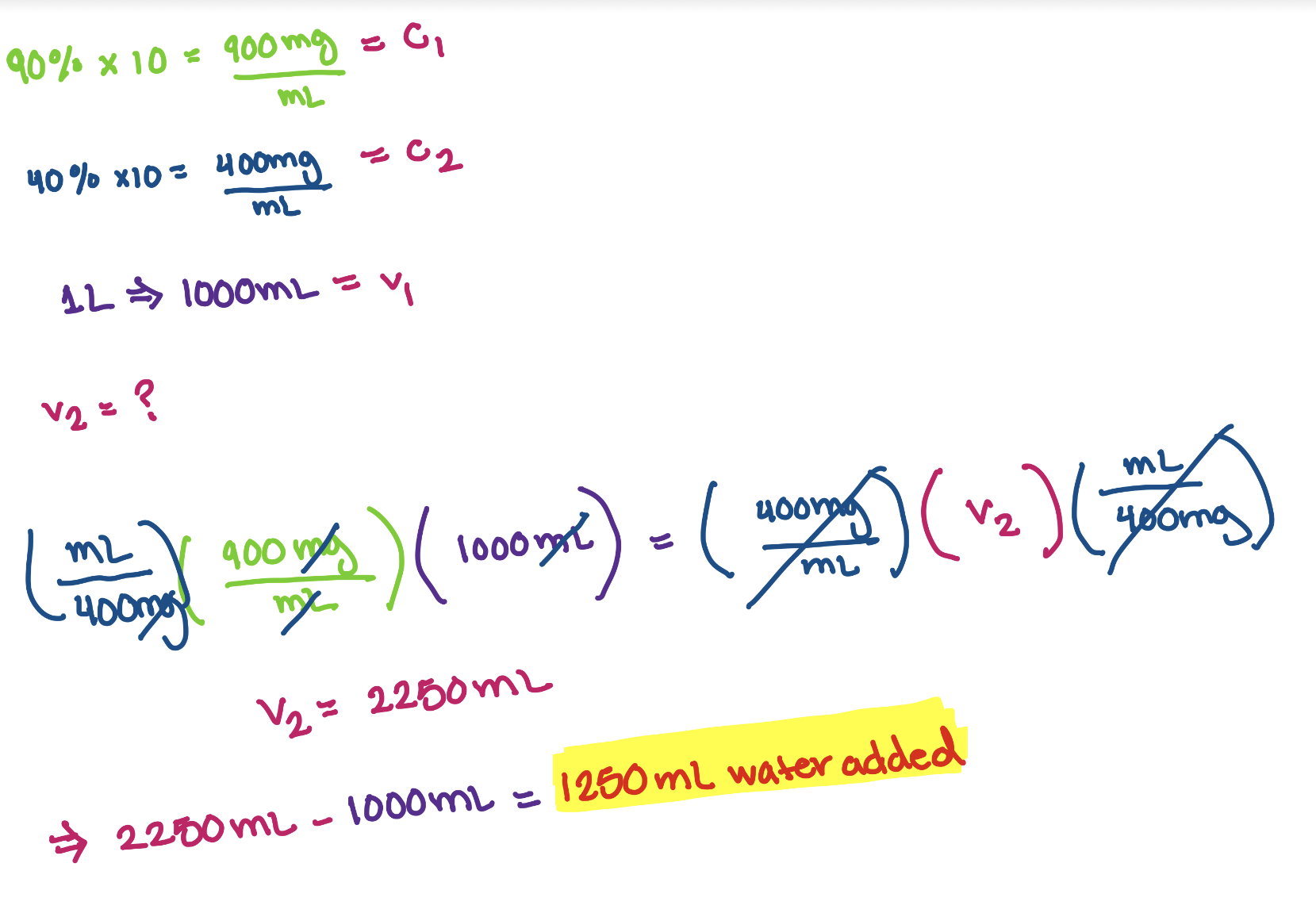
How much water must be added to a liter of 90% alcohol to change it to a 40% solution?
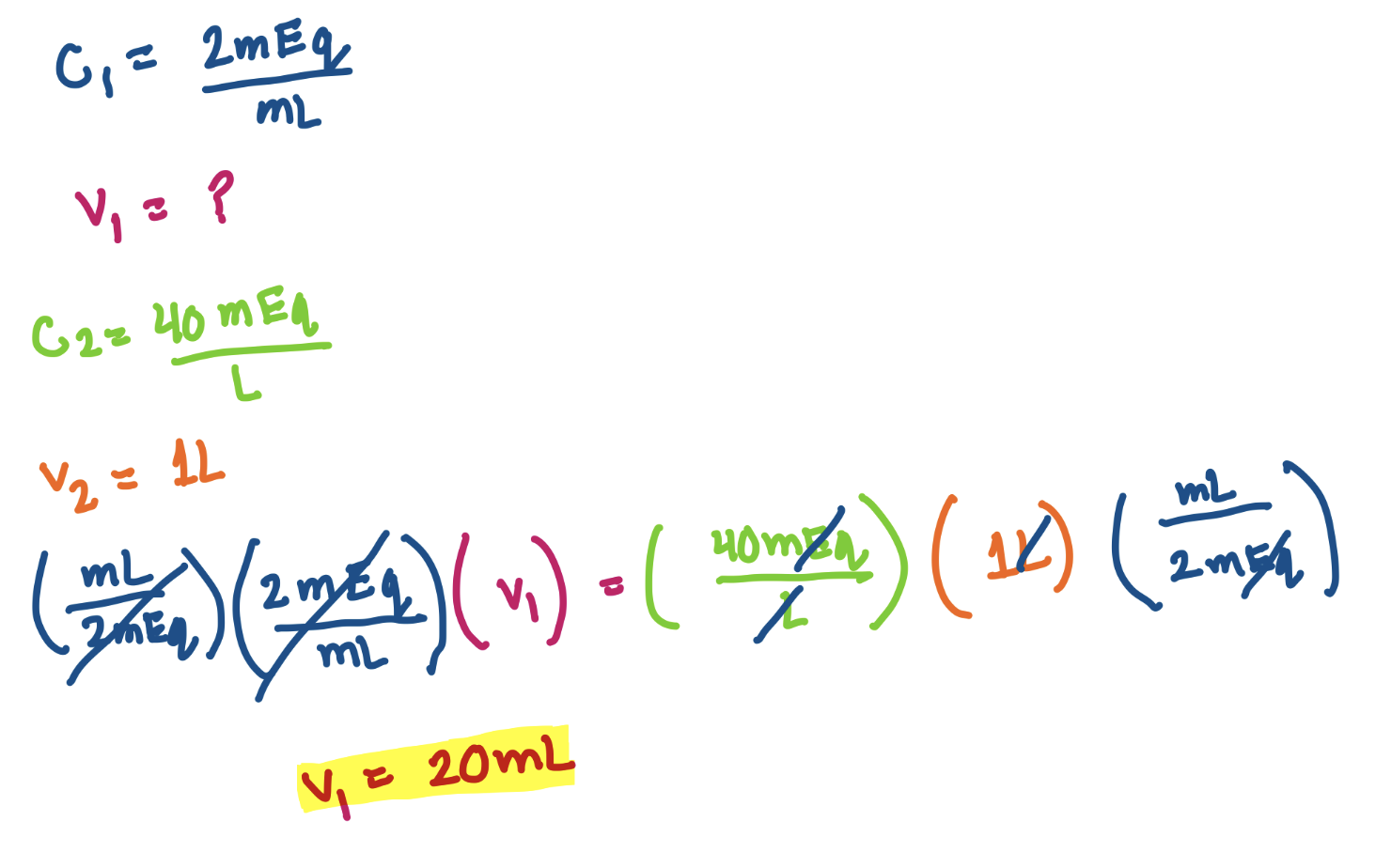
You have a 2% Chlorhexidine solution. It must be diluted to a 1:40 Chlorhexidine solution so that it can be used for wound cleanings. How much solution do you add to the 2% Chlorhexidine solution to get a final volume of 100ml of a 1:40 dilution?

Calculating Fluid Additives:
Usually electrolytes
Practice Problem:
The surgery fluid dose rate for the 25 lbs dog you are performing a spay on will be 5 ml/kg/hr. What fluid rate will you set the fluid pump to?

We are performing on a 8 lbs cat with a history of heart disease. The fluid dose rate is 3ml/kg/hr. What fluid will you set the fluid pump to?

We are hospitalizing a 44 lbs canine patient & will be placing it on maintenance fluids at 60 ml/kg to be given over 24 hours. What fluid rate be for this patient?

We are hospitalizing a 10 lbs cat & will be placing it on a maintenance fluid rate of 30 ml/kg to given over 24 hours. What will the fluid rate be for this patient?
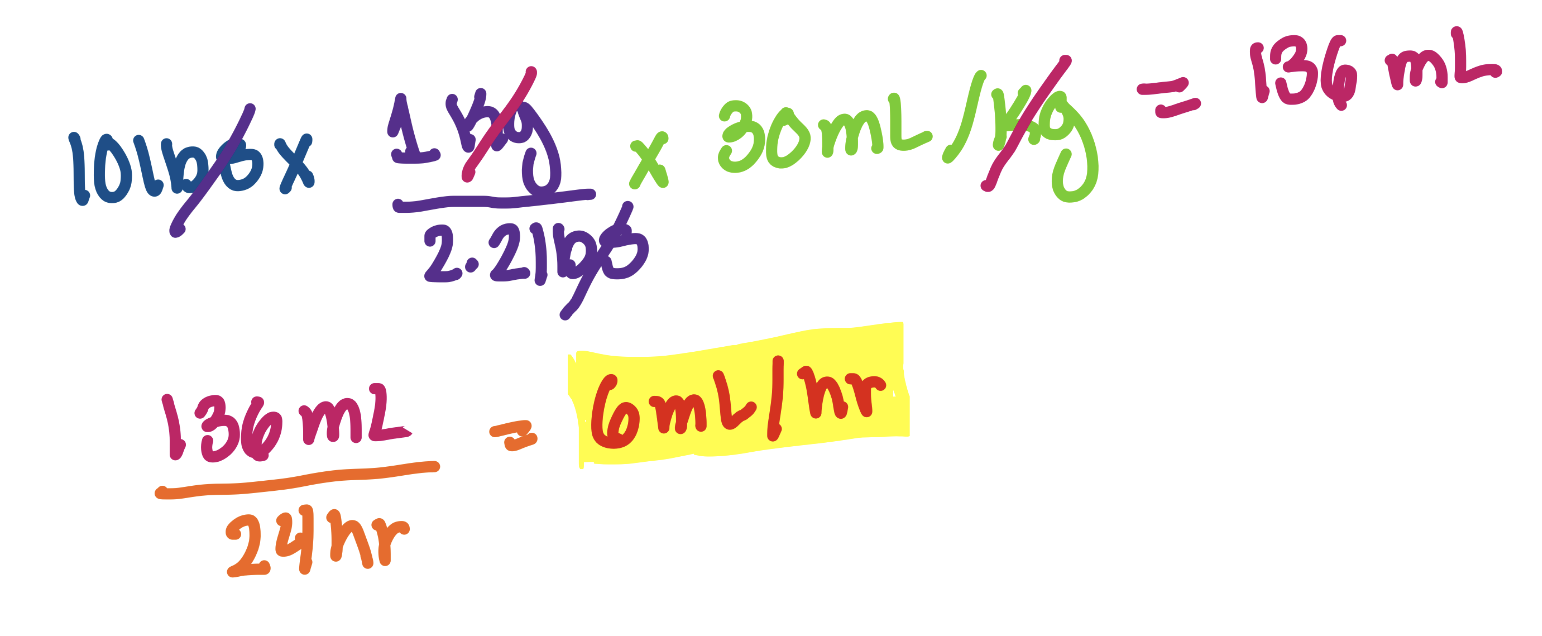
We are treating a severely dehydrated diabetic cat. I ask to give this 8 lbs cat a 10 ml/kg IV bolus of fluids. What will the fluid amount be?

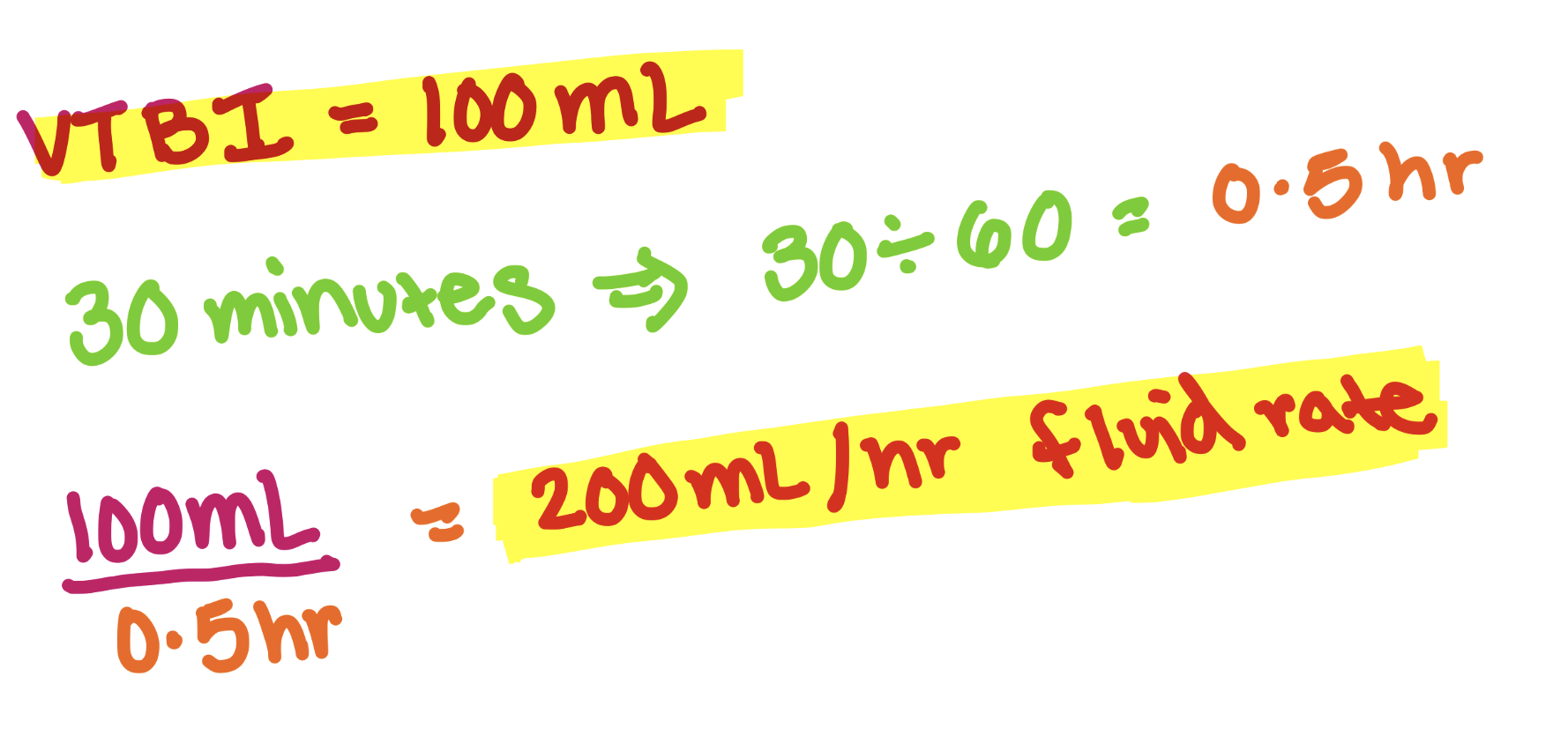
You are asked by the DVM to give a fluid bolus to a 15 lbs dog. The fluid bolus will be 100 ml over the course of 30 minutes. What fluid rate will you set the fluid pump to? What will be the VTBI?
You are asked to give a severely dehydrated 10 lbs cat a 50ml fluid bolus over 15 minutes. On the fluid pump, what will you set the fluid rate to and what will be the VTBI?

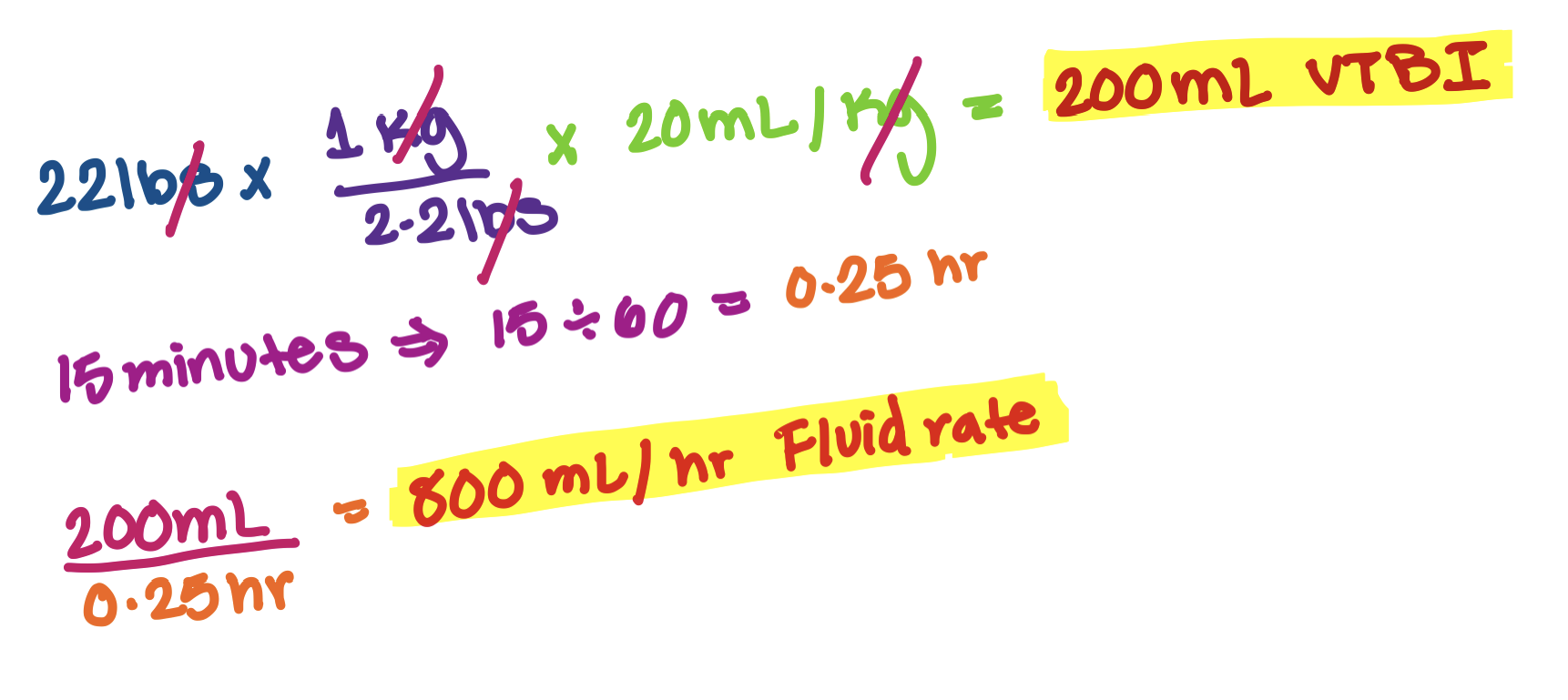
You are asked to give a 20 ml/kg dose of fluids over 15 minutes to a 22 lbs dog. What will you set the fluid pump rate & VTBI to?
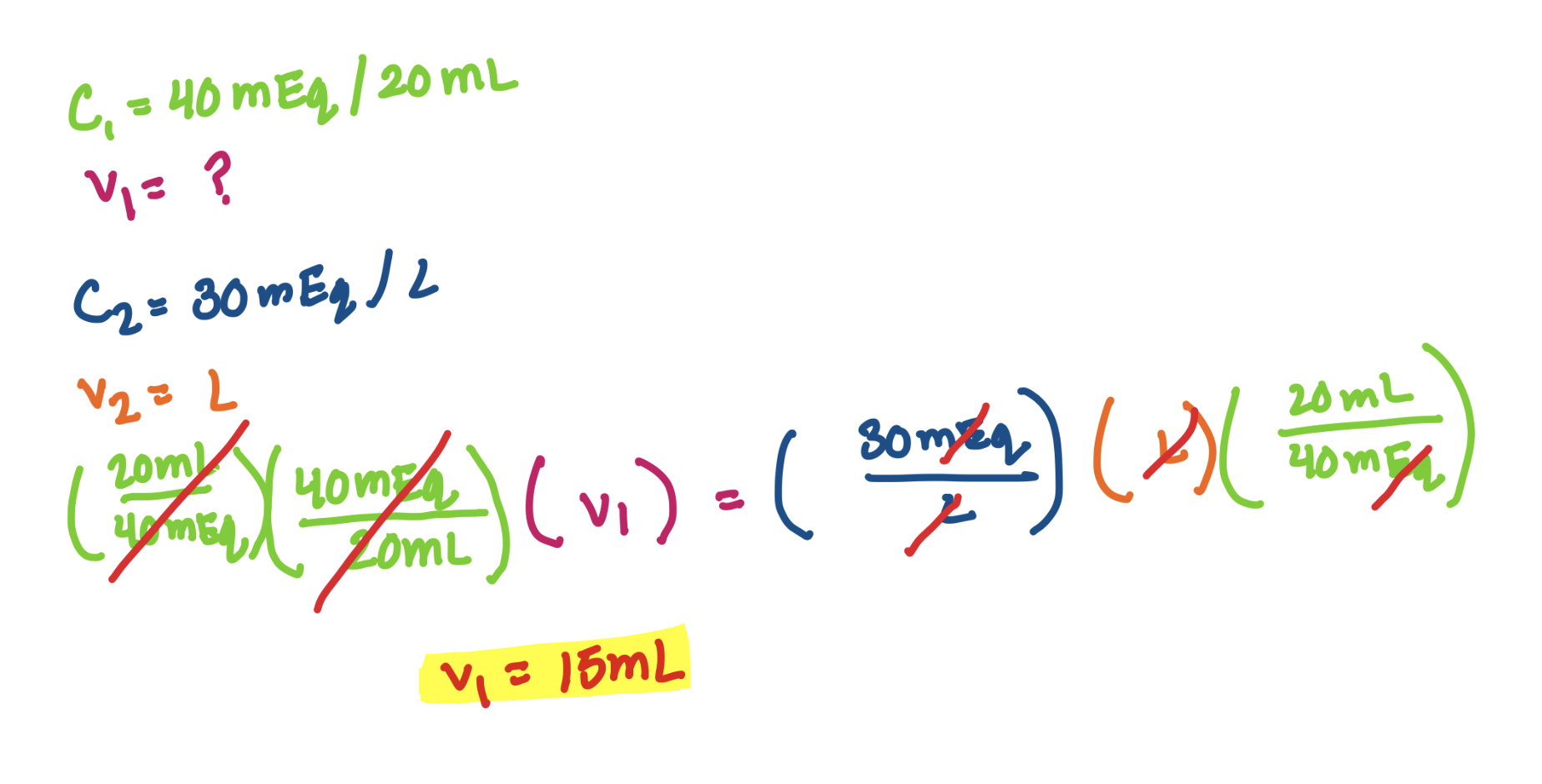
You are asked to add 30 mEq of KCl into a bag of IV fluids. The KCI bottle is 40 mEg/20ml. What ml quantity of KCI will you add to the bag of fluids?
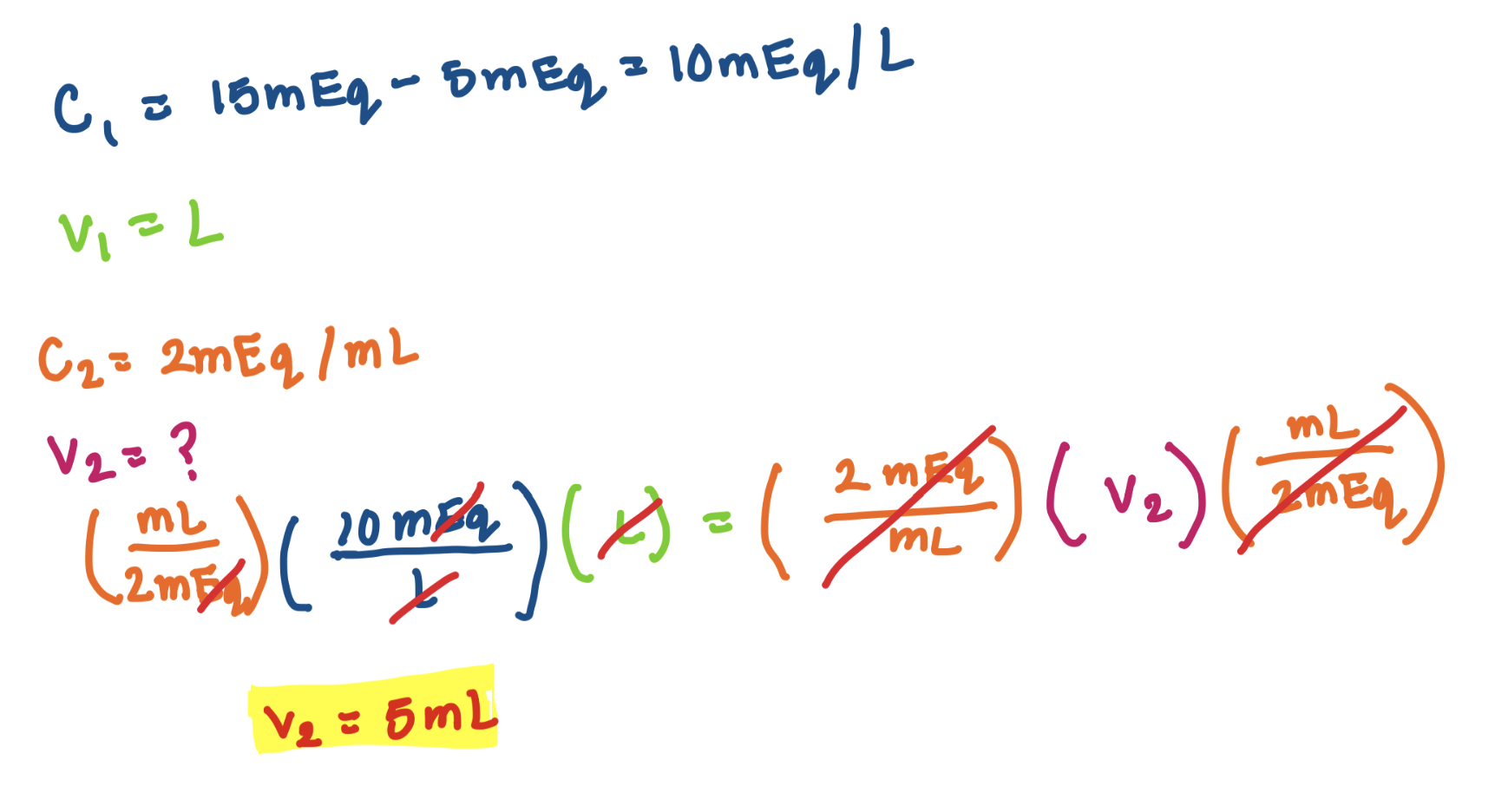
We want a 1 L bag of fluids to contain 15 mEq of KCI. The fluid bag already contains 5 mEq of KCI. What is the mLs of 2 mEq/ml KCI to achieve 15 mEq of KCI in the IV fluid bag?
What is the mg/ml concentration of a 10% solution?

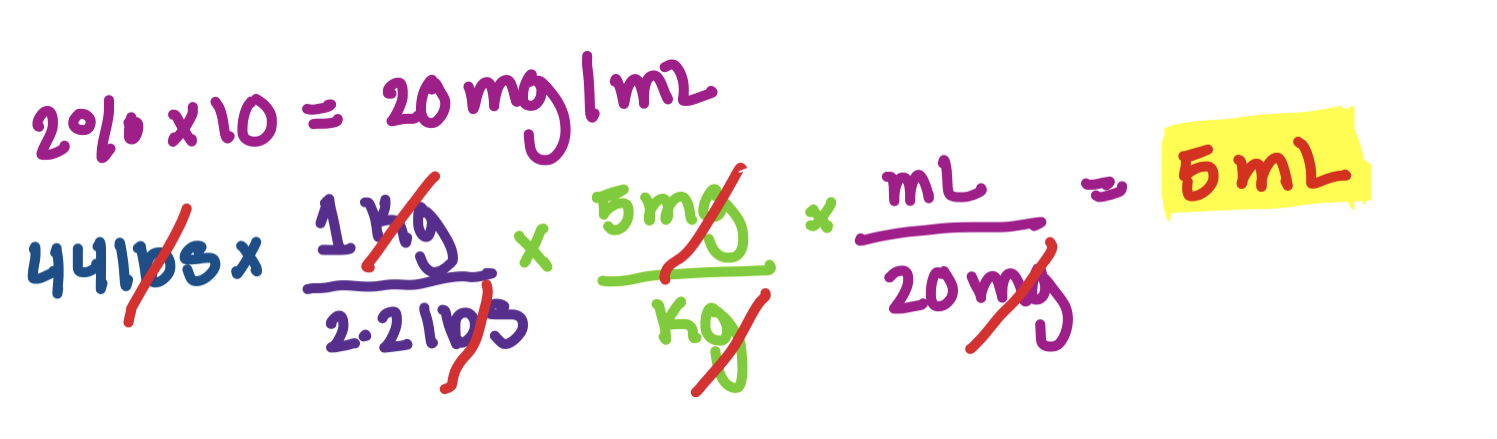
You are asked to give a 5 mg/kg dose of a 2% solution to a 44 lbs dog. How many mls of the 2% solution will you administer?
You are asked to make a 10ml solution of 10% Dextrose. You have a bottle of 50% Dextrose and a bag of saline. How much 50% Dextrose will you use and how much saline will you use?
