Preservatives
 Call Kai
 Learn
 Practice Test
 Spaced Repetition
 Match
 Flashcards
 Knowt Play
1/26

There's no tags or description
Looks like no tags are added yet.
27 Terms
What are the sterility requirements of the oral, rectal, topical, and inhaled medicinal products?
They don’t need to be sterile, but they have limits on the number of contaminants, and there must be the absence of specific microbes (e.g. absence of E.coli for oral medicinal products, absence of S.aureus for topical).
What are the sterility requirements of ophthalmic and parenteral medicinal products?
They must be sterile
What factors determine the sterility requirements of MPs?
Product type: Aqueous or non-aqueous formulation
Route of administration
Nature of the product: Whether it supports microbial growth and contains preservatives
Intended recipient: Neonates are more vulnerable than healthy adults
Patient condition: The presence of disease, wounds, or organ damage may increase the risk of infection
What microbial contaminations are encountered?
Bacteria
Fungi
Viruses (rare)
Protozoa (rare)
Prions (rare)
What are the main characteristics of bacteria?
No membrane bound organelles
0.5-5µm
Broadly divided into gram +ve and gram -ve bacteria
Most bacteria are non-pathogenic, but there are several important pathogens
Most bacteria can grow as biofilms
What is the medical relevance of biofilms?
Majority of infections involve cells growing in biofilms (e.g. endocarditis)
Biofilms can grow on indwelling medical devices (e.g. catheters) and on surfaces in places like hospitals
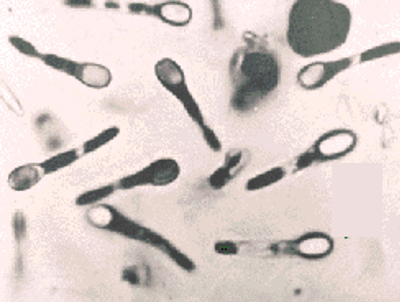
What is bacterial sporulation?
The process by which certain bacteria produce a highly resistant, dormant structure called an endospore when environmental conditions become unfavourable, such as when nutrients are limited.
Spores are very resistant to heat, radiation, desiccation, and chemical agents. They can survive for many years.
What’s the difference between planktonic cells and biofilms?
Planktonic cells are bacteria that live individually and freely in a liquid environment and are more susceptible to antibiotics. They are more freely exposed to the antibiotic.
Biofilms are bacteria that attach to the surface and form a community surrounded by a protective matrix, and are more resistant to antibiotics.
What is the medical significance of fungi?
Pathogenic fungi:
Candida spp. can cause oral thrush
Dermatophytes are fungi that colonise skin, nails, hair
Non-pathogenic fungi:
Penicillium spp. produces penicillins
What are other contaminations?
Viruses
Protozoa – May infect improperly sterilized contact lenses
Prions – Prions are heat and chemical resistant, so are difficult to remove from medical equipment after surgery of patients with e.g. Mad Cow disease
What are the consequences of microbial contamination?
Health hazard – The contaminating organism or its toxins can cause disease.
Spoilage – There may be therapeutic breakdown of actives, or another component of formulation. It may also lose its aesthetic appeal, leading to non-compliance in patients.
What are the functions of preservatives?
The decrease the risk of microbial contamination throughout product shelf life.
What are some ideal properties of preservatives?
Broad spectrum
Rapid antimicrobial action
Chemically stable
Effective at product pH
Compatible with the formulation
Physically undetectable
Constitute a small proportion of the product
Safe
Cost effects
Name common examples of preservatives used in oral MPs
Organic acids e.g. benzoic acid, sorbic acid
Parabens; Esters of p-hydroxybenzoic acid e.g. propyl paraben
When organic acids are being used as preservatives, does pH matter?
Organic acids exist in 2 forms:
Unionised form - No electrical charge, lipophilic, and can pass through cell membranes more easily. This is the form mainly responsible for antimicrobial activity.
Ionised form – Has an electrical charge so cannot pass through cell membranes as easily.
The balance between these 2 forms depends on the pH of the product.
Organic acids work best when the pH is below their pKa, because a greater proportion of the acid remains unionised (e.g. benzoic acid has a pKa of 4.2 - at pH 3, most benzoic acid is unionised, so it has greater preservative activity, at pH 4.2, approximately 50% is unionised, at pH 6, most benzoic acid is ionised, so its preservative activity is reduced)
When parabens are being used as preservatives, does pH matter?
Parabens have unionized and ionized forms, but unlike organic acids, their pKa values are much higher (e.g. methylparaben has a pKa of ~8).
This means parabens can remain effective over a wider pH range than benzoic acid.
What are the disadvantages of parabens?
They have low solubility, making it harder to incorporate enough of the preservative into an aqueous product.
They have a slow kill rate, meaning they may inhibit or kill microorganisms relatively slowly, so they might not eliminate contamination quickly.
Different parabens are used in combination to improve preservative effectiveness.
What are the advantages of organic acids and parabens as preservatives?
Effective at low concentrations
Generally non-toxic, cheap, & stable.
Reasonable spectrum of activity
Can be bactericidal and fungicidal, but are not sporicidal
Physically undetectable
Long acting (but NOT fast acting)
How is preservative efficacy tested?
Via the challenge test
Assess the product in its final container
Deliberately contaminate the product with ~106 microorganisms per mL or g
Use different types of microorganisms:
Bacterial: Pseudomonas aeruginosa, Staphylococcus aureus, Escherichia coli
Fungal: Aspergillus niger, Candida albicans
Osmophilic yeast: Zygosaccharomyces rouxiiIncubate and sample over 28 days
Assess the viability. This means to check the microorganisms are still alive and capable of growing. The number of viable microorganisms is measured at each sampling point and compared with the original number.
Compare the results with the acceptance criteria

How do you read this table?
Product type = The type of medicine being tested
Challenge organism = The type of organism you deliberately introduced into the product during testing
Acceptance criteria (A or B) = Different standards the product must meet, depending on the product category and pharmacopoeia requirements
Log reduction specified = The required reduction in the number of viable microorganisms after a particular time.
Now what does log reduction mean>
A log reduction measures how much the number of microorganisms has decreased.
1-log means there’s a 90% reduction in microorganisms. If we started with 1,000,000, then 100,00 would remain.
2-log means 99% reduction. 1,000,000, only 10,000 remains.
3-log means 99.9% remains. 1,000,000, only 1,000 remains.
The higher the log, the greater the decrease in microorganisms.
So for parenteral/ophthalmic products, bacteria, acceptance criteria A, after 6 hours there’s a 2-log reduction. The number of viable bacteria must decrease by 99% for that. After 24h, the number of viable bacteria must decreased by 99.9%.
NR means no recovery. That means <100 organisms per gram or ml or product
NI means no increase. That means < ½ log increase from the last value given for VC.


Exam Q) A preserved ophthalmic product was inoculated with 106 CFU/ml Candida albicans, and over 28 days samples were withdrawn and a VC was obtained.
What would VC be after 7 days to meet grade A criteria?
What would VC be after 14 days to meet grade B criteria?
What would VC be after 28 days to meet grade B criteria?
What would be the VC of the inoculum?
What would VC be after 7 days to meet grade A criteria?
Ophthalmic
Fungi (Candida albicans)
A
After 7 days, there needs to be a log reduction of 2.
Log reduction 2 = 99%
99% of 106 is 990,000
106 – 990,000 = 10,000
VC after 7 days is 104 CFU/mL
What would VC be after 14 days to meet grade B criteria?
Ophthalmic
Fungi (Candida albicans)
B
After 14 days, there needs to be a log reduction of 1.
Log reduction 2 = 90%
90% of 106 is 900,000
106 – 900,000 = 100,000
VC after 14 days is 105 CFU/mL
What would VC be after 28 days to meet grade B criteria?
Ophthalmic
Fungi (Candida albicans)
B
After 28 days, there needs to be a log reduction of NI.
NI means there must be < ½ log increase from the last value given for VC.
VC after 14 days is 105
VC after 28 days is <105.5 CFU/mL (less than ½ log increase)
What would be the VC of the inoculum?
106 CFU/mL

What factors affect the choice of preservative?
Intended application
Number and type of microorganisms present
Safety, stability, and cost
Microenvironment
Properties of chemical agent
How does the intended application affect the choice of the preservative?
Product type – sterile vs. non sterile
Route of administration – toxicity of preservative
Moisture content
Susceptibility to attack
How does the number and type of microorganisms present affect the choice of the preservative?
In oral products, the most likely contaminating bacteria are E.coli, S.aureus, P.aeruginosa, Clostridium sp, and the most likely contaminating fungi are Candida sp.
We want to reduce the potential of contamination through packing, and we also want to know its shelf life.
How does safety, stability, and cost affect the choice of the preservative?
Safety
safe to handle during manufacture / packaging
non-toxic in relation to route of administration
Stability
not affected by other products in formulation
effective over range of pH
effective over product shelf life
Cost effective
must not constitute large proportion of cost of product
How does the microenvironment affect the choice of the preservative?
‘Availability’ of preservative
Interaction with formulation and/or with container?
Permeation through the container & evaporation?
Partitioning into oily phase? (e.g. parabens)
Moisture
Products with large amounts of water are more at risk
Aim to reduce moisture content
Storage temp
Affects activity / stability of preservative
Affects levels of contamination
Consider fluctuations
How do the physicochemical properties of the product affect the choice of the preservative?
pH of the product
Affects potency through ionisation e.g. Organic acids are inactive when ionised
Affects survival & growth of organism
Concentration / Dilution of the preservative
toxicity or very low conc. required can make preservative inappropriate