Endocrine System
 Call Kai
 Learn
 Practice Test
 Spaced Repetition
 Match
 Flashcards
 Knowt Play
1/72

There's no tags or description
Looks like no tags are added yet.
73 Terms
endocrine system - review
secretes hormones as chemical messengers that target receptors
the endocrine system causes the negative feedback systems
these hormones chemical structures can be
peptide
steroid
once they have been used they are excreted by the kidneys
endocrine system - where hormones are excreted from
pituitary gland
adrenal glands
thyroid gland and parathyroid glands
pancreas
gonads
pineal gland
thymus
local hormones
location of endocrine glands

sources of major hormones and primary effects
there are anterior and posterior lobes of the pituitary glands
adenohypophysis: anterior lobe
neurohypophysis

hormone release
most often controlled by negative feedback mechanisms
endorine and nervous systems work tg to regulate metabolic activities
complex system for some hormones
secretion may be controlled by more than one mechanism
hypothalamus and pituitary working tg to get the hormone released
some hormones work antagonistically
some hormones work against eachother
ex: insulin and cortisol
rate and timing of secretion may vary
ex: menstral cycle - estrogen and prostoglandin released largely once a month
cyclic patterns
negative feeback loop
A negative feedback loop acts as a system's internal stabilizer by working to reverse any changes away from a desired baseline. When a disturbance occurs—such as a spike in body temperature or a drop in a home's thermostat reading—specialized sensors detect the shift and alert a central control mechanism. This controller immediately triggers corrective actions, or effectors, designed to counter the change and bring conditions back to normal. Once the system successfully returns to its optimal set point, the corrective process automatically shuts off, preventing overcorrection and successfully maintaining a steady, balanced state known as homeostasis.
negative feedback loop - decreasing blood sugar
Lowering High Blood Sugar
1. Stimulus: You eat food, carbohydrates break down, and blood glucose rises above normal levels.
2. Detection: Beta cells in the pancreas sense the elevated glucose in the blood.
3. Release: The pancreas secretes insulin into the bloodstream.
4. Transport: Insulin travels through the body and binds to receptors on cell membranes (like a key opening a lock).
5. Uptake:
• Muscle and fat cells open up gateways to pull glucose out of the blood for energy.
• The liver absorbs glucose and converts it into stored glycogen.
6. Correction: Blood glucose levels drop back down to the normal baseline.
7. Shutoff: The pancreas senses the normal glucose level and stops releasing insulin (the negative feedback loop closes).

negative feedback loop - increased blood sugar
Step-by-Step: Raising Low Blood Sugar
1. Stimulus: You skip a meal or exercise heavily, causing blood glucose to drop below normal levels.
2. Detection: Alpha cells in the pancreas sense the low glucose levels.
3. Release: The pancreas secretes glucagon into the bloodstream.
4. Target: Glucagon travels through the blood and targets the liver.
5. Conversion: The liver breaks down glycogen back into usable glucose molecules (glycogenolysis).
6. Release: The liver pumps this freshly freed glucose into the bloodstream.
7. Correction: Blood glucose levels rise back up to the normal baseline.
8. Shutoff: The pancreas senses the restored glucose levels and stops releasing glucagon (the negative feedback loop closes).

endocrie disorders
all disorders reflect impared control/feedback
manifestation of hormonal disorders reflect the action of the hormone
ex: lack of insulin → gonna cause high blood sugar
the point of insulin is to decrease blood sugar
excess hormone levels
tumor produces high levels
excretion by liver or kidney is impaired
body cant excrete it
congenital condition producess excess hormone
deficit of hormone or reduced effects
tumor produces too little hormone or it could be pressing on the gland causing it to not be able to release it
inadequate tissue receptors present
might not be as sensitive to the hormone coming in
antagonistic hormone production is increased
malnutrition
atrophy, surgical removal of gland
congenital deficit - present at birth
diagnostic tests
blood tests
check serum hormone levels
radioimmunoassay
immunochemical methods
urine tests
stimulation or suppression tests
scans, ultrasounds, MRI
biopsy
treatment
deficit may be treated with replacement therapy
excessive secretion may be treated with
medications
surgery
radiation
insulin and diabetes mellitus
diabetes mellitus: basic problem is inadequate insulin effects in receptor tissues
deficit of insulin secretions
production of insulin antagonists
Diabetes results in abnormal carbohydrate, protein, and fat metabolism.
Due to glucose being stuck in the blood stream so now they have to find something else to give energy
without insulin these can help for short term but over time its going to be problomatic
some tissues can transport glucose in the absence of insulin:
CNS, kidney, myocardium, gut, and skeletal muscle
skeletal muscle can partially meet tissue needs without insulin
type 1 diabetes
deficit of insulin secretion
autoimmune destruction of beta cells in pancreas
beta cells secrete insulin so when they are destroyed insulin isnt getting secreted
insulin dependent diabetes
insulin replacement required
acute onset in children and adolescents
not linked to obesity
genetic factors may play a role
type 2 diabetes
deficit of insulin secretion or too much production of insulin antagonist
non-insulin-dependent
make insulin but might not be enough
insulin typically isnt give to these people and oral hypoglucemic medications may be used instead
this med only works for people with type 2
caused by decreased production of insulin and/or increased resistance by body cells to insulin
onset is slow and insidious and usually in 50+ age (age is decreasing throughout the years)
associated with obesity
component of metabolic syndrome
increasing incidence in teens and young adults
metabolic syndrome
citeria
men: abdominal girth > 40in
women: abdominal girth > 35in
elevated triglycerides > 150 mg/dl
reduced HDL cholesterol < 50 mg/dl
good cholesterol
increased BP > 130/85 mmHG
hyperglycemia fasting BS > 100 mg/dl
presence of 3 out of 5 is the diagnostic criteria for diagnosis
this is obesity related
this is stuff that is modifiable
this doesnt mean you automatically have type 2 but youre at high risk and on track to have it
general manifestations of DM
insulin deficit results in decreased transportation and use of glucose in many cells
polyphagia
increase in hunger
fatigue
brain can only bring in so much glucose without the help of insulin
too much glucose in the blood stream and isnt being put in the cells to use due to the decrease in insuline
insulin brings glucose to cells
blood glucose levels rise - hyperglycemia
excess glucose in urine - glucosuria
dehydration results from hyperosmolar filtrate
polyuria
h20 is going to follow the glucose causing decrease in h20 causing an increase in thirst
polydipsia
an abnormal, persistent and unquenchable feeling of extreme thirst that leads to excessive fluid intake
high glucose levels
hyperglycemia
low glucose levels
hypoglycemia
polyuria
abnormally large volume of urine
polydipsia
feeling of thirst
glucosuria
glucose in the urine
fasting blood glucose level
70-100 is normal
glucose tolerance test
pt will be fasting before coming in and will drink 25 grams of a sugar drink in the dr office and we monitor their blood sugars after time (usually 1 hr sometimes 3 hrs long)
they want your glucose number to be less than a certain number to say that your body is trying to decrease glucose
glycosylated hemoglobin test (HbA1c)
clinical and subclinical diabetes
monitor glucose levels over several months
monitor for 90-120 days (this is how long rbcs live for)
look at a rbc and cut it in half and then count the number of sugar molecules on a rbc
want it to be less than 7
tells us how well were managining our diabetes overtime

Diabetes - treatment principles
maintenance of blood glucose levels in norm range
biggest thing: want to maintain for that specific person
helps to reduce complications
diet and exercise (bigges ones to reduce risk for type 2 - when exersizing your body is using glucose)
exercise reduces blood glucose as skeletal muscle uses glucose
glucose within vessels is damaging which is why we need to manage
oral medication
increase insulin secretion
reduce blood glucose levels
insulin replacement
required for type 1 not always for type 2
T1D - metabolic changes
catabolism (breaking down) of fats and proteins
excessive amts of fatty acids and metabolites
ketones in the blood
fats and proteins are breaking down and cause keto acids to be excreted making us have ketones in the blood
bicarb will try to help out so we will have a decreased serum bicarb bc they are being used up
ketonuria
decreased serum bicab; decrease in pH of body fluids
ketoacids excreted in urine
tells us we have decompensated metabolic acidosis cause nothing is stoping the ketones and it has made it all the way to the urine
decompensated metabolic acidosis
if the body doesnt have insulin to move the glucose, our bodys have to figure out how to make energy
T1D - complications
complications are directly related to duration and extent of abnormal blood glucose levels
many factors lead to fluctuations in serum glucose levels
variations in diet and alc use
basically glucose and carbs which can increase your blood glucose
change in physical activity
body is demanding more glucose be used
infection
body is demanding more glucose be used
vomiting
not keeping glucose in
complications may be acute or chronic
diabetes - acute complications
hypoglucemia (insulin shock)
diabetic ketoacidosis
HHNK or HHNC
Mobilization and use of lipids to meet cellular needs result in production of ketoacids
Not enough insulin to bring in glucose so now we need to break down something else to get the energy but it will create a productions of keto acids
May be initiated by infection or stress
Body demands more glucose and corticosol gets secreated when stressed or infection which is an antagonist of insulin
May result from error in dosage, infection, change in diet, alcohol intake, or exercise
hypoglycemia (insulin shock)
more common with insulin replacement treatment
more common in T1D
can occur due to excess oral hypoglycemic drugs
insulin shock
excess insulin in circulation
glucose deficit in blood (decrease of glucose in blood)
can be life threatening or cause brain damage if untreated
seen in
often following strenuous exercise
dosage error
vomiting
nutrients and glucose not keeping in
skipping meal after taking insulin

hyoglycemic shock: signs and symptoms
disorientation and change in behavior
brain isnt getting enough glucose to function
may appear impaired
anxiety or decreased responsiveness
brain isnt getting enough glucose to function
decreased blood glucose
initially might be high bc SNS has been kicked in
decreased bp and increased hr
decreasing level of consciousness
NOTE: immediate administration of glucose is required to prevent brain damage
diabetic ketoacidosis
occurs in insulin dependent clients
more commonly seen in T1D
result of insufficent insulin in blood
high blood glucose levels
300-600 range

diabetic ketoacidosis - signs and symptoms
dehydration
thirst, dry , rough oral mucosa
warm, dry skin
rapid, deep respiration - acetone breath
fruity smell and is strong (body is trying to get rid of the acid so its trying to breath it off)
kussmals breathing
lethargy, decreased responsiveness
metabolic acidosis
may lead to loss of conciousness or coma
electrolyte imbalances (low sodium - peeing out so much water, high potassium)
abdominal cramps, nausea, vomiting; lethargy weakness
effects of insulin deficit
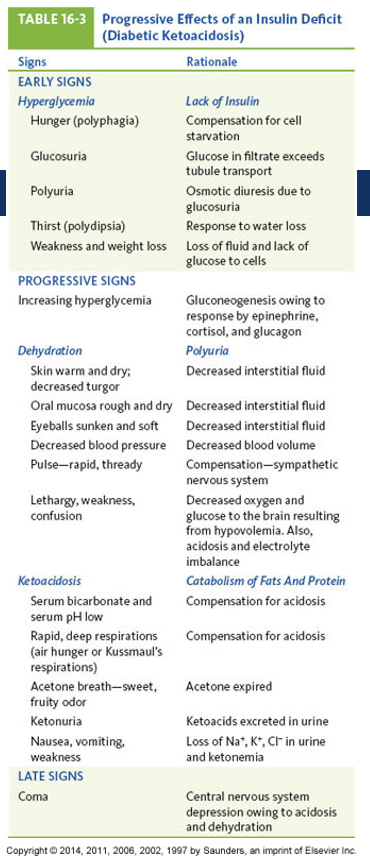
acute complications: HHNK (hyperglucemic hyperosmolar non-ketoic)
occurs in type 2 diabetes
insidious (comes on slowly) in onset and diagnosis may be missed
often occurs in older clients and assumed to be cognitive impairment
results in severe dehydration and electrolyte imbalances
HHNK manifestations
we have enough insulin present where ketones arent produced but if long term the body may create ketones
hyperglucemia
severe dehydration - so much glucose within the blood stream so the tissues are dumping fluid into blood stream
increased hematocrit
loss of turgor etc
increased hr and resperations
700-1000 glucose
glucose has a high pulling pressure and is trying to pull in more water to even out the concentration of the blood
now we have so much water in the vasculature this is why we pee so much
electrolyte embalances result in:
neurological deficits
muscle weakness
difficulties with speech
abnormal reflexes
HHNK vs DKA
DKA
your blood glucose is extremely high but your body cant create insulin or there is a really really tiny amt
this causes your body to then break down other things like lipid and proteins to get energy and that causes ketoacid to accumulate causing ketones
this is typically seen in children and help diagnose them with T1D
HHNK
your blood glucose is extremely high but your body cant create enough insulin to support the glucose
you are still making insulin but it just isnt enough
it is enough insulin tho to not make your body break down other nutrients to get energy but isnt enough to bring down glucose in the blood
typically seen in type 2 and helps diagnose someone with type 2
chronic complications of diabietes
vascular problems
microangiopathy
macroangiopathy
infections
cataracts
pregnancy issues
Dawn Phenomenon
Somogyi Effect
vascular problems - chronic comp
increased incidence of atherosclerosis
changes may occur in small and large arteries
microangiopathy - chronic comp
microangiopathy: changes in microcirculation
obstruction or rupture of small capillaries and arteries
tissue necrosis and loss of func
neuropathy and loss of sensation
retinopathy - leading cause of blindness
chronic renal failure - degeneration in glomeruli of kidney
macroangiopathy - chonic comps
macroangiopathy: affects large arteries
result of abnormal lipid levels
high incidence of heart attacks, strokes, peripheral vascular disease
may result in ulcers on feet and legs - slow healing
frequent infections and gangrenous ulcers
amputation may be necessary
vascular problems with diabetes

infections
common and often more severe in diabetics
infections in feet and legs due to vascular and neurologic impairment
fungal infections common
candida
vagina and or oral cavity
UTI
dental caries
gingivitis and periodontitis
cataracts - chronic comps
opcity of lens in eye
related to abnormal mtabolism of glucose
pregnancy
complications to both mother and fetus may occur
increased incidence of spontaneous abortions
infants born to diabetic mothers
increased size and weight for date
may experience hypoglycemia in first hours postnatally
potential comps of diabetes mellitus
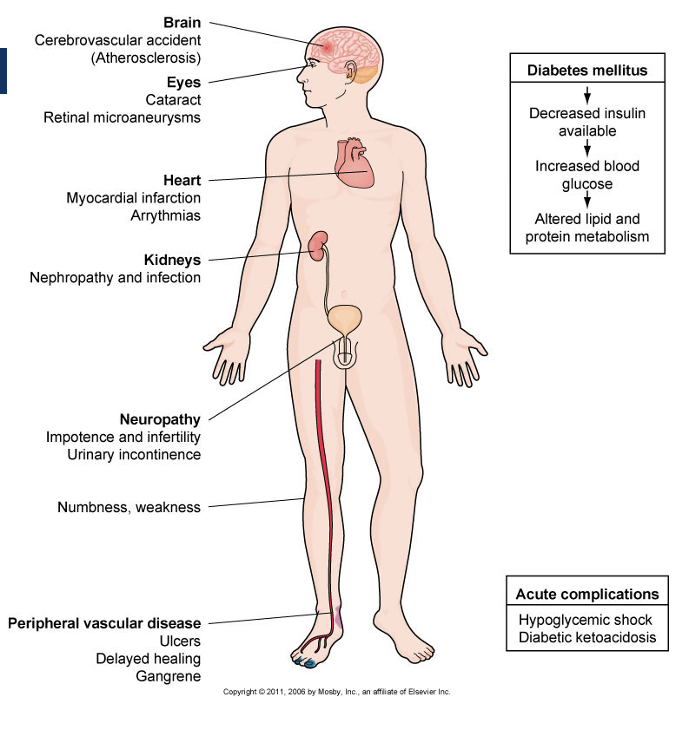
Dawn Phenomenon vs. Somogyi Effect
parathyroid hormone and calcium - hypoparathyroidism
leads to hypocalcemia
weak cardiac muscle contractions
increased excitability of nerves - spontaneous contractions of skeletal muscle
causes
tumor congenital lack of parathyroid
surgery or radiation in neck region
autoimmune disease
negative feedback loop of calcium

normal control and feedback of calcium

parathyroid hormone and calcium - hyperparathyroidism
results in hypercalcemia
forceful cardiac contractions
osteoporosis
predisposition to kidney stones
causes
tumor
secondary to renal failure
paraneoplastic syndrome
common effects of parathyroid hormone imbalence

pituitary hormones
adenomas are the most common cause of pituitary disorders
effect of mass
may cause pressure in the skull
headaches, seizures, drowsiness, visual deficits
effect on hormone secretion
dependent on cells and location involved
may cause excessive or decreased release of hormones
growth hormone (GH) children
dwarfism
deficit in growth hormone production/release
gigantism
excessive GH prior to puberty and fusion of epiphysis

Growth hormone (GH) adult
agromegaly
excess GH secretion in adults
often associated with adenoma
bones become broader and heavier
soft tissue grows
enlarged hands and feet; change in facial features

antidiueretic hormone (ADH) - diabetes insipidus
diabetes insipidus: deficit of ADH
adenoma
may originate in the neurohypophysis
head injury or surgery
possible genetic problem
replacement treatment required
ADH - inapproprite ADH syndrome
excess ADH
may be temp, triggered by stress, may be secreted by an ectopic source such as a tumor
treatment: diuretics and sodium supplements
hypothalamus-pituitary-thyroid gland feedback

hypothalamus-pituitary-thyroid gland negative feedback - made easy

thyroid disorder - goiter
enlargement of thyroid gland
endemic goiter
goitrogens
toxic goiter
endemic goiter
hypothyroid condition in regions with low iodine levels in soil and food
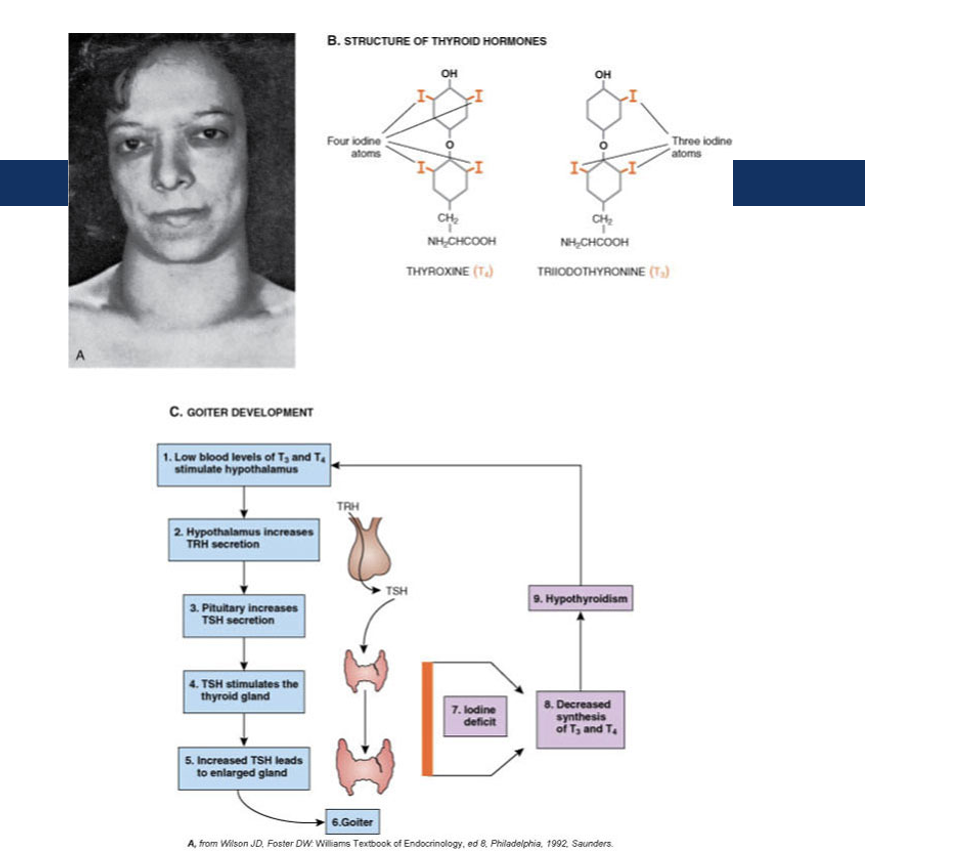
goitrogens
foods that contain elements to block synthesis of t3 and t4
toxic goiter
results from hyperactivity of thyroid gland
Thyroid Disorders: Hyperthyroidism - graves disease
related to autoimmune factor
hypermetabolism and increased stimulation of SNS
increased body temp
sweating
soft silky hair and skin
reduced BMI
insomnia
hyperactivity
toxic goiter
Thyroid Disorders: Hyperthyroidism - exophthalmos
presence of protruding staring eyes, decreased blink and eye movement
result of increased tissue mass in orbit
may result in visual impairment

hypothyroidism
iodine deficint
hashimoto thyroiditis
autoimmune disorder
tumor
surgical removal or treatment of gland
cretinism
results in short stature and severe cognitive deficits
untreated congenital hypothyroidism
may be related to iodine deficiency during pregnancy

hypothyroidism manifestations
goiter if cause is endemic iodine deficiency
intolerance to cold
increased BMI
lethargy and fatigue
decreased appetitie
myxedema in severe untreated hypothyroidism
non pitting edema in face, thickened tongue
myxedema coma: acute hypotension, hypoglycemia, and hypothermia results in loss of consciousness, life-threatening if untreated
comparison of hypothyroidism and hyperthyroidism

adrenal glands
adrenal medulla
pheochromocytoma
benign tumor of the adrenal medulla - secretes epinephrine, nonepinephrine, and possibly other substances
occasionally multiple tumors
headache, heart palpations, sweating, intermittent or constant anxiety
adrenal glands - adrenal cortex - cushing syndrome
caused by an excessive level of glucocorticoids - possible result of
adrenal adenoma
pituitary adenoma
ectopic carcinoma
latrogenic conditions
substance abuse
cushing syndrome - changes
change in persons appearance
round face with ruddy color
truncal obesity with fat pad between scapulae
thin limbs
thin hair
fragile skin, purpal striae
retention of sodium and water
suppression of the immune response
stimulation of erythrocyte production
emotional lability and euphoria
increased catabolism of bone and protein
delayed healing
increased insulin resistance and possible glucose intolerance

addison disease
deficiency of adrenocorticoid secretions
autoimmune reaction is a common cause
gland may be destroyed by hemorrhage or infection
manifestations
decreased blood glucose levels
inadequate stress response
fatigue
weight loss; frequent infections
low serum sodium concentration
decreased blood volume
hypotension
high potassium levels
Comparison of Addison Disease with Cushing Syndrome
