AHS 3305 Practical 1 - Fleas, Lice, Flies, Ticks, Mites
 Call Kai
 Learn
Learn Practice Test
 Spaced Repetition
 Match
Match Flashcards
 Knowt Play
1/33

There's no tags or description
Looks like no tags are added yet.
Name | Mastery | Learn | Test | Matching | Spaced | Call with Kai | Chat |
|---|
No analytics yet
Send a link to your students to track their progress
34 Terms

Cellophane Tape Preparation
Place a line of mineral oil on a glass slide
apply CLEAR cellophane tape to skin to collect sample
place adhesive surface of tape over mineral oil on glass slide
scan microscopically with the 4x or 10x objective
used to diagnose surface mites, fur mites, lice
Deep Skin Scrape Preparation
apply a few drops of mineral oil on a glass slide
dip #10 scalpel blade in oil (helps sample stick)
squeeze area to be scraped between fingers
hold scalpel blade perpendicular to skin
scrape until oozing blood is seen
smear sample onto slide, add more oil if needed
place cover slip over sample and mineral oil
scan under microscope with 10x objective
used to diagnose burrowing mites
Superficial Skin Scrape Preparation
apply a few drops of mineral oil on a glass slide
dip #10 scalpel blade in oil (helps sample stick)
squeeze area to be scraped between fingers
hold scalpel blade perpendicular to skin
scrape skin superficially to collect loose scales and crusts
smear sample onto slide, add more oil if needed
place cover slip over sample and mineral oil
scan under microscope with 10x objective
used to diagnose surface mites

Ear Swab Sample
moisten cotton tipped applicator with mineral oil
collect sample of ear debris with cotton swab
place a few drops of mineral oil and debris on slide
mix debris and mineral oil with wooden applicator stick until homogenous
place coverslip (mineral oil should cover entire undersurface of cover slip)
scan under microscope with 10x
used to diagnose ear mites like Otodectes and Psoroptes

How is flea infestation diagnosed?
you can look at lower back just above tail
use flea comb to capture fleas and flea debris (feces)
flea debris turn red when water is applied from digested blood from blood meals
Terms when animal is infested with parasite
fleas = ectoparasitism
lice = pediculosis
flies = myiasis
ticks = tick infestation
mites = acariosis/acariasis
Demodex - demodicosis
Saroptes - scabies
Otodectes - Otoacariasis

What is the life cycle of a mosquito?
Egg
larva
pupa
adult


What is the life cycle of a tick?
egg
larvae
nymph
adult

Ctenocephalides felis
Common name - cat flea
Dx: using flea comb and wetting dirt with water
Host: infests cats and dogs mostly, and mammals and birds
Location: lives on the skin
Zoonotic: yes, can take blood meals from humans but won’t infest them
Life cycle:
egg
larva
pupa
adult
6 legs
3 body parts: head, thorax, abdomen


Echidnophaga gallinacea
Common name - Poultry Sticktight Flea
Dx: using flea comb and wetting dirt with water
Host: cats, dogs, POULTRY, birds
Location: on the skin
Zoonotic: Yes, can take blood meals from humans but won’t infest them
Life cycle:
egg
larva
pupa
adult
6 legs
3 body parts: head, thorax, abdomen


Trichodectes canis
Common name - Dog chewing/biting lice
Order: Mallophaga
Dx: magnifiying lens, clear cellophane tape, microscopic examination
Host: domestic dogs and wild canids
Location: in and among hair of host
Zoonotic: No
Life cycle:
Egg (nits)
nymph
adult
infestation called pediculosis
transmitted direct contact and fomites
highly host specific
6 legs, 3 body parts: head, thorax, abdomen


Felicola subrostratus
Common name - Cat biting/chewing lice
Order: Mallophaga
Dx: magnifiying lens, clear cellophane tape, microscopic examination
Host: cats and other felines
Location: in and among hair of host
Zoonotic: No
Life cycle:
Egg (nits)
nymph
adult
infestation called pediculosis
transmitted direct contact and fomites
highly host specific
6 legs, 3 body parts: head, thorax, abdomen


Linognathus setosus
Common name - Dog sucking lice
Order: Anoplura
Dx: magnifiying lens, clear cellophane tape, microscopic examination
Host: domestic animals except cats and birds
Location: in and among hair of host
Zoonotic: No
Life cycle:
Egg (nits)
nymph
adult
infestation called pediculosis
transmitted direct contact
highly host specific
6 legs, 3 body parts: head, thorax, abdomen


Melophagus ovinus
Common name - Sheep Ked
Obligatory (entire life cycle on host)
Non-myiasis producing fly
Biting fly → anemia
Dx: Looking through wool/fleece
Host: Sheep and goats
Location: Deep within the sheep’s wool or goat’s fleece
Zoonotic: No
Transmitted: Direct contact
Flattened and wingless and resemble ticks
Females lay 1 larva (no eggs)
Life cycle:
Larva
Pupa
adult
Infestation called melophagiosis
6 legs


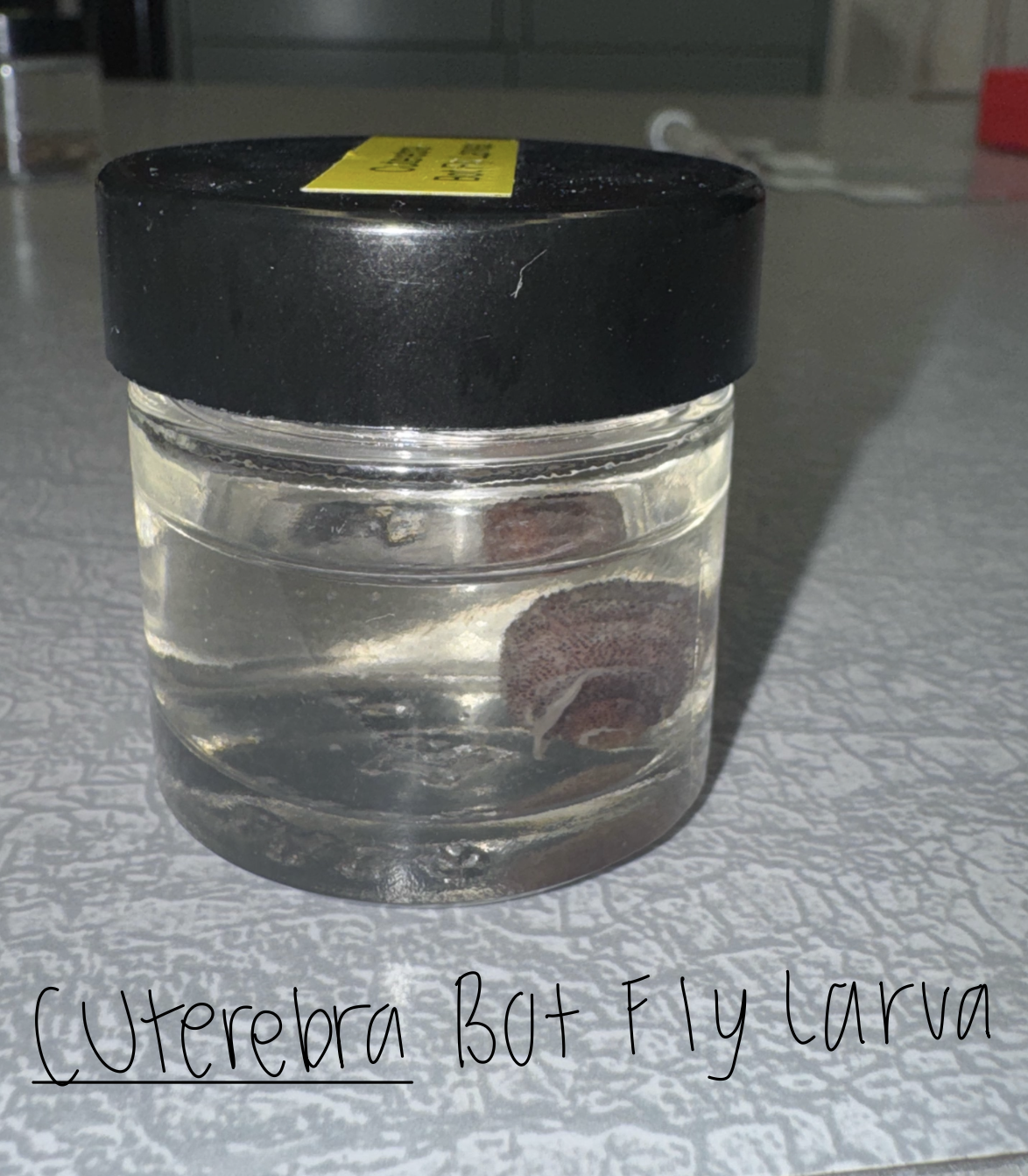
Cuterebra
Obligatory
Myiasis producing fly
Bot
Dx: looking for swollen, cyst-like subcutaneous lesions
Host: Rabbits, rodents, dogs, cats, sometimes humans
Location: Areas around head and neck (subcutaneous abscesses)
can be in nasal and oral cavities
can migrate to brain (fatal)
MIUST BE CAREFUL REMOVING or fatal
anaphylaxis
Zoonotic: Yes, but rare
Transmitted: Direct contact with 1st stage larvae
Life cycle:
Egg
Larva
Pupa
adult
larvae covered with tiny black spikes
Infestation called cuterebrosis
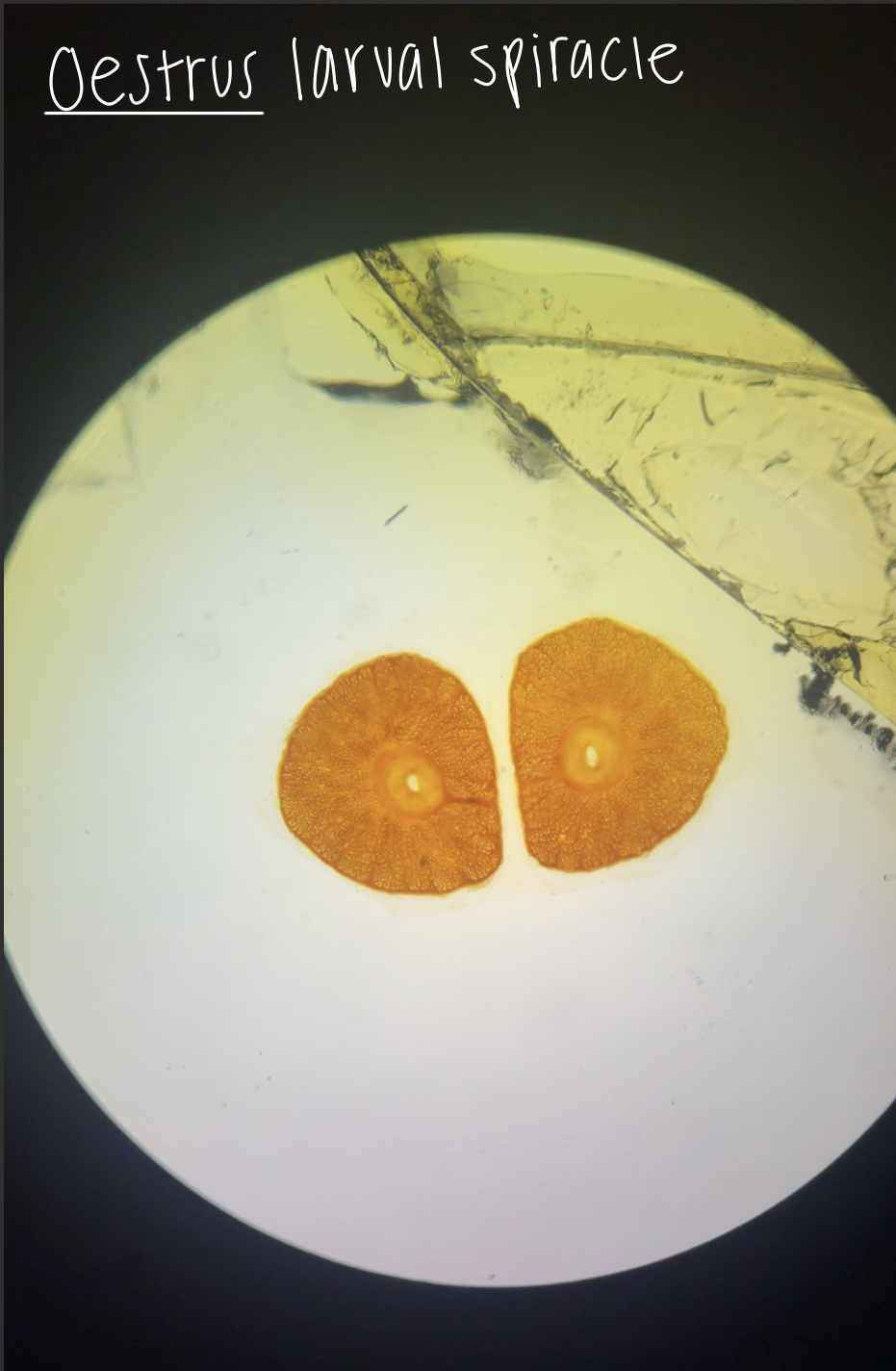
Oestrus ovis
Common name - Nasal Bot Fly
Obligatory
Myiasis producing fly
Bot
Dx: Looking for the large brown bot going through nostrils
Host: Sheep and goats
Location: Nasal chambers
Zoonotic: Yes
Transmitted: Adult female lays larvae in nares
Life cycle:
Females squirt larvae into nostrils
Larvae crawl into frontal sinuses → feed on mucosa
return to nostrils → fall to ground, pupate → adults
black oral hooks
infestation is called oestrosis


Gasterophilus intestinalis
Common name - Horse bots/Horse boy fly
Obligatory
Myiasis producing fly
Adults causes fly worry
Bot
Dx: Looking for female flies around horse in fall and feces with tiny larvae and dark-brown bots
Host: Horses
Location: Attached to gastric mucosa (stomach)
Zoonotic: No
Transmitted: Adult female lays eggs on horse legs, they groom themselves, and larvae hatch and penetrate mucosa
larvae may cause inflammation and interfere with digestion
Life cycle:
fly deposits eggs to hairs
hatching triggered by warmth and moisture during grooming
larvae enter mouth → migrate through oral tissue → swallowed
attach to gastric mucosa, remain for months
exit in stool → pupate (visible bots) → adults
infestation is called gasterophilosis


Hypoderma
Common name for larvae - warbles, grubs
Common name for flies - bot fly, warble fly, gad fly, heel fly
Obligatory
Myiasis producing fly
Adults cause gadding
Dx: Looking for swelling on back and looking for gadding
Host: Ruminants, occasionally horses, sometimes humans
Location: In large boil-like cysts in back of cow and through tissue
Zoonotic: Yes
Transmitted: Adult female flies from host to host
larvae migrate through tissue and makes hides downgrade from larval damage and causes green “butcher’s jelly” which decreases money
Life cycle:
fly attaches eggs to hair during summer
larvae enter through hair follicles or wounds (from biting flies)
migrate to back → forms warbles with breathing hole (palpable under skin)
emerge, fall to ground, pupate → adults
infestation is called hypodermosis


How are maggots different?
They live in soiled, or wounded tissue


Rhipicephalus sanguineus
Common name - Brown Dog Tick/Kennel Tick
Hard tick
Family: Ixodidae
Host: Dogs, sometimes humans
Location: Attached below hair coat, external ear canal and between toes
Transmitted: direct contact in infested environment
Zoonotic: No, but can cause tick paralysis
Life cycle:
Eggs
Unfed larvae
Goes on 1st host
Fed larvae, unfed nymph
Goes on 2nd host
Fed nymph, unfed adults
Goes on 3rd host
Fed male and female adult
Parasitizes at larva, nymph, and adult stage
Has an inornate, uniformly reddish-brown scutum
The head has prominent lateral extensions that give it a hexagon looking structure
8 legs
infestation called acariasis/ixodidosis

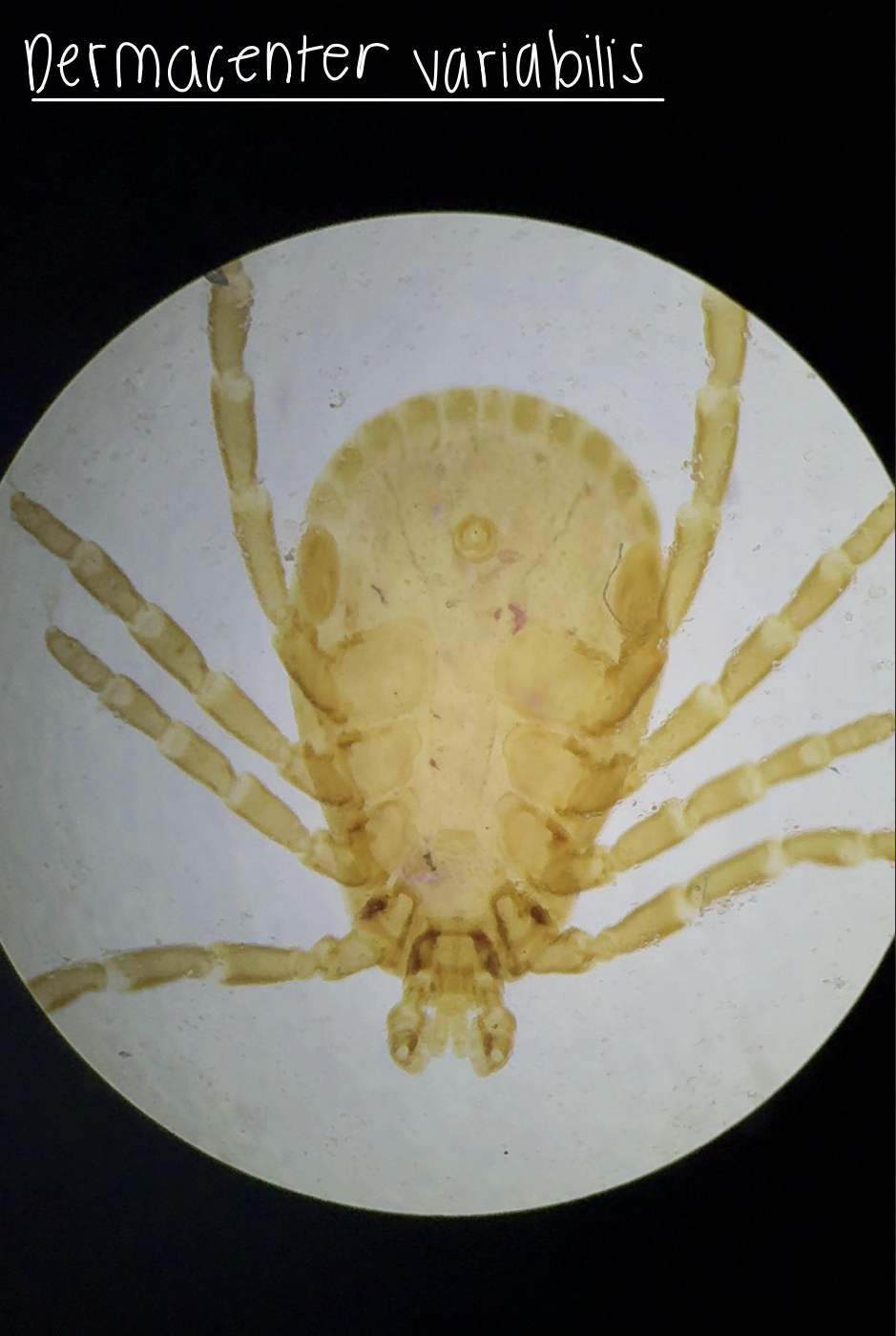
Dermacentor variabilis
Common name - The American Dog Tick
Hard tick
Family: Ixodidae
Host: Small mammals, dogs, humans
Location: Attached to skin when feeding (head/neck)
Transmitted: direct contact with life stage at tip of infested vegetation
Zoonotic: Yes
Life cycle:
eggs hatch into 6-legged larvae
larvae feed on 1st host
larvae molt into nymphs after leaving 1st host
can feed on humans and transmit disease
nymphs feed on 2nd host
nymphs molt into adults after leaving 2nd host
can feed on humans
adults attach to 3rd host for feeding and mating
adult female drop off host to lay eggs
Parasitizes at larva, nymph, and adult stage
only inhabits grassy, scrub-brush areas
has an ornate scutum that is dark brown with white striping
has a rectangular base of head and white markings on dorsal shield
short mouthparts and festoons
8 legs
infestation called acariasis/ixodidosis


Dermacentor andersoni
Common name - The Rocky Mountain Wood Tick
Hard tick
Family: Ixodidae
Host:
Larval and nymph stages: small rodents
Adult stage: dogs, horses, cattle, goats, sheep, humans
Location: Attached to skin surface (head/neck)
Transmitted: direct contact with infested vegetation
Zoonotic: Yes
Life cycle:
eggs hatch into 6-legged larvae
larvae feed on 1st host (rodents)
larvae molt into nymphs after leaving 1st host
nymphs feed on 2nd host (rodents)
nymphs molt into adults after leaving 2nd host
adults attach to 3rd host for feeding and mating (large mammals)
adult female drop off host to lay eggs
Parasitizes at larva, nymph, and adult stage
ornate tick
female has small scutum and male has big scutum
short palps and hypostome
8 festooned legs
infestation called acariasis/ixodidosis


Ixodes scapularis
Common name - Deer Tick/Black Legged Tick
Hard tick
Family: Ixodidae
Host:
Larval and nymph stages: mice and voles
Adult stage: horses, dogs, deer, and humans
Location: Attached to host when feeding, in environment when not feeding
Transmitted: direct contact with life stage on tip of vegetation
Zoonotic: Yes
Life cycle:
eggs
larvae feed on 1st host (small mammals/rodents)
larvae leave host and molt into nymphs
nymphs stay dormant for seasons
nymphs feed on 2nd host
nymphs leave host and molt to adults
adults feed on 3rd host
adults leave host and female lays eggs
Parasitizes at larva, nymph, and adult stage
lacks festoons and inornate
mouthparts are long and anal groove surrounds anus anteriorly
8 legs
infestation called acariasis/ixodidosis


Amblyomma americanum
Common name - The Lone Star Tick
Hard tick
Family: Ixodidae
Host:
Larval and nymph stages: ground birds
Adult stage: cattle, horses, sheep, dogs, and humans
Location: Attached to host when feeding (head, belly, flanks, ears)
Transmitted: direct contact with infested vegetation
Zoonotic: Yes
Life cycle:
eggs
larvae feed on 1st host
larvae leave host and molt into nymphs
nymphs feed on 2nd host
nymphs leave host and molt to adults
adults feed on 3rd host
adults leave host and female lays eggs
Parasitizes at larva, nymph, and adult stage
has a white spot on the apex of its scutum
8 legs
infestation called acariasis/ixodidosis


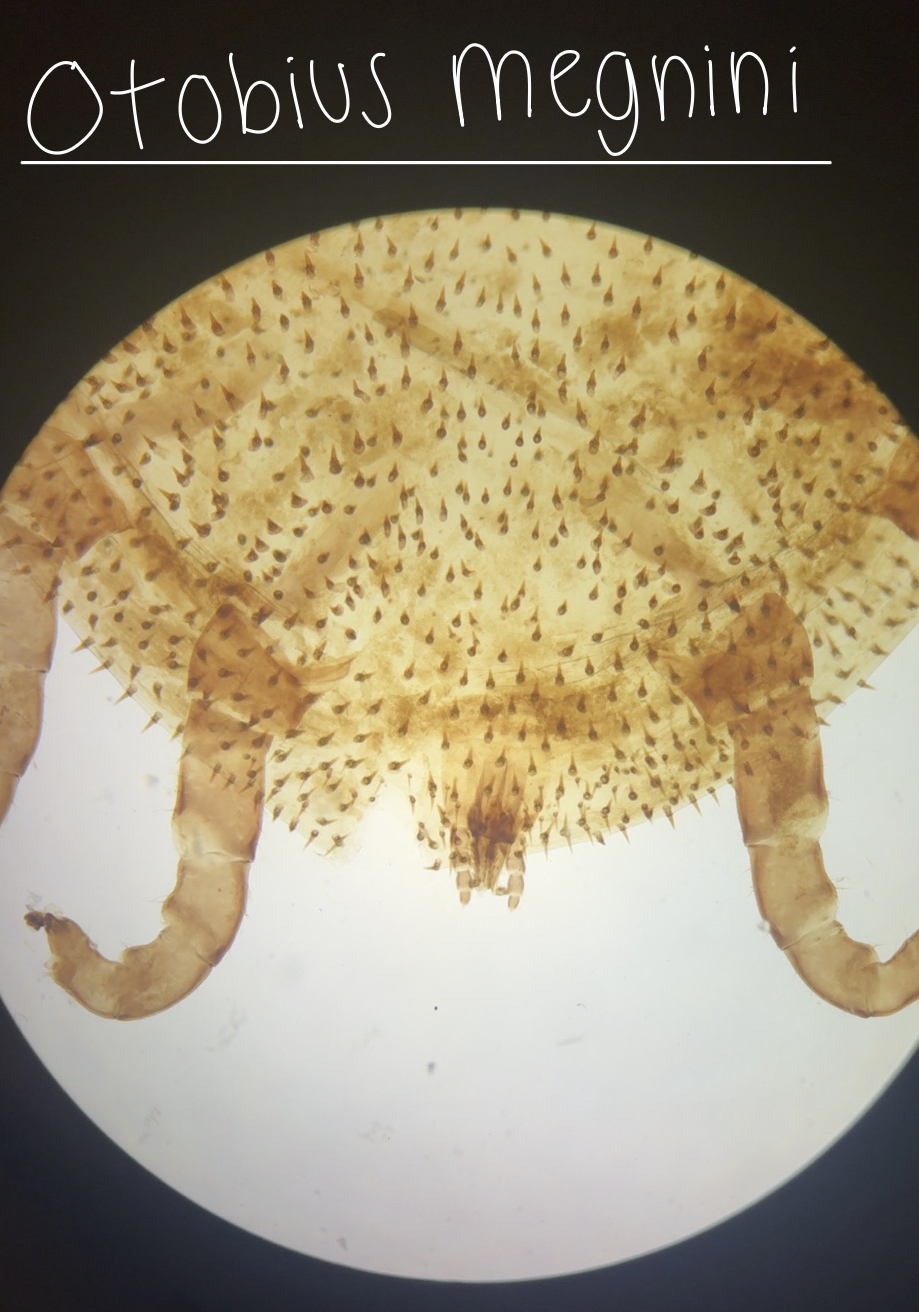
Otobius megnini
Common name - Spinose Ear Tick
Soft tick
Family: Argasidae
Host: Livestock, dogs, people
Location: External ear canal
Transmitted: Direct contact with infested environment
Dx: otoscope
Zoonotic: No, but can infest humans
Life cycle:
eggs
larvae feed on host and molts into nymph
nymph molts into adult then leaves the host
Parasitizes at larvae and nymph stages only
mouthparts may not be visible when looking at dorsal aspect
almost violin shaped
nymph covered with tiny backward-projecting spines
larval stage has stout, tiny spines
8 legs
infestation is called otoacariasis

Sarcoptes scabiei
Common name - Scabies mite
Burrowing mite
Dx:
blood test - ELISA
positive 2-4 weeks after infestation
can react to dust mites - false positive
reference lab - IDEXX
in-house test - Heska
superficial skin scrape
cellophane tape preparation
Host: species specific, can affect dogs (canis), pigs (suis)
Location: tunnel in superficial epidermis
Transmitted: direct contact, spread easily
Zoonotic: Yes
Life cycle:
female mites burrow into skin and form tunnels and eggs are laid
larvae and nymphs grow in tunnels
causes extreme pruritus
crusts at edges of ears, elbows, face, abdomen
oval shape
each leg has a sucker on ends of legs and connected by a pedicel
infestation is called sarcoptic mange


Demodex
Burrowing mite
Dx: deep skin scrape
Host: species and host specific, domestic animals and humans
Location: hair follicles and sebaceous glands of the skin
Transmitted: direct contact, and by dam and neonate
Zoonotic: No
Life cycle:
adult mites in hair follicles and lay eggs in follicles and glands
can be transmitted to nursing puppies
eggs hatch into 6 legged larvae in follicles
larvae molt to nymph
nymph molt to adult
causes localized or generalized demodicosis
unique cigar shape
causes hair loss, skin thickening, pustules
infestation is called demodicosis or red mange


Psoroptes cuniculi
Common name - Ear canker mite of rabbits
Surface mite
Dx: ear swab or superficial skin scrape or cellophane tape preparation
Host: rabbits, also can affect horses, goat, sheep
Location: skin surface, live in waxy discharge in ears
Transmitted: direct contact
Zoonotic: No
Life cycle:
spent on one host, eggs molt into larvae
larvae molt into nymphs
nymphs molt into adults and live in ear canal
corn flake appearance
have long, jointed pedicels with suckers
dark internal area in center
infestation is called psoroptic mange


Otodectes cynotis
Common name - Ear mite
Surface mite
Dx: ear swab or superficial skin scrape or cellophane tape preparation or otoscope
Host: dogs, cats, ferrets (most common cat and dog mite)
Location: external ear canal (also tail head region)
Transmitted: direct contact, very contagious
Zoonotic: Yes, but rare
Life cycle:
eggs
larvae
nymph
adult
ear debris resemble coffee grounds
very pruritic
short, unjointed pedicels with suckers on end of legs
anus is terminal
infestation is called otodectic mange


Notoedres (cati)
Common name - (cati) Feline scabies mite
Burrowing mite
Dx: superficial skin scrape or cellophane tape preparation
Host: felines and sometimes rabbits
Location: superficial layer of dermis but can also be around pinna, face, neck, and feet
Transmitted: direct contact
Zoonotic: Yes
Life cycle:
eggs
larvae
nymph
adult
smaller than Sarcoptes
long, unjointed pedicels
crusts mainly on head, neck, feet
anus is dorsal
infestation is called notoedric mange

Which parasites are zoonotic?
Ctenocephalides felis
cat flea
Echidnophaga gallinacea
poultry sticktight flea
Cuterebra
wolves, warbles
Oestrus ovis
nasal bot fly
Hypoderma
ox warbles, cattle grubs
Dermacentor (andersoni and variabilis)
The Rocky Mountain Wood tick and The American Dog tick
Otobius megnini
Spinose Ear Tick
Sarcoptes scabiei
Scabies mite
Amblyomma americanum
The Lone Star Tick
Ixodes scapularis
The Deer Tick/Black Legged Tick
Otodectes cynotis
ear mite
Notoedres cati
cat scabies mite
Which parasites aren’t zoonotic?
Trichodectes canis
dog chewing lice
Felicola subrostratus
cat chewing lice
Linognathus setosus
dog sucking lice
Melophagus ovinus
Sheep ked
Gasterophilus intestinalis
Horse bot fly
Rhipicephalus sanguineus
The Brown Dog/Kennel tick
Demodex
Psoroptes cuniculi
Ear canker mite of rabbits
How can you tell ticks apart?
Short mouthparts:
Dermacentor
Rhipicephalus sanguineus
Both have festoons
Rhipicephalus has a hexagonal shaped head
Long mouthparts:
Amblyomma americanum
Ixodes scapularis
Only Amblyomma americanum has festoons