Immunology Term One test study notes
 Call Kai
 Learn
 Practice Test
 Spaced Repetition
 Match
 Flashcards
 Knowt Play
1/94

Earn XP
Description and Tags
October 5th (monday) Exam date study Up
95 Terms
Describe the environments where viruses can appear ?
Can exist In places like Air, Food, water and reservoirs
pinpoint areas of the Human body where microbes can inhibit ??
Appears within our exterior as in Skin as well as internal body cavities that being lungs, GI-tract, and Nasopharyngeal
Important tool that protects our body from the Harsh environment threats?
Seen as being our specialized and individualized immune system that can block out and destroy external & internal threats
Define the term Immunity ?
Known as a state of protection from harsh dangers, such as foreign pathogens, or substances (antigens), or undesirable states being Cancer
Significance of Vaccines ?
Can help to build stronger immunity as it can relay the immune system the antibodies to eradicate an infectious agent it will cause diseasde.
Small pox is ?
A virus
Lice is
Known as an insect
What is our body and Immune system Surrounded around?
Known to be Inhibited around numerous levels of Hostile milieu. That being Fungi Such as candida, Bacteria like MRSA, and lastly toxins such as Diphtheria toxins
What is responsible for Immune cell development ?
Known as the primary Lymphoid organs which are the Bone Marrow and Thymus. That creates production and evolution of WBC( White blood cells )
Examples of secondary lymphoid organs ??
Are known as the spleen, lymph nodes, tonsils and Adenoids bronchus
Two types of Body Precautions to stop invading pathogens?
Known as being physical barriers such as the skin and the Mucus gland. Along with this can be a chemical aspect with its barriers being its variation of pH as well as lysosome

Impact from Bone marrow structures ?
Will be that the Body active inhibitor and sub-environment Providing changes and immunity abilities and creating red blood cells.
What is a natural killer ?
Deemed as a cell that can directly destroy virally infected cells.

How does the Unregenerated Tract protect the Immune system ?
Can be know to assist by flushing away into urine, aggregation by urinary means. And low pH. The anti microbial peptides and lastly proteins in Vaginal secretions.
Main impacts/ Process of Bone marrow productions?
Had controlled differentiation seen by osteoblasts, Endothelia cells, reticular cells and lastly the Sympathetic neurons
Stem cells Spreading abilities ?
Can be able to circulate between the Bone marrow and along to other tissues within the blood stream.
Label and highlighting signifance of the Peyer’s patches ?
Known as a body function that controls and limits the Immune system. Through this can be the antigens’ ability is highlighted, on the maturation of Lymphocytes within the memory cells.
Provide some examples of the different secondary Lymphoid organs ?
Can be stated as skin, The spleen, As well as the Lymph nodes
Effects of the skin Function for the Immune system ?
Know to act as a protective barrier that orchestrates the direction of dendritic cells into the Lymph nodes to operate the antigens appearing and beginning to produce T cells.
Describe the Intra - epidermal Lymphocytes ?
Acts as a local barrier for the skin as well as expresses monocytes, macrophages & stem cells.
Lymph nodes are cucrical because ?
It acts as a rich environment where the B-cells can change to Plasma cells. And B &T cells interact cooperatively, allowing memory cells to become resistant.
How are Antibodies Created ?
Can be produced By the B cells And can be Transferred Between Individuals to provide passive immunity.
Describe the anti serum ??
Known as being able to neutralize & precipitate toxins along with agglutinate bacteria.
Immunoglobulin is ?
A portion cell called humoral immunity that attacks pathogens through the use of antibodies .
Impact & significance of the T lymphocytes ?
Known as being associated to immune systems cells. Very strong and can eradicate pathogens clear out infected self cells. As well as aid other cells in inducing immunity.
Key significant of the B- Cells ?
Can meet with antigen to produce the antibodies spefificity of their cell membrane immunoglobulin
Activating of T-cells ?
Known to be identified as a group of receptors that bind specific to properties that are presented in MHC molecules .
How Antigens react and appear ?
Has operated on its Immune response by Recognition molecules. Examples of this is through Germ line Encoded Receptors.(pRR”S ) pattern recognition receptors.
Biding and collaboration of Antigens?
Through receptors that are common amongst B and T cells. Bind to very specific antigens.
A target of an antigen ?
Known as a Pamp ( pathogen-associated molecular patterns. Fend off different pathogens such as peptidoglycan and B - Glucans

Process of Cloning in association with antigens ?
Appears following on interaction of B or T cells. From this enter phase of Proliferation. That creates large Number of clones. has initially simulated traits from the original lymphocytes
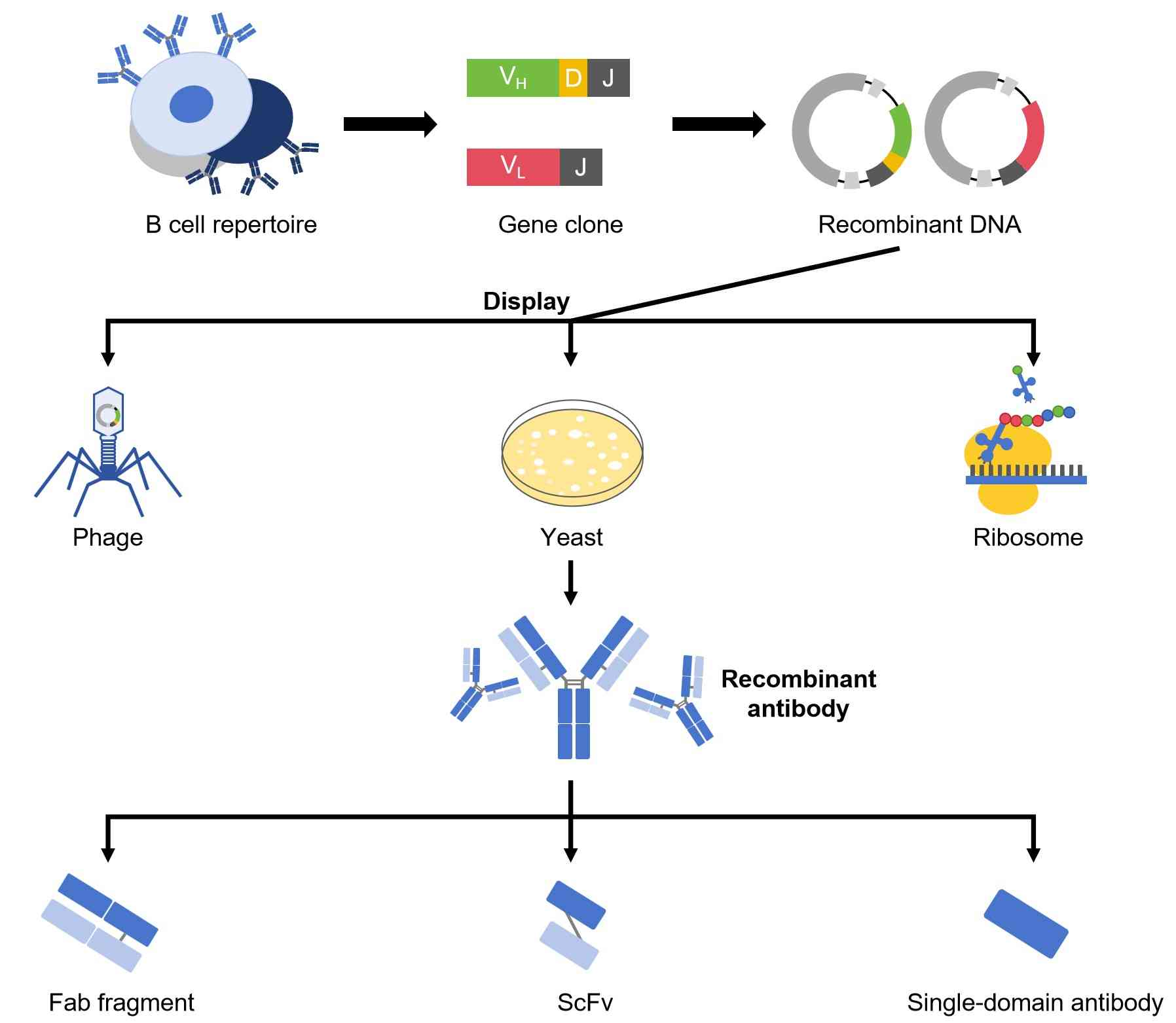
Importance of Tolerance in the Immune system?
Helps to keep away and destroy anti self recognitions molecules from appearing or circulating in the blood stream .
Label the two types of systems within the vertebrate immune system ?
are known as The Innate immunity as well as adaptive immunity of the immune system.
A primary response relating to the immune system ?
Is known as initiated upon first exposure to antigen. Has memory lymphocytes that support clearing of the antigen.
A secondary responses ?
Begins upon second exposure of the same antigen that simulates memory lymphocytes
Exploring Hypersensitivity with the immune system ?
Can be as an misdirected Immune resposne. Can appear as allegerries and astmna
Two types of immunodefiency ?
Can be primary through Genes you lose an immue fuction. Or secondary aquired loss of an immune fuction .
Exploring cancer and conflict in the immune system ?
A situation where the dangerous cells we want to target our own cells. Harder to control and Generate Immunity over it
Issues appearing with transplated Tissues ?
Can have a natural body immune response to rejected the needed tissues . Due to the body's function to attack and destroy foreign tissues.
sensitivity/ Issues of the microbiome ?
Can have imbalances or dysbiosis that can cause immune overstimulation resulting in inflammation appearing.
Effects /Way antibodies protect with the B -cells ?
Is able to neutral the antigens & antibodies can create phagocytes. Modulate NK-mediated cytotoxicity and modulate the lysis.
What are the 4 major antibodies and there appearance ?
Known as the IgG,igA,igM, and igD are founded from B-cells secretions
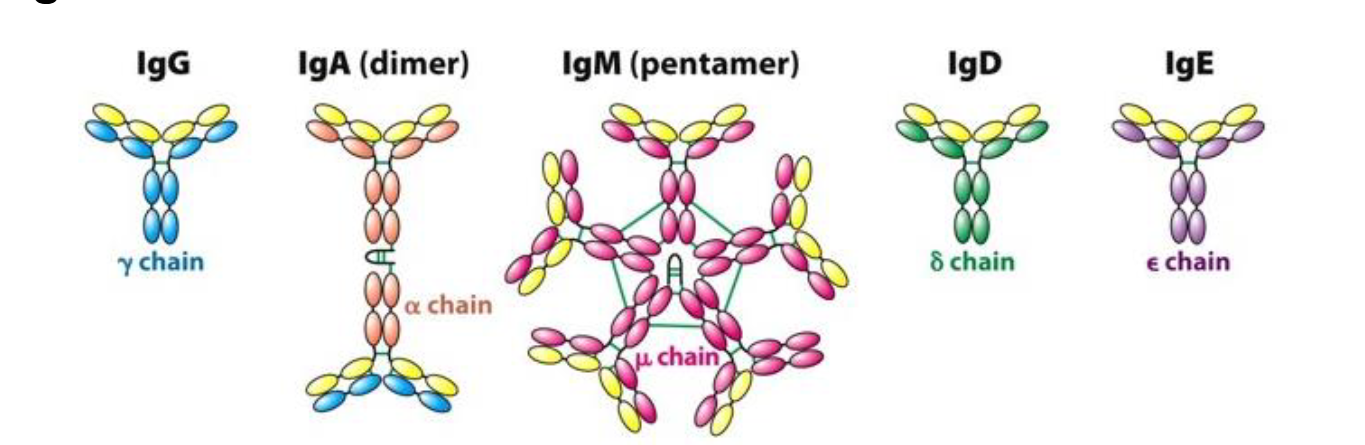
Difference of igD compared to the rest of the group ?
Known to be membrane bound version and is not capable of being secreated.

Overview of igM antibody?
Known as being one of the first class of AB is an primary immune response. Expressed as immature B-cells while in the bone marrow. Low affinity but polyvalent exhibits high avidity. Excellent at initiating the complement response & inducing opsonization
What is IgG antibodies overview ?
Is known as the Most common isotype in the serum carries a heavy chain known as a glycosylated region. Which helps with cells complemented activations & the cell medicated cytotoxicity,

Key characteristics of igA antibodies ?
Known as 2 strains founded in humans can appear in circulations & secretions such as mucus,milk, Tears and saliva. Important for toxin neutralization & preventing commensal bacteria from entering the circulation. Exist in dimeric or multimeric forms that undergo endocytosis of complexes
IgE antibody key characteristics ?
Known as allegery , Asthma otopic dermetis can protect cells from Helminths(worms) & protozoa Such as .e., amoebic dysentery, Plasmodium causing malaria). Can have deregulation possible for modulate the relasse of histamine
Overview of the CTL’s (cytotoxic T Cells )?
Able to deliver apoptosis as well as induce and repair cellular damage through the use of preforming granzymes (protease)
determine the antibodies that is present on a Mature B-cells ?
Known as the IGM antibody
Which antibodies are capable of Doing mucosal transport
Known as The IGA 1 &2 and IGM

Label the heavy chain component present with the Antibodies.
IgG can have a gamma γ heavy chain present ranging from 1 to 4. For IgA has 1 to 2 Alpha α chains.IgM has a Mu (μ). IgE caries an Espition ε chain . And IgD carrires a delta chain
Known antibodies that can activate the known classical complement pathways ?
Can be seen as IgG and iGM antibodies
Define and Explain the N(K) natural cells ?
Known as cells that can recongize and kill virally infected. Tumor & stressed (oxidative)n cells. Seen as the cells that do not express MHC cells -! molecules on the surface
Define the major cell types in the Innate immunity ?
will be seen as phagocytes Such as monocytes and macrophytes (NK )natural killer cells and Leukocytes.
Describe the diversity of the innate immunity ?
Is know only to be a limited # of the conversed Germ to encoded Receptors.
Describe the memory responses of the Innate immunity ?
Some appear as an invertebrate innate response within the same human and Mouse/NK cells
The known specififty for the adaptive immunity ?
Seen as a very highly specific discriminates between Given minor differences in molecular structure From microbial or non microbial molecules.
The majority cell type of Adaptive Immunity ?
T cells, B cells and antigen Presenting cells
The memory response composed in adaptive immunity
Can be seen as the persistent Memory of Faster response. With larger quantity of expressed organimsns
Visualizing the diversity of the adaptive immunity?
A large # of receptors arising from Genetic combinations of receptor genes in each individual
The present souble component of blood with the adaptive immunity
Seen as the Antibodies and cytokines
Example of Suface recpetors and their Task?
Known as the B cell, it can help bind to specific molecules T cells can be known to bind and associate with the MHC molecule. For b cells, they use the Cell membrane immunoglobulin
Herd Immunity within a population restricts The propagation of an infectious agent primary because
A high Prevalence of immune individuals reduces the statistical probability that is susceptible host that will encounter an active reservoir of the infection
a macrophage engage in phagocytosis to clear bacterial pathogens this cellular ingestion process require?
Direct recognition & engagement between host cell receptors & microbial surface structures
Lymph nodes Provide an exceptional Rich microenvironment that Facilitates the Terminal Differentiation of what specific cell linage ?
B-cells Differentiation into antibody-secreting plasma cells
What are the examples of PAMP’S mentioned in the lecture ?
Known as the peptidoglycan & Beta -Glucans
What are harmless organisms living in and on the body called ?
The commensal organisms
What is the Imbalance in the Microbiome called ?
Dysbiosis
What Functions can Different Classes of T cells Preform ?
Known to eradicate Pathogens. Clear infected self-cells and lastly aid other immune cells.
In which decade did chase Demonstrate Transfer of Tuberculosis immunity by white Blood cells ?
In the 1940s
Job/ Appearance of the stems cells
Can circulate From Bone marrow to other tissues of the Bone marrow through the blood stream
Where Antigens appears ?
Can show up onto Being Trapped on the APC(Antigen presenting cells) which can be present to the Molecule T -cells
Mucosa-Associated lymphoid tissue Can be structurally organized in Two distinct ways throughout the body’s Vulnerable interface. These include ?
Sites that been compartmentalized by the Fibrous capsule or seen from encapsulated associated tissue
The Clonal Selection Theory States that the individual B &T lymphocytes pass on inheritance specificity for a single antigen. This unique specificity is present on the cell surface.
Prior to the antigen encounter due to the expression of many copies present within the cell surface