bio189 exam 1
 Call Kai
 Learn
Learn Practice Test
 Spaced Repetition
 Match
Match Flashcards
 Knowt Play
1/129

Name | Mastery | Learn | Test | Matching | Spaced | Call with Kai | Chat |
|---|
No analytics yet
Send a link to your students to track their progress
130 Terms
chemistry
all living things are made up of chemicals
atom
fundamental unit of matter
nucleus: protons and neutrons
electrons on outer rings
elements that make up most of the mass of living things
N, C, H, O, P (SPONCH)
periodic table
arranged by atomic number (increasing)
isotope
same element, different atomic mass
ion
gains or loses electrons
chemical reaction
rearranging electrons outside the nucleus (outside)
nuclear reaction
changes to the protons and neutrons inside the nucleus (inside)
nonpolar (covalent) bond
elections are shared equally
backbone of DNA and proteins
polar (covalent) bond
electrons shared unequally
partial positive and negative poles
ionic bond
transfers 1 or more electrons
holds compounds together
hydrogen bond
slightly positive and negative
weak
vital for DNA
electronegativity
how badly does an atom want/attract extra electrons
nonpolar electronegativity
identical/similar
polar electronegativity
moderate differences
ionic electronegativity
very large difference
ex: metal and nonmetal
relationship between the arrangement of the periodic table and electronegativity
increases from right to left
decreases top to bottom
cohesion
attraction between molecules of the same substance (surface tension)
adhesion
attraction between water moles and molecules of a different substance (water droplets on leaves)
solid
packed tightly
because of hydrogen bonds = packed less tightly than liquid
orderly
liquid
packed closely but loosely and fluid
moving
gas
completely loose or spread apart
hydrophilic
compounds interact w/ water
polar or ionic
dissolves, mixes, spreads
hydrophobic
compounds do not interact w/ water
nonpolar
repels water, separates, forms
process of a solute dissolving in a solvent to form a solution
solute is being dissolved, solvent does the dissolving, solution = homogenous mix of 2 or more kinds of molecules (atoms or ions)
acid
producing H+
increase H+
decreases pH
base
accepts H+
decrease H+
basic pH
pH scale
acidic (+7), neutral (0), basic (-7)
how organisms can use buffers to maintain homeostasis
prevents pH changes
absorbs/releases H+ to maintain a normal pH range
properties of carbon that make this element the chemical basis of all life
chemical basis of all life
atomic structure allows it to form stable, diverse, strong covalent bonds w/ up to 4 other atoms
oxygen
hydroxyl
carbonyl
carbonyl
nitrogen and sulfur
amino
sulfhydryl
hydrocarbon and phosphorus
alkenes + alkene
phosphate
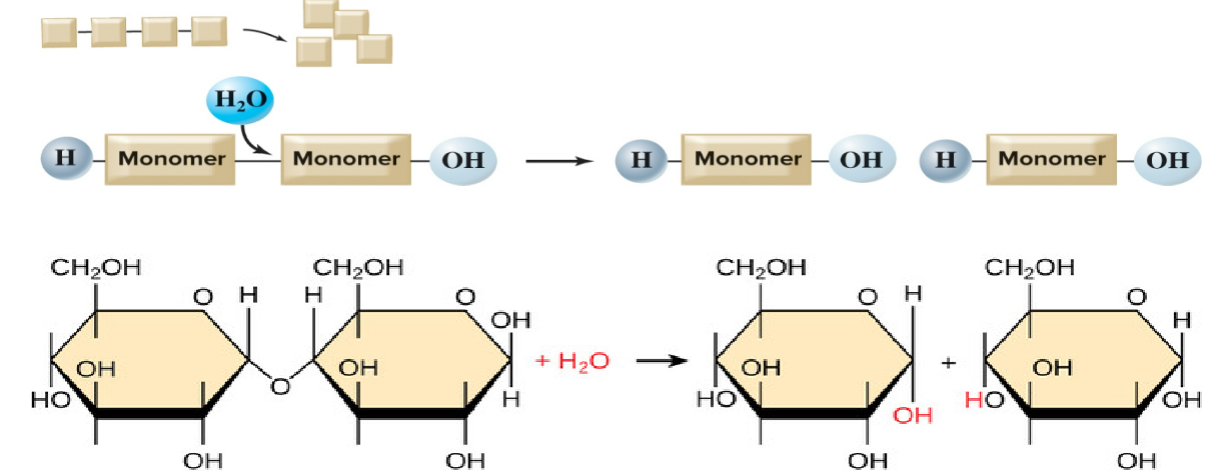
dehydration synthesis

hydrolysis
carbohydrates
carbon, hydrogen, oxygen (1:2:1)
monosaccharides
monomer
simple sugar
ex: glucose
disaccharides
polymers
sucrose
polysaccharides
glycosidic bonds
starch, glycogen, cellulose
carb function
rapid, short term cellular energy
structural support
supports cells and organisms (cellulose, chitin)
story energy (starch, glycogen)
lipids (hydrophobic)
carbon, hydrogen, oxygen
long nonpolar hydrocarbon chains
triglycerides
fats and oils
1 glycerol molecule + 3 fatty acids
phospholipids
steroids, waxes, glycolipids
glycerol + 2 fatty acids + phosphate group
steroids
4 linked carbon rings
structure of a triglyceride
Saturated: Are those in which all the carbons in the hydrocarbon chain form single bonds.
Linear
Mono Unsaturated: Contain one C=C double bond.
Kink
Polyunsaturated: 2 or more C=C double bonds.

why some fats are solid at room temperature and others are liquid
saturated (solid): straight structure, tightly packed, strong attraction, no C=C double bond in hydrocarbon tail
unsaturated (liquid): bent structure, loosely packed, weaker attraction, at least one C=C double bond in hydrocarbon tail
why phospholipids form a bilayer when dissolved in water
have hydrophilic polar heads and hydrophobic nonpolar tails
chemical nature of steroids and give an example of their biological importance
core structure
hydrophobicity
functional group
cell membrane stability
amino acid structure

general functions of proteins
bonding ability to other molecules
activate special genes
recognize specific regions of DNA
interaction with other proteins in the nucleus
spatial links between domains
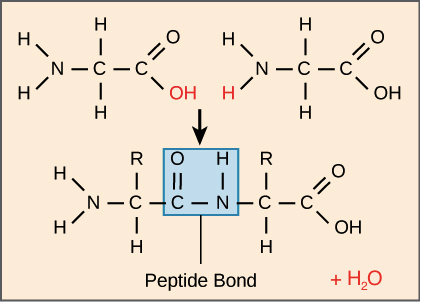
amino acid joined to form a polypeptide
primary structure
linear sequence of amino acids in a polypeptide chain
held together by covalent peptide bonds
dictates how the entire protein will ultimately fold
secondary structure
localized folding and coiling of the polypeptide chain
alpha helices (coils) and beta-pleated sheets (folds)
stabilized by hydrogen bonds along the protein backbone
tertiary structure
3D shape of a single polypeptide chain
formed by interactions among amino acid side chains (r groups)
creates functional, compact protein structures
quaternary structure
arrangement of 2 or more separate polypeptide chains
ex: hemoglobin
held together by the same non-covalent and covalent interactions found in tertiary structure
determines protein shape and function
amino acids
structure of nucleotide

DNA
deoxyribonucleotides
deoxyribose
form double stranded deoxyribonucleic acid for genetic storage
adenine, thymine, guanine, cytosine
RNA
ribonucleotides
ribose
form single stranded ribonucleic acid for protein synthesis
adenine, uracil, guanine, cytosine
purines (base)
adenine and guanine
2 fused carbon nitrogen rings
in DNA and RNA
pyrimidines (base)
single carbon nitrogen ring
cytosine is in both DNA and RNA
thymine is only in DNA
uracil replaces thymine in RNA
nucleotides
DNA and RNA
central dogma
DNA → RNA → protein
rna base pair
a + u and c + g
dna base pair
a + t and c + g
biological components
atom, small molecules, proteins, viruses, most bacteria and archaea, most plant and animal cells, frog eggs, ant
3 main parts of cell theory
all living things are made up of cells
cells are the basic unit of life
all cells come from pre-existing cells
light microscopy
light source
condenser lens
specimen
eyepiece lens
transmission electron microscopy
electron source
condenser lens
projection lens
scanning electron microscopy
electron source
condenser lens
scanning coil
detector
3D specimen
cellular components found in all living things
plasma membrane
cytoplasm
DNA
ribosomes
ratio of surface area to volume limits cells size
a cells volume increases much faster than its surface area as it grows
domain bacteria
prokaryotic
absent nucleus
fatty acids
domain archaea
prokaryotic
absent nucleus
nonfatty acid lipids
domain eukarya
eukaryotic
nucleus
membrane, bounded organelles
fatty acids
prokaryotic cells
archaea and bacteria
no membrane bounded organelles
nucleoid (center of cell
generally smaller
unicellular
eukaryotic cells
eukarya
has membrane bounded organelles
nucleus
generally larger
often multicellular but can be unicellular
plant cells
has a cell wall and cell membrane
fixed, rigid, rectangular
has chloroplasts to make food from sunlight
contains one large central vacuole
stores extra energy as starch
animal cells
only has cell membrane
irregular, flexible, round
no chloroplast, must absorb nutrients
few small, scattered vacuoles
stores extra energy as glycogen
function of membrane
acts as protective barrier that separates the inside of a cell wall from its outside environment while controlling what goes in and out
plasma membrane is a semi-permeable barrier
internal structure is made of a phospholipid bilayer that acts as a selective barrier
structure of a membrane
phospholipid bilayer
proteins
cholesterol
carbohydrates
primary function
phospholipid bilayer (membrane)m
double layer of lipids (base)
each lipid has a water-loving head and two water-fearing tails. The tails face inward, and the heads face outward.
proteins (membrane)
float inside or span across the lipid layer to move nutrients and send signals
cholesterol (membrane)
tucked inside the layer to keep the membrane stable and flexible
carbohydrates (membrane)
sugars attach to the outside to help cells identify each other
primary function (membrane)
selective gate letting safe materials in while keeping harmful things out
mitochondria
energy producing
powerhouse of the cell
double membrane structures convert nutrients into usable energy thru cellular respiration
found in plant and animal cells
chloroplasts
energy producing
found in plants and algae
where plants synthesize their food
nucleus
processing and transport organelles
largest double membrane organelle
houses the cells DNA
coordinates activities like growth and reproduction
endoplasmic reticulum
processing and transport
folded membrane network connected to the nucleus
golgi apparatus
processing and transport
stack of flattened sacs that modify, sorts, and packages proteins and lipids from the ER for shipment
lysosomes
breakdown and storage
recycling and garbage removal centers of the animal cell
ribosomes
translate mRNA to make protein
can be free or bounded
eukaryotic endomembrane system
used to modify and move materials within the cell
rough ER
studded with ribosomes to make proteins
smooth ER
makes lipids and handles detoxification
if missing mitochondria (powerhouse)
cell runs out of energy and stops working and dies
if missing lysosome (cleanup crew)
waste builds up inside the cell, causing damage
if missing ribosomes (builders)
cell cannot repair itself or run chemical reactions