Arousal, Stress, and Anxiety
 Call Kai
 Learn
Learn Practice Test
 Spaced Repetition
 Match
Match Flashcards
 Knowt Play
1/35

There's no tags or description
Looks like no tags are added yet.
Name | Mastery | Learn | Test | Matching | Spaced | Call with Kai | Chat |
|---|
No analytics yet
Send a link to your students to track their progress
36 Terms
Arousal
blend of psychological and physiological activation, varying in intensity along a continuum (activation)
Anxiety
negative emotional state with feelings of worry, nervousness, and apprehension associated with activation or arousal of the body
*component of activation
trait vs state
trait- part of yourself, general disposition
state- moment dependent changes
*higher trait anxiety is more likely to have more state anxiety
Trait anxiety
an acquired disposition that predisposes a person to perceive a wide range of objectively nondangerous circumstances as threatening and to respond to these with disproportionate state anxiety levels
state anxiety
moment to moment changes in feelings of nervousness, worry, and apprehension associated with arousal of the body
cognitive state anxiety
moment to moment changes in worries and negative thoughts
somatic state anxiety (physiological)
moment to moment changes in perceived physiological arousal, bodily changes
sweat, breathing, heart rate, temp
perceived control state anxiety
the degree to which one has the resources and ability to meet challenges
stress
substantial imbalance between physical and psychological demands placed on an individual and their response capability under conditions in which failure to meet demands has important consequences
resources do not meet demands
stress process
do my resources meet the demands of the situation
stages of stress process
stage 1 environmental demand (physical and psychological)
stage 2 individuals perception of the environmental demand
stage 3 stress response (arousal, state anxiety, bodily response)
stage 4 behavioral consequences (performance or outcome)
intervention
stage 1 - removing the threat
stage 2 - changing perception
stage 3 - breathing exercising, managing responses
stage 4 - changing actions
drive theory
as an individuals arousal or state anxiety increases performance increases
simple (well learned and well engrained) but physical > weight lifting, sprinting
negative effects on activities that require focus and precision > golf, darts
inverted-U hypothesis
as arousal increases, so does performance up to an optimate point. further increases in arousal past this point decreases performance.
high and low physiological arousal = bad performance
best performance = optimate (moderate) physiological arousal
individual zones of optimal functioning hypothesis
we all have a zone of optimal state anxiety which may not fall directly in the middle of the low to high anxiety continuum
hard to measure accuracy
depends on situation, activity and perception of physiological responses
zone - automaticity, thoughts are not distracting, reduced anxiety
not what interventions are based off of - zone is unreliable

multidimensional anxiety theory
type of anxiety matters
cognitive anxiety > negatively related to performance
somatic anxiety > inverted U
*difficult to separate cognitive and somatic anxiety
Cusp Catastrophe theory
effects of physiological arousal depend on cognitive anxiety
complex interaction
cognitive anxiety not necessarily bad
inverted-U is true when an athlete has low cognitive anxiety
when an athlete has high cognitive anxiety, increases in physiological arousal result in a rapid and dramatic decline in performance
bringing back physiological arousal slightly will not optimize performance

reversal theory
how arousal affects performance depends on an individual’s interpretation of their arousal level
pleasant - excitement
unpleasant - anxiety
this view is interesting, but too few studies have been conducted to draw firm conclusions
facilitative and debilitative anxiety
an individuals interpretation of anxiety symptoms is important for understanding anxiety - performance relationship
intensity - how much anxiety one feels
direction - a person’s interpretation of anxiety
role of psychological skills training
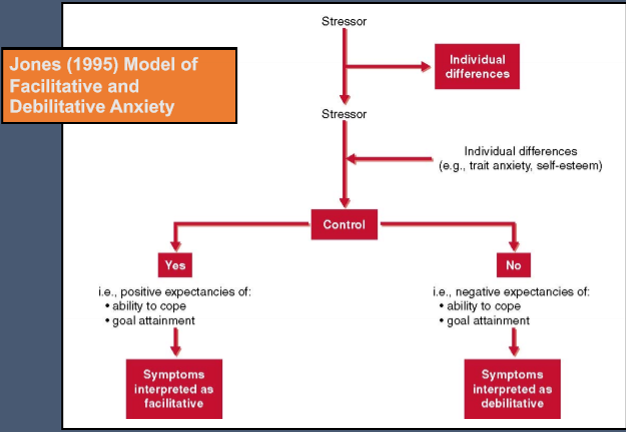
facilitative or debilitative depends on
perception of control on the situation
when in control anxiety is perceived as helpful
arousal is multifaceted
physical activation
interpretation of activation (individual differences)
effects on performance depends
individual interpretation
facilitative or debilitative
psyching up or psyching out
optimal levels of arousal lead to
peak performance
interaction of physiological activation and cognitive activation
excessive arousal and catastrophes are
difficult to reverse
how arousal influences performance
increases in arousal and state anxiety cause increases in muscle tension
leads to fatigue and coordination difficulties
holding hockey stick tighter because of muscle tension changes the way you hit the puck
increases in arousal and state anxiety decreases
effectiveness of attention, concentration, and visual search patterns
narrows attentional field
decreases environmental scanning
shifts attention to dominant style
shifts attention to inappropriate cues
attentional narrowing
low arousal attentional field is too broad
high arousal attentional field is too narrow

what you can do step 1
identify athletes sources of stress and anxiety
environmental and individual
help to minimize disruptive sources of stress/anxiety
typical sources of stress and anxiety
importance of game
type of sport
uncertainty
trait anxiety
self-esteem
performance expectancies
performance experience
other common sources of psychological stress
fear of failure
feelings of inadequacy
loss of internal control
guilt
social evaluation
current physical state
what the coach thinks/will say
not performing up to ability
what you can do step 2
recognize how personal and situational factors interact to influence arousal, anxiety, and performance

what you can do step 3
identify optimal combo of arousal related emotions needed for best performance
teach athletes techniques to regulate emotions
what you can do step 4
recognize the signs of increased arousal in performers (or decreased)
recognizing symptoms of arousal and state anxiety
cold, clammy hands
constant need to urinate
profuse sweating
negative self-talk
dazed look in the eyes
feeling ill
headache
cotton (dry) mouth
constant sickness
difficulty sleeping
increased muscle tension
butterflied in stomach
inability to concentrate
what can you do step 5
tailor coaching and instructional practices to individuals
sometimes arousal and state anxiety must be reduced and other times maintained, and other times facilitated
what you can do step 6
develop confidence in performers to help them cope with increased stress and anxiety
improving performance when not in optimal state (expanding the zone)
practice opportunities
balance challenge and success
control the controllable
controlled breathing
negative though stopping
staying in the present, process, positive