Geo - Physical & Chemical Weathering
 Call Kai
 Learn
 Practice Test
 Spaced Repetition
 Match
 Flashcards
 Knowt Play
1/16

Earn XP
Description and Tags
pass
17 Terms
weathering
process which leads to surface and sub-surface degradation
causes net lot of mass
changes strength, permeability, or particle size
chemical weathering
changes composition
mechanical/physical weathering
changes size
causes of physical weathering
pressure
freeze/thaw
temperature
crystallization
wetting/drying
exfoliation
rock is formed underground in high P
rock rises up
rock reaches surface and expands due to low P
expansion causes cracks (exfoliation)

hydration/desiccation
expansion and contraction through wetting and drying
water expands
evaporation compresses
crystallization of salts
salt evaporates leaving solids that expand and fracture
frost wedging
ice expands in cracks and breaks rocks

how much does water expand when frozen?
9%
consequences of physical weathering
reduces rocks to smaller fragments
increases exposed surface area of rock, making it more prone to weathering
agents of chemical weathering
water
oxygen
carbon dioxide
living organisms
carbonic acid H2CO3
CO2 is the most soluble of atmospheric agents (dissolves in water)
is an important agent in hydrolysis and dissolution
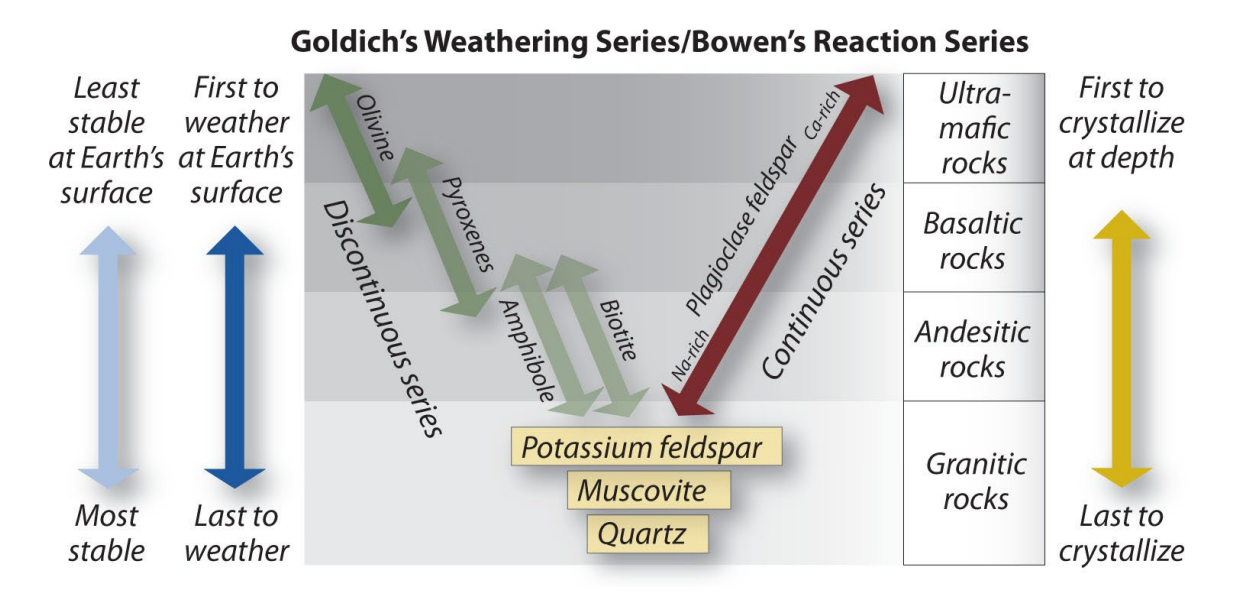
minerals that are the first to crystallize are the first to weather
dissolution
rocks are dissolved by water
co2 dissolves in water to form carbonic acid
water + carbonic acid completely dissolve minerals
ex. sinkholes
hydrolysis
hydrogen and hydroxyl ions in water react with minerals creating new minerals
oxidation
loss of electrons
strongly affects colors
affects anything with iron