Psychology Units 1&2 Chapter 8 & 9
 Call Kai
 Learn
Learn Practice Test
 Spaced Repetition
 Match
Match Flashcards
 Knowt Play
1/51

Earn XP
Description and Tags
Visual Perception & Illusions
Name | Mastery | Learn | Test | Matching | Spaced | Call with Kai | Chat |
|---|
No analytics yet
Send a link to your students to track their progress
52 Terms
Attention
The process of focusing on specific stimuli whilst ignoring and therefore excluding others
Sustained Attention
Involves maintenance of attention on a specific stimulus or task for a continuous period of time without being distracted

Divided Attention
The ability to distribute our attention so that two or more activities may be performed simultaneously

Selective Attention
Choosing and attending to a specific stimulus while at the same time excluding other stimulus

Perception
Is the process by which we interpret and give meaning to sensory information
Perception: Top-down processing
When we process information from past experience and the context it occurs

Perception: Bottom-up processing
When we process visual perception entirely on the sensory data and no previous knowledge

Depth Perception
The ability to accurately estimate the distance of objects and therefore perceive the world in three dimensions
Depth Cues
Our experience with the external world relating to the interpretation of an object’s distance in the visual field
Binocular
Requiring two eyes to operate
Monocular
Requiring one eye to operate
Binocular Depth Cues
Require the use of both eyes working together in order to provide information to the brain about depth and distance
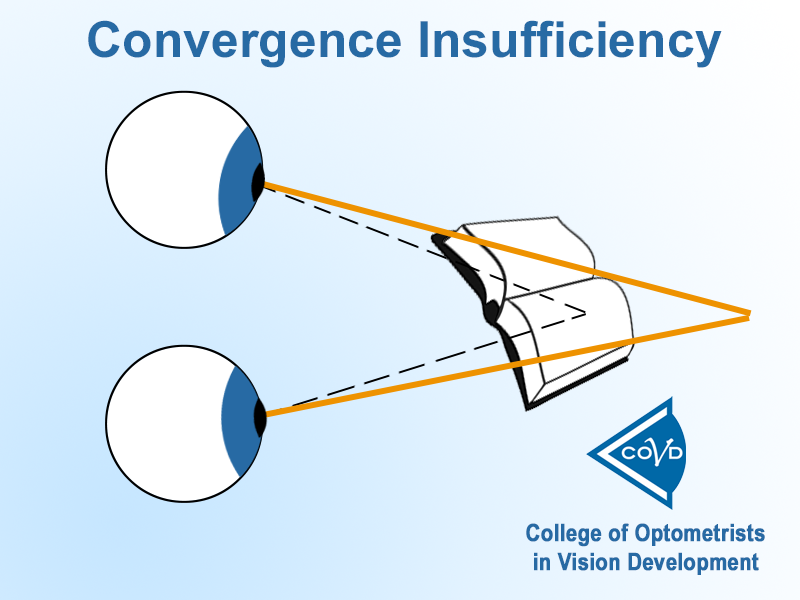
Binocular depth cue: Convergence
Changes in tension in the eye muscles that occur when the two eyes turn inwards to focus on objects that are close. The closer an object gets, the greater tension in the eye muscles. The further away an object gets, the less tension in the eye muscles
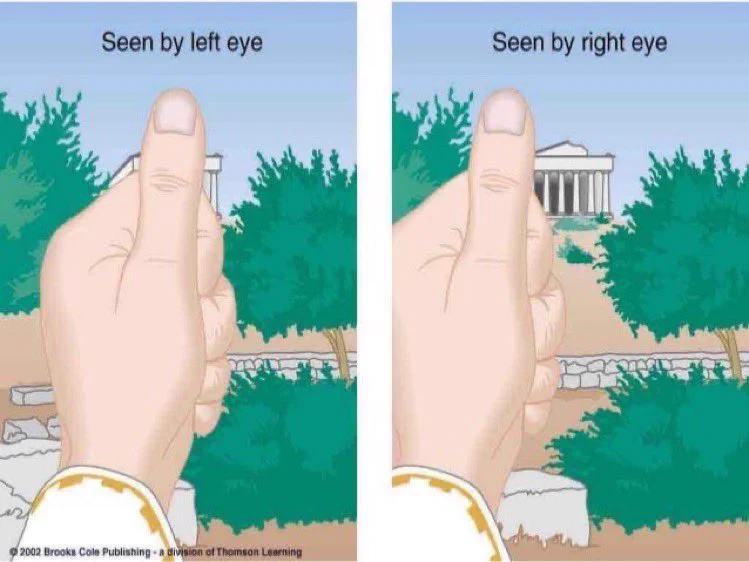
Binocular depth cue: Retinal Disparity
Refers to the very slight difference in the location of the images on the retinas, which enables us to make judgements about the depth or distance of an object. Each retina receives a slightly different image because our eyes are 6 to 7 centimetres apart
Monocular Depth Cues
Require the use of only one eye to provide information to the brain about depth and distance, but they also operate with both eyes
Monocular depth cue: Accomodation
Involves the automatic adjustment of the shape of the lens to focus on an object in response to changes in how far away the object is. The brain monitors the movement of the ciliary muscles that control the shape of the lens. These muscles contract to focus on objects that is closer, and elongate to focus on distant objects

Monocular depth cues: Pictorial Depth Cues
Used by artists to create a 3D perception of something that exists on a 2D surface
Pictorial depth cues: Linear Perspective
Is the convergence of parallel lines as they recede into the distance

Pictorial depth cues: Interposition
Occurs when one object partially blocks or covers another, and the partially blocked object is perceived as further away than the object that obscures it

Pictorial depth cues: Texture Gradient
Refers to the gradual reduction of the detail that occurs in an object or surface as it recedes into the distance, compared with an object or surface that is close and perceived in fine detail

Pictorial depth cue: Relative Size
Refers to the tendency to visually perceive the object that produces the largest image on the retina as being closer, and the object that produces the smallest image on the retina as being further away. However the objects are still expected to be about the same size in real life

Pictorial depth cue: Height in visual field
Objects that are located closer to the horizon are perceived as being more distant than objects located further from the horizon.

Gestalt Principles
Refers to ways in which we organise the features of a visual stimulus by grouping them to perceive a whole, complete form
Gestalt Principles: Figure-ground
By dividing a visual stimulus into a ‘figure’, which stands out from the ‘ground’, which is its surroundings. The contour belongs to the figure, and defines it against the ground

Gestalt Principles: Closure
Is the tendency to mentally ‘close up’, fill in or ignore gaps in a visual image and to perceive incomplete objects as complete (‘whole’).

Gestalt Principles: Similarity
Involves the tendency to perceive parts of a visual stimulus that have similar features (such as size, shape, texture or colour) as belonging together in a unit, group or ‘whole’

Gestalt Principles: Proximity
To perceive parts of a visual image which are positioned close together as belonging together in a group

Perceptual Set
Is a temporary readiness to perceive something in accordance with what we expect it to be. We are more likely to interpret the object or event in the predetermined way

Perceptual Set: Context
Refers to the setting or environment in which a perception is made

Perceptual Set: Motivation
Refers to processes which activate and sustain goal directed behaviour

Perceptual Set: Past Experience
Refers to our personal experiences throughout our lives. Our visual perception relies to a very large extent on our past experience.
Perceptual Set: Memory
Memory is the process of storing and retrieving this perceived information for use when needed
Culture
Involve influences from the external social environment in which we interact with others
Perceptual Distortion
Involves an inconsistency between a perceptual experience and physical reality
Visual illusions
A misperception of external visual stimuli that occurs as a result of a distortion or mistake when interpreting the stimuli
Müller-Lyer illusion
A visual illusion in which one of two lines of equal length, each of which has opposite shaped ends, is incorrectly perceived as being longer than the other. The line with the ‘feather tail’ is perceived as being longer than the line with the ‘arrow head’

Ames Room illusion
A perceptual misinterpretation involving a trapezium shaped room that appears rectangular when viewed through a peephole only using one eye and people appear small or large depending on where they stand in the room

Size Constancy
Refers to the fact that we maintain a constant perception of an object’s size, even though the size of the image on the retina alters as the object moves nearer to or further from us

Shape Constancy
Refers to the fact that an object is perceived to maintain its known shape despite the changing perspective from which it is observed

Spinning Dancer illusion
A visual illusion in which the silhouette of a female dancer can be interpreted as spinning clockwise or anticlockwise. This is due to the lack of depth cues

Agnosia
Characterised by loss or impairment of the ability to recognise and identify objects, people, sounds or other sensory stimuli when using one or more of the 5 senses despite otherwise using other normally functioning senses

Visual Agnosia
Loss or impairment of the ability to recognise visual stimuli, particularly familiar objects and faces. Related to the damage of the ventral stream, which is the pathway from the primary visual cortex in the occipital lobe to the temporal lobe
Apperceptive visual agnosia
An inability to accurately perceive visually presented stimuli. What is seen cannot be recognised

Associative visual agnosia
An inability to associate a visual stimulus with stored information about objects in memory despite having otherwise normal perceptual abilities

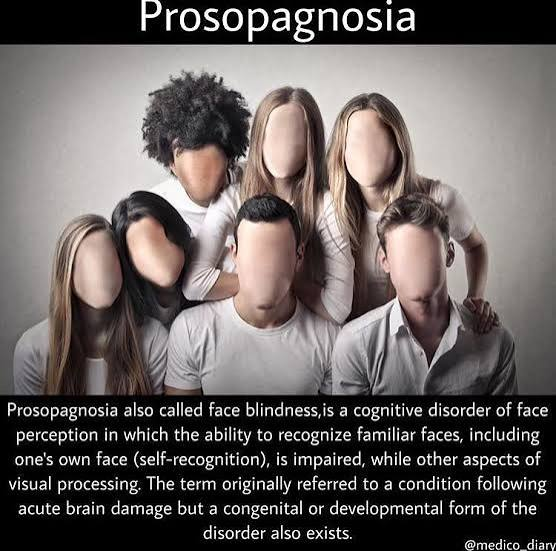
Prosopagnosia
An inability to recognise a familiar face, including their own when seen in a mirror or photograph
Simultanagnosia
An inability to recognise more than one object at a time in a scene that contains more than object.
Topographical agnosia
An inability to find one’s way around familiar environments
Colour agnosia
An inability to identify and distinguish between different colours, despite normal basic colour vision and colour discrimination mechanisms
Agnosic alexia
An inability to recognise or comprehend written or printed words
Synaesthesia
A perceptual experience in which stimulation of one sense produces additional sensations in another
grapheme-colour synaesthesia
In which a person sees colours when viewing letters, numbers or words

Spatial Neglect
A neurological disorder whereby individuals are unable to notice anything either on their left or right side even though there may be no sensory loss. They tend to behave as if that one side of their world does not exist
