Respiration and Circulation
 Call Kai
 Learn
 Practice Test
 Spaced Repetition
 Match
 Flashcards
 Knowt Play
1/90

There's no tags or description
Looks like no tags are added yet.
91 Terms
What is diffusion?
mechanism by which dissolved substances move across vessel walls, slow movement over short distances, passive
What is bulk flow?
rapid flow over long distances, requires energy
What is the order of thoracic membranes from outwards to inwards?
parietal pleura, visceral pleura, fibrous pericardium, parietal pericardium, visceral pericardium (epicardium)
What are the regions of parietal pleura?
costal next to ribs, diaphragmatic next to diaphragm, mediastinal next to mediastinum, pericardial mediastinal is the part attached to fibrous pericardium
What are the functions of the parietal and visceral pericardium?
reduce friction during beating, anchor heart, barrier against disease
What is the conducting zone?
no gas exchange, only movement of air, includes nasal cavity, mouth, larynx, trachea, bronchii, bronchioles
What is the respiratory zone?
gas exchange area, includes alveolar ducts and alveoli
Describe the flow of blood through the heart
vena cava, right atrium, tricuspid valve, right ventricle, pulmonary semilunar valve, pulmonary arteries, lungs, pulmonary veins, left atrium, bicuspid mitral valve, left ventricle, aortic semilunar valve, aorta
What structures are involved in the function of heart valves?
chordae tendinae connected to papillary muscles that pull them closed when the heart contracts, not present in semilunar valves
What is the function of the intervenous tubercle?
shunts blood into the right atrium from superior and inferior vena cava, streamlines flow
What is the function of the trabeculae carnae?
shunts blood out of ventricles, streamlines flow
What is the function of the skeleton of the heart?
fibrous rings anchor valves and cardiac muscles, separates atria and ventricle electric signals, can ossify and cause issues
Describe the conduction pathway in the heart
starts at sinoatrial node, down septum to apex, turns and travels up heart walls, trabecula septomerginalis is a shortcut between right atrium and ventricle
What are the nutritional and functional blood supplies for the heart?
nutritional coronayr arteries, functional vena cava
What are the nutritional and functional blood supplies for the lungs?
nutritional bronchial arteries, functional pulmonary arteries
What are the nutritional and functional blood supplies for the liver?
nutritional hepatic artery, functional portal vein
What are the Thesbian veins?
venous blood return from the coronary arteries that empties into all heart chambers
What is the function of the vasum vasorum?
supplies nutritional blood to large vessels
How can tumors cause swelling?
growth can pinch off lymphatic vessels, causing interstitial fluid to accumulate
What is countercurrent exchange?
closely associates arteries and veins for temperature conservation, solute balance, hormone signaling
What are portal systems?
blood goes from one capillary bed to another before returning to the heart, like capillaries in intestines go to capillaries in liver before returning to heart, allows filtration of blood before it goes all around the body
What is the function of anastomoses?
blood can still reach areas it needs to if one pathway is cut or blocked
Describe the umbilical vein
carries oxygenated blood into fetus, becomes round ligament of liver in adults
Describe the umbilical arteries
carry deoxygenated blood out of fetus, becomes round ligament of bladder in adults
What is the ductus venosus?
fetal shunt bypasses the liver, becomes ligamentum venosum in adults
What is the ductus arteriosus?
fetal shunt bypasses the lungs, becomes ligamentum arteriosum in adults
What is the foramen ovale?
fetal shunt bypasses the lungs, becomes fossa ovalis in adults
Describe the life cycle of a red blood cell
begins in bone marrow, reticulocyte is released into blood where it matures into red blood cell, need to bend through tiny capillaries and lose flexibility after 120 days, heme groups and iron ions recycled in bone marrow or stored by liver
What can concentration of RBCs tell you?
anemia or polycythemia
What can size of RBCs tell you?
normocytic, microcytic, macrocytic, should be an even distribution of lige stages
What can concentration of hemoglobin tell you?
normochromic, hypochromic, hyperchromic, color
What germ layer does lung epithelium come from?
endothelium
What does Nkx 2.1 do?
initiates separation of trachea from esophagus
What does Sox 2 do?
expressed in foregut tube that becomes esophagus, precise amount required for proper separation, also differentiates lung progenitor cells fated to become airway cells
What is atresia?
esophagus has a dead end and doesn’t connect to stomach
What is a fistula?
esophagus and trachea are connected
What are the stages of branching morphogenesis?
embryonic appearance of left and right buds, pseudoglandular airway tree is complete, canalicular 3 more round of branching occur, saccular branching done epithelial growth and differentiation continue, alveolar subdivision of alveoli to increase surface area
What does Wnt2 do?
induces expression of Nkx 2.1
What does BMP4 do?
suppresses Sox 2 to allow Nkx 2.1 expression, BMP2 and BMP7 more important in humans
What does fgf10 do?
permissive factor required for branching but local concentrations are not important
What does Sox 9 do?
differentiates lung progenitor cells fated to become alveolar cells
What role does fetal breathing play in developing lungs?
stimulates alveolar type 1 cells to differentiate and become very flat
How does the pulmonary vasculature develop?
pulmonary arteries and veins are from cardiac progenitors, but cardiac progenitors do not generate alveolar capillaries
What are aerocytes?
capillary endothelial cells for gas exchange
What are general capillary cells?
capillary cells that proliferate during injury
What is bronchopulmonary dysplasia?
pediatric lung disease, baby born too early before lungs done developing, need oxygen supplementation but that also makes it worse by losing AT1 cells
What is childhood interstitial lung disease?
idiopathic pulmonary fibrosis, mutations in AT2 cells, generate fibrotic tissue in lungs, can fix with in utero gene editing
How is parturition stimulated?
AT2 cell maturation and production of surfactant protein A
What is Fick’s law?
velocity of gas diffusion is proportional to area over time times diffusion constant times difference in partial pressure
What are the respiratory epithelium cells?
basal, goblet, ciliated, club, rare types are ionocytes, tuft, neuroendocrine
What are basal cells?
stem cells that can differentiate into any other airway cell type
What are goblet cells?
produce mucus, asthma patients have more of them but submucosal glands produce more than individual goblet cells
What are ciliated cells?
have specifically motile cilia because nearly all cells have cilia for signaling, propel mucus up and out, terminally differentiated and cannot proliferate
What are club cells?
produce secretoglobins and uteroglobins thought to have immune functions, produce surfactant proteins
What are alveolar type 1 cells?
large, squamous, make 95% surface area, facilitate gas exchange
What are alveolar type 2 cells?
cuboidal, produce surfactant proteins and phospholipids to prevent alveolar walls from sticking, surfactant proteins B and C are hydrophobic and increase spread of surfactant
What does the bronchial artery do?
provides oxygenated blood to feed metabolic functions of conducting airway cells
What is the function of a small amount of fluid in the pleural space?
allows parietal and visceral pleura to slide without friction and prevents them from separating, acts like glue
What is Boyle’s law?
P1V1 = P2V2, assuming constant temperature and number of molecules, as volume increases, pressure decreases, as volume decreases, pressure increases
What is different about the pleural space in bison?
left and right are connected, so if a bison gets stabbed and loses the negative pressure in pleural space, both lung collapse, in humans, they are separate so only one will collapse
Describe how the alveolar pressure changes during inspiration and expiration
0 at peak expiration, gets negative and air is moving in during inspiration, 0 again at peak inspiration, gets positive and air is moving out during expiration
What are contractile cardiac cells?
generate force, conduct action potentials, not autorythmic, have plateau action potential graph, driven by voltage gated sodium channels
What are autorhythmic cells?
provide pathway for spreading excitation, do not generate force, spontaneously depolarize, have repeating action potential graph, driven by ligand gated HCN and voltage gated calcium channels
Describe the action potential graph of a contractile cardiac cell
extremely fast depolarization with Na entering, ends when Na channels close, plateau with Ca entering to prevent summation, ends when Ca channels close but K channels stay open, repolarization with K leaving, ends when K channels close
Describe the action potential graph of an autorhythmic cardiac cell
ligand gated HCN channels slowly increase membrane potential to a certain point, then T-type voltage gated calcium channels open and increase it to threshold potential, spontaneous depolarization occurs with L-type voltage gated calcium channels opening, rectifying K channels repolarize cell
What is anisotropic conduction?
electrical signals move in 1 direction via gap junctions at intercalated discs
What are the functions of the AV node?
only spot where signal can pass from atria to ventricles, slight delay here allows ventricles to be topped off before they contract, and can act as an emergency pacemaker is SA node isn’t working
Why is the SA node the pacemaker of the heart?
it has the fastest spontaneous firing rate at 70-80/min, AV node is at 40-60/min
How is tachycardia classified?
site of origin, atrial, sinus, junctional, ventricular
What is sick sinus syndrome?
SA node dysfunction
What are afterdepolarizations?
depolarizations during refractory period, can be early or delayed
What are cardiac blocks?
conduction pathway blocked, caused by trauma, toxins, infections, heart defects, 1st degree extra long delay at AV node, 2nd degree only some atrial action potentials transmitted to ventricles, 3rd degree no action potentials transmitted to ventricles
What is cardiac reentry?
when a block is unidirectional, action potential travels around block and keeps going backwards through block
What influences the length and amplitude of waves on an ECG?
size of the sum of potentials and synchronicity of potentials

tidal volume, range of regular breaths, measured with spirometer

functional residual capacity, end of regular breath, need plethysmography to measure
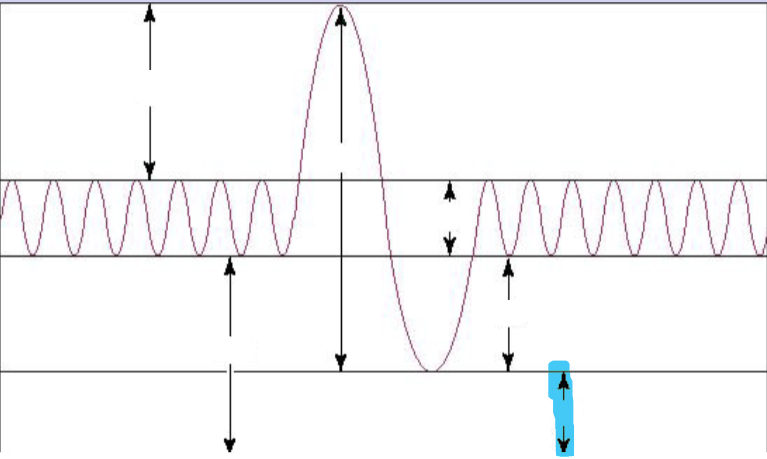
residual volume, after forced exhalation, need plethysmography to measure

vital capacity, measured with spirometer

total lung capacity
What is hysteresis?
space between inspiration and expiration curves on pressure-volume graph, need more initial pressure before inspiration due to needing to overcome surface tension, influenced by compliance of ribcage, more compliance means smaller space, less compliance means greater space
What is compliance?
change in volume / change in pressure, measure of the stretchy/stiffness of ribcage
What factors increase compliance?
neonates, lack of elastin from smoking, emphysema
What factors decrease compliance?
adults, tight chest bandages, connective tissue proliferation like scar tissue and fibrosis from inhaling silica, loss of surfactant, atelectasis
What is tethering?
alveoli are connected, they expand together, preventing each other from collapsing
What is atelectasis?
alveolar collapse from air being squashed out under weight of lung, due to lying down for too long
How does gravity influence alveolar size?
alveoli are bigger on dorsal side in quadrupeds, at RV, all alveoli are small, at FRC, dorsal alveoli expand and ventral alveoli are compressed, at TLC, all alveoli are expanded, pleural pressure is more negative at apex of lung
What is resistance?
change in pressure over volume over time, approximately 1/radius to the 4th, influenced by width and length of tube, lung volume, laminar or turbulent flow, viscosity of gas, but width has greatest influence