maxillofacial and dento-alveolar trauma
 Call Kai
 Learn
 Practice Test
 Spaced Repetition
 Match
 Flashcards
 Knowt Play
1/65

Earn XP
Description and Tags
lecture given 9/29/2026
66 Terms
oral region comprises only 1% of the human body area, but accounts for ______% of all bodily injuries
among facial injuries, dental injuries are the ______
5
most common
studies by bell suggests the redundant nature of _________ allows most dentoalveolar bony injuries to heal well, despite mucosal lacerations and extensive communication
vascular supply
what is the etiology of dental injuries?
slips and falls, sports, interpersonal violence (#2 cause), motor vehicle accidents (#1 cause), industrial mishaps, domestic abuse and violence, substance abuse, medial and physical disorders
stats on dental trauma
children with primary dentition: 11-20%
children with perm dentition: 5-20%
boys 2x more likely than girls
peak incidence in primary dentition at 2-4 yr
another peak ar 8-12 yr
which teeth are most commonly involved in dental trauma?
maxillary central incisors
maxillary lateral incisors
mandibular anteriors
what history needs to be collected when someone comes in for dental trauma?
treatment provided since injury
unconsciousness, nausea/vomiting, amnesia, headache, visual disturbances, confusion
general health
tooth or pieces of tooth noted at site of incident
malocclusion
unaccounted for avulsed teeth, free tooth fragments, or dislodged restorations raise suspicion of _____
aspiration
auscultation of the chest to rule out wheezing or labored breathing is essential
what physical exam needs to happen for a pt with dental trauma?
soft tissue
jaw and alveolar bone
occlusion
teeth
infection
fracture
displacement
mobility
pulp testing
percussion
what radiographic exam needs to happen for a pt with dental trauma?
presence of root fracture
degree of extrusion or intrusion
presence of pre exisiting periapical disease
extent of root development
size of the pulp chamber and root canal
presence of jaw fractures
tooth fragment and foreign bodies lodged in soft tissues
periapical, occlusion, pano, CBCT, medical CT
ellis and davey I
fracture within enamel
ellis and davey II
fracture of enamel and dentin
ellis and davey III
fracture involving pulp
ellis and davey IV
fractures involving the roots
andreasen classification
adopted by WHO using international classification of disease codes
simple and comprehensive
applies to both permanent and primary dentition
descriptions of injuries to teeth, supporting structures, and gingival/oral mucosa

what is the treatment for a crown fracture only in enamel?
smooth, relieve occlusion
follow up in 6 wks to 1 yr
soft diet
no antibiotics
what is the treatment for a crown fracture in enamel/dentin?
restore, relieve occlusion
follow up in 6 wks to 1 yr
soft diet
no antibiotics
what is the treatment for a crown fracture in enamel/dentin/pulp (immature teeth)?
calcium hydroxide pulp cap or pulpotomy
follow up in 6 wks to 1 yr
soft diet
no antibiotics
what is the treatment for a crown fracture in enamel/dentin/pulp (mature teeth)?
endodontic treatment
follow up in 6 wks to 1 yr
soft diet
no antibiotics
pulp capping
if there is a small exposure
the pt is seen shortly after injury
the pt has no root fracture
the tooth is not displaced
no large or deep restorations exist that might indicate chronic inflammation of the pulp
what is the treatment for a crown/root fracture with pulp involvement?
expose fracture site- gingivectomy, ortho extrusion, endodontic
follow up after 6 weeks to 1 yr
soft diet
no antibiotics
what is the treatment for a crown/root fracture without pulp involvement?
expose fracture site- gingivectomy, ortho extrusion
follow up after 6 weeks to 1 yr
soft diet
no antibiotics
what is the treatment for a vertical root fracture?
extraction
no follow up
no soft diet
no antibiotics
what is the treatment for a horizontal root fracture in the apical or middle?
reposition and stabilize
follow up in 4 to 8 wks, 6 mo to 1 yr, every 5 yrs
soft diet
no antibiotics
what is the treatment for a horizontal root fracture in the apical 1/3?
extraction
no follow up
soft diet
no antibiotics
what are pulpal responses to trauma?
hyperemia
pulpal hemorrhage
pulpal necrosis
calcific metamorphosis
internal resorption
what is the tooth reaction to trauma?
surface resorption
inflammatory resorption
replacement resorption
concussion
tooth receives trauma but no evidence of mobility, no displacement, no fracture, tenderness to percussion
no treatment- watch monitoring
subluxation
loosening force is absorbed by the tooth without apparent loss of tooth structure
occlusal adjustment, watchful monitoring, and vitality testing
intrusive luxation
displacement of the tooth into the alveolus
immature apex (incomplete root development)
mature apex (complete root development)
intrusive luxation with incomplete root development
allow the tooth to erupt (6-12 mo)
watchful monitoring for signs of pulpal necrosis
if pulpal necrosis develops, then endo with calcium hydroxide
intrusive luxation with complete root development
reposition to original position and splint
ortho extrusion (96% chance pulpal necrosis)
calcium hydroxide endodontic treatment (6-12 mo)
52% incidence of inflammatory or replacement resorption
extrusive luxation
the tooth is displaced coronally
the tooth should be repositioned and splinted for 2 wks
64% incidence of pulpal necrosis
74% incidence of external resorption
lateral luxation
can occur in buccal, lingual, mesial, or distal direction
can result in fracture of alveolar bone
tooth should be manually repositioned and non-rigidly splinted for 4-8 weeks
watchful monitoring for the need for endo
if the tooth is displaced more than 5mm, endo is indicated
avulsed teeth
most common in 7-10 yrs
maxillary central incisor is most common
what is the most important factor for long term prognosis of an avulsed tooth?
the amount of vital periodontal fibers remaining at the root tooth surface prior to reimplantation
what factors should be considered prior to reimplanting an avulsed tooth?
tooth should be free of perio disease
alveolar socket should be reasonably intact
no ortho contraindication
extra alveolar period should be considered
the stage of root development
periodontal ligament cells
necrotic with teeth that have been extra oral for 120 min or more
hanks balanced salt solution can maintain the PD, osmolality, pH, and cell metabolism
healing takes 3-4 weeks
hanks solution
ph 7.2m osmolality 320 mosm
group of salts rich in bicarbonate ions
used as a buffer system in cell culture media and aid in maintaining the optimum physiological pH for cellular growth
whole milk
avulsed tooth short term storage for up to 6 hrs
better than saliva
does not prevent cell death
what is the treatment for an avulsed tooth with an open apex within 2 hrs?
reimplant as soon as possible
do not remove the PDL
transport in hanks or whole milk
place in doxycycline solution for 5 min (higher rate of pulpal revascularization)
do not remove the blood clot from the alveolar socket
watchful monitoring for endo treatment need
semi- rigid splint fixation for 10-14 days
take tooth out of occlusion
tetanus prophy consideration
post op instructions- antibiotics for 7-10 days, soft diet, chlorhexadine mouth rinse 2x a day, OHI
what is the treatment for an avulsed tooth with an open or closed apex more than 2 hrs?
remove necrotic PDL
scrap PDL from root
soak in sodium hypochlorite for 30 min
endo treatment in hand (clean and shape canal)
citric acid solution for 3 min- open dental tubules allows for fibrous attachment
soak in 1% stannous fluoride for 5 min- more resistant to root resorption
place in doxycycline solution for 5 min- more resistant to root resorption
semi-rigid splint for 10-14 days
take tooth out of occlusion
what are risks of reimplanting avulsed teeth?
ankylosis increases with prolonged splinting
external resorption increases with rigid splints
how long should…
mobile teeth
displaced tooth
root fracture
avulsed (mature)
avulsed (immature)
be splinted for?
7-10 days
2-3 weeks
2-4 mo
7-10 days
3-4 weeks
dentoalveolar fracture
fracture of the alveolar bone involving 1 or more teeth
treatment- reduce the alveolar segment, stabilization with splint for 4-6 wks, closure of mucobuccal laceration, check occlusion / antibiotic treatment for 7-10 days, chlorhexadine 2x daily for 1 week, splinting for 4-6 weeks, soft diet, follow up
how should luxation or extrusion of a primary tooth be handled?
re-position or remove
how should intrusion of a primary tooth be handled?
remove if contacting perm tooth or if re-eruption has not started after 4-8 weeks
remove if signs of infection
allow to erupt if not contacting perm tooth
how should root fracture of a primary tooth be handled?
apical 1/3- observation
middle or cervical 1/3- removal of primary tooth without damaging permanent tooth
glasgow coma scale
assesses a pts level of consciousness following brain injury by scoring eye opening, verbal response, and motor response
scores range from 3 (deepest coma) to 15 (fully awake)
it helps to guide treatment decisions and tract pt progress over time
8 or less= severe brain injury
9-12= suggests a moderate injury
13-15= mild brain injury
soft tissue injury
examine location and associated structures
irrigation, layered closure
antibiotics
what are the types of mandibular fractures in order of most to least common?
condyle
angle
symphysis
body
alveolar
ramus
coronoid
simple/closed mandibular fracture
does not produce an open wound to the external environment (skin, mucosa, or PDL)
compound/open mandibular fracture
an external wound, involving the skin, mucosa, or PDL communicates with the fracture site
comminuted mandibular fracture
bone is splintered or crushed
greenstick mandibular fracture
one cortext of the bone is broken, the other cortext is bent
pathological mandibular fracture
due to a pre-existing pathological weakness of the bone (cyst, tumor, ect)
what are the other classifications of mandibular fracture?
displaced or not displaced
horizontal or vertical
favorable or unfavorable
what are the general principles of fracture treatment?
reduction
stabilization
fixation
rehabilitation
what are the objectives of treating fractures?
re-establish
occlusion
occlusion
occlusion
form
function
what are the treatment options for mandibular fractures?
no treatment / liquid diet
closed reduction
open reduction
what are indicatons for a closed reduction treatment for a mandibular fracture?
non-displaced favorable
grossly comminuted fractures
deficient or lack of overlying soft tissues
fractures in children with developing dentition
coronoid process fractures
majority of condylar fractures
what are methods of a closed reduction treatment for a mandibular fracture
ivy loops
arch bars
splints- gunning splints/dentures/cap splints
external pin fixation
what are methods of an open reduction treatment for a mandibular fracture?
non-rigid fixation- wire
semi-rigid- monocortical screws/plates (champy)
rigid fixation- compression plates, reconstruction plates
symptoms of le fort type 1 fractures
swelling of upper lip
buccal surface brusing
malocclusion
loosening of teeth

symptoms of le fort type 2 fractures
deformity and swelling of midface
widening of intercanthal space
mobility of upper jaw and nose
malocclusion
periorbital edema and ecchymosis
epistaxis
bruising and vestibule plate bruising
cerebrospinal fluid rhinorrhea

symptoms of le fort type 3 fractures
similar to type 2
lengthening and flattening of face
orbital hooding
enophthalmos
mastoid region bruising
ear drainage
hemotympanum
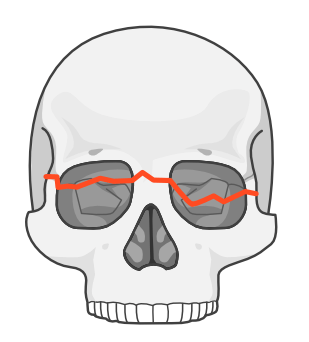
what are most common signs and symptoms of ZMC fractures?
pain, edema, swelling, bruising of the cheeks and eyelids
malar flattening
step defect palated along infraorbital rim
step defect palated at frontozygomatic suture
trismus
infraorbital nerve paresthesia or anesthesia
enophthalmos
diplopia
decreased mobility of extra-ocular eye muscles, reduced upward gaze