marketing exam #1
 Call Kai
 Learn
Learn Practice Test
 Spaced Repetition
 Match
Match Flashcards
 Knowt Play
1/172

There's no tags or description
Looks like no tags are added yet.
Name | Mastery | Learn | Test | Matching | Spaced | Call with Kai | Chat |
|---|
No analytics yet
Send a link to your students to track their progress
173 Terms
consumer behavior
totality of consumers thoughts, feelings, and decisions about the consumption, acquisition, and disposition of goods, services, activities and ideas
who is the consumer
not only limited to the consumer
purchaser
decider
influencer
disposer
what type of responses do consumers make
cognitions - thoughts
affect - feelings
behaviors - observable
cognitions
product related knowledge, beliefs, opinions, intentions, and memories
affect
product related attitudes, emotions, and visceral states
observable behaviors
product related decisions and actions
when can consumer responses be influenced?
acquistion
usage
disposition
acquisition
buying
leasing
trading
sharing
stealing
finding
usage
whether
why
symbolism
satisfaction
perception
disposition
trash
recycle
reuse
sell
trade
give
consumer sake of exploring consumer behavior
to understand their preferences, desires, and needs
to help them make the best choice
society sake of studying consumer behavior
to enable policy makers design effective policies
marketers sake of studying consumer behavior
to learn how to influence consumers
to understand consumers, marketers must learn not only what consumers want but why they want it
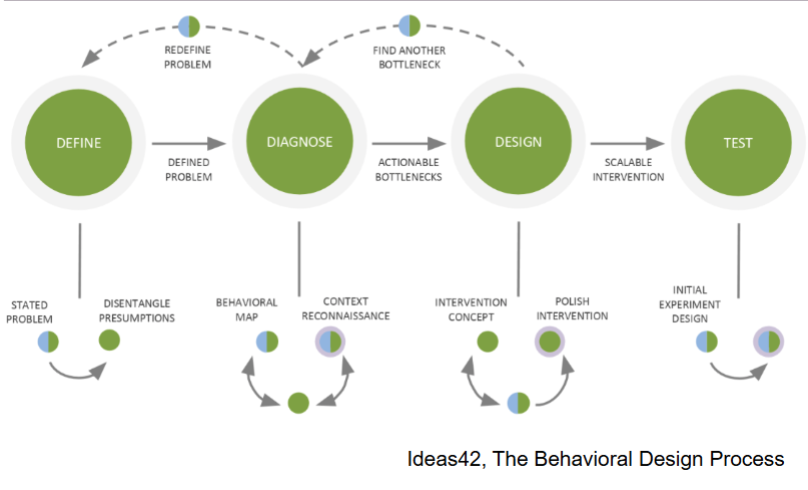
behavioral design process
define
diagnose
design
test
define
identify the problem you want to solve
SMART GOAL
Specific
Measurable
Achievable
Relevant
Time bound

diagnose
identify bottlenecks to behavior change
develop and test a theory of behavior change
create a behavioral map, a chronological chart of the consumer thoughts, attitudes, and choices may lead to the goal
evaluate what situational or contextual factors might serve as levers or bottlenecks to these steps being performed
test your theory via observation, interviews, focus groups, surveys, experiemtns

design
develop strategies to address bottlenecks
create a behaviorally informed intervention
how might we lower on eliminate this bottleneck?
how might we guide consumers around this bottleneck?
how might we motivate consumers to overcome this bottlenec
test
evaluate the impact of the intervention
assess the success of your chosen strategy
administer the intervention and measure its
primary data
collected specifically for its own purposes
secondary data
collected by an entity for one purpose and subsequently used for some other purpose
general rule: collect _________ first because its cheaper and already available, then turn to primary data
nonexperimental research
experiments that cannot show causation
surveys
structured questionnaires on attitudes, beliefs, choices
PROS: cost effective, broad reach, quick data collection
CONS: limited depth, no follow up
interviews
one-on-one conversations for detailed insights
PROS: flexible, rich, in depth responses
CONS: time consuming, small sample size
focus groups
guided froup discussions on perceptions and ideas
PROS: diverse views, interactive exchange
CONS: risk of bias, may not reflect actual behavior
observational research
watching consumers in real world settings
PROS: shows actual behaviors, competitive insights
CONS: doesnt capture motications or thought processes
hybrid methods
mix of observation + interaction
PROS: conbines depth & realism, reveals usability issues
CONS: costly, resource intensive

experimental research
a research method that shows causation
three features of experimental methodology
manipulated cause
control conditions
random assignment
manipulated cause
change the independent variable, measure effect on the indpendent variable
control conditions
keep everything the same; use a control (no treatment) group or comparison (a different treatment) group
random assignment
assign participants to conditions randomly to rule out pre existing differences
causal inference
shows cause and effect relationships
control
isolates variables to measure their direct impact
replicability
can be repeated to verify results
feasibility
experiments may be difficult to run or costly
ethical constraints
some things cannot be manipulated
three criteria for evaluating research
does the study show causality
are the findings reliable
is the research internally and externally valid
causality
changes in variable cause changes in another
methodology
is the research non experimental or experimental
reverse causation
is it possible that the cause and effect work in the opposite direction
reliability
a study produces consistent results
external validity
the results generalize to real world situationst
internal validity
the study accurately shows cause and effect within the experiment
hawthorne effect
acting differently because you know youre being watched
demand characteristics
answering how you think the researcher wants
placebo effect
feeling the change just from believing you got a treatment
third variables
an outside factor that affects both of the things youre measuring

segmentation
dividing a market into meaningful smaller markets or submarkets based on common characteristics
segments should be
identifiable
substantial
accesible
stable
differentiable
actionable
target marketing
director one’s marketing efforts into specific segments (target markets)
customized target marketing
a unique product is create for the needs of a unique customer
concentrated target marketing
target a large portion fo a small market
differentiated target marketing
develop different value offeings for different targeted segments
undifferentiated target marketing
mass market
differentiate on price

positioning
communicating value to one’s target market by connecting consumers needs and wants to what your company has to offer
types of positioning strategies
price
core benefit
usage situation
product user
steps in segmentation
segmentation
target marketing
positioning
benefits of segmentation
enables us to respond to our consumers unique wants and needs
escapes the majority fallacy
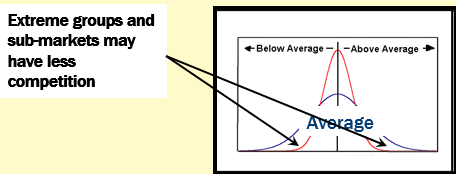
majority fallacy
pursuing the majority segment can be a fallacy because the largest segment where competition tends to be most intense, is not always the most profitable
drawbacks of segmentation
sales costs tradeoff
cannibalization of sales
sales costs tradeoff
sales may increase with more specialized products, but so do costs
cannibalization
our product may eat share from our other products
demographic segmentation
gender
age
occupation
income
education
wealth
advantages of demographic segmentation
easy to apply and use, as governmental statistical data is readily available in most countries
suitable data can be obtained quickly and cheaply
easy for management and staff to understand
limitations of demographic segmentation
assumes that all consumers who share demographic traits are similar in needs
shallow and sometimes stereotypic understanding of consumers
geographic segmentation
climate
population density
region
geodemography
advantages of geographic segmentation
easy to apply and use
works well in areas where there are significant demographic or lifestyle differences across regions
limitations of geographic segmentation
assumes that all consumers in a geogrpahic are have similar needs
often needs to be used in conjuction with another type of segmentation
PRIZM segmentation tool
consists of 68 segments
social groups (based on urbanization and socioeconomic rank)
ubran, suburban, second city, town and rural
lifestage groups (based on age and presence of children at home and socioeconomic rank)
younger years, family life, mature years
provides information about segments demographic, lifestyle, and media traits
psychographic segmentation
personality
values
lifestyles
big 5 personality test
openness
conscientiousness
extraversion
agreeableness
neuroticism
advantages of psychographic segmentation
gives much better insight into the underlying motives and values of the consumer as a person
allows for more targeted messaging
disadvantages of psychographic segmentation
may require detailed data and research on consumers, which may be beyong the reach of small firms
may better at predicting what sort of messaging will resonate better than actual behavior
may be context specific

behavioral segmentation
product benefits
price, convenience, ease of use, status
usage occasions
morning, evening
leisure, work, rush
holiday, special day
usage frequency
current user, potential user, lapsed user
light medium, heavy
purchase history
past purchases
search history
advantages of behavioral segmentation
tons of available data
allows for personalized, highly targeted marketing
obvious connection to behavior
disadvantages of behavioral segmentation
doesnt tell us why
raises issues of privacy
attention
the processes by which we devote mental activity to a stimulus
attention
fill in the blank: ___________ is
often divided
limited
selective
types of divided attention
multitasking
distraction
driving while texting
limited attention
millers rule
limited sensitivity
Millers Rule
working memory holds about 7+- 2 items
capacity rises from childhood to adulthood, then declines
Webers Law
the bigger the initial stimulus, the bigger the change needed to be noticed (a $1 price cut matters on a $5 item, not on a $500 one)
adaptation that leads to advertisement wear out
we stop noticing stimuli that are simple, subtle, repetitive
how to combat advertisement wear out
Stimuli that are
COMPLEX
INTENSE
NONREPETITIVE
UPDATED
arousal
determines how many resources we can devote
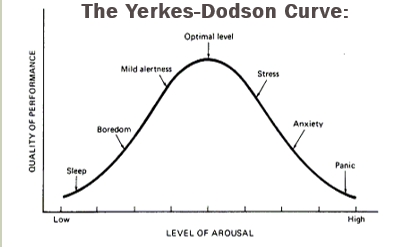
yerkes dodson curve
an inverted U, so performance is best at moderate arousal and worse when arousal is too low (sleep deprived nurse) or too high (super bowl fans)
selective attention
we focus on one or more stimuli and tuning out others
change blindness
failure to notice an obvious change
inattentional blindness
failing to notice an unexpeced item
cherrys shadowing task
different messages in each ear; participants repeat ("shadow") one.
Not much gets through: few noticed a switch to gibberish or backwards speech; a word list repeated 35 times wasn't recognized better than chance.
Some things do: general properties (a tone, a woman's voice); your own name (about a third notice, the cocktail-party effect); a sentence that jumps ears can pull you into switching.
conclusion: we facilitate one stimulus and inhibit others, but still monitor the unattended channel so relevant info can break through
individual factors that captivate a consumers attention
capacity
sensitivity
resources
sources that captivate a consumers attention
vividness
intensity
novelty
consumers capacity
kiss principle (keep it simple stupid)
consumers sensitivity
keep the consumers from adapting to your product
make it non repetitive, complex, intense
personalize your message
consumers are more sensitive to information that is personally relevant
consumers resources
too much or too little arousal is a bad thing
know when your audience is likely to be optimally alert
keep complexity to a minimum when arousal is likely to be too low or too high
source factors of vividness
humor
emotional inerest
concreteness
proximity
source factors of intensity
size
volume
color
position
source factors of novelty
unexpected ad or product format
unexpected ad placement
unexpected intrusion
perception
the process by which sensations (sights, sounds, smells, tastes, touch) are organized and interpreted
perception myth
we see the world as it is. we simply register sensory inputs and report them back