Brain And Behavior
 Call Kai
 Learn
 Practice Test
 Spaced Repetition
 Match
 Flashcards
 Knowt Play
1/319

There's no tags or description
Looks like no tags are added yet.
320 Terms
Neurons
Primary functioning cells of CNS,
Conduct electrical signal
Communication /information processing
Sensory neurons
Receive info from outside world
Moton neurons
Movement, sends commands from CNS to muscles + glands
Interneurons
In between sensory+ motor neurons
Input zone
Dendrites ,(sometimes soma ), Recives comunications
Integration zone
Soma, signals are summed together to determine if signals will be passed along
conduction zone
Axon
Output zone
Axon terminal signal is passed to other cells
Microtubules and micro fibers
Traveling down axon, serves as a highway
Axon hillock
Where soma and axon connect signal starts here
Myelin
Coats axon, helps transmission speed 2 type of cells make this up
Nodes of ranvier
Gaps between mylen
Axon terminal
Releases neurotransmitters
Unipolar neuron
Muscles organs glands

Bipolar neuron
Sensory systems

Multipolar
Cerebral cortex

Types of glia
Macroglia
Microglia
Glia functions
Glue nervouse systems together, provide physical and chemical support, provide insulation
Astrocytes characteristics
Only in CNS
Star shaped
Nurish
Regulate extra fluid
Helps blood brain barrier
Physical support
Engage in phagocytosis
Astrocyte identify

Oligodendnocytes characteristics
Only in CNS
Axonal support
Provide mylenation of brain and spinal chord
Oligodendrocytes identify

Glia outside CNS
Shwann cells
Shawn cells characteristics
In PNS
Mylenation outside CNS
Axonal support
Preforms phagocytosis of dying axons
Shwann cells identify

Identify CNS cell

Identify PNS cell

Microglia characteristics
CNS and PNS
Mobile
Phagocytosis and protection from microorganisms
Causes inflamation after brain injury
Helps synaptic prunning
Multiple sclerosis
Myelin gets damaged
Amythropic Lateral S.
Glial cells kill motor cells
Alzheimers
Glial fails to protect properly
Gliosis
Scarring after brain injury
Skull
Protects from damage
Swelling here can lead to pressure build up and tissue damage
3 layers of meninges
Dura mater
Arachnoid mater
Piamatter
Dura matter characteristics
Outermost meninges
Hard
Arachnoid mater
Middle layer of meninges
Spider web like
This space is filled with fluid
Piamatter characteristics
Innermost meninges
Covers the brain
Meningitis
Inflamation of meninges
Meningoma
Tumor in meninges
Spinal fluid and ventricular system characteristics
Provides nutrition
Cushioning
Ventricles filled with CSF
Shock absorption
Hydrocephalus
Developmental trauma
Too much fluid
Pressure build up
Glymphatic system characteristics
Brain version of lymphatic system
Removes waste
Involves astrocytes
Works during deep sleep
Glymphatic system dysfunction causes what
Cognitive impairment
Neurodegenerative illness
Blood Brain Barrier (BBB) characteristics
Feature of blood vessels
Precent through most of the brain
Keeps drugs toxins and pathogens out
Astrocytes aid this
divisions of nervous system
central and peripheral
divisions of central nervous system
spinal chord and brain
divisions of peripheral nervous system
somatic and automatic
divisions of automatic nervous system
sympathetic and parasympathetic
Afferent definition
input
efferent definition
output
somatic system characteristics
Provides nerves to muscles and skin
Sensory input (afferent) to the brain
Voluntary muscle movement ( efferent)
Spinal nerves and cranial nerves
automatic nervous system characteristics
innervates smooth muscles and glands
automatic
sympathatic system function
fight or flights
parasympathetic nervous system function
feed and breed
rest and digest
parasympathetic and sympathetic relations
these 2 systems innervate the same parts of the body but cause opposite reactions
how does sympathetic system send signals
all at once
domino effect using chain ganglia
how does the parasympathetic system send signals
one by one
at the organs or muscles it affects
spinal cord characteristics
sends into to and from the brain
produces reflexes
sensory input enters dorsally
motor input exists ventrally
ganglia definition
collection of nerve cell bodies
define dorsally
from the back
define ventrally
from the front
define white matter
matter that sends out signals
made of myleinated axons
gray matter definition
processes infromation
made of cell bodies
order of grey and white matter in spinal cord
white outside grey inside
order of white and grey matter in brain
white inside, grey outside
how do you identify the front or back of the spinal cord
the “ bumps “ are towards the back
identify a coronal/ frontal cut

identify a sagittal plane cut

identify a horizontal plane cut
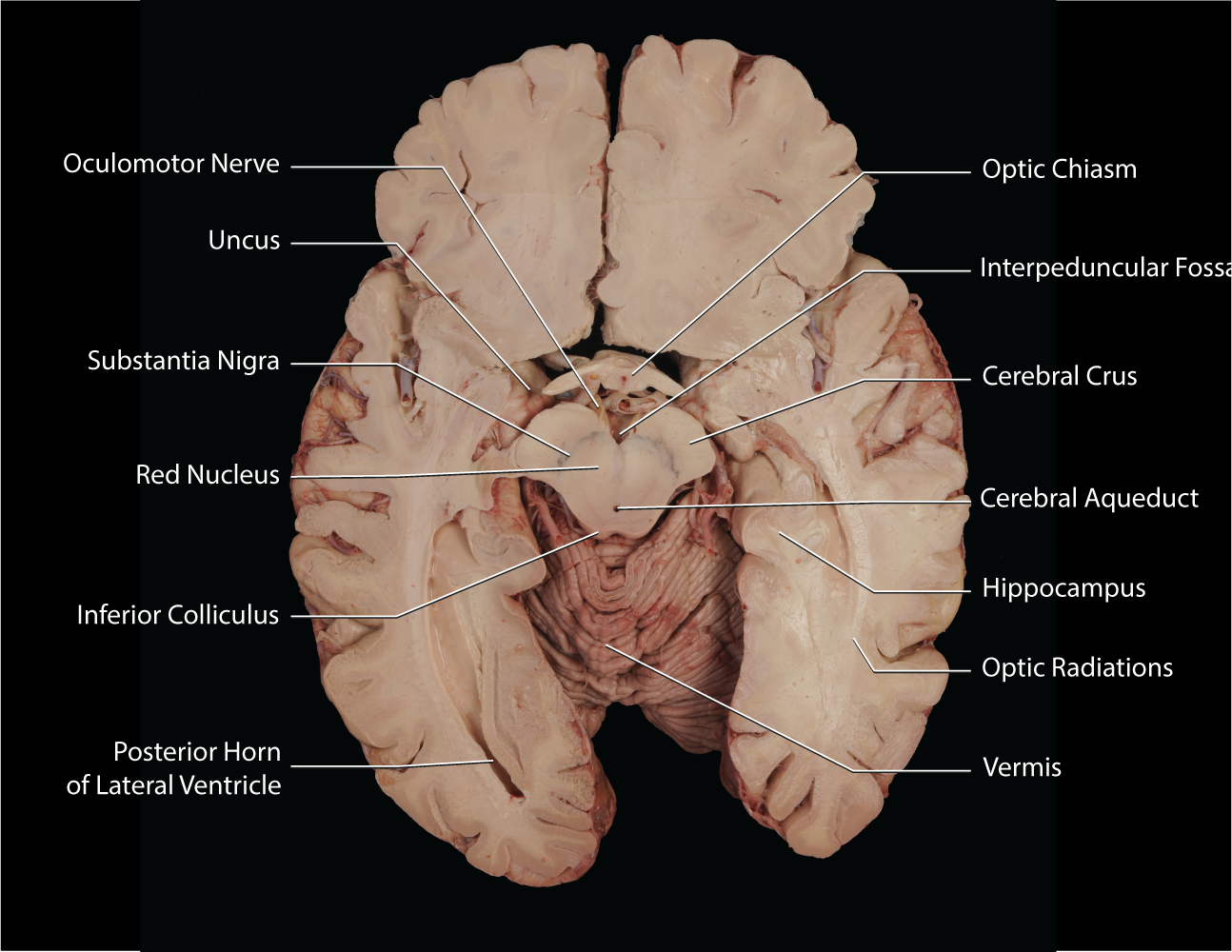
define medial
towards the middle
define lateral
towards the side
define ipsilateral
same side
define contralateral
opposite side
define superior
above
define inferior
bellow
define anterior/ rostral
towards the nose
define posterior
towards the tail
define dorsal
back
define Ventral
front
define proximal
near
define distal
far
what are the 3 divisions of the brain
forebrain
midbrain
hindbrain
define cerebral cortex
outermost convoluted layer of the brain
define gyri
bumps on the brain
define sulci/ fissure
wrinkles/ folds
frontal lobe characteristics
planning and initiating movement
executive functions like attention decision making and impulse control
speech production
emotional regulation
lots of association cortex
primary motor strip
area in the brain that starts intentional movement
Parietal lobe characteristics
sensory processing (touch)
association cortex
spacial processing
temporal lobe
hearing
association cortex
Occipital lobe
vision
has no association cortex
selfish lobe
central sulcus characteristics
divides frontal and parietal lobe
divides pre-post central gyrus
Sylvia fissure characteristics
“thumb”
lateral fissure
divides temporal lobe from frontal and parietal
precentral gyrus characteristics
posterior frontal lobe
motor controll
postcentral gyrus characteristics
anterior parietal lobe
touch
sensation
longitudinal fissure
divides both hemispheres
corpus callosum (cc)
large bundle of axons
connects 2 sides of brain
bridge
Basal ganglia characteristics
motor controll
affected in parkinson’s and huningtons
nucleus accumbens
Nucleus accumbens characteristics
part of basial ganglia
associated with rewards
dopamine hits
Limbic system characteristics
important for emotional regulation
amygdala
hippocampus
amygdala characteristics
controls emotions
conditioned emotions