Fluid, Electrolyte, and Acid-Base Balance
 Call Kai
 Learn
 Practice Test
 Spaced Repetition
 Match
 Flashcards
 Knowt Play
1/20

Earn XP
Description and Tags
Lecture
21 Terms
I. Body Fluid Compartments
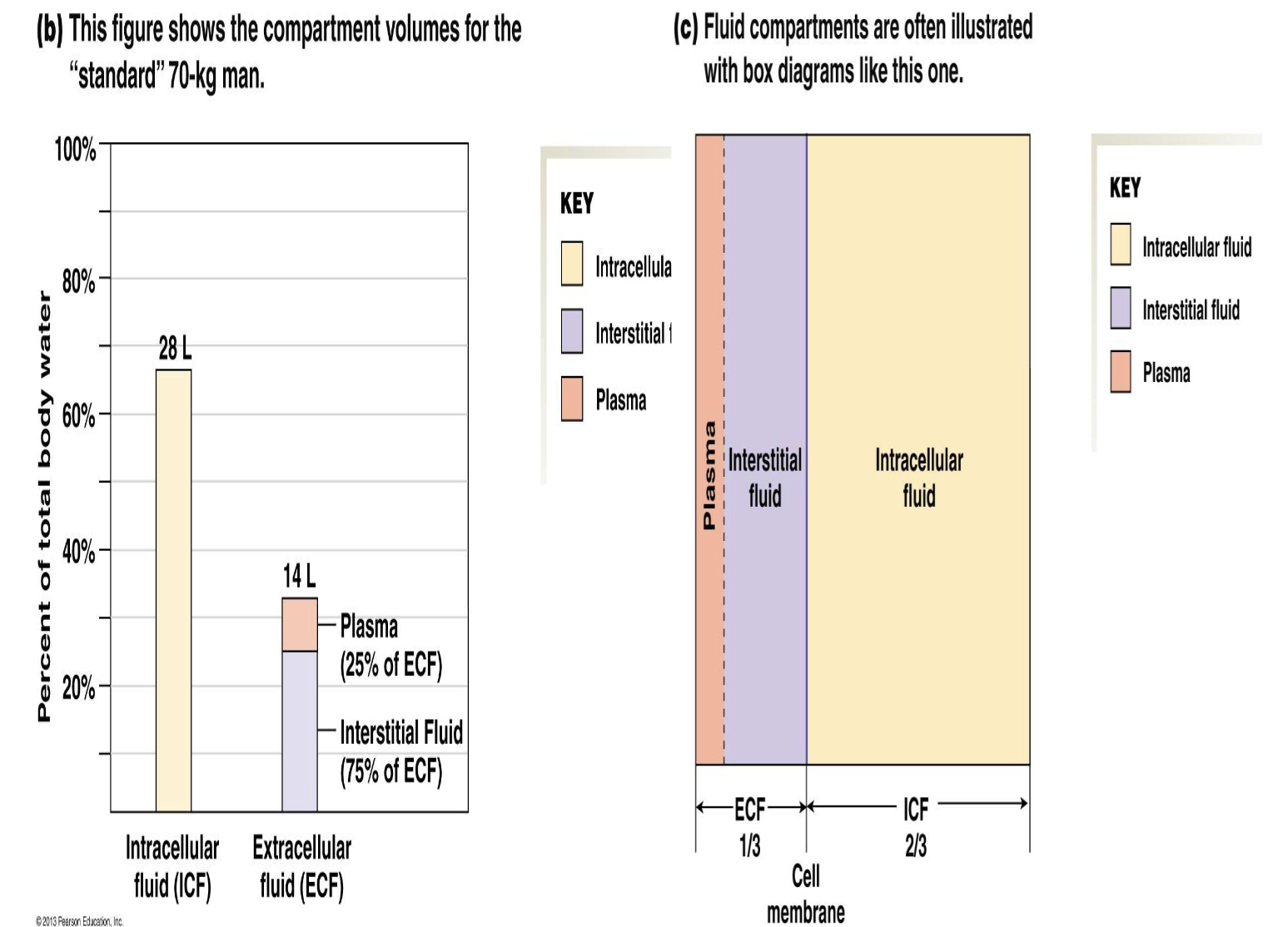
What are the two major fluid compartments in the body?
What is intracellular fluid (ICF)?
Intracellular fluid (ICF) and extracellular fluid (ECF)
Fluid located inside cells

What is extracellular fluid (ECF)?
What are the two subdivisions of extracellular fluid (ECF)?
What are the three types of equilibrium ?
Fluid located outside cells
Interstitial fluid and plasma
Osmotic equilibrium, chemical disequilibrium, and electrical disequilibrium

How does high ECF osmolarity affect cells?
How does low ECF osmolarity affect cells?
Cells shrink
Cells swell
A. Regulation of Osmotic Pressure
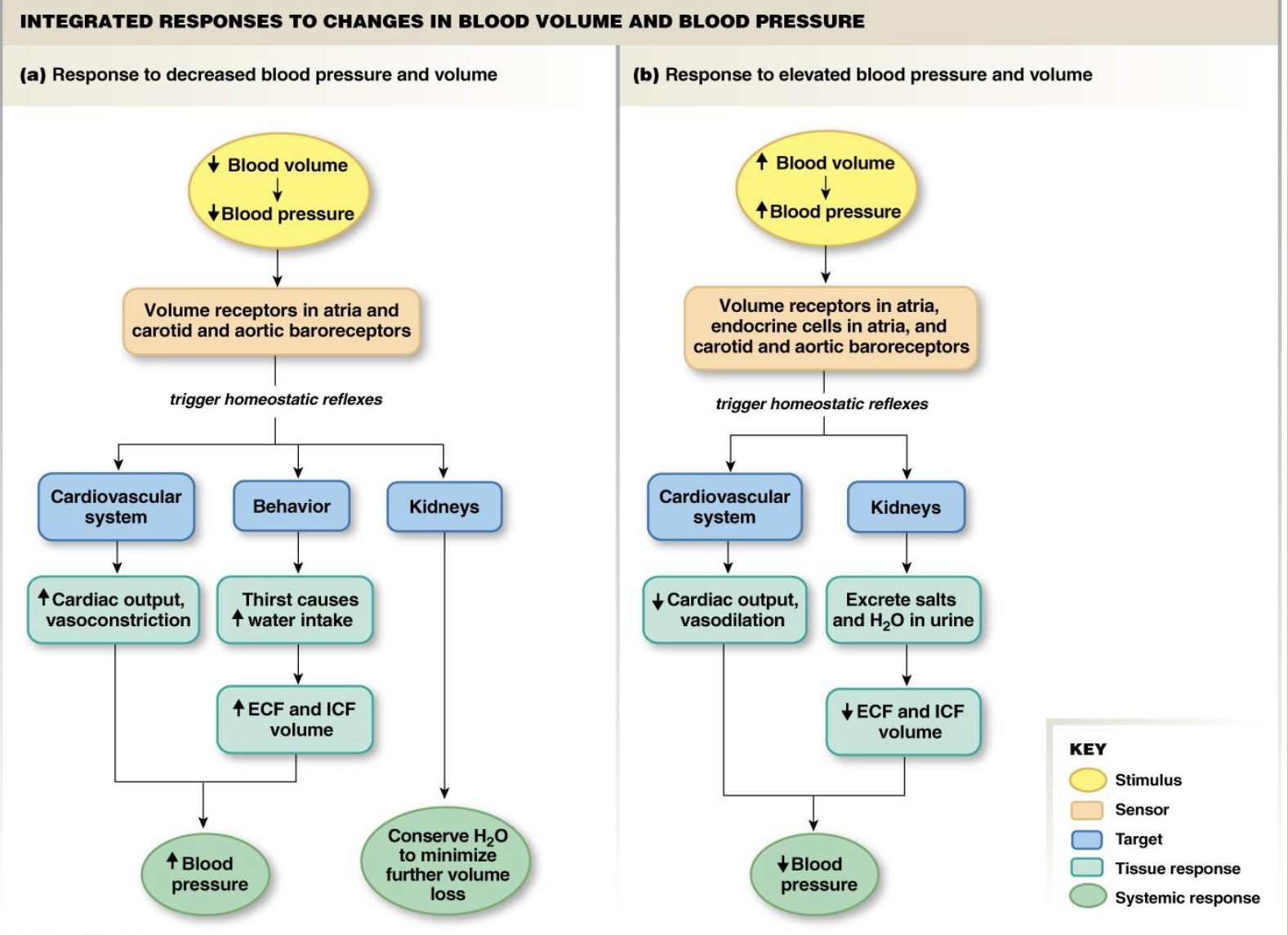
What are the three mechanisms that regulate osmotic pressure?
How quickly does the cardiovascular system respond to changes in osmotic pressure?
Cardiovascular, renal, and behavioral responses
Rapidly

How quickly do the kidneys respond to changes in osmotic pressure?
What is the behavioral response that helps regulate osmotic pressure?
What other behavioral response helps regulate osmotic pressure?
More slowly
Thirst
Salt appetite
II. Water Balance
A. Water Intake and Excretion
What are the three sources of water intake listed in the notes?
What are the two main categories of water loss?
Ingestion, respiration, and IV (intravenous injection)
Excretion and insensible water loss.

What are the two ways water is lost through excretion?
What is insensible water loss?
What is the relationship between water intake and water loss during water balance?
Urine and feces
Water loss across the skin and through exhalation
Water intake and water loss are balanced
B. Role of the Kidneys
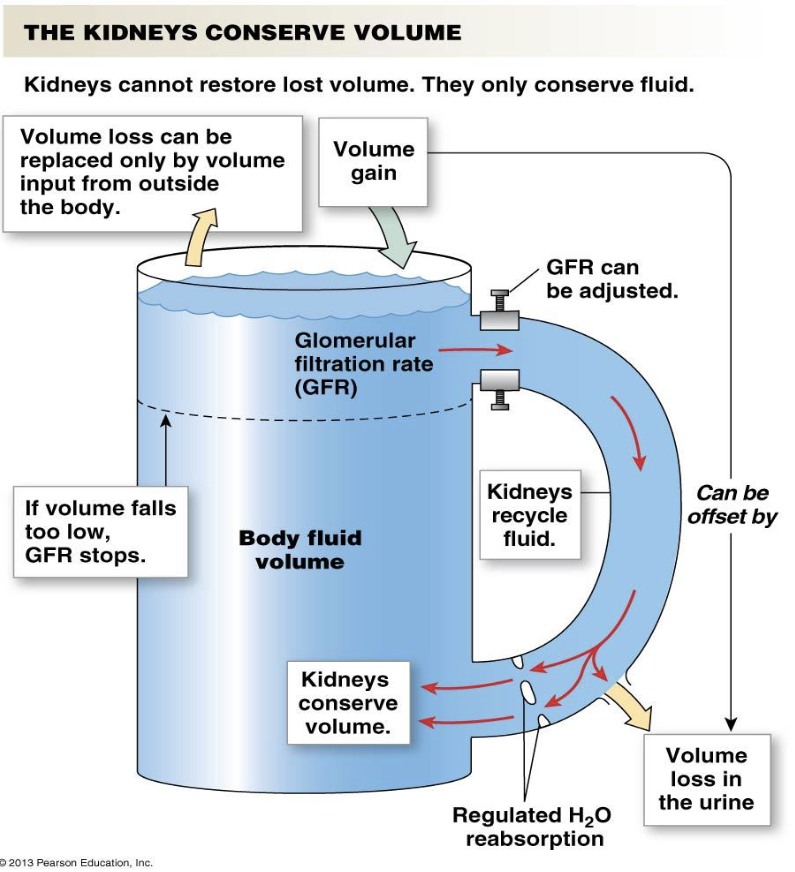
How can the kidneys remove excess fluid from the body?
How can the kidneys help conserve fluid?
Can the kidneys replace fluid that has already been lost?
Through urination
By reducing water loss
No. Only water intake can replace lost fluid
C. Vasopressin
What does vasopressin respond to?
Where are the osmoreceptors that detect changes in osmolarity?
Changes in osmolarity
In the hypothalamus

III. Sodium Balance
A. Sodium Intake and Excretion
What is the main source of sodium intake?
Where is most sodium lost from the body?
Ingestion
Through urine

What are two other ways small amounts of sodium are lost?
What situations can cause large amounts of sodium loss?
What does the body have a homeostatic response to?
Through feces and perspiration
Vomiting, diarrhea, and heavy sweating
Salt ingestion
B. Aldosterone
What two conditions stimulate aldosterone release?
Increased extracellular K+ concentrations and low blood pressure
V. Acid-Base Balance
A. Normal pH and Hydrogen Ion Balance
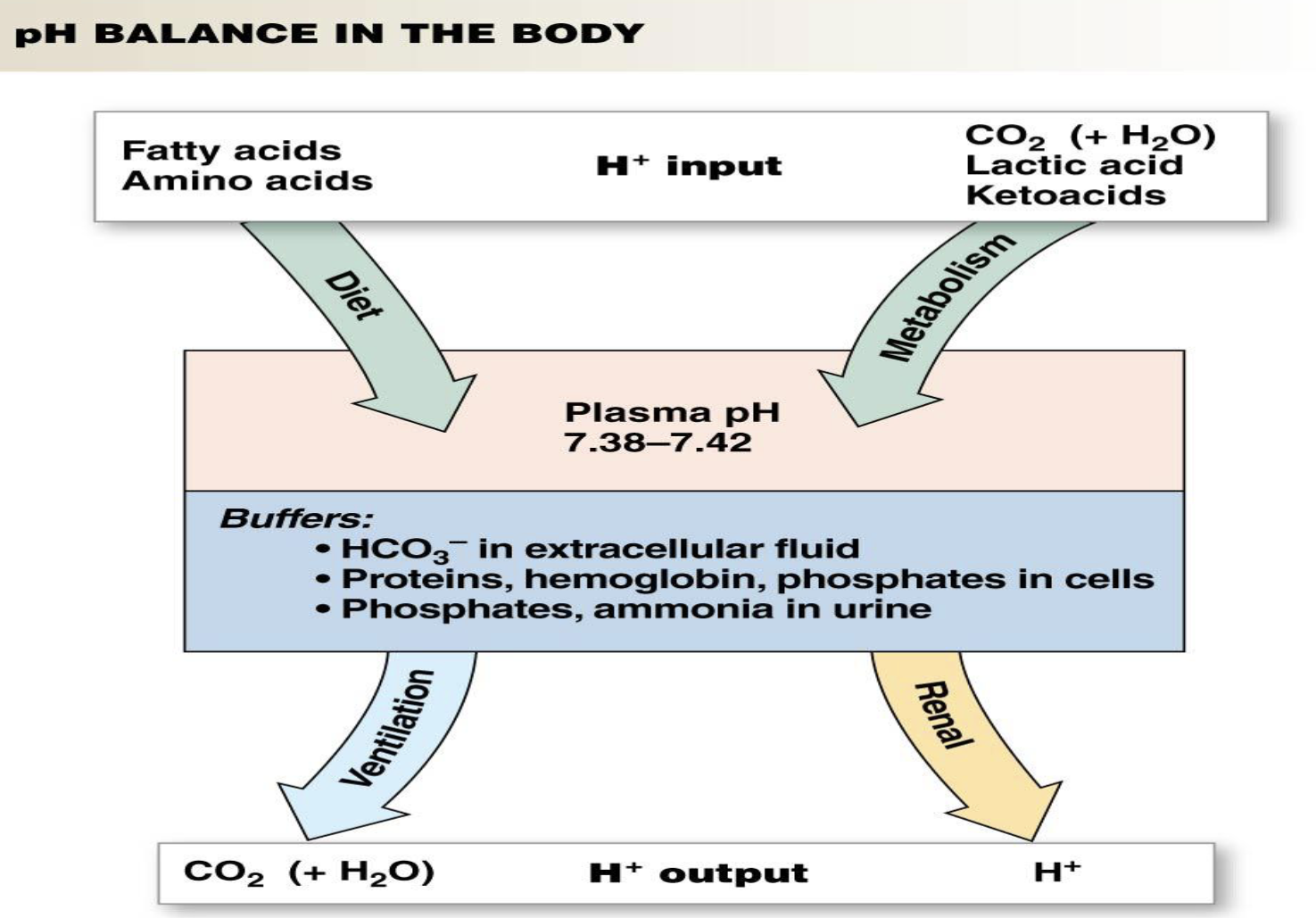
What is the normal plasma pH range listed in the notes?
What are two sources of hydrogen ion (H+) intake?
7.38–7.42
Diet and metabolism
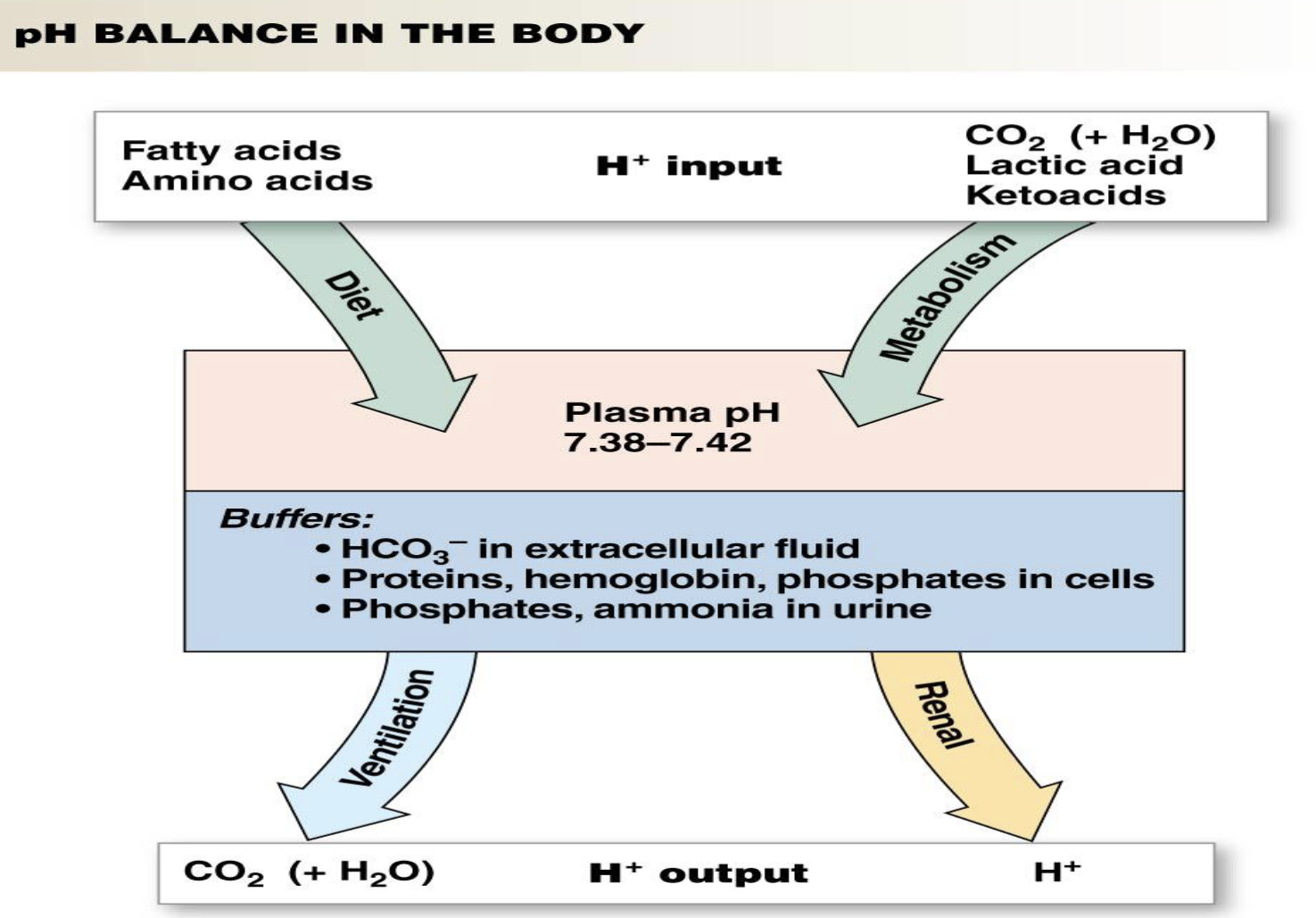
Which dietary components contribute to H+ intake?
How does metabolism contribute to H+ intake?
What are the two ways hydrogen ions are lost from the body?
Fatty acids and amino acids
Through CO2 production
Ventilation (removal of CO2) and renal excretion of H+

B. pH Regulation
What are the three mechanisms that regulate pH?
What buffer is specifically listed in the notes?
Buffers, ventilation, and renal regulation
Bicarbonate
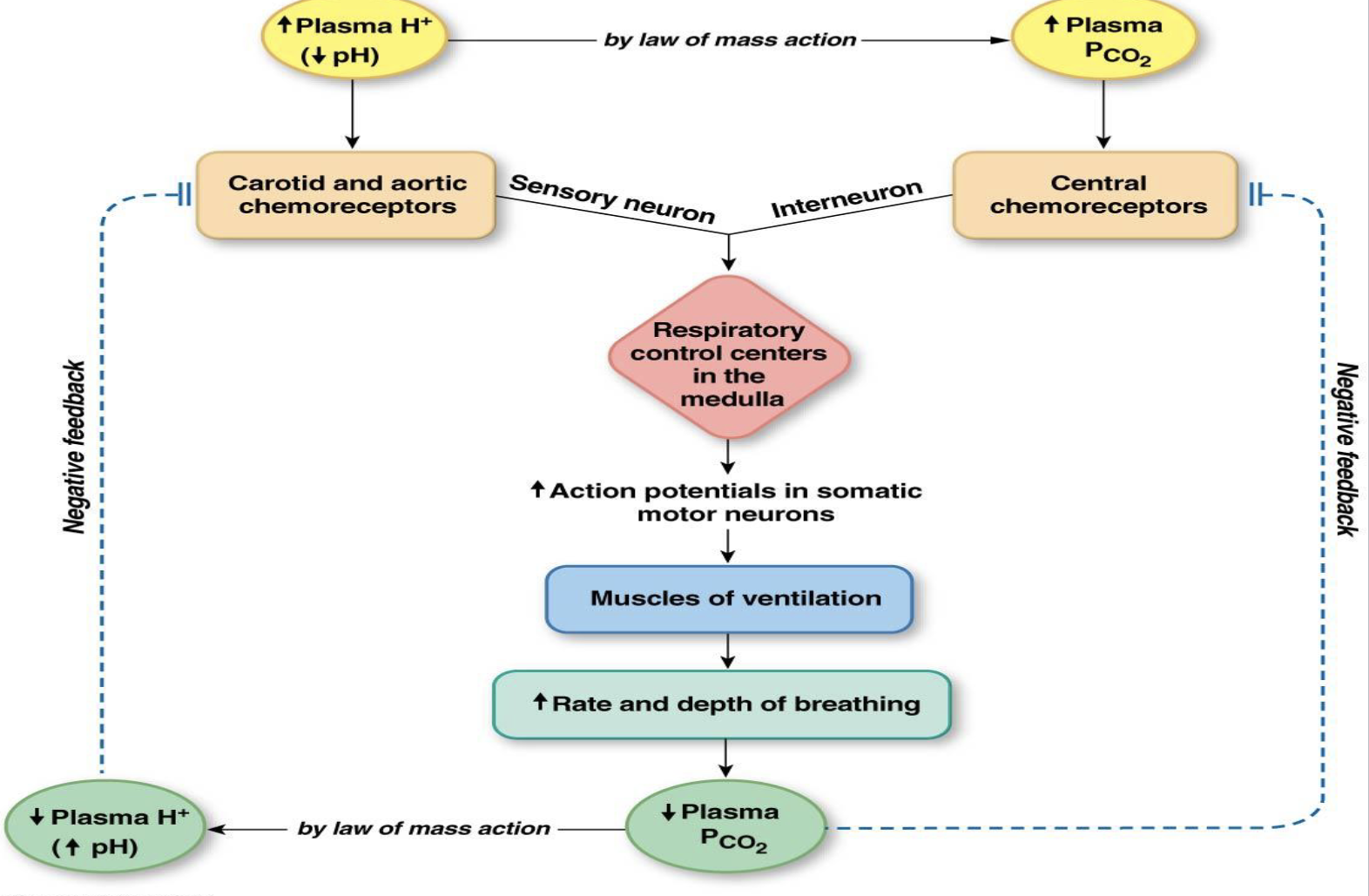
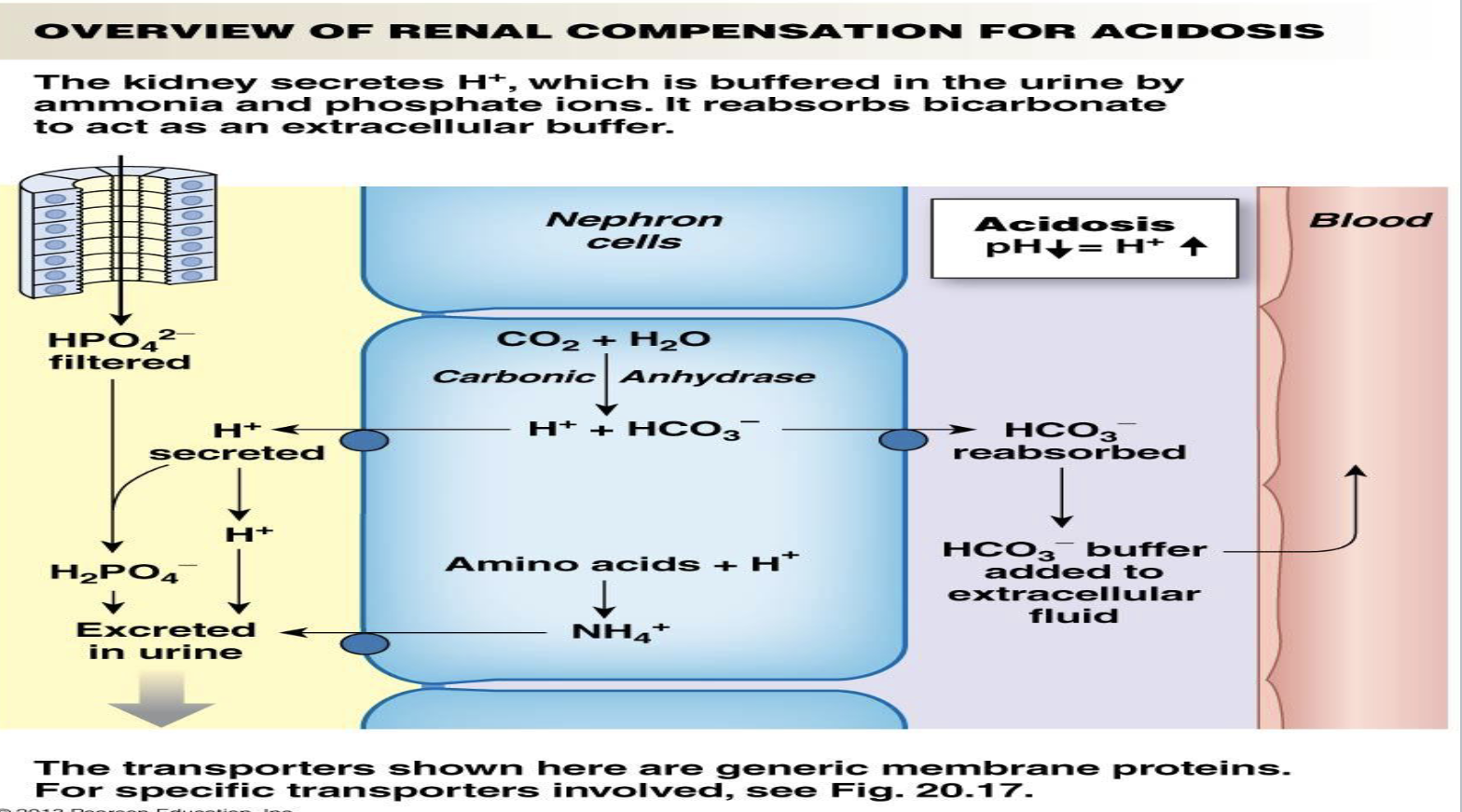
What are the two body systems involved in regulating pH besides buffers?
Which part of the nephron is involved in renal regulation during acidosis?
Which part of the nephron is involved in renal regulation during both acidosis and alkalosis?
The respiratory system and kidneys
The distal convoluted tubule
The collecting duct

V. Acidosis and Alkalosis
A. Acidosis
What happens to neurons during acidosis?
What are the two respiratory causes of acidosis listed in the notes?
They become less excitable
Hypoventilation and emphysema
What are the metabolic causes of acidosis listed in the notes?
What is respiratory acidosis associated with?
What is metabolic acidosis associated with?
Anaerobic metabolism and the production of acids and fatty acids
Hypoventilation and emphysema
Anaerobic metabolism and acids and fatty acids
B. Alkalosis
What happens to neurons during alkalosis?
What are the respiratory causes of alkalosis ?
They become hyperexcitable
Hyperventilation, anxiety, and panic attacks
What are the metabolic causes of alkalosis listed in the notes?
What is respiratory alkalosis associated with?
What is metabolic alkalosis associated with?
Excessive vomiting and excessive bicarbonate ingestion
Hyperventilation, anxiety, and panic attacks
Excessive vomiting and excessive bicarbonate ingestion