GRST209: Quiz 2 Photos
 Call Kai
 Learn
 Practice Test
 Spaced Repetition
 Match
 Flashcards
 Knowt Play
1/101

Earn XP
Description and Tags
Demeter, Aphrodite, Hephaestus, Ares, Eros, Poseidon, Medusa, Athena, Apollo, Artemis, Hermes, Dionysus
102 Terms

Demeter
Greek women in secluded women’s quarters
emphasizes domestic role and social sphere

Demeter
Symbolism: seated pose and veil(sovereign deity and earth mother)
Significance: tension between autonomous divine authority(fertility) and patriarchal authority(Zeus authority over marriage)
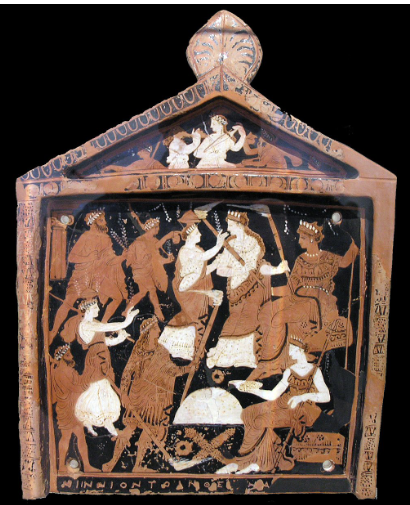
The Ninnion Tablet
Eleusinian Mysteries
Demeter receiving initiates
Persephone standing with torches acting as guide and queen
Transition from darkness to ritual illumination experienced inside Telesterion

Triptolemus(Elusian prince)
Description: Demeter gave him seeds to teach humanity to sow, plot, and harvest wheat
Symbolism: gift of farming, traveling from Eleusis to the rest of the world
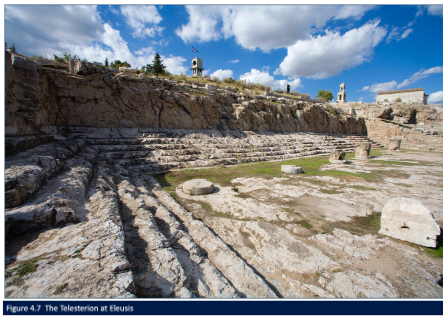
Telesterion at Eleusis(Archaeological site)
initiation hall at the sanctuary of Eleusis
enclosed hall designed to hold thousands of initiates(mystai) in pitch darkness
Here, the Hierophant revealed the secret sacred objects(deiknymena), spoke sacred words, and offered initates the promise of a blessed afterlife

Terracotta figurine of Baubo on a pig
Baubo(associated with lambe)
Baubo exposed herself and made vulgar jokes, causing Demeter to laugh and break her fast(Hymn to Demeter)
justified ritual obscenity, banter and sexual jokes during festivals(Haloa, Thesmophoria) to banish grief and stimulate fertility
pig represents subterranean offering and fertility

The Locri Pinax
from sanctuary of Persephone at Locri Epizephyrii, Southern Italy
Persephone as queen of the underworld and guardian ofwedding customs/traditions
Symbolism: opening of bridal chest(kiste) represents both maidenhood transitioning into marriage and the unveiling of sacred, secret items connected to rebirth an the underworld

Sculpture by Gian-Lorenzo Bernini, 1612-1622
Hades bursts through the earth on his chariot to seize unwilling Persephone with Zeus’s sanction(Homeric Hymn to Demeter)
Cerberus at Hades feet, making the underworld destination
emphasizes the visceral terror of abduction and sudden separation of daughter from mother

Demeter of Knidos(4th century BCE marble)
draped mantle and head-veil portray Demeter in her dual guise: dignified Olympian queen and mourning mother(Mater Dolorosa) searching for Persephone
Significance: standard classical archetype of Demeter representing mature womanhood, maternal protection, and agrarian stability

The Birth of Venus by Sandro Botticelli (c.1485)
Hesiodic myth
Aphrodite riding from the sea-foam(aphros) after the castration of Ouranos, stepping ashore on Cythera/Cyprus while flowers sprout beneath her feet
shows classic Venus Pudica gesture(modest hand placement covering breasts and groin) adopted from classical Hellenistic statues

Cypriot Bird-Faced Figurine
Bronze Age/ Early Iron Age Cypriot fertility idol
represents pre-Hellenic fertility cults of Cyprus
as major copper-mining trade hub bridging Mesopotamia, the Levant, and Greece, Cyprus fused Near Eastern goddess traditions(Inanna/Ishtar/Astarte) into deity who eventually became Greek Aphrodite

Map of Eastern Mediterranean & Cyprus
illustrates Cyprus as the geographical and cultural stepping stone between the Near East and Greece
Rich in copper, Cyprus connected Mesopotaminan trade routes to Greek-city states
explaining why Aphrodites oldest Greek cults were located in Cyprus and why she bears the titles Cypris and Cyprogenes(born in Cyprus)
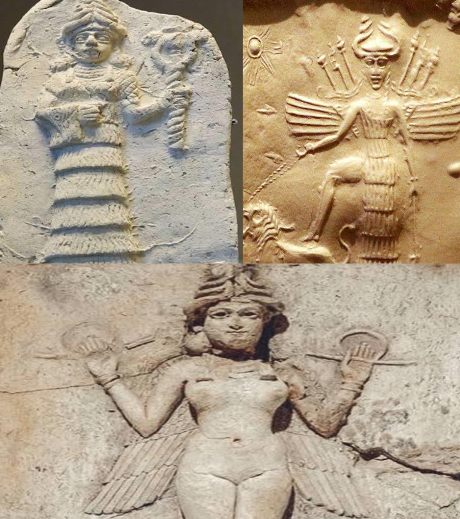
Mesopotamian Goddess Triad
Inanna(Sumerian) and Ishtar(Akkadian/Babylonian)
Duality of love and war: Near Eastern predecessor governed both erotic passion and violent warfare
depicted both nude and in armor, capable to terrifying vengeance
explains warlike Greek variants like Aphrodite Areia in Sparta

Hellenistic Semi-Draped Aphrodite
sculpture style: Hellenistic “wet drapery” technique
tension between being clothed vs. unclothed
sliding fabric bring attention to sensuality, blurring the line between modesty and erotic display

Aphrodite of Knidos by Praxiteles (4th century BCE)
first life sized female nude statue in Greek monumental art
Venus Pudica(“modest Venus”): portrayed in a private moment before or after bathing
gesture in ambiguous, hides and draws direct attention to female nudity, inviting and complicating the viewers gaze

Greek Terracotta Figurine, 4th century BCE
Aphrodite Anadyomene(Aphrodite rising from the sea)
symbolism: physical manifestation of the sea-birth myth
seashells serves as both a cradle and a symbol of marine birth, female fertility, and precious beauty emerging from the waves

Fresco of Venus and Mars (House of Mars and Venus, Pompeii, 1st century CE)
reclining Venus and Mars(Aphrodite and Ares)
conquering of war by love: god of war is disarmed, softened, and seduced by the goddess of desire
mythical context: recalls their affair where Hephaestus traps them in a net(Homer’s Odyssey Book 8)
Roman context: Mars(father of Romulus) and Venus(mother of Aeneas) together represent the dual divine ancestry of the Roman people

Fresco of Mars and Enthrones Clothed Venus(House of Mars and Venus, Pompeii, 1st venture CE)
mars and an Enthroned, fully clothes Venus
contradictions in Roman Representation: contrasts sharply with the nude, erotic Venus
she is fully clothed, seated, and regals, embodying marital dignity and patron protection, yet physically linked to the armed God of war

Venus Pompeiana - House of the Four Gods, Pompeii, 1st century CE)
cult title: Venus Pompeiana(Patron/Protector goddess of Pompeii)
significance: shows how Venus was adapted into civic Roman religion
rather than unruly force of lust, she is represented as an authoritative protector of the colony, crowned and sovereign, accompanied by Cupid bearing military gear(shield)
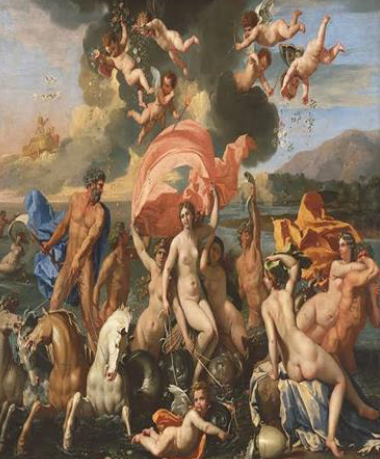
The Triumph of Venus/ Sea Triumph
context: castration of Ouranos, Hesiod’s Theogony
mythological subject: the marine triumph and procession of Aphrodite rising from the sea
Hesiodic narrative: illustrated the moment she emerges from the immortal foam(aphros) created by Ouranos’ severed flesh
she is escorted across the waves toward Cythera and Cyprus accompanied by marine deities and personifications of desire(erotes)

Draped Statue of Aphrodite
context: disparity and contradiction: the many Aphrodites/ Aphrodite Ourania
identity/aspect: classical representation of Aphrodite Ourania(heavenly Aphrodite) or civic/matronly Aphrodite
thematic significance: demonstrates prior to 4th century BCE nude tradition, Aphrodite was regularly represented as fully clothed, dignified, and modest
in philosophical thought, Ourania represents pure, noble, and intellectual love
standing in sharp contrast to Pandemos(common/lustful Aphrodite)
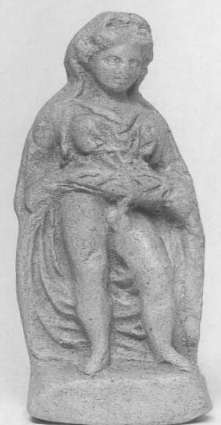
Terracotta figurine of Aphroditus
identity: Aphroditus(the bearded/phallic Aphrodite of Cyprus and Athens)
originated in Cyprus and spread to Athens by the 4th century BCE
pelieved to possess apotropaic(warding off evil/harm) qualities
celebrated in civic fertility festivals that involved ritual transvestism, transcending and subverting strict binary gender norms
mythological precursor to Hermaphroditus(son of Hermes and Aphrodite)

Homeric Hymn to Aphrodite: her regret and loss of status
subject: Aphrodite veiled as a bride, adorned with attributes of divine beauty, love and light
connection to the Hymn: pairs with passage where Aphrodite laments her seduction of the Trojan shepherd Anchises
after boasting she could compel all god’s to mate with mortals, Zeus forces her to fall under mortal passion herself, resulting in her grief, shame, and pregnancy with Aeneas
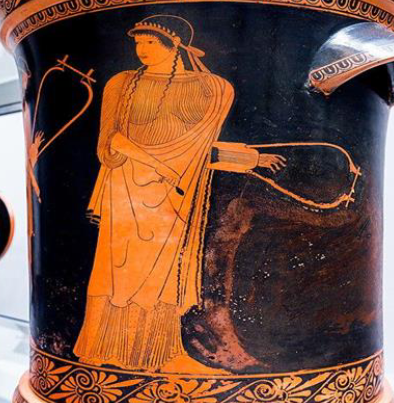
Sappho Holding a Lyre(vase painting)
subject: Sappho of Lesbos(often paired in vase scenes with the lyric poet Alcaeus)
context and role: renowned archaic female lyric poet who led a thiasos(musical/religious circle for elite young women on Lesbos)
significance in myth studies: provided a rare female voice in ancient Greece
in “ode to Aphrodite” she incokes Aphrodite as an intimate protector and symmachos(fellow fighter/ ally) in private emotional longing rather than treating her as a menacing or purely destructive for

Venus Genetrix/ “wet drapery” Aphrodite
cult title: Venus Genetrix = “Venus the Mother/Ancestress”
political reception: adopted prominently in ome by Julius Caesar, who built a temple to Venus Genetrix in his forum to proclaim the Julian clan’s direct divine descent from Venus through Aeneas
combines divine maternal authority with sensual, clinging “wet drapery”
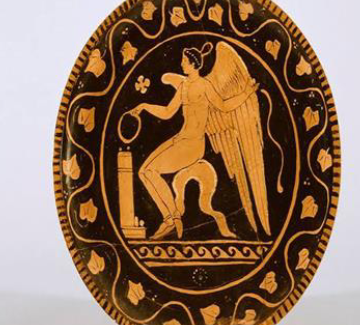
Apulian Red-Figure Plate with Winged Eros
identity: Eros(Roman Cupid)
cosmic evolution: in Hesiod’s Thoegony, Eros is primordial, formless entity born straight out of Chaos. In later classical Hellenistic myth, he is re-imagined as the mischievous son of Aprodite and Ares
symbolism: depicted as a agile, winged youth holding a wreath of victory/seduction, symbolizing the overwhelming, irrational, and chaotic nature of sudden erotic attraction

Psyche Abandoned/Psyche with butterfly wings
figure: Psyche(personification of the human soul)
mythological source: Apuleius’ novel Metamorphoses(The Golden Ass)
narrative context: Venus grew intensely jealous of mortal Psyche’s extraordinary beauty and subjected her to impossible subterranean trials
statue captures Psyche collapsing under the weight of Venus’s wrath and the trials imposed before she is eventually rescued bu Cupid and granted immortality

Thetis in the Forge of Hephaestus(Pompeian Fresco)
mythological scene: Thetis commissioning armor for Achilles from Hephaestus(Illian, Book 8)
narrative context: after Patroclus is kikilled wearing Achilles’ armor, Achilles’ mother, the sea-nymph Thetis, visits Hephaestus’s divine forge.
Hephaestus eagerly helps because Thetis rescues and nursed him when Hera cast him from Olympus
Symbolism: highlights Hephaestus as the master of divine craftsmanship, technology, and miraculous metalwork(creating the legendary Shield of Achilles)

The Return of Hephaestus to Olympus(Oinochoe Vase)
mythological event: the return of Hephaestuf to Lympus
narrative context: Hephaestus trapped him mother Hera in a mechanical golden throne to avenge her casting him out
Ares tried to retrieve him by force and was driven off
Dionysus succeeded by getting Hephaestus intoxicated on wine, reconciling him with the Olympians, and leading him back in a joyful procession
significance: explains how Hephaestus reclaimed his rightful place and status among the twelve Olympians despite his physical disability
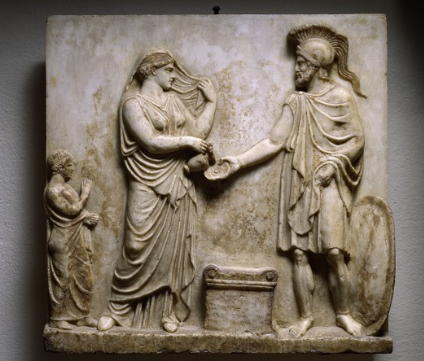
Relief of Ares and Aphrodite
identities: Ares and Aphrodite
thematic pairing: represents the allegorical pairing of War/Strife and Love/Desire
cult and mythological meaning:
while Ares was generally shunned and rarely received major civic temples on his own, he was often worshiped alongside Aphrodite
together they produced offspring representing both terror(Deimos and Phobos) and civil order(Harmonia)

Attic Lekythos and Winged Adolescent Eros
identity: Eros(classical Greek representation)
iconographic attributes: large bird-like wings, Bowman and quiver of arrows
classical conception: portrayed as an adolescent male youth(ephebe) rather than a baby
this form embodied athletic beauty and reflected the social dynamics of mentorship and desire in classical Athens

Fresco of Cupids / Erotes at Work(Pompeii)
subject: Cupid/Putti at work(from the House of Vettii, Pompeii)
historical evolution of love: demonstrates the Hellenistic and Roman shift from a singular, terrifying cosmic force into the multiple, playful, decorative infants(amore’s/Erotes)
cultural meaning: represents the domestic taming of passion into lighthearted, everyday decorative genre scenes

Oceanus/Trevi Fountain(Rome)
figure: Oceanus(central figure of the Trevi Fountain in Rome by Pietro Bracci)
cosmic identity: a Titan and primordial water deity
in ancient Greek cosmology Oceanus was not saltwater, but the vast freshwater river encircling the known world
significance in lecture: demonstrates that Poseidon was neither the first nor the sole ruler of water, the oldest primordial Titan dynasties preceded Olympian rule

Mosaic of Neptune in his Chariot
subject: Triumph of Neptune(2nd century CE mosaic from Roman North Africa)
iconographic Attributes: the trident(three-pronged fishing spear used to summon storms and shatter the earth) and hippocamps(half-horse, half-fish creatures)
significance: illustrates Poseidon/Neptune’s dominion over the raw power of the ocean, wild storms, horses, and seismic disturbances
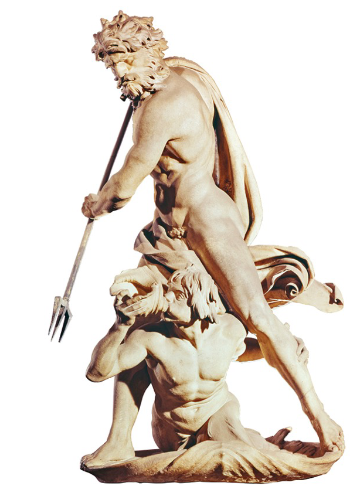
Neptune and Triton by Gian Lorenzo Bernini (c.1622-1623)
figures: Poseidon standing over his son Triton (child of Poseidon and Amphitrite)
Iconography: Triton’s conch shell trumpet was mythologically blown to either stir up ocean storms or calm turbulent waters at Poseidon’s command
shows the dramatic mastery of the sea’s unpredictable currents

Seated Poseidon with Trident
subject: enthroned Poseidon
characterization: depicts Poseidon as an authoritative sovereign deity, visually matching his brothers Zeus and Hades, but distinguished by the trident
religious role: honored at promontories and sea-facing cliffs by Greek seafarers seeking safe passage through inherently violent and unpredictable waters

Medusa and Perseus Comparison
right: Perseus with the Head of Medusa by Benvenuto Cellini(1545-1554)
traditional Renaissance bronze celebrating male heroic triumph, political control, and the slaying of the terrifying female “monster”
left: Medusa with the Head of Perseus by Luciano Garbati(2008)
modern feminist re-imagining that upends Cellini’s composition
critical theory: pairs with modern feminist discourse(Susan Bowers, Gilian Alban, and the #metoo movement)
Medusa is re-framed from a vilified monster into a survivor of assault acting in self-defense, asserting bodily autonomy and the power of the female gaze
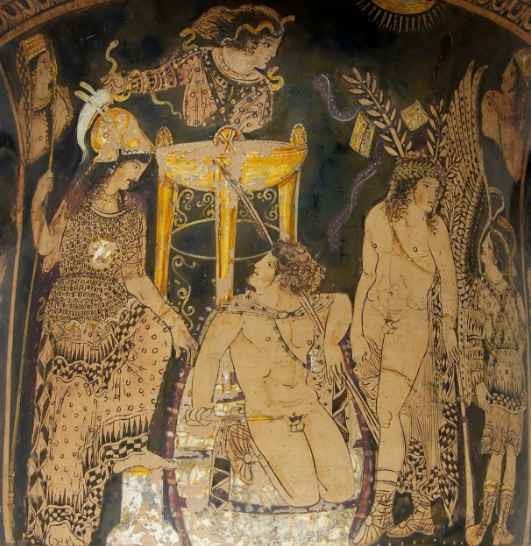
Orestes at Delphi / Trial of Orestes
mythological event: Orestes seeking sanctuary from the Furies( Oresteia by Aeschylus)
narrative context: after killing his mother Clytemnestra to avenge his father Agamemnon, Orestes is hounded by the pitiless Erinyes
he seeks asylum at Apollo’s shrine in Delphi before traveling to Athens
Thematic meaning: sets the stage for the foundation of the Areopagus homicide court in Athens, where Athena’s tie-breaking vote transforms cyclical blood vengeance into institutional civic trials by jury

Birth of Athena from Zeus’ head (Black-figure Kylix)
mythological event: the birth of Athena
cosmic meaning: Zeus swallowed the pregnant Titaness Metis(“cunning intelligence”) to prevent an heir from overthrowing him, incorporating her wisdom permanently into himself
symbolism: Athena is born motherless, fully armed, and adult, emerging from Zeus’ head
this visually asserts her complete alignment with paternal authority, state power, and masculine warfare rather than maternal or marital ties

Athena in Combat Armor
iconographic attributes: high-crested helmet, spearmint round shield, and the aegis fringed with writhing serpents bearing the Gorgon’s head
Athena vs. Ares in Warfare: represents disciplined, tactical warfare, practical intelligence, and self restraint(Metic), directly contrasting with Ares’ blind, chaotic bloodlust and fury
the Gorgoneion acts as an apotropaic emblem meant to terrify enemies and ward off evil

Perseus Slaying Medusa Attended by Athena (Pelike Vase)
mythological event: the beheading of Medusa by Perseus
role of Athena: shows Athena as the patron and protector of heroes who rely on calculated tactics and divine aid rather than mere brute strength
significance: Athena provided Perseus with the bronze mirror-shield to avoid Medusa’s petrifying gaze
afterward, Perseus gifts Medusa’s severed head to Athena to wear on her aegis
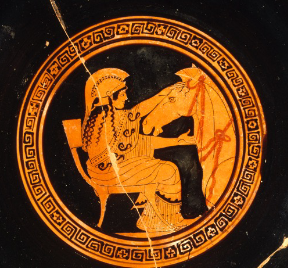
Athena Taming / Bridling a Horse (Kylix Tondo)
Domain: Athena Chalinitis (“Athena of the Bridle”) / Athena Ergane (“The Craftswoman”)
taming nature: while Poseidon created the raw, wild horse, Athena invented the Bridle and bit, enabling humans to tame, steer, and utilize horses for transport and warfare
thematic meaning: embodies practical intelligence (Metis) taming the wild forces of the natural world into useful human culture

The Sacred Olive Tree of the Erechtheion (Acropolis)
mythological monument: the living symbol of the Contest for Athens between Athena and Poseidon
Aetiological meaning: Commemorates the original sacred Olive tree created by Athena on this spot
the olive tree was judged more beneficial than Poseidon’s saltwater spring, securing her patronage over Athens
civic identity: represents peace, prosperity, culinary staple, and lamp oil, forming the economic and spiritual backbone of classical Athens

The Parthenon on the Athenian Acropolis
structure: The Parthenon (Temple of Athena Parthenos, constructed 447-438 BCE under Pericles and Pheidias)
civic and political function: the crowning monument of the Acropolis, built to celebrate Athenian imperial power and the victory of Greece over Persia
mythological program: housed the colossal gold and ivory statue of Athena Parthenos
its east pediment depicted her victory over Poseidon

Fragment of the Birth of Erichthonios
mythological event: the birth of Erichthonios (early founding king of Athens)
narrative: born when Hephaestus’ semen fell on the earth (Gaia) after his failed attempt on the virgin Athena
Gaia bore the child and handed him to Athena to foster
ideology of Autochthony: embodies the Athenian claim to be autochthonous (“sprung from the earth itself’)
ideologically justified male civic self-sufficiency and the exclusion of mortal women from political citizenship in democratic Athens

Amasis Painter LekythosL Women Weaving
subject: women working wool and weaving at the loom (by Amasis Painter, c. 550-530 BCE)
connection to Athena: weaving was under the divine protection of Athena Ergane and symbolized ideal female virtue (arete)
civic ritual: relates to Ergastinai
the chosen Athenian women and maidens who spent months weaving the sacred saffron peplos dedicated to Athena during the Panathenaic festival procession

Ground Plan of the Parthenon (after J. Travlos)
subject: floor plan of the Parthenon
key components:
Peristyle: Octastyle Doric outer colonnade (8 columns on ends, 17 on sides)
Cella / Naos: the primary inner room that housed Pheidias’ 40-foot chryselephantine (gold and ivory) Statue of Athena Parthenos
Continuous Ionic Frieze: wrapped around the exterior of the inner cella wall, depicting the Panathenaic procession ascending to honor the goddess
Pediments(East and West): contained the sculpted sculptural groups depicting the Birth of Athena (East) and the contest with Poseidon (West)

Model Reconstruction of Athena Parthenos
artwork: Athena Parthenos (“Athena the Virgin”), reconstructed after the lost 5th century BCE masterwork sculpted by Pheidias
materials: originally a chryselephantine statue
crafted from massive wooden framework overlaid with sheets of hammered gold (for clothing/armor) and carved ivory (for flesh)
key iconographic details:
Nike (Victory): perched in her right hand, symbolizing Athenian military supremacy and victory over Persians
The shield and serpent: her shield depicts the mythical Amazonomachy on the outside and Gigatomachy on the inside, with the sacred serpent Erichthonios coiled within the hollow
The Aegis and Medusa: worn across her breastplate, displaying the severed Gorgon’s head (Gorgoneion) as a apotropaic ward
Pedestal Relief: the sculpted base beneath her feet depicts the myth of the Creation of Pandora, reflecting the ideological division between dangerous mortal women and the divine, motherless virgin goddess who protects the state
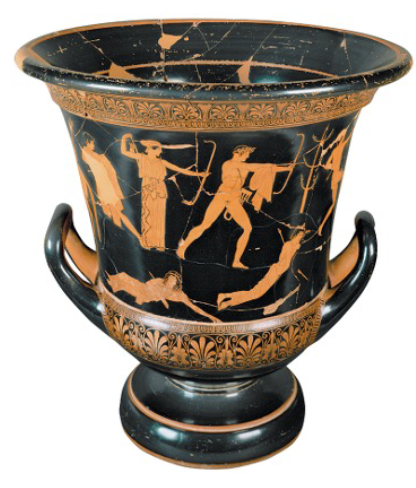
The Niobid Krater (Slaughter of the Niobids)
artifact: The Niobid Krater by the Niobid Painter (c. 460-450 BCE)
mythological event: the massacre of the Niobids
theme of Hubris: queen Niobe boasted that she was superior to the Titaness Leto because she bore twelve to fourteen children while Leto bore only two (Apollo and Artemis)
to avenge their mother’s honor (time), the divine twins pitilessly slaughtered all of Niobe’s sons and daughters with arrows
artistic innovation: notable in art history for placing figures at varying heights on an uneven terrain to suggest depth/space rather than a single flat ground line

The Omphalos Stone at Delphi
object: the Omphalos (Greek for “navel”)
cosmic meaning: marked Delphi as the geographical center/navel of the earth
according to myth, Zeus released two eagles from opposite ends of the cosmos, and their flight paths crossed directly over this point
mythological origin: associated with the swaddled stone that Rhea gave Cronus to swallow in place of infant Zeus, after regurgitating it, Zeus places it at Delphi as a permanent sign of wonder for mortals

The Pythia and King Aegeus (Kylix Tondo)
figures: the Pythia (priestess of Apollo) consulting with the King Aegeus of Athens (by the Kodros Painter)
the Oracular Procedure:
the Pythia sat stop the bronze tripod within the inner sanctuary (adyton)
she entered an inspired trance, holding sacred laurel (Apollo’s plant) and uttering the god’s prophetic responses, which were recorded and interpreted by male priests
mythological context: Aegeus consulted the Pythia about his childlessness, her riddling prophecy led directly to the conception of the hero Theseus

Roman Aureus/Coin with Cybele in Lion Chariot
deity depicted: Magna Mater (Cybele), the Phrygian Great Mother goddess
connection to the lecture:
highlights the Sibylline Books in Roman civic religion
during the crisis of the Second Punic War (205-204 BCE), the Roman Senate consulted the Sibylline prophecies preserved from Cumae
the oracle commanded Rome to import the cult of the foreign mother goddess Cybele from Asia Minor to defeat Hannibal

Roman Sarcophagus with the Slaying of the Niobids
artifact type: Niobid Sarcophagus (Roman funerary relief)
symbolism in Funerary Art: the sudden, unavoidable death of Niobe’s children served as a mythological metaphor for untimely mortal death, grief, and the fragility of human pride before divine will
connection to Jane Harrison: used on the slide to introduce Cambridge Ritualists, who debated whether myths of tragic divine sacrifice and slaughter originated as ritual scripts for real-world civic rites

Latona (Leto) and her Children, Apollo and Artemis (Diana)
mythological meaning: Commemorates Leto’s difficult journey across the Aegean fleeing Hera’s wrath until finding sanctuary on the floating island of Delos
thematic significance: introduces the divine twins as lifelong allies who fiercely defend their mother’s honor and govern maturation, youth, and transition across Greek life

Artemis(Diana) of Versailles (Artemis the Huntress)
Iconographic attributes:
short chiton hitched up at the waist for running uninhibited through forests
quiver, bow, hunting boots/sandals, and an accompanying deer/stag
cult meaning: portrays Artemis as Agrotera (“of the wild”) and guardian of untamed nature, free from domestic seclusion and civic marriage

Apulian Krater with the Sacrifice of Iphigenia
mythological event: the sacrifice of Iphigenia at Aulis
narrative context: when the Greek armada was trapped at Aulis by contrary winds sent by Artemis, the seer Calchas announced that Agamemnon had to sacrifice his eldest virgin daughter to appease the goddess
the deer substitution: at the critical moment of execution, Artemis took pity on Iphigenia, spirited the girl away to the land of the Taurians to serve as her priestess, and substituted a sacred deer on the alter in her place

Handle of the Francois Vase (Potnia Theron)
upper register: winged goddess standing rigidly facing forward, holding a rearing panther/lion in one hand and a stag in the other
lower register: crouching warrior(Ajax) carrying the limp corpse of Achilles from the battlefield
iconographic type: Potnia Theron (“mistress of animals/wild beasts”)
archaic origins: preserves an ancient Near Eastern and Minoan-Mycenaean winged goddess type holding wild beasts in symmetry
meaning for Artemis: demonstrates that before she was conceptualized as a classical huntress with bow and arrows, Artemis was revered as an archaic sovereign power commanding all wild animal life
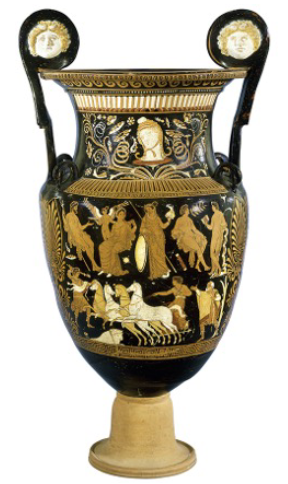
Apulian Volute-Krater with the Death of Hippolytus
mythological event: the fatal chariot wreck of Hippolytus (Euripides’ Hippolytus)
narrative context: Hippolytus’ stepmother Phaedra falsely accused him of assault after he spurned her love
Theseus cursed his son using a prayer to Poseidon who sent a sea-monster/bull out of the surf to bold the horses and drag Hippolytus to his death
thematic meaning: illustrates the tragic destruction caused by Hippolytus completely denying Aphrodite (erotic life) in his pursuit of absolute ascetic purity under Artemis

Statue of a Bear Cub (Brauron/Acropolis Museum)
artifact: Votive sculpture of a Bear Cub dedicated in the cult of Artemis Brauronia
ritual context (Arkteia): in the coastal sanctuary of Brauron in Attica, young Athenian girls (age 5-10) underwent an initiation rite called “playing the bear” (Arkteia)
anthropological meaning: represents the liminal/transitional stage in female childhood
girls shed their wild, untamed nature (metaphorically personified as wild bears) to be ritually “tamed” and prepared for their civilized adult roles as domestic wives and mothers

Remains of the Temple of Artemis Orthia at Sparta
site: the sanctuary and altar of Artemis Orthia at Sparta
ritual of flogging (Diamastigosis): the site of a severe initiation ordeal for adolescent Spartan youths (ages 16-19) completing their state military training (agoge)
cultural meaning: young men attempted to steal cheeses from Artemis’s altar while being violently whipped by older youths, testing endurance, silence, stealth, and pain tolerance
demonstrates the Spartan use of myth and ritual to transform adolescent boys into hardened citizen hoplite soldiers

The Apollo Belvedere
artwork: Roman marble copy of a 4th-century BCE Greek bronze attributed to Leochares, Vatican Museums
classical ideal: considered the supreme classical embodiment of male physical perfection, harmony, youthful vigor, and divine poise
iconographic context: shows Apollo immediately after releasing an arrow from his bow (originally help in his outstretched left hand), embodying the Apollonian ideals of clarity, calm restraint and mastery over distance
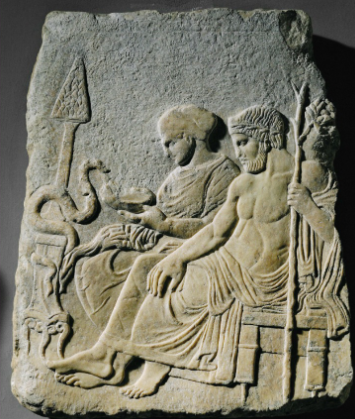
Relief of Asclepius and Hygieia (Epidaurus Relief)
figures: Asclepius (God of medicine, son of Apollo) and his daughter/companion Hygieia (personification of health/cleanliness)
attributes: the staff entwined with a serpent (the rod of Asclepius, enduring symbol of the medical profession) and sacred snakes feeding from a ritual dish
cult practice (incubation): patient visited healing sanctuaries (like Epidaurus) to sleep overnight in their dormitory (abaton)
Asclepius and his sacred serpents were believed to visit them in dreams, diagnosing ailments and delivering divine medical cures

Attic Lekythos with Striding Hermes
subject: Hermes the messenger / traveler
iconographic attributes:
Petasus: broad traveler’s sun hat
Talaria: winged boots/sandals for supernatural speed
Caduceus (kerykeion): the herald’s staff giving him diplomatic immunity across contested boundaries
role in myth: shows Hermes as the active mobile intermediary connecting Olympus, the mortal world, and the underworld

Flying Mercury by Giambologna
artwork: Mercury (Hermes) by Giambologna (1567, Bargello Museum, Florence)
thematic significance: the quintessential Renaissance visualization of Mercury as pure aerial velocity and physical weightlessness
inconography: incorporates all classical attributes, winged petasus/helmet, winged talaria, and the snake-entwined caduceus
illustrating his role as the swift divine messenger of Jupiter/Zeus

Hermes and the Infant Dionysus (Praxiteles)
mythological narrative: after Semele was incinerated by Zeus’s lightning, Zeus rescued the unborn Dionysus and sewed him into his thigh
once born, Zeus entrusted baby Dionysus to Hermes to smuggle past Hera to be raised safely in the wilderness
artistic innovation: famous for the “Pracitelean S-curve” contrapposto and the tender, playful interaction between the protector god and the infant(originally dangling a bunch of grapes in his lost right hand)

Tortoise-Shell Lyre (Chelys)
foundation myth(Homeric Hymn to Hermes): on the morning of his birth, infant Hermes found a mountain tortoise outside his cave, killed it, cleaned the carapace, stretched oxhide across it, and added sheet-gut strings to invent the first lyre
significance: Hermes used this instrument to sing of his divine pedigree, and later gave it to Apollo to reconcile after stealing Apollo’s cattle, cementing his place among the Olympians

Running Hermes with Lyre and Caduceus (Kylix Tondo)
subject: Hermes the cunning trickster / musician
narrative synthesis: depicts Hermes combining two key elements from his birth myth, his musical invention (the tortoise Lyre) and his role as divine traveler/messenger (caduceus, petasus, winged boots)
theoretical significance: embodies the active, rule-breaking trickster whose subversive theft and inventions ultimately establish balance and gain him divine status

Black Figure Vase of Apollo Confronting Hermes in his Cradle
mythological episode: Apollo contronts baby Hermes in Maia’s cave (Homeric Hymn to Hermes)
narrative: after stealing Apollos’s 50 divine cattle, infant Hermes zipped back into his cave, wrapped himself in baby swaddling, and feigned innocent sleep
Social rite of passage: illustrates the archaic Greek practice of cattle-raiding as an initiation contest where young males demonstrated cunning, stealth, and audacity before entering adult citizen status
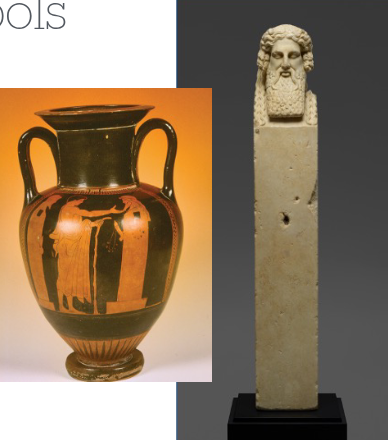
Classical Herm and Red-figure Pelike with Herm
object: the Herm (Herma)
features and function:
a squared stone shaft topped with a bust of Hermes, adorned with the horizontal shoulder bosses and a prominent carved phallus
stood outside of Athenian houses, city gates, crossroads, and gymnasia
Apotropaic and fertile: the phallus served to ward off evil and bad luck while promoting fecundity for livestock (sheep, goats, pigs) and the community
historical crisis (415 BCE): on the eve of the Sicilian Expedition, the mass nocturnal vandalism/castration of Athens’ herms caused immense civic panic over sacrilege and treason

Funerary Lekythos with Hermes Psychopompos and Myrrine
role: Hermes Psychopompos (“conductor of souls”)
context: commemorates Myrrine, the first state priestess of Athena Nike on the Acropolis
the gesture (Dexiosis): The solemn clasping of hands marks the final earthly farewell and illustrates Hermes’ gentle, compassionate duty of guiding the deceased across the ultimate boundary from life into the underworld

Painted Lararium from the Thermopolium of Vetutius Placidus (Pompeii)
structure: a Lararium (shrine to household gods and guardian spirits) in Roman commercial fast-food shop/tavern (Thermopolium)
presence of Mercury: Mercury (Hermes) appears on the far left holding a money bag (marsupium) and Caduceus, invoking his patronage over commerce, financial profit, contracts, and business fortune
serpents below: the sacred serpents represent prosperity, protection, and fertility for the shop premises
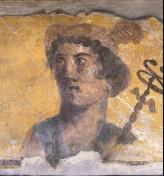
Head of Mercury Fresco (Pompeii)
subject: Mercurius /Hermes in Roman domestic and commercial painting
iconographic identifiers: winged cap and Caduceus staff
socio-economic role: illustrates the Roman conception of Mercury as the patron of negotiation, fluid exchange, market stalls and travelers navigating foreign spaces

Shop sign / Fresco of Mercury from Pompeii
artifact type: painted facade/ workshop sign from Pompeii
cult role of Mercury: illustrates Mercurius as the patron deity of Roman commercial shops, shopkeepers, and street stalls (tabernae)
the in-between category of trade: reflects how commerce and market exchange were viewed as “in-between” or liminal spaces where goods, strangers, and money crossed paths under Mercury’s protection

Attic Red-Figure Kylix with Seated Hestia
identity: Hestia, eternal virgin goddess of the domestic and civic hearth
iconographic meaning:
unline the active, mobile Olympian gods, Hestia is represented as seated, veiledm and still, embodying stationary, secluded, and permanent center of the household (oikos)
she holds a budding branch or flower, symbolizing peaceful prosperity, purity, and familial continuity
structuralist polarity (Jean-Pierre Vernant): formulates the complementary structural opposite to Hermes
Hestia = interiority, fixed orientation, kinship, and protection inside the home
Hermes = exteriority, mobility, trade, strangers, and adventure outside the home

Bacchus and Mount Vesuvius (House of the Centenary Fresco)
subject: Bacchus (Dionysus) and Mount Vesuvius
agricultural context: shows Vesuvius prior to its 79 CE eruption as a single verdant peak covered in vineyards
“liquid seeds” and fertility: illustrates Augustine’s concept of Dionysus presiding over vital moistures, specifically the sap of grapevines, wine, and male reproductive semen
crested snake embodies domestic prosperity, health, and fertility (genius loci)

Infant Dionysus Riding a Lion/Tiger (House of the Faun Mosaic)
subject: infant/child Dionysus riding a feline
Olympian anomaly: demonstrates one of the three primary ways Dionysus differs from other Olympians
his frequent visual portrayal as an infant, child, or toddler rather than an adult in peak athletic form
taming wild nature: shows that even as a young child, Dionysus effortlessly commands, tames, and rides apex predators and wild beasts

Men Dancing at a Symposium (Attic Red-Figure Kylix)
subject: the Komos / Revel at a Greek Symposium
cultural setting: elite all-male gathering held in the private dining room (andron) of a Greek house
function: promoted male conviviality, feasting, drinking, competitive poetry, and recreational sexuality outside civic reproduction marriage
connection to Dionysus: wine acted as the sacred medium that lowered social inhibitions and fostered intellectual/erotic communion among male citizens

Satyr and Maenad Fresco (House of the Baccanti)
figures: Satyr and Maenap
Dionysus Retinue (Thiasus): the constant mythical companions of Dionysus
Satyrs represent untamed male sexual drive, while Maenads represent female ecstatic divine release
thematic meaning: illustrates the transformative power of wine, stripping away rigid civil decorum and awakening raw erotic instinct, passion, and carefree abandon

Double-Sided Marble Oscillum (House of the Black Wall)
top: a nude, dancing Satyr in wild movement
bottom: a draped, ecstatic Maenad carrying a Thyrsus beside an altar
artifact type: Oscillum (carved marble disc designed to be hung between columns)
domestic function: suspended from lintels in Roman peristyle garden courtyards
as breezes moves them, they rotated (“oscillated”) to catch the sunlight
Apotropaic and Bacchic: warded off the evil eye while converting private residential gardens into sacred, theatrical stage sets dedicated to Dionysus/Bacchus
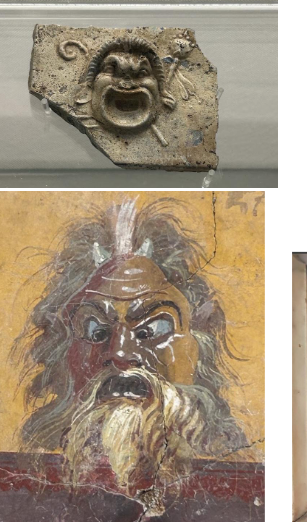
Terracotta and Fresco Theatrical Masks
top: fragment of a carved architectural terracotta relief featuring an exaggerated comic mask with a wide gaping mouth
bottom: detailed wall painting of a bearded tragic/satyric mask with pointed white animal horns, disheveled hair, and wide, staring eyes above an open mouth
subject: theatrical masks (Prosopa)
connection to Dionysus: Dionysus was the supreme patron deity of drama, disguise, and illusion
theatrical function:
enabled all-male Greek and Roman actors to seamlessly play multiple personas, including women, gods, slaves, and foreigners
the wide, open mouth acted as a visual convention and acoustic megaphone, projecting emotional grief (tragedy) or ribald buffoonery (comedy) to distant rows in open-air stone theaters
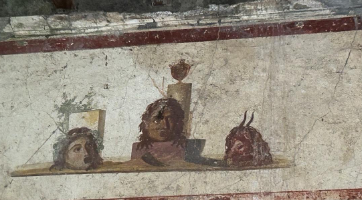
Trompe-l’oeil Shelf with Three Theatrical Masks (Pompeian Fresco)
style: Roman Trompe-l’oeil (“decieve the eye”) illusionistic fresco
genres represented: the three core branches of Greek and Roman dramatic performance under Dionysus, tragedy, comedy, and the Satyr play
significance in elite villas: Roman aristocrats displayed theatre masks in dining and reception rooms to signal cultural sophistication (paideia) and familiarity with high Greek literature and philosophy
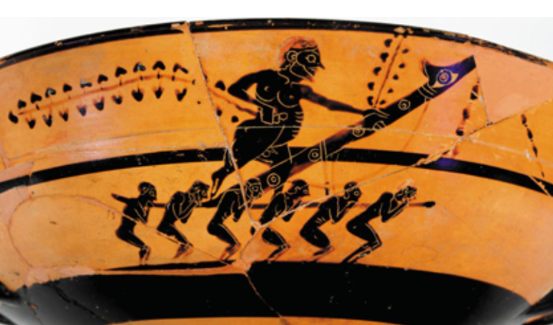
The Phallophoria (Attic Black-Figure Kylix)
ritual: the Phallophoria (“carrying of the phallus”)
festival context: a central procession of the Country Dionysia celebrated across the rural villages of Attica in December
ritual meaning: carried giant phallic effigies through fields to ward off crop failure and ensure agrarian, viticultural and animal fecundity for the coming year via sympathetic magic

Theatre of Dionysus Eleuthereus (Athens)
site: theater of Dionysus Eleuthereus on the south slope of the Athenian Acropolis
historical milestone: the birthplace of western drama
here, the monumental masterpieces of Aeschylus, Sophocles, Euripides, and Aristophanes were premiered during the annual City Dionysia
civic function: held an entire assembly of citizen men, integrating political debate, state ideology, religious sacrifice, and tragic catharsis

Actors preparing for the Satyr Play (House of the Tragic Poet Mosaic)
artwork: the Choregos Mosaic / Actors rehearsing for a satyr play
subject matter: depicts the backstage preparation (proskenion) for a satyr play
the comic, burlesque performance staged after three tragedies to provide comic relief
all male cast: highlights how male actors transformed into mythical creatures through masks, false goat hides, and costumes, blurring the boundary between human reality and Dionysian myth

Villa of the Mysteries Fresco (Initiation Cycle)
site and context: villa of the Mysteries, Pompeii (private subterranean/initiatory chamber)
stages of Bacchic initiation:
reading and instruction: reading sacred scroll and performing preliminary offerings
unveiling the phallus: the kneeling initiate reaches toward a winnowing basket (liknon) containing an upright, veiled ritual phallus, symbolizing fertility and rebirth
ritual flagellation and terror: a winged daimon brandishes a whip over the cowering initiate, matching Plutarch’s account that initiation begins with shuddering, trembling, and alarm
bridal adornment and rebirth: the initiated woman sits calmly as a bride of Dionysus while having her hair dressed, having passed through psychological terror into divine enlightenment and belonging

Attic Red-Figure Bell Krater with Youthful Dionysus
iconographic transition (post-430 BCE): represents the major stylistic shift in Greek art where Dionysus stopped being depicted exclusively as a mature, bearded patriarch and began appearing as youthful, soft, and somewhat androgynous
key attributes: the kantharos (two-handed drinking goblet), ivy wreath, and accompaniment by ecstatic dancers and flute musicians
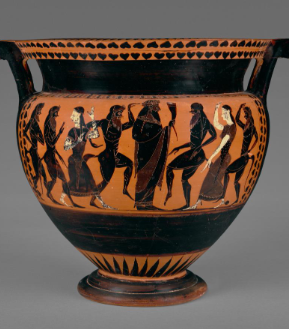
Attic Black-Figure Column-Krater with Bearded Dionysus
archaic iconography: demonstrates the traditional archaic depiction of Dionysus prior to the late 5th century BCE
portrayed as an elderly, bearded and fully robed kingly god
the Bacchic Thiasus: framed by wild, bestial satyrs (horse tails and ears) and dancing Maenads, visualizing unrestrained bodily appetite and ritual revelry (Komos)

Dionysus Discovering Ariadne on Naxos (Pompeian Fresco)
mythological episode: Dionysus finding Ariadne on the island of Naxos
narrative context: after Ariadne helped Theseus escape the Cretan Labyrinth with a thread Theseus abandoned her while she slept on Naxos
Dionysus arrived with his Retinue, woke her, made her his immortal divine consort, and placed her wedding crown among the stars (Corona Borealis)

Standing Youthful Dionysus Fresco
subject: youthful Roman Bacchus / Dionysus
iconographic identifiers: crown of grape/ivy leaves, slender contrapposto stance, and the Thyrsus (fennel stalk topped with a pinecone or ivy)
queer theory connection: exemplifies Dionysus’ soft, androgynous appearance that breaks rigid masculine ideals, echoing Pentheus’ description in Euripides’ Bachae of his pale skin, flowing curls, and alluring charm

Fragment of Maenad with Infant Dionysus
subject: maenad / nymph nursing the infant Dionysus
mythological background: following his rescue from Zeus’ thigh, Dionysus was hidden away from Hera’s wrath in the care of the mountain nymphs of Nysa and rustic nursemaids
theme: underscores his unusual status as a deity frequently venerated in connection with childhood, maternal nurturing, and nature

Dionysus Leaning on a Satyr (Fresco and marble statue)
left: Pompeian Fresco of a nude, wreathed Dionysis holding a thyrsus and pouring wine from an Oinochoe for a small satyr/panther
right: Roman marble statue group of a languid, nude Dionysus resting his right arm over his head, leaning affectionately upon a muscular shorter satyr holding a drinking cup
artistic group: intoxicated Dionysus supported by a Satyr
the rest gesture: the arm arched over the head is a classical visual code for divinely inspired exhaustion, rest, or drunken reverie (lychnos)
symbiosis: shows the god of wine physically leaning upon his rustic companion, blurring the divine hierarchy between an Olympian gods and a half-bestial woodland spirit
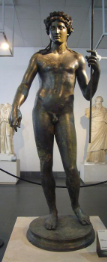
The Tiber Apollo / Tiber Dionysus Bronze
artwork: Tiber Dionysus (recovered from the Tiber River, Rome, National Roman Museum)
style: Roman bronze created in the classicizing Greek style of the 5th century BCE
dualities of Apollo and Dionysus: demonstrates how closely representations of a youthful Dionysus can resemble Apollo
both share long hair, physical youth, wreaths, and athletic poise, yet oversee contrasting emotional and psychological domains

Silenus and Satyr with Child Dionysus (marble sculptures)
left: a carved table support / trapezophoros showing a bearded, elder Silenus swaddling and holding an infant in his arms
right: a dynamic marble group of a standing satyr carrying the child Dionysus on his shoulders, while the child reaches down offering a bunch of grapes
figures: Silenus (Papposilenus) and an adolescent satyr acting as foster father and guardian to child Dionysus
mythological role of Silenus: the wise, drunken tutor who raised Dionysus in the wilderness
domestic function in Pompeii: used as luxurious decorative furniture supports (trapezophoroi) and garden statuary in elite peristyles, celebrating familial joy, wine culture, and pastoral freedom

Roman Banqueting Scene (House of the Chaste Lovers Fresco)
room type: Triclinium (formal dining room featuring three couches arranged in a U-shape)
theatricalization of Roman dining:
diners reclined on couches (lecti) while drinking mixed wine, enjoying poetry, and watching dramatic performances
rooms were frescoed with Dionysian themes (satyrs, Maenads, theater masks) to turn private domestic meals into immersive, festive theatrical spectacles

Garden Room Fresco (House of the Golden Bracelet)
room type: Oecus (a grand reception/Banqueting hall open to the garden)
style and function: second/third-style Roman garden room Fresco that dissolved solid interior walls into a perpetual, paradisiacal open-air space
theatricalization of living spaces: embeds painted theatre masks, oscilla, and pinakes directly into the greenery, transforming a private dining area into a permanent pastoral stage set under the patronage of Dionysus/Bacchus

The Roman theatre of Merida (Spain)
monument: Roman theatre of Agusta Emerity (Merido, Spain)
architectural elements:
cavea: semicircular stone seating rows for spectators
scaenae frons: the elaborate, permanent architectural rear wall of the stage composed of columns, pediments, and niches housing statues of gods and emperors
connection to lecture: demonstrates the monumental civic scale of theatre architecture across the Roman Empire, which wealthy Roman homeowners later imitated and miniaturized inside private domestic peristyle gardens
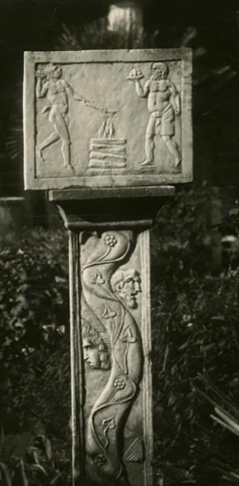
Marble Pinax on Pilaster (House of the Golden Cupids)
artifact: marble Pinax on a pillar / pilaster
relief scene: depicts a youthful nude satyr and an older bearded Silenus pouring a libation or making a sacrifice over a blazing stone altar
function in domestic art: permanent ornamental garden fixture places along pathways in elite Pompeian peristyles, reinforcing the sacred pastoral and sacrificial world of Dionysian cult within private homes

Marble mask of Maenad (House of the Golden Cupids)
subject: marble theatrical / Bacchic mask of a maenad
iconography: ivy and grape clusters women into the hair mark her a a female devotee of Dionysus
the wide, open mouth mimics an actors speaking mask
domestic use: hung from cords between peristyle garden columns as an oscillum, served an apotropaic purpose (averting evil) while visually celebrating theatre and Bacchic revelry

Marble Pinax depicting theatrical masks and performers
artifact type: Pinax (votive or decorative relief plaque)
subject: theatrical masks of drama and comedy
architectural setting: embedded directly into the masonry walls of domestic courtyards to display the patrons cultural literacy, wealth, and devotion to the Dionysian arts

Marble Oscillum depicting a centaur
mythological subject: a captured or restrained centaur
centaurs represent the wild, untamed hybrid creatures of the forest whose base instincts are easily unhinged by wine (as in the Centauromachy)
context: suspended between columns in the open air, swinging in the wind to bring good fortune, ward off negative spirits, and enliven peristyle spaces