Learn: Cellular Respiration and Fermentation: Key Concepts and Pathways
 Call Kai
 Learn
Learn Practice Test
 Spaced Repetition
 Match
Match Flashcards
 Knowt Play
1/50

There's no tags or description
Looks like no tags are added yet.
Name | Mastery | Learn | Test | Matching | Spaced | Call with Kai | Chat |
|---|
No analytics yet
Send a link to your students to track their progress
51 Terms
What is the primary function of cellular respiration?
To break down organic molecules to generate ATP.
Where does cellular respiration occur in the cell?
In the mitochondria.
What is the overall equation for cellular respiration using glucose?
C6H12O6 + 6 O2 → 6 CO2 + 6 H2O + Energy (ATP + heat).

What type of pathways release stored energy by breaking down complex molecules?
Catabolic pathways.
What is fermentation?
A partial degradation of sugars that occurs without oxygen.
What is aerobic respiration?
A process that consumes organic molecules and oxygen to yield ATP.

What is anaerobic respiration?
A process similar to aerobic respiration but consumes compounds other than oxygen.
What are redox reactions?
Chemical reactions that transfer electrons between reactants.

What is oxidation in the context of redox reactions?
The loss of electrons from a substance.
What is reduction in the context of redox reactions?
The addition of electrons to a substance.
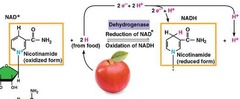
What is the role of NAD+ in cellular respiration?
NAD+ acts as an electron carrier and oxidizing agent.
What happens during glycolysis?
Glucose is broken down into two molecules of pyruvate.
Where does glycolysis take place?
In the cytoplasm.
What is the citric acid cycle's role in cellular respiration?
It completes the breakdown of glucose to CO2.
What is oxidative phosphorylation?
The process during which the electron transport chain and chemiosmosis synthesize most of the cell's ATP.

What is the final electron acceptor in the electron transport chain?
Oxygen (O2).
What analogy is used to describe cellular respiration?
Glucose is like a larger-denomination bill, and ATP is like smaller-denomination bills.
What is substrate-level phosphorylation?
The process of forming ATP by directly transferring a phosphate group to ADP.
What is the significance of redox reactions in cellular respiration?
They release energy stored in organic molecules, which is used to synthesize ATP.
How does the electron transport chain contribute to ATP synthesis?
It breaks the fall of electrons to O2 into several energy-releasing steps.
What is the role of electron carriers like NADH and FADH2?
They transport electrons to the electron transport chain.
What are the three stages of cellular respiration?
Glycolysis, pyruvate oxidation and citric acid cycle, and oxidative phosphorylation.

What happens to electrons during cellular respiration?
They are transferred from organic fuel molecules to oxygen, releasing energy.
What is the energy yield of glycolysis?
Some ATP is formed, but no CO2 is released.
What is the main purpose of the citric acid cycle?
To oxidize acetyl CoA to CO2 and generate electron carriers.
What is the relationship between glycolysis and the citric acid cycle?
Glycolysis produces pyruvate, which is then oxidized in the citric acid cycle.
How does cellular respiration relate to energy currency?
It converts high-energy glucose into the more usable form of ATP.
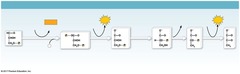
What is glycolysis?
A metabolic process that harvests chemical energy by oxidizing glucose to pyruvate.
Does glycolysis release CO2?
No, glycolysis does not release any CO2.
What are the two main phases of glycolysis?
The Energy Investment Phase and the Energy Payoff Phase.
What is the net gain of ATP from glycolysis?
2 ATP molecules are produced.
What is produced alongside ATP during glycolysis?
2 NADH and 2 pyruvate molecules.
What must happen to pyruvate before entering the citric acid cycle?
Pyruvate must be converted to acetyl coenzyme A (acetyl CoA).

What is the role of acetyl CoA in cellular respiration?
It links glycolysis to the citric acid cycle.
What does the citric acid cycle generate per turn?
ATP, NADH, and FADH2.

How many steps are in the citric acid cycle?
There are eight steps, each catalyzed by a specific enzyme.
What is the first step of the citric acid cycle?
The acetyl group of acetyl CoA combines with oxaloacetate to form citrate.

What happens to citrate in the citric acid cycle?
Citrate is decomposed back to oxaloacetate, completing the cycle.
What do NADH and FADH2 do after the citric acid cycle?
They carry electrons to the electron transport chain.
What is chemiosmosis?
The movement of H+ ions across a membrane, driving ATP synthesis.
What is the proton-motive force?
The H+ gradient that couples the electron transport chain to ATP synthesis.
What is the main purpose of feedback inhibition in cellular respiration?
To prevent wasteful production of ATP.
What happens to respiration if ATP concentration drops?
Respiration speeds up.
What happens to respiration if there is plenty of ATP?
Respiration slows down.
What is the final electron acceptor in anaerobic respiration?
An electron transport chain with a final electron acceptor other than oxygen.
What is the overall energy flow during cellular respiration?
Glucose → NADH → electron transport chain → proton-motive force → ATP.
How much energy from glucose is transferred to ATP?
About 34% of the energy in a glucose molecule is transferred to ATP.
What is the significance of NADH and FADH2 in cellular respiration?
They account for most of the energy extracted from food.
What is the role of the electron transport chain?
To facilitate the transfer of electrons and pump H+ ions to create a gradient.
What is the function of ATP synthase?
To synthesize ATP as H+ ions move down their concentration gradient.
What is the relationship between glycolysis and other metabolic pathways?
Glycolysis connects to many other metabolic pathways by funneling electrons from various organic molecules.