Austin Hunker Chemistry Vocab
 Call Kai
 Learn
 Practice Test
 Spaced Repetition
 Match
 Flashcards
 Knowt Play
1/30

Earn XP
Description and Tags
31 Terms
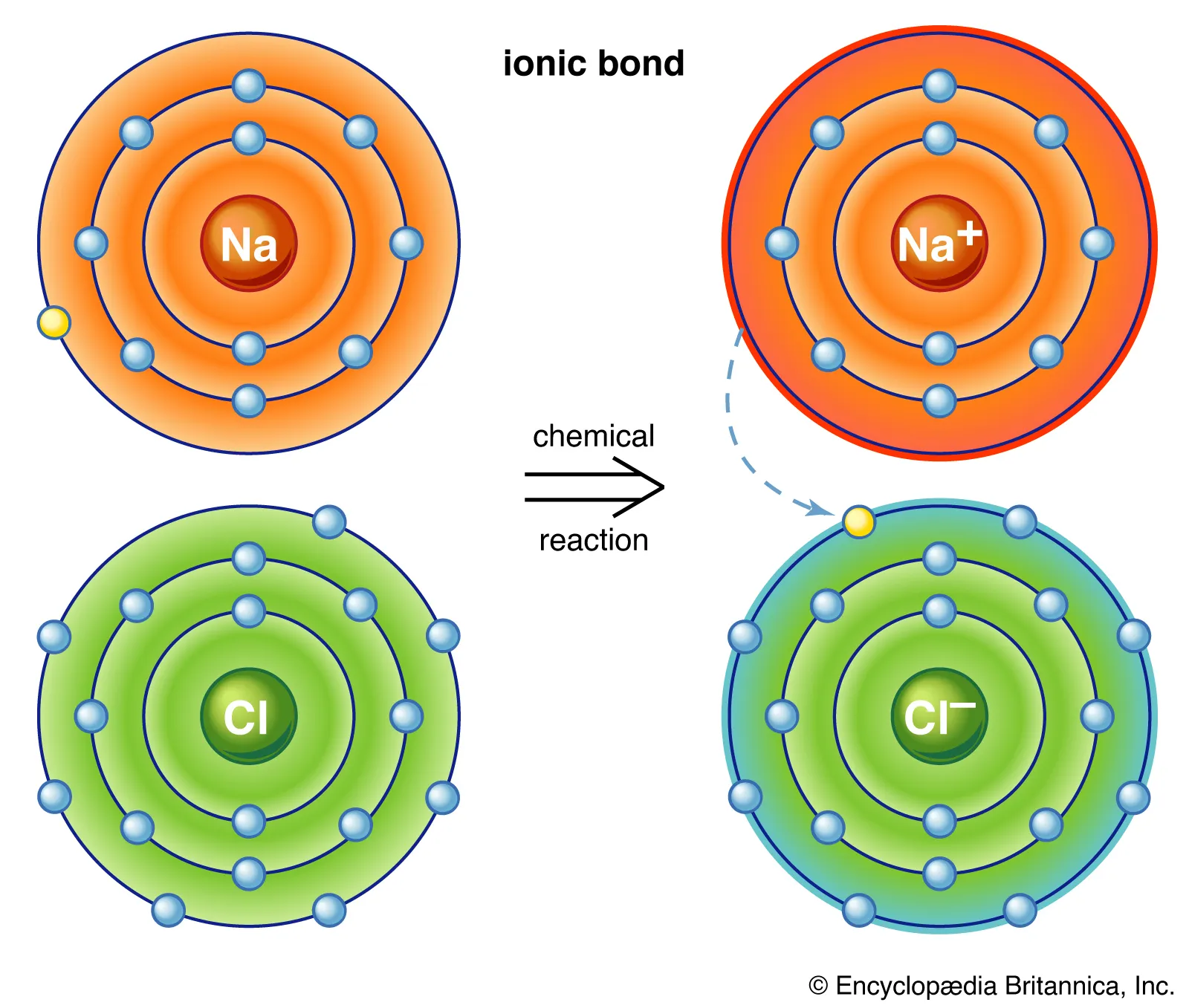
Ionic Bonding
Electrostatic attraction between a metal (cation) and a nonmetal (anion) following electron transfer.

Covalent Bonding
A chemical bond formed when two nonmetal atoms share valence electrons.

The Octet Rule
Atoms lose, gain, or share electrons to achieve a stable outer shell of 8 valence electrons.

Electron Dot Structures (Lewis Structures)
Diagrams that use dots around an element's symbol to represent its valence electrons.

Formula Unit
The lowest whole-number ratio of ions represented in an ionic compound (NaCl)

Properties of Ionic Compounds
Rigid crystalline lattices with high melting points that are brittle and conduct electricity when dissolved or molten.
Empirical Formulas
A chemical formula showing the simplest whole-number ratio of elements in a compound.

Properties of Molecular Compounds
Compounds composed of neutral molecules that generally have lower melting points and do not conduct electricity.

Structural Formula
A graphic representation that uses lines and symbols to show how atoms are arranged and chemically bonded to one another.

Single Bond
A covalent bond where 1 pair (2 electrons) is shared between two atoms.

Double Bond
A covalent bond where 2 pairs (4 electrons) are shared between two atoms.

Triple Bond
A covalent bond where 3 pairs (6 electrons) are shared between two atoms.

Valence Shell Electron Pair Theory (VSEPR)
A model stating that valence electron pairs adjust their geometry around a central atom to stay as far apart as possible to minimize repulsion.

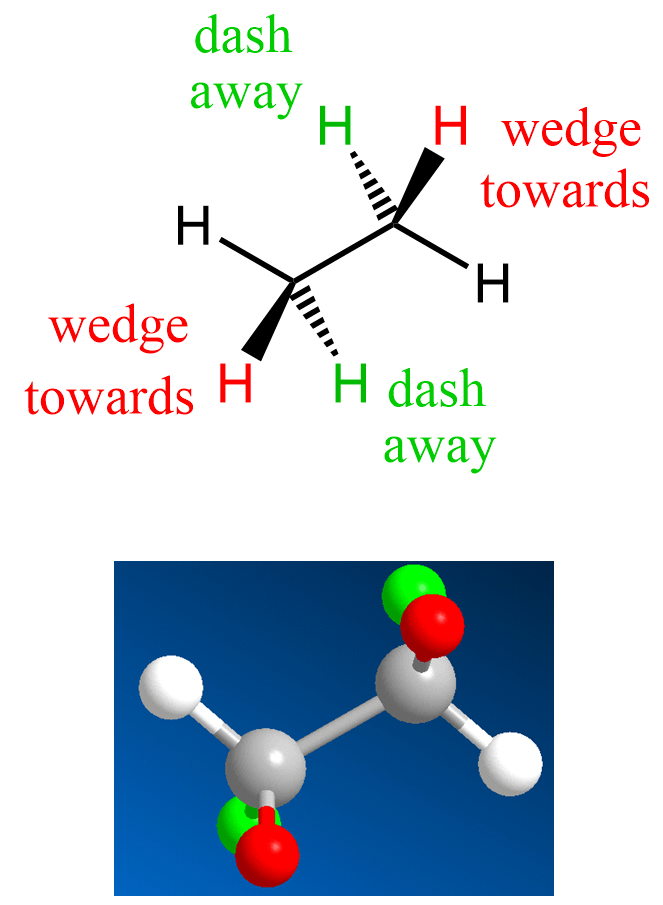
Dash-Wedge Notation
A method to illustrate 3D structure on paper where straight lines represent bonds in the plane, wedges point forward, and dashes point backward.
Linear Shape
A molecular geometry featuring 2 bonded atoms, 0 lone pairs, and a bond angle.

Trigonal Planar Shape
A flat molecular geometry featuring 3 bonded atoms, 0 lone pairs, and a bond angle.

Bent Shape
A molecular geometry featuring 2 bonded atoms, 1 or 2 lone pairs, and a bond angle of 120 or 104.5 degrees.

Pyramid Shape
A trigonal pyramidal molecular geometry featuring 3 bonded atoms, 1 lone pair, and a bond angle of around 107 degrees.

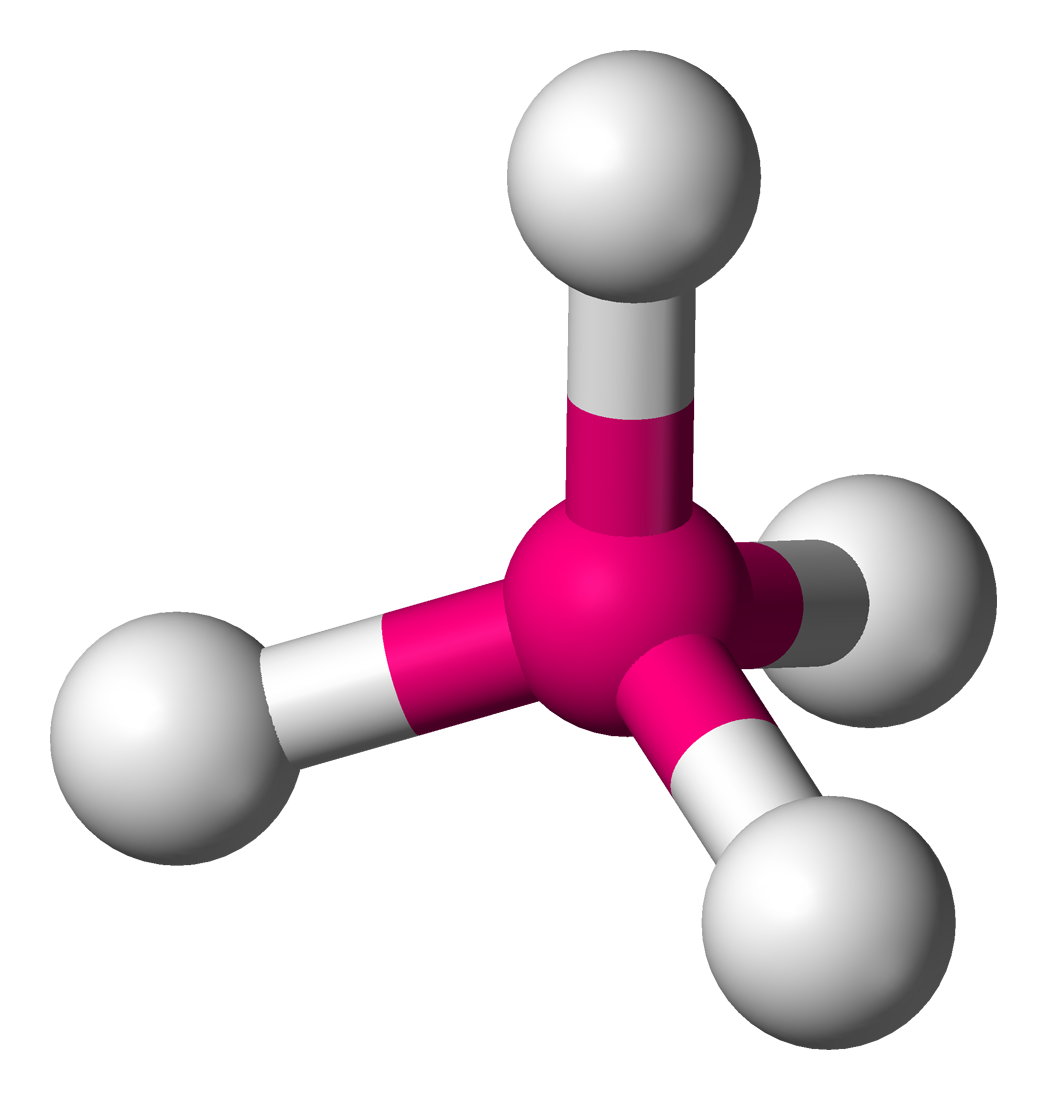
Tetrahedral Shape
A molecular geometry featuring 4 bonded atoms, 0 lone pairs, and an 109 degree bond angle.
Trigonal Bipyramidal
A molecular geometry featuring 5 bonded atoms, 0 lone pairs, and bond angles of 90 and 120 degrees.

Polar Bond
A covalent bond in which electrons are shared unequally due to differences in electronegativity, creating partial charges.

Nonpolar Bond
A covalent bond where electrons are shared symmetrically and equally between atoms with similar electronegativities.

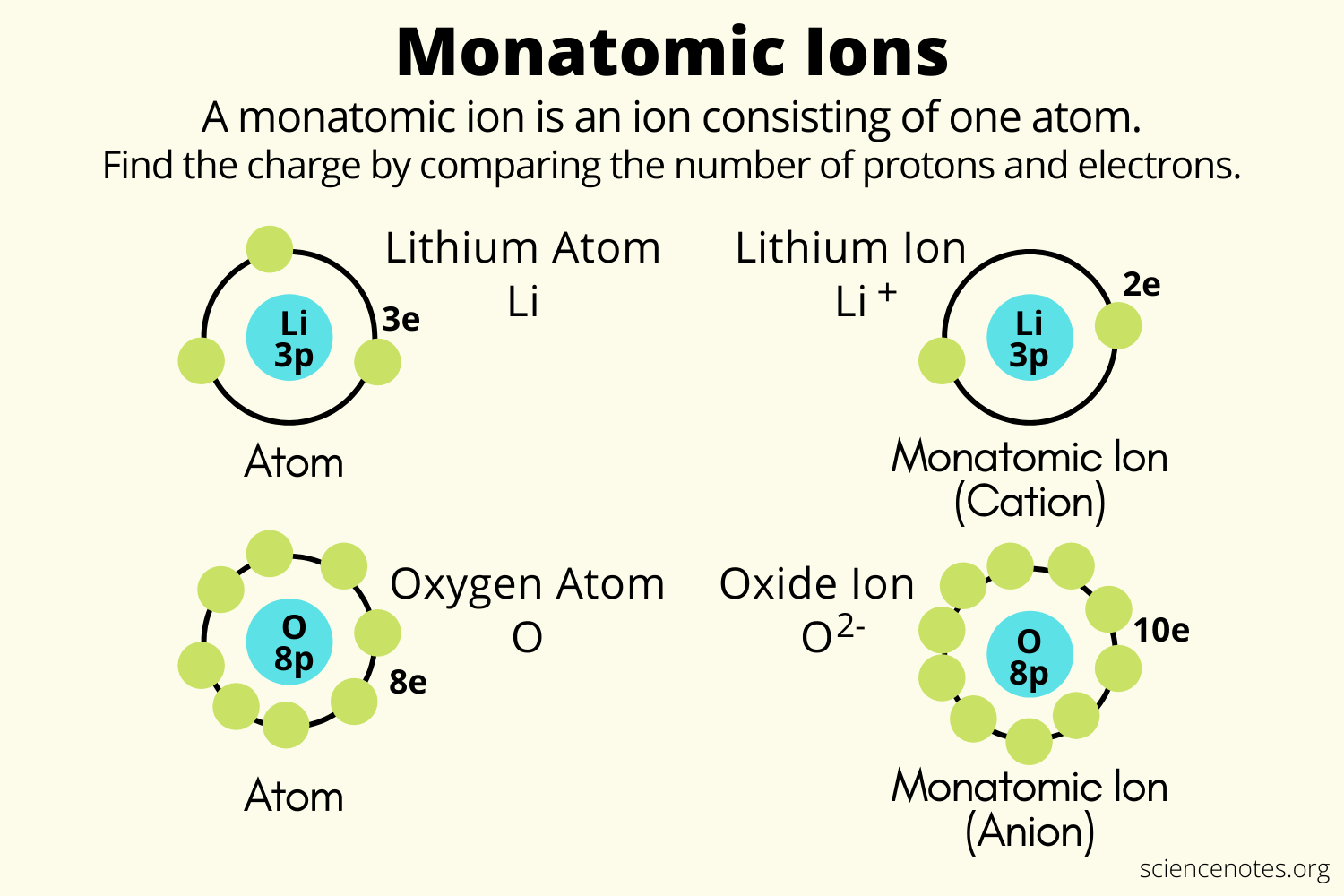
Monatomic
An ion consisting of a single atom with a positive or negative charge.
Polyatomic
A covalently bonded group of atoms that behaves as a single unit with a net charge.

Chemical Formula to Name for Ionic Compounds
Name the cation (metal) first, followed by the anion (nonmetal) changed to end in the suffix "ide".

Roman Numeral
A numeral placed in parentheses after a transition metal in a chemical name to specify its positive ionic charge.

Formula Writing for Ionic Compounds
Balance the positive and negative charges to make the net charge zero; the absolute values of the charges are crossed over to become the subscripts of the opposite ion.

Naming Acids
Binary acids (no oxygen) use the prefix hydro- and suffix “ic” acid. Oxyacids change an “ate” polyatomic ion to ¨ic¨ acid and an ite” polyatomic ion to -ous acid.

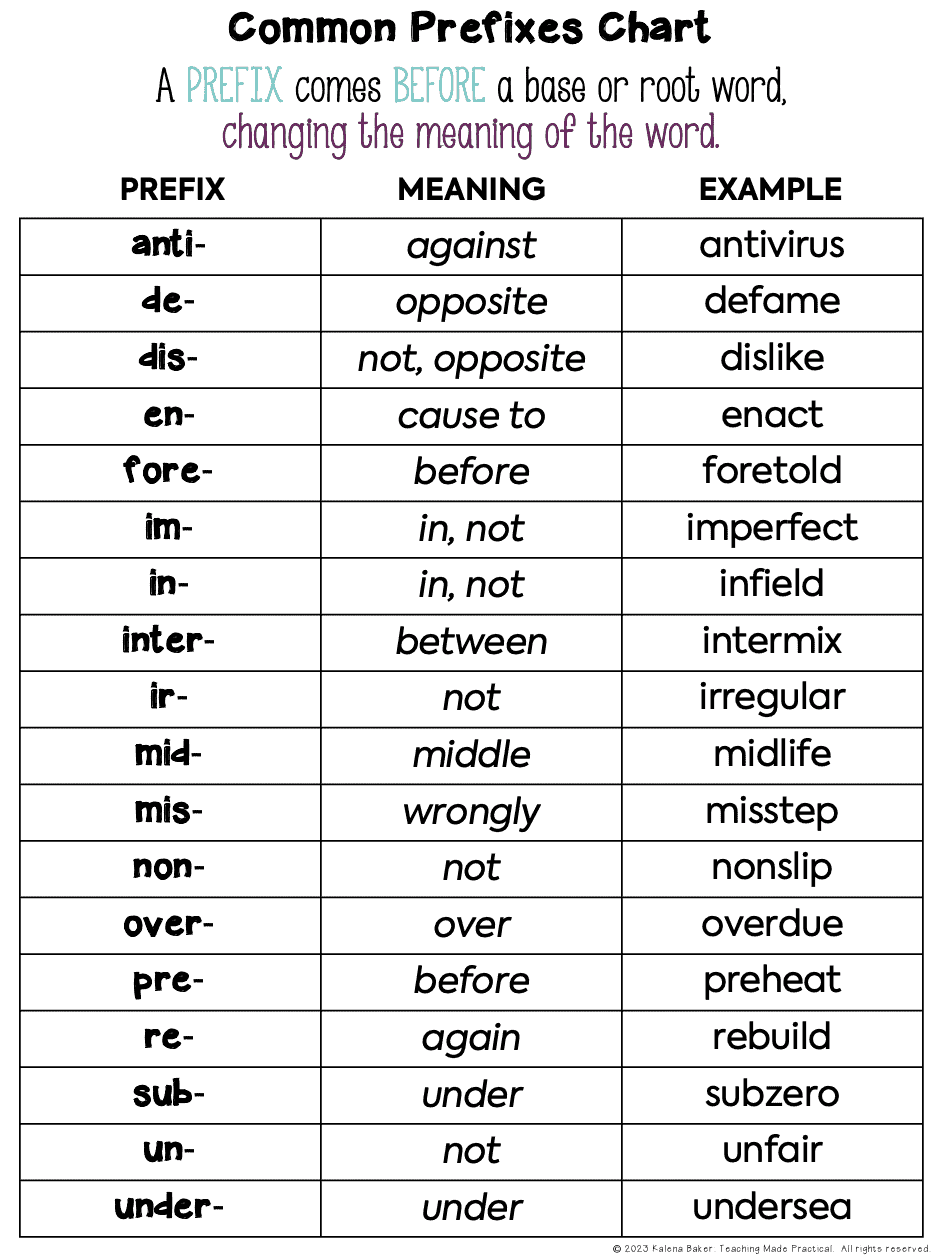
Prefixes
Greek multipliers used in covalent nomenclature to indicate the number of atoms present: mono- (1), di- (2), tri- (3), tetra- (4), penta- (5), hexa- (6), etc.
Naming Covalent Bonds
Use prefixes for both nonmetal elements (omitting mono- on the first element) and end the second element name with the suffix "-ide".

Writing Formulas for Covalent Bonds
Directly translate the numerical prefixes in the chemical name into the subscripts for each element's symbol.
