Chapter 9: Geological Time
 Call Kai
 Learn
 Practice Test
 Spaced Repetition
 Match
 Flashcards
 Knowt Play
1/93

There's no tags or description
Looks like no tags are added yet.
94 Terms
Relative dating
determines the order of geological events without a date
Absolute dating
determines actual ages of rocks and events; uses dates
What does absolute dating use to determine the ages of rocks?
isotopes, radiometric dating
stratification
layering of rock
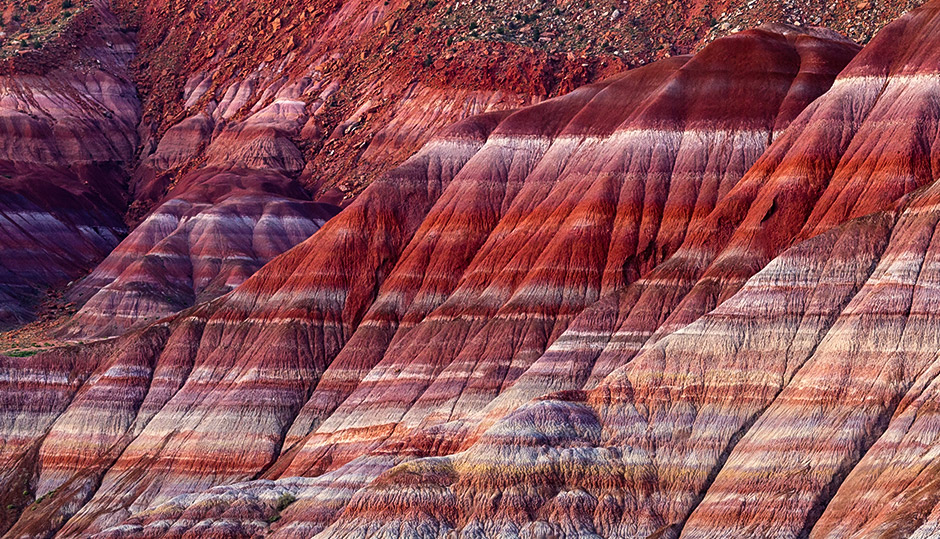
The layers of sedimentary rocks reflect the
deposition of original sediment

Two ways that layers end:
thinning at margin of a basin; grading into different sediment

What does lateral continuity tell us?
the layers were once continuous across a canyon

Correlation
matching a rock layer in one place with its counterpart in a different place
Are rock units/layers always continuous? What happens to them?
no; they get buried or eroded after separation

What can be constructed from geological correlation?
geologic maps
What can correlation determine?
how far rock types extend geographically

Fossils
remains of ancient life in rocks

Where are fossils found?
sediment, sedimentary rock
What is the study of fossils called?
paleontology
Why are fossils relevant in geology?
help interpret the past, help correlate rocks
What conditions favor preservation?
low oxygen, rapid burial, hard parts (teeth, skeleton)
Anoxic
little to no oxygen
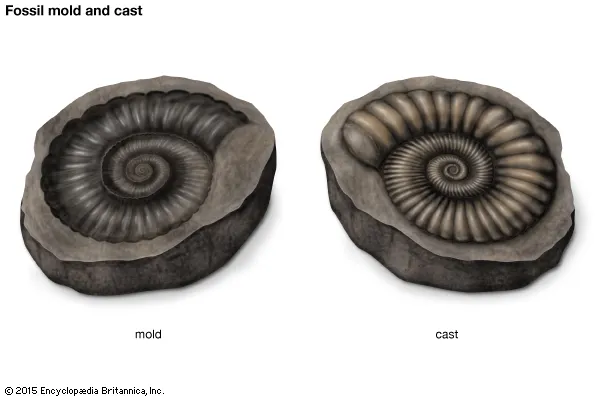
Depression or cavity in a rock that takes on the shape of the original fossil
mold
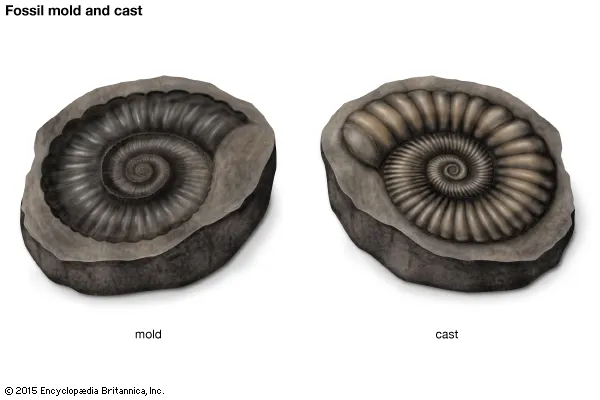
Void space in rock that is filled with secondary material
cast
Permineralization
mineral water penetrates wood and turns it to stone

Gas and liquid components squeezed by pressure during burial, leaving a film in the shape of the organism
carbonization
Markings and objects left behind by ancient life
trace fossils

Examples of trace fossils
burrows, tracks, coprolites
Gastrolith
stomach stones

Principle of Fossil Succession
fossils succeed each other in definite order
True/False: Any time-period can be recognized by its fossil content
true
In fossil succession, where can you find the oldest fossils? Where can you find the youngest?
oldest at the bottom, youngest at the top

Fossil range
time interval a species lived
True/False: fossils can be used to date the rocks that contain them
true
How long may a fossil range span?
millions of years
When does fossil range begin? When does it end?
emergence of a new species; extinction
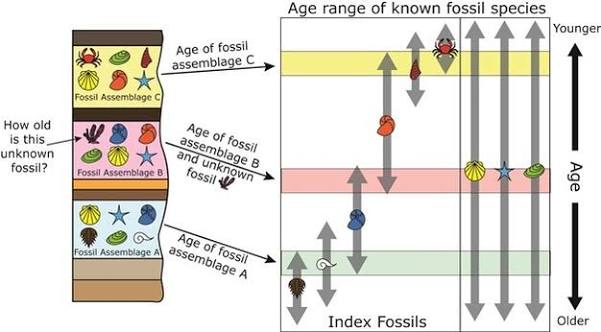
What can overlapping fossil ranges do?
constrain age of rock layer containing fossil

Stratigraphy
study of strata; organization of rock record
Lithostratigraphy
organize rocks from their physical properties
Biostratigraphy
fossils determine relative age of rocks
Chronostratigraphy
age of strata in relation to time
Basic unit of stratigraphy
formation
How are rock units in a formation grouped?
lithology (rock type), color, structure
Unconformities
gaps in earth’s record (missing strata in rock sequence)
Lithostratigraphy is distinguished by:
mineral composition, texture, color

Younger rock sits on top of older rocks that have been tilted, folded or eroded
angular unconformity
Geological contact where younger sedimentary rock layers lie directly on top of older, eroded igneous or metamorphic rock (different rock family)
nonconformity


An erosional surface or a gap in the rock record that separates two parallel sets of sedimentary (or volcanic) rock layers
disconformity
Law of superposition
top rock is younger, bottom is older

Principle of original horizontality
rock is first laid horizontally, folding occurs after
How is sediment originally deposited?
horizontally

Principle of lateral continuity
Rock layers are continuous until thinning at basin edge

Principle of cross-cutting relationships: if a fault cuts rock or magma intrudes rocks
the fault/magma are younger than the rocks they cut

Inclusions
rock trapped inside another rock

In a rock inclusion, the one inside is
older
What does absolute dating do to rocks and geological events?
assign actual dates
Does the construction of the geologic time scale use relative or absolute dating?
absolute
Is the nucleus stable or unstable in most atoms?
stable
This type of element has an unstable nucleus
radioactive element
Unstable element decays to a more _______ form and becomes a _________
stable; new element
The original unstable, radioactive isotope
parent
The new, more stable isotope formed from radioactive decay of parent
daughter
The rate the parent isotope decays at to become a stable daughter isotope is called
half life
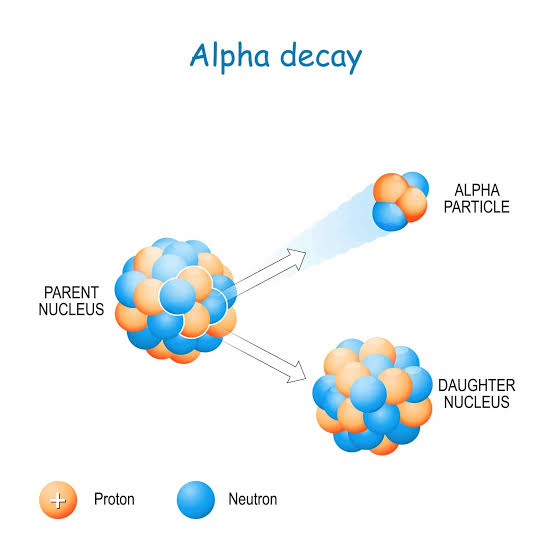
Alpha emission results in
loss of 2 protons and 2 neutrons
During alpha emission, what happens to the atomic mass? What happens to the atomic number?
decreases by 4, decreases by 2
Beta emission changes a:
neutron into a proton
In beta emissions, what happens to the atomic number? What about the atomic mass?
atomic number increases by 1, mass stays the same
Electron capture changes a:
proton into a neutron
In electron capture, what happens to the atomic number? What about the atomic mass?
atomic number decreases by 1, no change in mass

True/false:
When uranium- 238 decays, a series of intermediate daughter isotopes form and undergo further decay until ultimately stable lead-206 results
true
The time required for half the number of radioactive nuclei in a sample to decay to a new element
half life
How do you find the parent/daughter percentages after X half-lives?
keep cutting the parent value in half
What fraction of the parent isotope remains after 2 half lives? How much of the daughter isotope do you have now?
1/4 ; 3/4
What fraction of the parent isotope remains after 3 half lives?
1/8
Parent isotope + daughter isotope aways =
100 percent
What needs to be known in order to do radiometric dating (the age of a sample)?
half life; parent-daughter ratio
What is the age of a sample if the ratio is 25% parent and 75% daughter. The half-life is 5 million years
10 million
What can be used to measure parent-daughter isotope ratios?
mass spectrometer
When temperatures become high enough for daughter isotopes to escape the minerals where they accumulate…
the isotopic clock resets
What is produced in the atmosphere via bombardment of nitrogen atoms with neutrons?
carbon 14
True'/False: Living matter absorbs carbon dioxide containing carbon-14
true
After death, what happens to carbon 14?
decays but is not replaced
Why is the Carbon-12/Carbon-14 ratio in living matter constant?
decaying C14 is continuously replaced with new C14
If a rock has experienced more than one episode of metamorphism, then only
the most recent event can be dated
Igneous rocks can provide an approximate crystallization age using
whole rock analysis
Why don’t detrital (clastic) sedimentary rocks give meaningful ages?
Minerals only give the same age as parent rock
The mixture of different ages in a basin is _________ in dating ages
meaningless
Isotopic dating of a sedimentary rock is possible if it contains __________ that formed during burial/diagenesis in the sedimentary basin
authigenic minerals
How do you date sedimentary rock packages (since you can't radiometrically date them directly)?
bracket them using surrounding features (rocks above, below, cross-cutting dikes, etc.)

A “calendar” of earth’s history; was created using relative dating
geologic time scale
Largest unit of time (500 million - 2 billion years)
eon
Second largest unit of time (tens to hundreds of millions of years)
era
Third largest unit of time (tens of millions of years)
period
Smallest unit of time
epoch
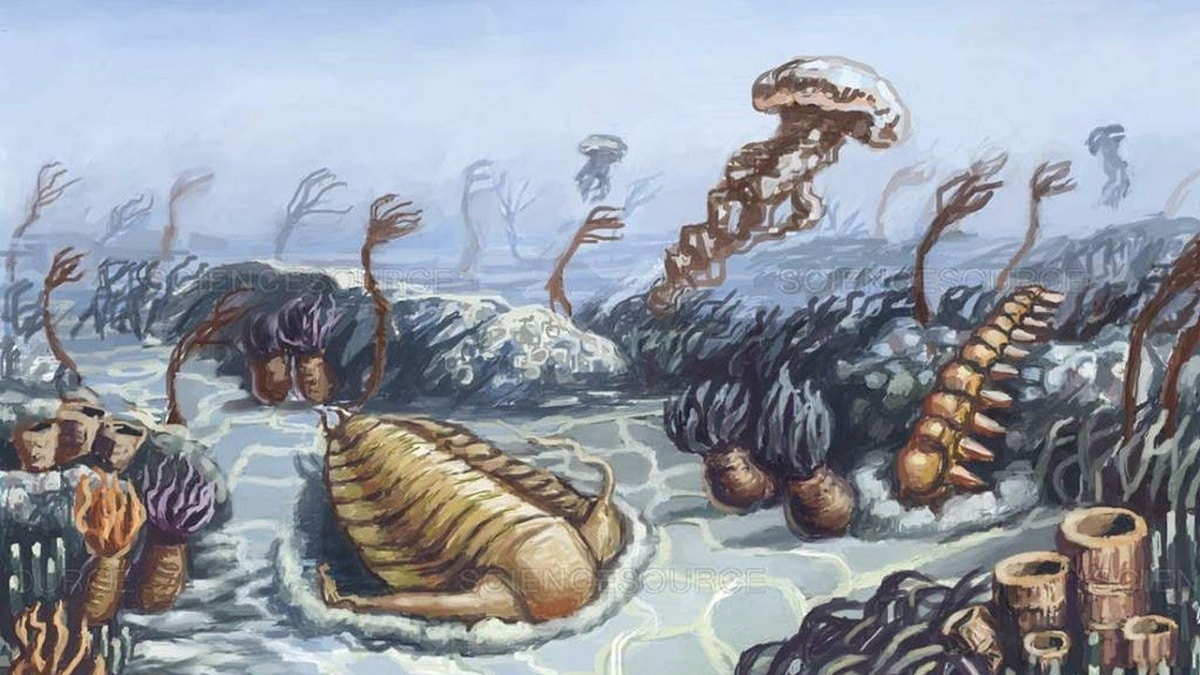
Most recent eon; visible life (541 million years ago - present day)
Phanerozoic
After Phanerozoic, name the eons from youngest to oldest
protozoic, archaen, hadean
cenozoic means
recent life
mesozoic means
middle life
paleozoic means
ancient life