AQA A Level Biology - Populations in Ecosystems
 Call Kai
 Learn
 Practice Test
 Spaced Repetition
 Match
 Flashcards
 Knowt Play
1/49

There's no tags or description
Looks like no tags are added yet.
50 Terms
define ecosystem
all the organisms living in a community and the abiotic conditions in the area in which they live; interaction of abiotic and biotic factors
what are biotic factors?
living features of an ecosystem
e.g. predators/food
what are abiotic factors?
non living features of an ecosystem
temperature/soil
what is a habitat?
area where an organism lives
what is a niche?
role of a species within its ecosystem or community
within a habitat each species has its own niche
abiotic niches - temperature range that an organism can live at, time of day it’s awake at
biotic niches - what it eats, what organisms eat it
a niche can only be occupied by 1species - always slight differences between niches of 2 species (i.e. diet differences)
what happens if 2 species try to occupy the same niche?
they will compete
one organism will be more successful than the other until only 1 species is left
what is an adaptation?
a feature of a species that increases an organisms chance of survival
better adapted organisms are more likely to survive and reproduce passing on advantageous alleles (natural selection)
every species is adapted to use an ecosystem uniquely allowing it to have its own niche
can be to either abiotic or biotic conditions
define population
all the organisms of 1 species in a habitat that can interbreed
define community
all the populations of different species in a habitat
define population size
total number of organisms of 1 species in a habitat (can vary)
define carrying capacity
the maximum stable population size of a species that an ecosystem can support - varies as a result of abiotic and biotic factors
describe how population size may vary due to abiotic factors
when abiotic conditions are ideal for a species, organisms can grow more quickly and reproduced successfully so population size increases
when conditions are not idea, the organisms grow slower and reproduce less successfully so reduced overall growth
e.g temperature, shelter availability, water, humidity, space
which biotic factors may cause population size to vary?
e.g inter and intraspecific competition, predation
describe how interspecific competition may cause population size to vary
different species compete, so the resources available to both species are reduced - e.g. if a food source is shared, less is available to each organism,
so both populations will be limited e.g. by a lower amount of food, so they will have less energy for growth and reproduction
so population sizes will be lower
if 2 species are competing and one is better adapted, it will outcompete the less well adapted species which won’t then be able to coexist with the better adapted species - arises when 2 species have the same niche
describe how intraspecific competition may cause population size to vary
competition within a species causes a cyclical change in population size and carrying capacity
the population grows then shrinks then grows again
this is because population increases when resources are plentiful, and as the population increases competition increases for the same amount of resources, so the resources become limiting
if the population increases beyond the carrying capacity, not enough resources are available for all organisms so the population declines, so there is less competition for resources, so there is more growth and reproduction so the population grows agian
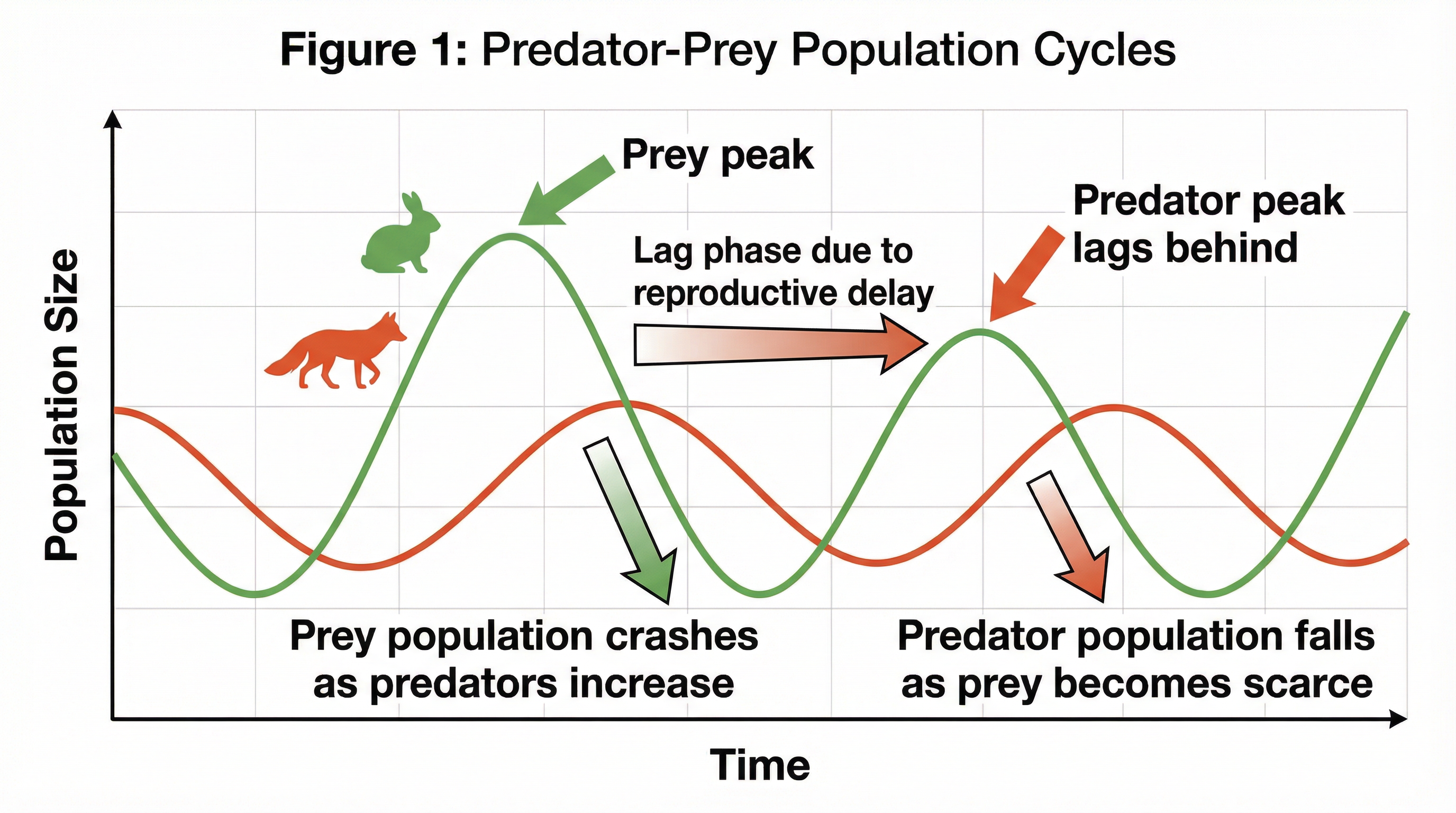
describe how predation may cause population size to vary
as prey population increases, there is more food available for predators so the predator population increases
so more prey is eaten so the prey population falls
so there is less food for predators so the predator population falls
in reality this is more complex due to the effect of other factors like prey food availability (may cause initial drop)
there is a lag in the increases as the initial increase for prey has to occur before the predator population can start to increase
what do organisms commonly compete for?
food
water
mates
shelter
minerals
light
what are some limiting factors for population growth?
temperature
light
pH
water
humidity
define abundance
number of individuals in a particular area (can be estimated by counting)
what are the two types of abundance measurement?
frequency - number of samples a species is recorded in
percentage cover - percentage of area covered by the organism
define distribution
locations of a particular species in an area being investigated
why is random sampling done?
done as it is too time consuming and costly to measure abundance and distribution in an entire area
what is a running mean?
to ensure you have taken enough samples to get a reliable estimate, take a mean of all the data each time a new sample is collected
when the mean no longer changes, the data should give a realistic overall estimate
how would you carry out random sampling with slow moving or non motile organisms?
quadrats
belt transect
how would you use quadrats for random sampling?
estimate percentage cover or count number of organisms in the quadrat
find the mean across all samples
scale up to area sampled if number used
how would you use transects for random sampling?
lay out a tape measure as a belt transect
either place quadrats next to each other or at regular intervals (over large distance)
record percentage cover of each species
calculate species frequency and percentage cover
how would you estimate population size of motile organisms?
mark-release-recapture
describe how you would carry out mark-release-recapture
capture a sample of a species and mark them in a way that doesn’t reduce chances of survival (harm or attract prey)
release them back into habitat
wait a given period of time then capture another sample of organisms and count how many are marked
total population size = (number caught S1 x number caught S2) / number marked in S2
what assumptions must be made for mark release recapture?
marked individuals that are released distribute evenly into the population before the second sample is taken
the proportion of marked to unmarked organisms in S2 is the same as the whole population
definite boundary to the population so no im or emigration occurs during the window
no births or deaths during the window
marks are non toxic and do not reduce chance of survival
marks do not rub off
how would you investigate the effect of an abiotic factor on population distribution?
use a belt transect and measure the abiotic factor at each quadrat placement
use spearman’s rank with 1 species to investigate potential correlation
can plot graphs or kite diagrams with distance, percentage cover and abiotic factor
define succession
process by which an ecosystem changes over time
‘ecosystem experiences a directional change in plant and animal communities over time’
happens in stages
where does primary succession occur?
on sites not previously occupied by vegetation - newly farmed/exposed
so no soil/organic material
describe the pioneer stage of primary succession
species begin to colonise new land surface - seeds and spores are blown in by the wind and begin to grow - called pioneer species
abiotic conditions are very hostile and only pioneer species can grow as they are adapted
no competition, organisms not dependent on animals,
may be able to fix nitrogen and build up soil further
what happens in the second stage of primary succession?
pioneer species die and microorganisms decompose the dead organic material forming basic soil
this makes conditions less hostile (e.g. basic soil retains more water)
so new organisms with different adaptions can move in and grow
the pioneer species have changed the abiotic conditions
what happens in the 3rd stage of primary succession?
new organisms die and are decomposed which adds more organic material making the soil deeper and more rich in minerals
nitrogen fixing bacteria form ammonium for plant use
this allows larger plants like shrubs to grow in the deeper soil
this soil retains more water and contains more nutrients
some new species may alter the environment so that it becomes less suitable for previous species
what happens in later stages of primary succession?
different plants and animals that are better adapted move in and outcompete current plants and animals, dominating the ecosystem
these dominant species cause the most environmental change
as succession furthers, ecosystems become more complex
new species moving in increases biodiversity, more plants create more habitats, abiotic coverage becomes less hostile and biomass increases
eventually a climax community forms - this is the largest and most complex community of plants and animals it can - won’t change much from now on
what are the characteristics of a climax community?
species have large seeds so seedlings can survive low light intensity (high competition)
species cannot tolerate great fluctuations in soil water ocntent
species are strongly influenced by other organisms - e.g competitors, pollinators, microorganisms, seed dispersers
what is secondary succession?
succession that happens on land that has been cleared of plants, but active soil remains
the established community is destroyed but with minimal soil disturbance
can occur at any stage after pioneer stage
similar process to primary succession but starts at a later stage due to the presence of soil so new pioneers species can be larger
describe how human activity can impact succession
can halt succession, e.g by stopping a climax community developing
when succession is stopped artificially, the climax community is called a plagioclimax
what is a climactic climax community?
climax community for a particular climate
species that make up a climax community depend on the ecosystem’s climate
define conservation
protection and management of species and habitats/ecosystems in a sustainable way
dynamic methods need to adapt to constant changes in ecosystems
may be conflict between human needs and conservation
what are the two types of conservation method?
in situ: in natural environment (reserves, legislation, repopulation)
ex situ: out of natural environment (zoos, seedbanks, botanic gardens)
name 5 methods of conservation
succession management
seed banks
captive breeding
fishing quotas
protected areas
what is succession management?
preventing succession in order to maintain an ecosystem in it’s current stage of succession (e.g. to maintain a habitat)
what are seed banks and how are they used?
store of seeds from lots of different plant species
act as a back up for conservation in the wild
can be used to reintroduce species if they go extinct
do not need lots of space, can be used anywhere
can store seeds for a long time as long as the environment is cool and dry to prevent germination
seeds must be regularly tested to ensure they are still viable - this is expensive and time consuming
what is captive breeding?
breeding animals in a controlled environment
ideal for extinct species in the wild to increase numbers
however, some animals find it difficult to breed outside of their natural environment
bred animals can be reintroduced into the wild, preventing extinction
however, this can introduce new diseases harming existing species
what are fishing quotas?
conserve fish by reducing numbers that are allowed to be caught and killed
prevents a situation where fish numbers are so low that there is an extinction risk
can be unpopular as they limit income
some ships catch extra fish then throw them back in order to meet quotes - however this is wasteful as the fish are probably dead so does not help conservation
requires international cooperation
what are protected areas?
areas that protect habitats/species by restricting development and farming
habitats can be managed to conserve them
can be complicated as these are often tourist destinations
how can population growth of bacteria be investigated?
with sufficient food and space, bacterial population sizes will grow at a steady rate
can be investigated experimentally by growing bacteria in liquid broth (culture containing nutrients)
when light is passed through a broth culture sample, some is scattered due to the presence of bacteria, reducing the amount of light passing through
spectrophotometers can measure the amount of light passing through and provide an absorbance value
graphs of absorbance against time can be plotted - exponential graph
numbers of bacteria will increase hugely, making it hard to draw a precise enough scale on the y axis
to solve, logarithmic graphs can be drawn
what would a growth of micoorganisms graph look like?
