Lab Practical
 Call Kai
 Learn
 Practice Test
 Spaced Repetition
 Match
 Flashcards
 Knowt Play
1/83

Earn XP
Description and Tags
Labs 6-11
84 Terms

What is this?
Mayfly — Ephemeroptera
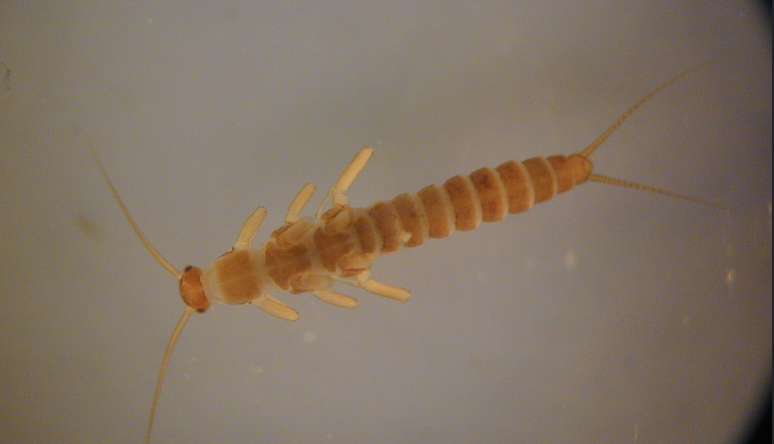
What is this?
Stonefly— Plecoptera

What is this?
Damselfly— Odonata
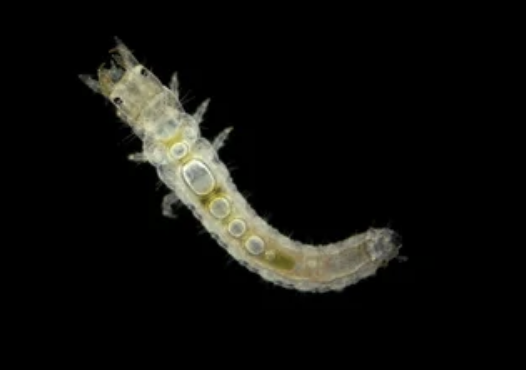
What is this?
Caddisfly —Trichoptera

What is this
Dobsonfly, fishy, and alderfly— Megaloptera
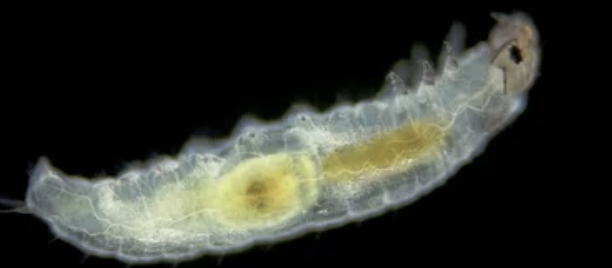
What is this?
Aquatic moth— Lepidoptera
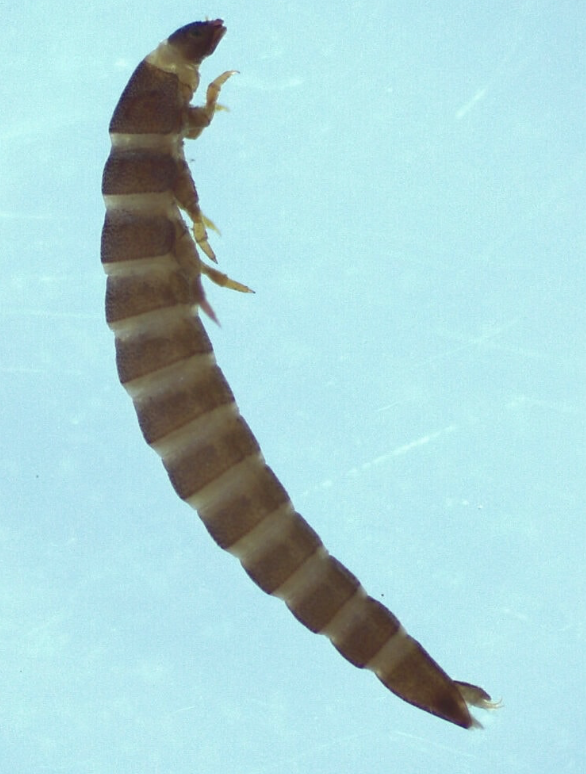
What is this?
Aquatic beetle Larva— Coleoptera

What is this?
Dragonflies - Odonata

What is this?
Adult Beetles- Coleoptera

What is this?
Aquatic true bug— Hemiptera

What is this?
Athericidae— Water snipe flies

What is this?
Tipulidae— Crane flies

What is this?
Tabaniidae— Horse flies
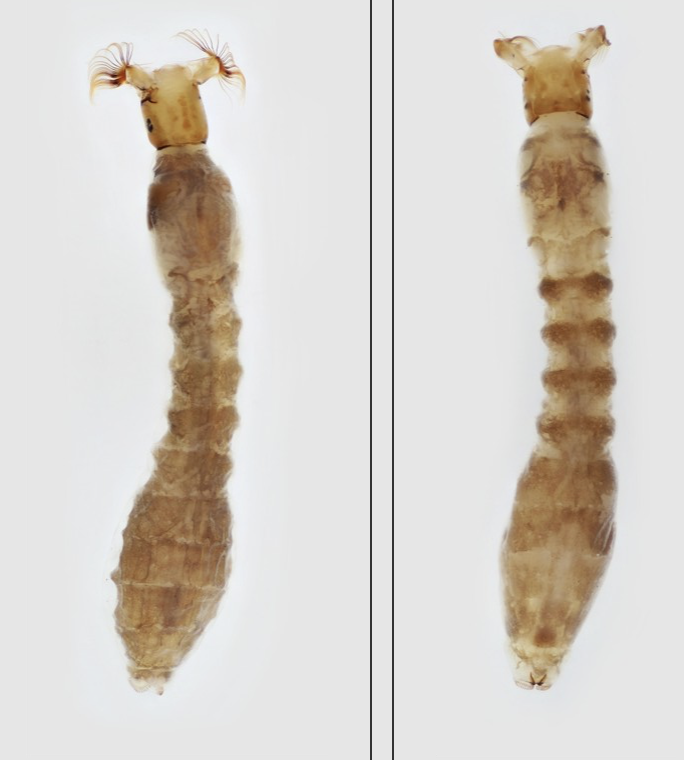
What is this?
Simuliidae— Black flies

What is this?
Chironomidae- Midges
In lab, You will study (or have already studied) how characteristics of the ______ community can indicate the health of an aquatic ecosystem.
A. Plant
B. vertebrate
C. Invertebrate
D. Protozoan
E. Bacterial
C. Invertebrate
The %EPT value is an estimate of water quality in aquatic ecosystems. What does the “T” in EPT stand for?
A. Teroptera
B.Taxa
C. Thysanoptera
D.Trichoptera
D. Trichoptera
In this week’s lab using invertebrate species as bioindicators of:
A. Water quality
B. Air quality
C.Carrying capacity
D.None of the above
A. Water quality
“Taxon” refers to ____
A. Family
B. Genus
C. Species
D. All of the above
E. None of the above
D. All of the above
In aquatic ecosystems. higher taxa richness values are correlated with higher habitat diversity and lower water quality conditions.
A. True
B. False
B. False
Simpson’s Diversity Index includes speeches richness and:
A. Diversity
B. Relative abundance
C. The number of taxa in the sample
D. Habitat quality
C. The number of taxa in the sample

Using the image below, which groups are most closely related to one another?
A. All groups are equally related to one another
B. b and c
C. a and b
D. a and c
E. Cannot be determined from image
b. b and c
When a stream becomes polluted, taxa richness will ______ and %EPT will _____.
A. Increase…decrease
B. Decrease… decrease
C. Decrease… increase
D. Increase… increase
E. Decrease… Not change
B. Decrease…decrease
A scientist calculates Simpson’s index of diversity from her collected data and obtains a value of 1.37. What does this mean?
A. This value indicates her sample is very diverse
B. This value indicates her sample is not very diverse
C. SID values range from 0 to 1 so she has made a calculation error
D. There are appromiately 1.37 taxa in her sample
E. None of the other choice are true
A. This value indicate her sample is very diverse

The circled feature in the image below represents _____
A. An Outgroup
B. A common ancestor
C.A living species
D. An ingroup
E. More than one of the other choices
C. A living species
When a taxonomic group contains an ancestor and only some of its descendants, this group is considered to be _____.
A. Polyphyletic
B. Paraphyletic
C. Monophyletic
D. Analogous
E. Homologous
B. Paraphyletic

Which taxon is shown below?
A. Amphipoda
B.Gastropoda
C. Diptera
D. Plecoptera
E. Coleoptera
C. Diptera
A sample of 16 individuals taken from a riffle has 5 mayflies, 7 stoneflies, 3 caddisflies, and 1 black fly. What is likely NOT true about this sample?
A. Macroinvertebrates with high tolerance values thrive in this riffle
B. The %EPT is high in this riffle
C. The pollution level is low in this riffle
D. The family biotic index would be very low in this riffle
E. More than one of the other choices
A.Macroinvertebrates with high tolerance values thrive in this riffle
Which of the following best describes a polygamy?
A. Phylogeny in which the relationships cannot be resolved into dichotomies
B. Lineage containing the common ancestor but not all of the descendants
C. Lineage containing descendants from more than one common ancestor
D. Lineages containing a single common ancestor
A. Phylogeny in which the relationships cannot be resolved into dichotomies
What is a bioindicator?
An organism used to assess habitat conditions. In Lab 6, you used aquatic macroinvertebrates to assess stream health.
Why use bioindicators alongside water chemistry?
The organisms living in a stream can reflect conditions over time. A water sample shows conditions at the time it was collected.
What is taxa richness?
The number of different taxa present. If 40 organisms belong to five groups, the richness is five.
What is evenness?
How equally individuals are distributed among the taxa.
How do you calculate relative abundance?
Divide the number of individuals in one taxon by the total number of individuals in the sample. Multiply by 100 if the question asks for a percentage.
What does EPT stand for?
Ephemeroptera (mayflies), Plecoptera (stoneflies), and Trichoptera (caddisflies).
How do you calculate %EPT, and what does a high value suggest?
Add up the individuals in the three EPT groups, divide by the total sample count, and multiply by 100. A high %EPT generally suggests better stream conditions because these groups tend to be sensitive to pollution.
How do you calculate Simpson’s Index of Diversity (SID)?
Divide each taxon’s count by the total. Square each proportion, add the squares, and subtract that sum from 1.
What does an SID closer to 1 mean?
Greater diversity. SID reflects both taxa richness and evenness.
How might pollution affect richness, SID, and %EPT?
You’d generally predict lower values. Comparing multiple metrics helps because each describes a different part of the community.
What goes on the axes of a taxa accumulation curve?
The x-axis shows the cumulative number of areas sampled. The y-axis shows the cumulative number of taxa found.
What does it mean when a taxa accumulation curve levels off?
Sampling more areas is turning up few new taxa. If the curve is still climbing, more sampling may reveal more taxa.
What does a node on a phylogenetic tree represent?
A common ancestor of the lineages that branch from that point.
What are sister taxa?
Two lineages that branch from the same immediate common ancestor. Either branch can represent one species or a whole group
How can you tell which taxa are more closely related?
Trace their branches back to where they meet. The pair that shares the more recent common ancestor is more closely related.
Does rotating branches around a node change the relationships?
No. The tips may switch positions, but the branches still connect to the same ancestors.
What is the difference between a dichotomy and a polytomy?
A dichotomy splits into two branches. A polytomy has three or more branches at one node and can indicate that the branching order is unresolved.
What is a monophyletic group, or clade?
A common ancestor and all of its descendants. On a tree, you could cut one branch and take the entire group with it.
What is the difference between a paraphyletic and a polyphyletic group?
A paraphyletic group includes a common ancestor but leaves out some descendants. A polyphyletic group combines lineages while excluding their most recent common ancestor.
What are an ingroup and an outgroup?
The ingroup is the group being studied. The outgroup is a related lineage outside that group used for comparison.
What is taxonomy, and who developed the modern hierarchical system?
Taxonomy is the classification of organisms. Carolus Linnaeus developed the hierarchical system in which smaller groups are nested within larger groups.
What are the taxonomic ranks from broadest to narrowest?
Domain → Kingdom → Phylum → Class → Order → Family → Genus → Species.
How do you write a two-part scientific name?
Capitalize the genus, lowercase the second word, and italicize both when typed. Underline both when handwritten. Example: Homo sapiens.
What is the difference between homologous and analogous traits?
Homologous traits are similar because they were inherited from a common ancestor. Analogous traits evolved independently and have a similar function or appearance.
What is convergent evolution?
Different lineages independently evolve similar traits, often under similar environmental pressures. Flying squirrels and sugar gliders independently evolved adaptations for gliding.
What is a vestigial structure?
An inherited structure that has lost much or all of its original function. It can still have another function.
What evidence besides visible traits can help build a phylogenetic tree?
DNA or protein sequences and fossils. Fossils can show features of extinct forms and when they lived.
What does a gap in the fossil record mean?
There are no known fossils for that interval. The organism may still have lived then. In the Arthropocules activity, you could connect forms across gaps longer than one million years.
How did you turn your classification table into an Arthropocules tree?
Put the living species at the tips. Work backward by grouping them into genera, families, and broader ranks. In the living-forms exercise, each split had two branches. In the fossil exercise, line up fossils by age and put living forms on the 0 line.
What color are Gram-positive cells after Gram staining, and why?
Purple or blue-purple. Their thick peptidoglycan layer retains the crystal violet–iodine complex during decolorization.
What color are Gram-negative cells after Gram staining, and why?
Pink or red. They have thin peptidoglycan and an outer membrane. They lose the purple complex during decolorization, so the pink safranin is visible.
What are the four main reagents in a Gram stain, in order?
Crystal violet → Lugol’s iodine → alcohol/acetone decolorizer → safranin.
Crystal violet stains both types purple, iodine helps hold that stain, the decolorizer removes it from Gram-negative cells, and safranin makes those cells visible in pink.
What color is each group immediately after correct decolorization, before safranin?
Gram-positive cells are purple. Gram-negative cells are colorless.
What can happen if you skip Lugol’s iodine?
The crystal violet–iodine complex doesn’t form. The purple stain can wash out of Gram-positive cells, making them appear pink at the end.
What happens if you decolorize too long?
Gram-positive cells can lose the purple stain too and appear falsely Gram-negative after safranin.
What happens if you skip or underdo decolorization?
Gram-negative cells may keep the purple stain and appear falsely Gram-positive.
What are the three basic bacterial cell shapes in Lab 8?
Cocci are round, bacilli are rods, and spirilla are spiral-shaped or corkscrew-shaped.
How do you describe both shape and Gram reaction from a slide photo?
Read the shape and color separately. Purple spheres = Gram-positive cocci. Pink rods = Gram-negative bacilli, assuming the stain was done correctly.
What did the dental plaque stain show?
The single crystal violet stain helped you see cell shape and arrangement. For Gram reaction, use the results of the full Gram stain.
Why heat-fix a dried smear?
It helps the cells stick to the slide so they’re less likely to wash away during staining.
Which microscopes did Lab 8 use for colonies and individual cells?
A dissecting microscope for colonies and a compound microscope for individual cells. A 10× ocular and a 40× objective give 400× total magnification.
What is the difference between cell morphology and colony morphology?
Cell morphology describes a single cell’s shape. Colony morphology describes the visible group of cells, including its form, margin, size, color, and texture.
What’s the difference between “circular” and “entire” on a colony description?
Circular describes the colony’s overall shape. Entire describes a smooth edge. A colony can be both.
How do you recognize filamentous form, irregular form, an undulate margin, and a lobate margin?
Filamentous has threadlike projections. Irregular has an uneven overall shape. Undulate has a gently wavy edge. Lobate has larger, rounded lobes along the edge. Use the pre-lab diagram as the front of this card.
What does an antibiotic’s mode of action tell you?
It interferes with peptidoglycan cross-linking as bacteria build their cell walls. The Gram-negative outer membrane can limit access for some cell-wall-targeting drugs, so susceptibility depends on the drug and the bacterium.
What is a zone of inhibition, and what is the control disk for?
The zone of inhibition is the area around a disk where visible bacterial growth is inhibited. The control disk contains no antibiotic and shows whether the disk alone affects growth.
_______ can form endospores
A. All bacteria
B. Bacillus bacteria
C. Escherichia bacteria
D. Staphylococcus bacteria
E. Pseudomonas bacteria
B. Bacillus bacteria
Using the phylogenetic tree below, how would you describe a group containing just lizards, crocodiles, and their shared common ancestor.