BROCK BIOLOGY - CHAPTER 1
 Call Kai
 Learn
Learn Practice Test
 Spaced Repetition
 Match
Match Flashcards
 Knowt Play
1/79

Earn XP
Description and Tags
The Microbial World
Name | Mastery | Learn | Test | Matching | Spaced | Call with Kai | Chat |
|---|
No analytics yet
Send a link to your students to track their progress
80 Terms
Listeria monocytogenes
soil organism
infect other microbes such as amoebae
have a unique ability to hijack cellular systems
microbiology
study of the dominant form of life on earth
microorganisms
life forms too small to be seen by the naked eye
live in microbial communities
microbial communities
a bacterial community with a diverse populations of microorganisms the live together in a shared environment and interact with one another
culture
collection of cells that have been grown in or on a nutrient medium
medium
a liquid or solid nutrient mixture that contains all of the nutrients required foro a microorganism to grow
growth
increase in cell number as a result of cell division
colony
visible mass or cluster of microorganisms growing on or within a solid culture medium
microbial cells
living compartments thet interact with their environment and with other cells in dynamic ways
viruses
not included because they are not cells
cytoplasmic membrane
a permeability barrier that separates the inside of the cell
cytoplasm
aqueous mixture of macromolecules
macromolecules
example is proteins, lipids, nucleic acids, and polysaccharides
ribosomes
responsible for protein synthesis
cell wall
a permeable structure located outside the membrane, it lends a structural strength to the cell, and much stronger than the cytoplasmic membrane
cell wall
found only in plant cell and not in animal cell
eukaryotic cell and prokaryotic cell
what are the cell types
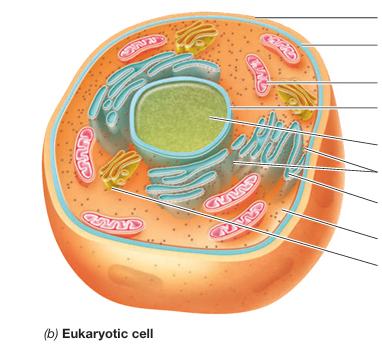
eukaryotic cell
belong to the group of eukarya, where plants and animals are also found (such as algae, protozoa, and fungi). typically have organelles
organelles
assortment of membrane-enclosed cytoplasmic structure, this includes DNA, mitochondria, chloroplasts, and various other ____
prokaryotic cell
belong to the group of bacteria and archaea
prokaryotic cell
a cell that lacks nucleus and organelles, and appeared long before the evolution of other cell types
CCMNNRECG
answer the following
CCNCPR
answer the following

CCMNNEC
answer the following

CCNC
answer the following

DNA genome
all cells possess what?
gene
a segment of DNA that encodes a protein or an RNA molecule
genome
full set of genes in a cell
prokaryotic cell
typically closed circular chromosomes, but some are linear
eukaryotic cell
several linear moelcules, each formed into its own chromosomes
prokaryotic cell
aggregates in the cytoplasm to form the nuceoid
nucleoid
not enclosed by a membrane
prokaryotic cell
nucleoid is only found in what cell?
eukaryotic cell
enclosed within a membrane-bound nucleus
prokaryotic cell
contains plasmids
plasmids
a small distinct circles of DNA with non-essential specializeds genes like antibiotic resistance
prokaryotic cell
genome size is small and compact
eukaryotic cell
genome size is much larger and less streamlined example is a human cell
prokaryotic cell
contains between 500 and 10,000 genes encoded by 0.5 to 10 million base pairs
human cell
contains about 3 billion base pairs encoding 20,000-25,000 genes
metabolism
process by which cells acquire nutrients from the environment and transform into new cellular materials or waste products, using energy to support synthesis of new structures that lead to cell division
enzymes
a specialized proteins possessing catalytic activity that carry out the chemical reactions required to supply energy and perform biosynthesis inside the cell
DNA replication
a critical process of replicating the cells genome, which must happen before cell division take place
motility
the ability of many cells to sense and respond to envronmental changes, typically through self-propulsion, allowing them to physically relocate
differentiation
a process where some cells undergo modifications to form specialized cells tailored for survival, dispersal, or growth
intercellular communication
the ability of cells to respond to chemical signals from their environment, making them ‘aware’ of their surroundings so they can react accordingly
horizontal gene transfer
a process where many prokaryotic cells can exchnage genes directly with neighboring cells, regardless of whether the are of teh same species.
evolution
it occurs when genes within a population od cells change in their sequence and frequency over time, resulting in descent with modification.
structure, metabolism, growth, evolution
properties of all cells
differentiation, communication, motility, horizontal gene transfer
properties of some cells
morphology
the cells size and shape
micrometers
microscopic cells sizes is measured in?
0.5 to 10 micrometers
prokaryotes cell size is ranging from?
0.2 micrometers
size of smallest prokaryotes
mycoplasma pneumoniae
what is the smallest cell of prokaryotes
750 micrometer
largest size of prokaryotes
thiomargarita namibiensis
what is the largest prokaryotes
eukaryotes
generally larger on average, usually ranging from 5 to 100 micrometers
0.8 micrometers
smallest cell size of eukaryotes
smaller cells
they possess more surface area relative to their volume
smaller cells
they have higher surface-to-volume S/V ratio
4pier2
formula of surface area
4/3pier3
formula of volume
s/v ratio
it controls critical properties like growth rate and cell shape
growth rate
it depends heavily on how fast cells exchange nutrients and waste products with their environment
smaller cells
they can exchange nutrients and wastes more rapidly
coccus
spherical or ovoid shaped cells
rod or bacillus
cylindrically shaped cells
spirillum
spiral-shaped cells with rigid cell bodies
vibrio
slightly curved, comma-shaped cells
spirochete
spiral-shaped cells with flexible cell bodies
stalks or hyphae
used by some cells for attachment or to increase surface area
budding
a process that can result irregular and asymmetrical shaped cells during asymmetrical cell division
diplococci
cocci ocurring in pairs
streptococci
cocci forming long chains
tetrads or sarcinae
cocci ocurring in three-dimensional cubes
staphylococci
cocci ocurring in grapelike clusters
filamentous bacteria
long, thin, rod-shaped bacteria that divide terminally and form long filaments composed of many cells attached end to end
rods and cocci
very common shaped of cells
spiral, budding, and filamentous
less common shaped of cells