Chapter 11 - Musculoskeletal System: Part 3

0.0(0)
Studied by 3 people
call kaiCall Kai
learnLearn
examPractice Test
spaced repetitionSpaced Repetition
heart puzzleMatch
flashcardsFlashcards
GameKnowt Play
Card Sorting

1/31

encourage image

There's no tags or description

Looks like no tags are added yet.

32 Terms

1
New cards

Brachium

The upper arm

2
New cards

Antebrachium

The forearm

3
New cards

Head of the radius

A disk shaped structure with the middle of the disk of the disk indented. It articulates with the capitulum of the humerus.
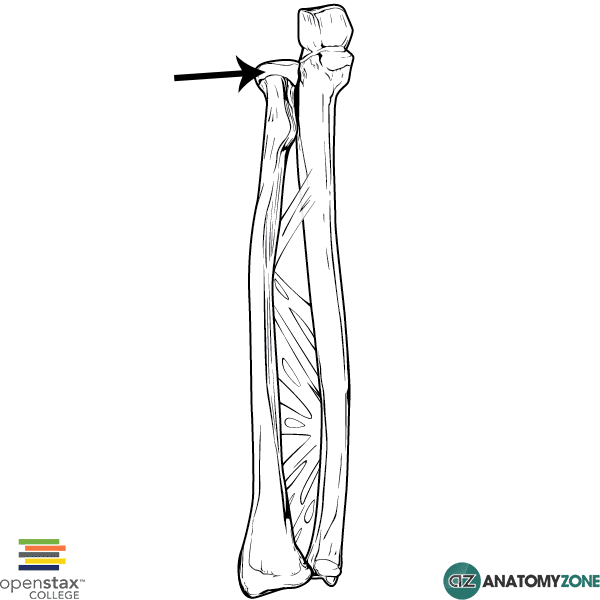
<p>A disk shaped structure with the middle of the disk of the disk indented. It articulates with the capitulum of the humerus.</p>
4
New cards

Radial Tuberosity

This large bump just distal to the proximal head of the radius is an attachment point for a muscle. In anatomical position, this structure always points medially toward the ulna.

<p>This large bump just distal to the proximal head of the radius is an attachment point for a muscle. In anatomical position, this structure always points medially toward the ulna.</p>
5
New cards

Trochlear Notch

This structure is the most obvious feature of the proximal end of the ulna. Its smooth surface faces anteriorly and articulates with the trochlea of the humerus.

<p>This structure is the most obvious feature of the proximal end of the ulna. Its smooth surface faces anteriorly and articulates with the trochlea of the humerus.</p>
6
New cards

Olecranon Process

This process forms the superior bony portion of the trochlear notch

<p>This process forms the superior bony portion of the trochlear notch</p>
7
New cards

Coronoid Process

This process forms the inferior bony portion of the trochlear notch

<p>This process forms the inferior bony portion of the trochlear notch</p>
8
New cards

Radial Notch

Near the coronoid process, on the lateral side of the ulna, this structure articulates with the proximal head of the radius. In the anatomical position, this structure always faces laterally.

<p>Near the coronoid process, on the lateral side of the ulna, this structure articulates with the proximal head of the radius. In the anatomical position, this structure always faces laterally.</p>
9
New cards

Ulnar Tuberosity

A bump on the anterior surface of the ulna, just distal to the coronoid process. Like the tuberosity of the radius, it is also an attachment site for a muscle.

<p>A bump on the anterior surface of the ulna, just distal to the coronoid process. Like the tuberosity of the radius, it is also an attachment site for a muscle.</p>
10
New cards

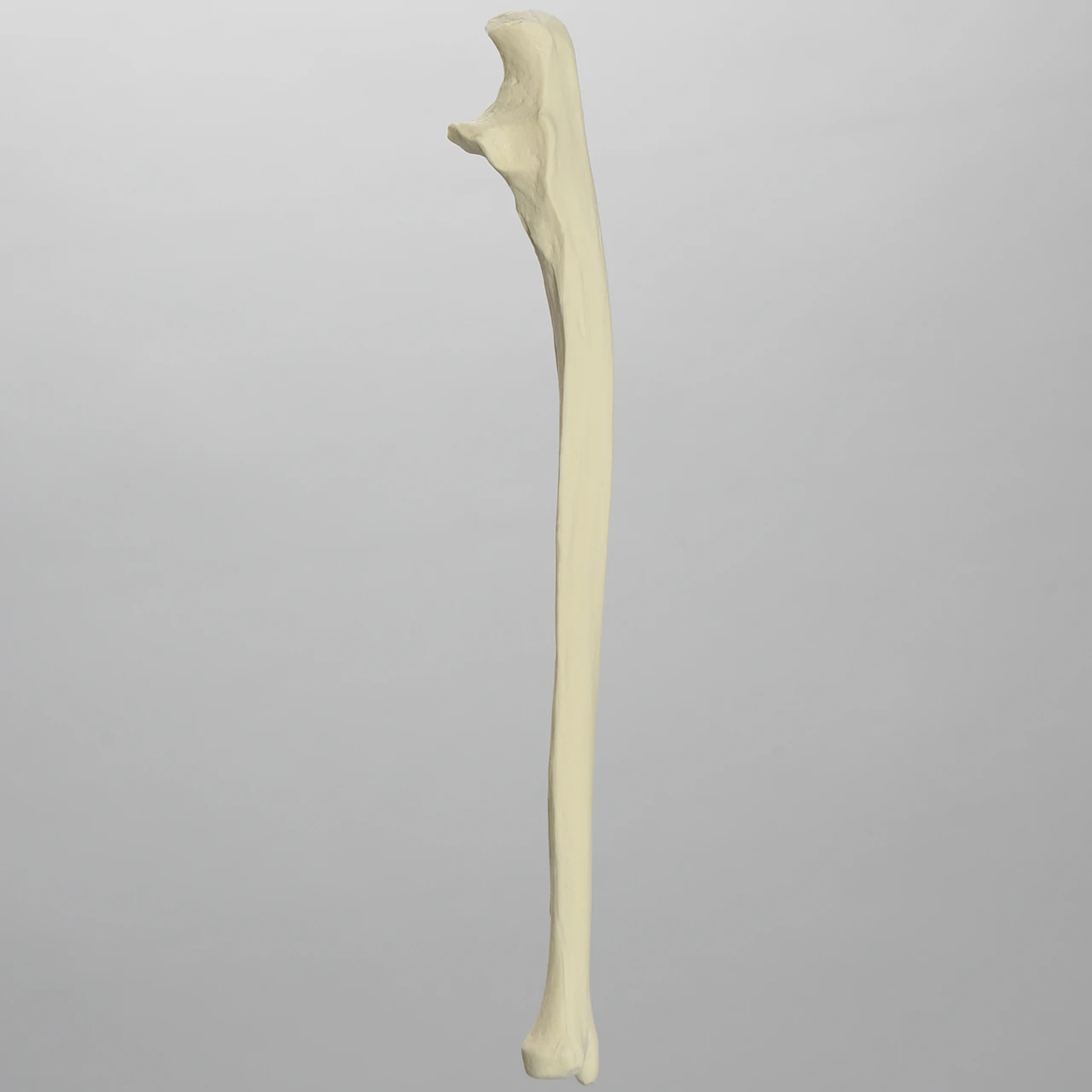
Ulna

knowt flashcard image
11
New cards

Radius

knowt flashcard image
12
New cards

Carpals

Eight of this kind of bone in your wrist, arranged in two rows, which allow you to move your wrist in many directions (will not have to identify the individual names or features of these bones)

<p>Eight of this kind of bone in your wrist, arranged in two rows, which allow you to move your wrist in many directions (will not have to identify the individual names or features of these bones)</p>
13
New cards

Metacarpals

Five of this bone; makes up the palm of your hand. They articulate proximally with the second row of carpals, and distally with the phalanges. They are numbered one through five, starting laterally on the thumb side and counting medially. (You will not have to individual features on each metacarpal bone, but you will need to be able to identify each of these five bones on a skeletion)

<p>Five of this bone; makes up the palm of your hand. They articulate proximally with the second row of carpals, and distally with the phalanges. They are numbered one through five, starting laterally on the thumb side and counting medially. (You will not have to individual features on each metacarpal bone, but you will need to be able to identify each of these five bones on a skeletion) </p>
14
New cards

Phalanges

There are fourteen of this bone, which form the fingers of your hand.
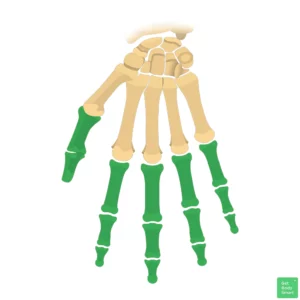
<p>There are fourteen of this bone, which form the fingers of your hand. </p>
15
New cards

Phalanx; Phalanges

What is the term for a single finger bone? Two or more finger bones?

16
New cards

Two (Proximal and Distal)

How many phalanges does the thumb comprise?

17
New cards

Digit I

What is the proper name for the thumb?

18
New cards

Three (Proximal, Middle, and Distal)

How many phalanges are digits II through V composed of?

19
New cards

Rotator Cuff

Comprises four muscles that work together to pull the head of the humerus against the glenoid cavity: the subscapularis, teres minor, infraspinatus, and suprasinatus. When contracting individually, these muscles will rotate the head of the humerus medially, laterally, or superiorly.

<p>Comprises four muscles that work together to pull the head of the humerus against the glenoid cavity: the subscapularis, teres minor, infraspinatus, and suprasinatus. When contracting individually, these muscles will rotate the head of the humerus medially, laterally, or superiorly.</p>
20
New cards

Subscapularis

knowt flashcard image
21
New cards

Supraspinatus

knowt flashcard image
22
New cards

Infraspinatus

knowt flashcard image
23
New cards

Teres Minor

knowt flashcard image
24
New cards

Teres Major

knowt flashcard image
25
New cards

Pectoralis Major

knowt flashcard image
26
New cards

Latissimus Dorsi

knowt flashcard image
27
New cards

Deltoid

knowt flashcard image
28
New cards

Biceps Brachii

knowt flashcard image
29
New cards

Brachialis

knowt flashcard image
30
New cards

Triceps Brachii

knowt flashcard image
31
New cards

Flexor Digitorum Profundus

knowt flashcard image
32
New cards

Extensor Digitorum

knowt flashcard image