Ch. 3 Financial Statements, Cash Flow, and Taxes
 Call Kai
 Learn
Learn Practice Test
 Spaced Repetition
 Match
Match Flashcards
 Knowt Play
1/32

There's no tags or description
Looks like no tags are added yet.
Name | Mastery | Learn | Test | Matching | Spaced | Call with Kai | Chat |
|---|
No analytics yet
Send a link to your students to track their progress
33 Terms
Annual Report
A report issued annually by a corporation to its stockholders. It contains basic financial statements as well as management’s analysis of the firm’s past operations and future prospects.
Report also provides 4 basic financial statements:
The balance sheet, which shows what assets the company owns and who has claims on those assets as of a given date—for example, December 31, 2025.
The income statement, which shows the firm’s sales and costs (and, thus, profits) during some past period—for example, 2025.
The statement of cash flows, which shows how much cash the firm began the year with, how much cash it ended up with, and what it did to increase or decrease its cash.
The statement of stockholders’ equity, which shows the amount of equity the stockholders had at the start of the year, the items that increased or decreased equity, and the equity at the end of the year.

Balance Sheet
A statement of a firm’s financial position at a specific point in time. The left side of the statement shows the assets that the company owns, and the right side shows the firm’s liabilities and stockholders’ equity, which are claims against the firm’s assets.

Stockholder’s Equity
It represents the amount that stockholders paid the company when shares were purchased and the amount of earnings the company has retained since its origination.

Retained Earnings
They represent the cumulative total of all earnings kept by the company during its life.

Cash vs. Other Assets
Although assets are reported in dollar terms, only the cash and equivalents account represents actual spendable money.
Accounts receivable represent credit sales that have not yet been collected.
Inventories show the cost of raw materials, work in process, and finished goods.
Net fixed assets represent the cost of the buildings and equipment used in operations minus the depreciation that has been taken on these assets.
Working Capital
Current assets that are used and replaced throughout the year.
Net Working Capital
Current assets minus current liabilities.

Net Operating Working Capital (NOWC)
Operating current assets minus operating current liabilities.

Income Statements
Reports summarizing a firm’s revenues, expenses, and profits during a reporting period, generally a quarter or a year.
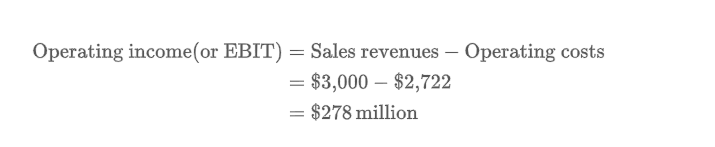
Operating Income
Earnings from operations before interest and taxes.
Depreciation
The charge to reflect the cost of assets depleted in the production process. Depreciation is not a cash outlay.
Amortization
A noncash charge similar to depreciation except that is represents a decline in value of intangible assets such as patents, copyrights, trademarks, and goodwill.
Earnings before interest, taxes, depreciation, and amortization (EBITDA)
How to find out how much cash a company is generating.
Statement of Cash Flows
A report that shows how items that affect the balance sheet and income statement affect the firm’s cash flows.

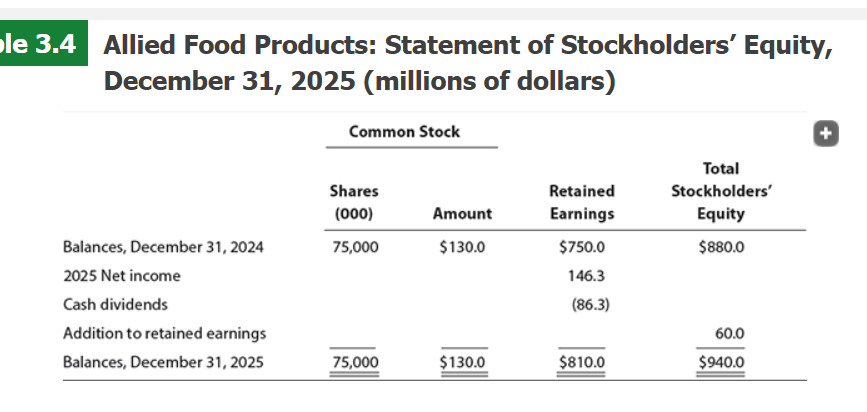
Statement of Stockholder’s Equity
A statement that shows by how much a firm’s equity changed during the year and why this change occurred.
**Note that “retained earnings” represents a claim against assets, not assets per se. Stockholders allow management to retain earnings and reinvest them in the business, use retained earnings for additions to plant and equipment, add to inventories, and the like. Companies do not just pile up cash in a bank account. Thus, retained earnings as reported on the balance sheet do not represent cash and are not “available” for dividends or anything else.
Sarbanes-Oxley Act (SOX)
Which required companies to improve their internal auditing standards and required the CEO and CFO to certify that the financial statements were properly prepared.
Free Cash Flow
The amount of cash that could be withdrawn without harming a firm's ability to operate and to produce future cash flows.

Net Operating Profit After Taxes (NOPAT)
The profit a company would generate if it had no debt and held only operating assets.
Net Operating Working Capital (NOCOW)
Current assets - operating current liabilities
Assets = current assets minus excess cash
Liabilities = current liabilities minus notes payable
Free Cash Flow (FCF)
Measures the cash a company generates after paying for its operating expenses and capital investments.
Market Value Added (MVA)
The excess of the market value of equity over its book value.
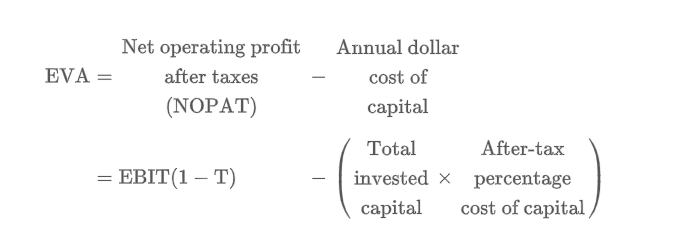
Economic Value Added (EVA)
Excess of NOPAT over capital costs.
Progressive Tax System
A tax system where the tax rate is higher on higher incomes. The personal income tax in the U.S. which ranges from 0% on the lowest incomes to 37% on the highest incomes, is progressive.

Marginal Tax Rate
The tax rate applicable to the last unit of a person’s income.
Average Tax Rate
Taxes paid divided by taxable income.
Capital Gain
The profit from the sale of a capital asset for more than its purchase price.
Capital Loss
The loss from the sale of a capital asset for less than its purchase price.
Traditional IRA
Individuals retirement arrangements in which qualified contributions are tax deductible and income and capital gains on investments within the account are not taxed until the money is withdrawn after age 59 ½
Roth IRA
Individual retirement arrangements in which contributions are not tax deductible but the future income and capital gains within these accounts are not taxed if the money is withdrawn after age 59 ½ .
Alternative Minimum Tax (AMT)
Created by Congress to make it more difficult for wealthy individuals to avoid paying taxes through the use of various deductions.
The dividends received are subjected to triple taxation
(1)The original corporation is taxed.
(2)The second corporation is taxed on the dividends it receives.
(3)The individuals who receive the final dividends are taxed again.
Carryforward
Ordinarily corporate operating losses can be carried forward indefinitely to offset taxable income in a given year.
S Corporations
Small corporations that, under Subchapter S of the Internal Revenue Code, elect to be taxed as a proprietorship or a partnership yet retain limited liability and other benefits of the corporate for of organization.