Chapter 7 Peripheral Odontogenic, Bone, Cartilage, and Metastatic Tumors
 Call Kai
 Learn
 Practice Test
 Spaced Repetition
 Match
 Flashcards
 Knowt Play
1/26

There's no tags or description
Looks like no tags are added yet.
27 Terms
Peripheral Odontogenic Tumors
Peripheral Ossifying Fibroma
Other peripheral odontogenic tumors
Several of the odontogenic tumors have been reported to occur on the gingiva without underlying bone involvement

Peripheral Ossifying Firbroma
•A well-demarcated sessile or pedunculated lesion
•Most likely derived from cells of the periodontal ligament
•More common in females than in males
•Often occurs in young individuals
•Composed of cellular fibrous connective tissue interspersed with scattered bone and cementum-like calcifications
•Treatment: Surgical excision
The peripheral ossifying fibroma is composed of a combination of fibrous tissue and islands or strands of odontogenic epithelium.

Tumors of the soft tissue
Lipoma
Tumors of nerve tissue
Tumors of muscle
Vascular tumors
Tumors of soft tissue include benign and malignant tumors of adipose (fat) tissue, nerve, muscle, blood vessels, and lymphatic vessels.

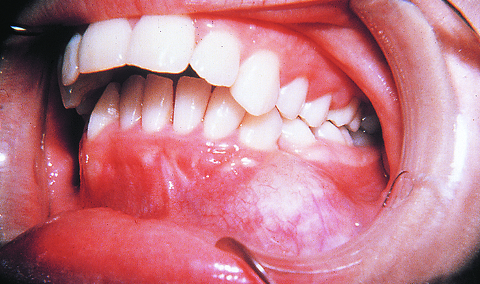
Lipoma
•A benign tumor of mature fat cells
•Clinically: A yellowish mass surrounded by a thin layer of epithelium
•Most commonly located on the buccal mucosa and the vestibule
•Most occur in individuals over age 40
•Microscopic
•A well-delineated tumor with mature fat cells uniform in size and shape
•Treatment: Surgical excision

Tumors of Nerve Tissue
Neurofibroma and schwannoma
Granular Cell tumor
Congenital Epulis
These are the types of tumors of nerves tissue that are discussed in this section

Neurofibroma and schwannoma
•Benign tumors derived from Schwann cells in nerve tissue
•The tongue is the most common intraoral location
•May occur at any age, with no sex predilection
•Neurofibromatosis of von Recklinghausen
•Neurofibroma
ØA fairly well-delineated, diffuse proliferation of spindle-shaped Schwann cells
•Schwannoma
ØSpindle-shaped Schwann cells arranged in palisaded whorls around a central pink zone
ØIt is surrounded by a connective tissue capsule
•Treatment: Surgical excision

Granular Cell Tumor
•A benign tumor composed of large cells with a granular cytoplasm
•Most often occurs on the tongue, followed by the buccal mucosa
•A painless, nonulcerated nodule
•Most are found in adults, with a female sex predilection
•Most likely arises from neural or primitive mesenchymal cells
•Large oval cells with a granular cytoplasm
•Treatment: Surgical excision

Congenital Epulis
•A benign neoplasm composed of cells closely resembling those seen in the granular cell tumor
•Most likely arises from primitive mesenchymal cells
•Appears as a sessile or pedunculated mass on the gingiva
•Usually occurs on the anterior maxillary gingiva
•Almost always occurs in girls
•Treatment: Surgical excision
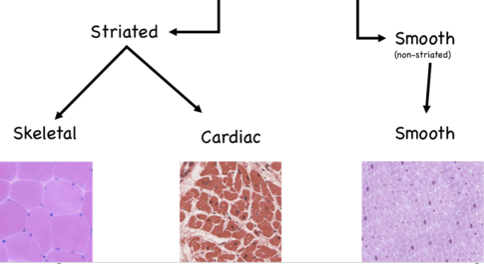
Tumors of Muscle
Extremely uncommon in the oral cavity
Vascular leiomyomas:
Rhabdomyoma
A benign tumor of striated muscle
Leiomyoma
A benign tumor of smooth muscle
Rhabdomyoma:
A malignant tumor of striated muscle
The most common malignant soft tissue tumor of the head and neck in children
Typically occurs in children under 10 years of age
Has a male sex predilection
A rapidly growing, destructive tumor
Treatment: Multidrug chemotherapy, radiation therapy, and surgery (poor prognosis)

Vascular Tumors
Hemangioma
Lymphangioma
Malignant Vascular tumors
These are the types of vascular tumors discussed in this section

Hemangioma
•A benign proliferation of capillaries
•Capillary hemangioma: Contains numerous small capillaries
•Cavernous hemangioma: Contains larger blood vessels
•Most are present at birth or arise shortly thereafter
•More than half occur in the head and neck area
•The tongue is the most common intraoral location
•More common in females
•May occur in adults in response to trauma
•Frequently blanch when pressure is applied
Treatment:
Many undergo spontaneous remission
Treatment is variable and includes surgery or the injection of a sclerosing solution
Lymphangioma
•A benign tumor of lymphatic vessels
•Most are present at birth
•Half arise in the head and neck area
•No sex predilection
•Intraorally, the most common location is the tongue, where it is an ill-defined mass with a pebbly surface
•A cystic lymphangioma in the neck is a cystic hygroma
•Treatment: Surgical excision: Tends to recur
Malignat vascular tumors
•Angiosarcoma may occur in the oral cavity, but it is rare
•Kaposi sarcoma may arise in multiple sites, including the skin and oral mucosa
•It was historically seen in older men
•A more aggressive form has arisen with HIV
•Kaposi sarcoma and HIV
•Lesions are often seen in the oral cavity as purple macules, plaques, or exophytic tumors
•Most commonly located on the hard palate and gingiva
•May also occur in patients with other forms of immunodeficiency
•Caused by a human herpesvirus (HHV-8; also called Kaposi sarcoma–associated herpesvirus [KSAH])
•Treatment
•Surgical excision
•Radiation therapy
Combination of both

Tumors of Melanin-producing Cells
Melanotic nevi
Malignat melanoma
these two types are melanin-producing cells that will be discussed in this section

Melanocytic Nevus
•Nevus may refer to either a developmental tumor of melanocytes or a pigmented congenital lesion
•Can arise on the skin or the oral mucosa
•Intraoral tumors consist of tan-to-brown macules or papules
•Occur most often on the hard palate or buccal mucosa
•Intraoral tumors consist of tan-to-brown macules or papules that occur most often on the hard palate.
•Occur twice as often in women as men
•Usually first identified in individuals between 20 and 50 years old
•Most are benign; some may be malignant
•Treatment
•Biopsy
•Surgical excision
Recurrence is rare

Malignant Melanoma
•A malignant tumor of melanocytes
•Most arise on the skin in response to prolonged exposure to sunlight
•Primary malignant melanoma is rare, but melanomas on skin may metastasize to oral cavity
•Usually a rapidly enlarging blue-to-black mass
•An aggressive tumor with unpredictable behavior and early metastasis
•Most common intraoral locations are the palate and maxillary gingiva
•Usually occur in adults over 40 years of age
•Treatment
•Surgical excision
•Chemotherapy may be used along with surgery
•Poor prognosis
Tumors of Bone and Cartilage
Osteoma
Osteosarcoma
Tumors of cartilage

Osteoma
•An asymptomatic benign tumor composed of benign compact bone
Radiographic
Appears as either a sharply delineated radiopaque mass within bone or attached to the outer surface of bone
No sex predilection
A component of Gardner syndrome
Treatment
Surgical excision
Does not recur

Osteosarcoma (osteogeninc sarcoma)
•A malignant tumor of bone-forming tissue
•The most common primary malignant tumor of bone in patients less than 40 years of age
•The average age of patients with osteosarcoma involving the jaws is about 37 years
•Occurs twice as frequently in mandible as maxilla
•More common in males
•Radiographic
•May vary from radiolucent to radiopaque
•Usually a destructive, poorly defined lesion
•May or may not involve adjacent soft tissue
•Asymmetric widening of the periodontal ligament space, and a “sunburst” pattern may be seen
Treatment:
Preoperative multiagent chemotherapy followed by surgery
Jaw tumors frequently recur
Tumors of Cartilage
•Chondroma: A benign tumor of cartilage
•Chondrosarcoma: A malignant tumor of cartilage
•Treatment of chondrosarcomas
•Wide surgical excision
Poor prognosis

Tumors of Blood forming tissues
Leukemia
Lyphoma
Multiple myeloma
Leukemia
•A broad group of disorders characterized by an overproduction of atypical white blood cells
•The types of leukemia seen are classified according to the kinds of cells that are proliferating
•Myelocytes
•Lymphocytes
•Monocytes
•Acute leukemia is most common in children and young adults
•Characterized by a proliferation of immature white blood cells
•Chronic leukemia most frequently occurs in middle-aged adults
•Characterized by excess proliferation of mature white blood cells
•Treatment
•Chemotherapy, radiation therapy, and corticosteroids
•Prognosis depends on the type and extent of disease
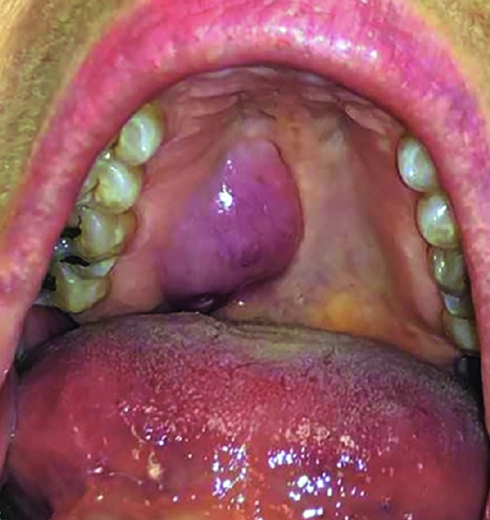
Lymphoma (non-Hodgkin lymphoma)
•A malignant tumor of lymphoid tissue
•Clinical presentation: Gradual enlargement of lymph nodes
•The most common intraoral location is the tonsils
•Usually occurs in adults
•More common in males than in females
•Treatment
•Radiotherapy
•Surgery
•Chemotherapy
Combination of these therapies

Multiple Myeloma
•A systematic, malignant proliferation of plasma cells
•Causes destructive lesions in bone
•Most patients are older than 40 years; occurs most commonly in the seventh decade of life
•Males are affected more often than females
•Patients usually experience bone pain and swelling
•Radiographic
•Multiple radiolucent lesions
•The mandible is affected more often than the maxilla
•Most patients have an elevation of a single type of immunoglobulin, called a monoclonal spike
•Patients may have fragments of immunoglobulins in their urine known as Bence Jones proteins
•An extramedullary plasmacytoma is a localized tumor of plasma cells in soft tissue
•Treatment
•Chemotherapy and radiation
Poor prognosis
Metastatic Tumors
•Metastatic tumors from primary sites elsewhere in the body are rare
•Most tumors arise from the thyroid, breast, lungs, prostate gland, and kidneys
•The most frequent intraoral site for metastatic tumors is the mandible
•Patients may experience pain, paresthesia or anesthesia of the lip, swelling, expansion of the affected bone, and loosening of teeth in the affected area
•Most patients are adults
Males are affected more often than females
•Radiographic
•Lesions are usually poorly defined and radiolucent
•Roots of involved teeth may show a spiked appearance
•Some tumors may form bone and be radiopaque
•Treatment
•Chemotherapy and radiation therapy
•The prognosis for patients with tumors that have metastasized to the jaws is poor

Langerhans Cell Histiocytosis (Langerhans Cell Disease)
•Group of rare disorders characterized by presence of histiocyte-like cells and eosinophils
•Spectrum of cell has been stratified into two basic categories
•Single-system disease with unifocal and multifocal involvement
•Multisystem disease with or without organ dysfunction
•Biopsy and histopathologic examination is necessary for diagnosis of LCH
•Most often occurs in children and in White individuals of Northern European ancestry
•Jaw lesions are seen in 10% to 20% of all cases of LCH
•Lesions of LCH involving the jawbones may closely mimic periodontal and/or endodontic disease, and this diagnosis may be considered when a clear odontogenic etiology cannot be identified

Mestatic Tumors
•Metastatic tumors from primary sites elsewhere in the body are rare
•Most arise from the thyroid gland, breast, lungs, prostate gland, and kidneys
•On occasion, the oral metastatic tumor is the first manifestation of a primary tumor elsewhere
•Chemotherapy and radiation therapy are used to alleviate the discomfort of metastatic tumors in the jaws