Exam 3- Micro
 Call Kai
 Learn
 Practice Test
 Spaced Repetition
 Match
 Flashcards
 Knowt Play
 Podcast
1/200

Earn XP
Description and Tags
Lesson 23,24,25,26,27,28
201 Terms
What are the 4 basic nutrional categories of life?
Photoautotrophs, chemoautotrophs, photoheterotrophs, chemoheterotrophs.
What are the energy source and carbon source of photoautotrophs?
Energy source: Light, Carbon source: Co2
What are the energy source and carbon source of chemoautotrophs?
Energy source: Inorganic molecules, Carbon source: Co2
What are the energy source and carbon source of photoheterotrophs?
Energy source: Light, Carbon source: Organic compounds
What are the energy source and carbon source of Chemoheterotrophs?
Energy source: Organic compounds, Carbon source: Organic compounds
What are the 4 toxic forms of O2 and there neutralizing agents
singlet oxygen= carotenoids
superoxide radicals= catalase or peroxidase
hydrogen peroxide= superoxide dismutase
hydroxyl radicals= catalase, peroxidase, and vitamin C/E
What are 5 influences on microbial growth?
growth factors, temperature, pH, osmotic pressure, and hydrostatic pressure
How do different temperatures influence microbial growth?
Psychrophiles thrive in really cold temps,
Psychotolerant = kinda cold temps,
Mesophiles prefer moderate temps,
Thermophiles thrive in high temps,
Hyperthermophiles like it really hot temps.
Know how the lines on the graph are they go up/down at which temp!

What are 6 growth factors and there function?
Amino acids - building blocks of proteins
Cholesterol= used by mycoplasmas(bacteria) for cell membrane
Heme= functional portion of cytochromes in electron transport system
NADA= electron carrier
Niacin(nicotinic acid, vitamin B3)= precursor of NAD+ and NADP+
Para-aminobenzoic acid(PABA)= precursor of folic acid, involved in metabolism of one-carbon compound and nucleic acid synthesis.
Difference between osmotic pressure and hydrostatic pressure?
Osmotic pressure is the pulling force on water across membrane due to solutes in solution. Hydrostatic pressure is the pushing force on water due to gravity and depth.
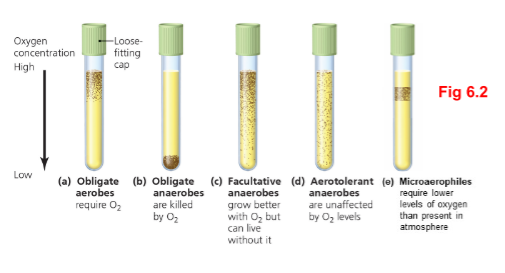
What are the 5 O2 requirements of different organisms?
Obligate aerobes - require o2 for growth
Obligate anaerobes - killed by o2
Facultative anaerobes - grow better with o2 but can live without it
Aerotolerant anaerobes - unaffected by o2 levels
Microaerophiles - require lower levels of o2 than present in atmosphere
What is Quorum Sensing?
the ability to detect and respond to cell population density by gene regulation. It initiates in the late exponential or early stationary phase.
Know from Quiz
Compare the microbial electron sources of Organotrophs vs. Lithotrophs.
Organotrophs utilize organic compounds as electron sources, while lithotrophs use inorganic substances for electron transfer.
What is a biofilm?
A syntrophic consortium of microorganisms in which cells stick to each other and often also to a surface. They make microorganisms more harmful and enhance antibiotic resistance. Biofilm formation is triggered by quorum sensing.

What are the 6 steps to biofilm formation?
Free-swimming microbes are vulnerable to environmental stresses.
Some microbes land on a surface, such as a tooth, and attach.
The cells begin producing an extracellular matric and secrete quorum-sensing molecules.
Quorum sensing ,triggers cells to change their biochemistry and shape.
New cells arrive possibly including new species and water channels form in the biofilm.
Some microbes escape from the biofilm to resume a free-living existence and perhaps to form a new biofilm on another surface.
*Production of extracellular polymeric substances (EPS) is crucial in the maturation of biofilm, because it provides structural integrity, protection, and secretion of quorum signals.
A team of researchers is investigating a bacterial strain that has been causing persistent infections in patients with implanted medical devices. The strain forms a biofilm on these devices, which is difficult to eradicate. Which aspect of biofilm biology could be targeted to disrupt this bacterial community and potentially treat the infections?
The communication pathways used in quorum sensing.
A medical microbiologist isolates a bacterium from a patient's anaerobic infection site. Upon culturing, it is noted that the bacterium does not grow in the presence of oxygen. However, genomic analysis shows the presence of genes coding for catalase and peroxidase. How can this finding be reconciled with the bacterium's growth profile?
The genes for catalase and peroxidase are likely non-functional or not expressed.
An experiment is designed to assess the growth of a bacterium at different hydrogen ion concentrations. The bacterium exhibits optimal growth at a pH of 9. This bacterium can be classified as:
an alkalophile.
A microbiologist notes that a certain species of bacteria only grows well under high pressures, such as those found at the bottom of deep oceans. This bacterium can be categorized as a:
Barophilic organism
What is a fastidious organism?
requires specific nutrients or growth factors and won’t grow on basic media.
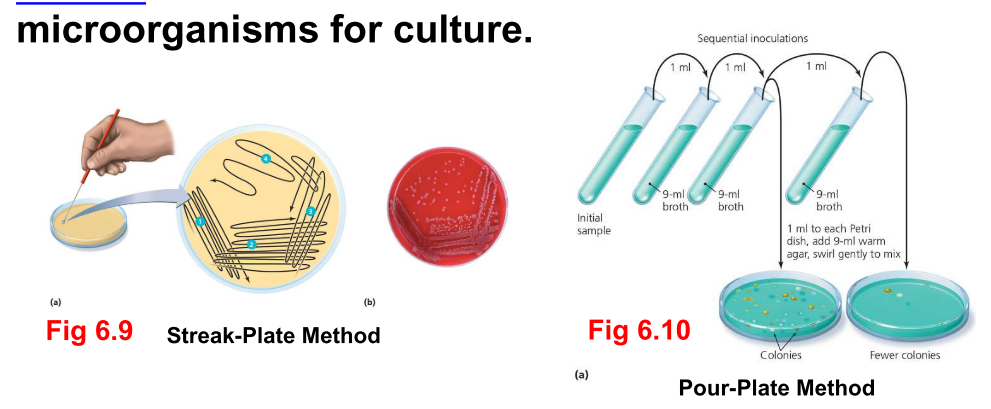
What are the 2 most common methods for isolation of microorganisms in culture?
Streak-plate method= separates cells on the agar surface using a sterilized loop by streaking in sequential quadrants; the number of cells is diluted until isolated colonies appear in the final zone.
Pour-plate method = diluted microbial samples are mixed with molten agar and poured into sterile Petri dishes; as the agar solidifies, colonies form both within the agar and on the surface
What are the 6 types of culture media for bacterial culture?
Defined media
Complex media
Selective media
Differential media
Anaerobic media
Transport media
What is a defined media?
Its exact chemical composition is known.
What is a complex media?
contains digests of protein or extracts(ex. yeast, soy, meat)

What is a selective media?
used to select for growth of a particular “selected” microorganism (ex. antibiotic resistance)

What is a differential media?
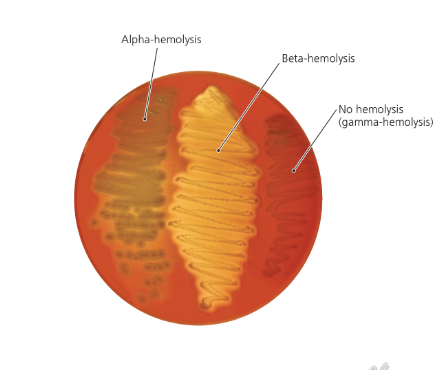
used to differentiate closely related organisms or groups of organism by visual changes of target/ color change in the medium (ex. blood agar, mannitol salt agar(MSA))
What is a anaerobic media?
medium for the isolation of anaerobes and facultative anaerobes
What is a transport media?
used to maintain viability of microorganism without significant increase in growth
What are the 3 methods for preserving cultures?
Refrigeration= (+4 degrees C) short term storage
Deep-freezing(-20-80 degrees C) storage for years
Lyophilization= procedure of freezing and subliming water from frozen preparation that enables storage for decades/centuries at +4-10 degrees C)

What is binary fission?
The asexual reproduction in which DNA of parents cell replicates followed by cytoplasmic division. Two new daughter cells are formed. Binary fission in bacterial cells is initiated when the bacterium reaches a critical size and nutrient availability is high
During the binary fission process, a mutation occurs in the DNA replication step of a bacterial cell. How might this mutation impact the resulting daughter cells, and what could be the long-term consequences for the bacterial population?
The mutation could be passed to both daughter cells, potentially leading to a new trait that could be beneficial or detrimental to the population.

What is generation time?
time for a population of bacteria to double in number, 20-60 min under optimal conditions
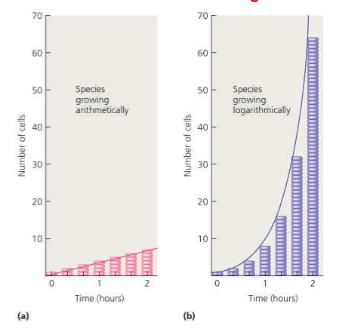
What is logarithmic growth?
the rapidly growing exponential growth phase of a cell culture.
Microorganisms will continue to increase exponentially until blank
essential nutrients are exhausted/used
Compare direct and indirect methods of measuring bacterial reproduction?
Direct methods involve counting the actual number of cells, such as using a microscope or plate counts, while indirect methods estimate growth through measurements of density or activity of cells.
What is turbidity?
how cloudy a liquid culture becomes as bacteria multiply measured by a spectrophotometer that detects how much light is absorbed/scattered by culture. Turbidity doesn’t tell us if cells are alive or dead for that use serial dilution.
Compare exponential and logistic growth?
Exponential growth is characterized by a constant growth rate, leading to rapid increases in population size without constraints resulting in a T-shaped curve, while logistic growth considers environmental limitations, resulting in an S-shaped curve where the population stabilizes at carrying capacity.
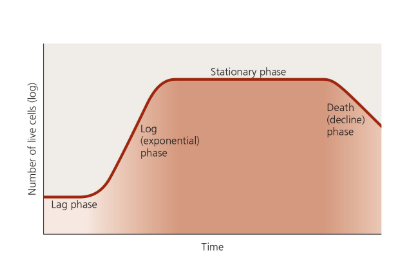
Draw and label the 4 distinct phases of bacterial population growth+ what occurs in each?
Lag phase= bacteria starts to grow
Exponential (Log) growth= population doubles every 20 minutes
Stationary phase= growth stops because nutrients are depleted/waste accumulates
Death phases= bacteria die faster than they multiply.
Considering the characteristics of bacterial colonies, how could the optical property of a colony affect its identification and study?
Transparent colonies are harder to detect and may require more sensitive culturing techniques
In a microbiology lab, a student is tasked with selecting an appropriate culture media for growing a fastidious bacterium. Which type of general culture media should the student choose?
Enriched media, to provide the necessary nutrients and growth factors
A lab technician is preparing to culture a sample from a highly contaminated environmental source. The goal is to isolate and grow a specific bacterium known to be present in the sample. Which type of general culture media would be the best choice for this purpose?
Selective media, to suppress the growth of competing microorganism
During an outbreak investigation in a hospital, blood agar plates are used to culture samples from infected patients. Several samples exhibit alpha-hemolysis (partial hemolysis) around the colonies. What does alpha-hemolysis indicate about the bacteria, and what should be the next steps in identifying the causative agent of the outbreak?
suggests the bacteria have moderate virulence; further biochemical tests and molecular techniques should be used to identify the species and determine the outbreak source.
Exponential Growth Calculation. Suppose a bacterial culture starts with 1000 bacteria and the per capita growth rate (rmax) is 0.5 per hour. Calculate the number of bacteria after 3 hours, assuming exponential growth conditions. Round your answer to the nearest whole bacterium.
Formula: N = N0 × e(rmax ×t)
Where: N = number of bacteria at time.
N0 = initial number of bacteria.
rmax = maximum per capita rate of increase.
t = time in hours
e = base of the natural logarithm (approximately 2.71828).
4482 bacteria

Logistic Growth Calculation at Half Carrying Capacity. A bacterial population grows following a logistic model with a carrying capacity (K) of 10,000 bacteria. If the initial population size (N) is 5000 bacteria and the maximum per capita rate of increase (rmax) is 0.1 per hour, calculate the rate of population growth at this instant in bacteria per hour. Round your answer to the nearest whole bacterium and do NOT include the units in your answer.
250 (bacteria per hour)

Solving for Maximum Per Capita Rate of Increase. A bacterial population grows following a logistic model with a carrying capacity (K) of 20,000 bacteria. If the initial population size (N) is 5000 bacteria and instantaneous rate of population growth (dN/dt) is 200 bacteria per hour, calculate the maximum per capita rate of increase (rmax). Express your answer as a decimal rounded to the nearest thousandth and do NOT include the units in your answer.
0.053 per hour

This figure displays a serial dilution series and viable plate count for estimating microbial population size. Use this information to calculate the Original Culture Density (OCD) in cfu/mL. Present your answer using correct scientific notation and units.
2.85 x 10^5 cfu/mL
What were Paul Ehrlich(1909) contributions to development of antimicrobials?
discovered selectively toxic compounds, like chemotherapy, as “magic bullets” to kill pathogens while having little to no effect on patients
What were Alexander Fleming(1928) contributions to development of antimicrobials?
discovered the first true antibiotic penicillin from mold
What were Gerhard Domagk(1932) contributions to development of antimicrobials?
Discovery of the first sulfa drug(sulfanilamide), Prontosil, leading to the development of
antibiotics
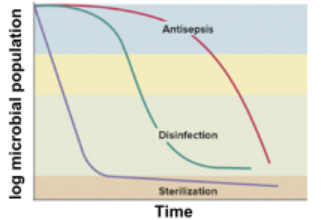
What is sterilization and some examples?
destruction of all microbial life. Examples include autoclaving, dry heat, and chemical sterilants.
Know example and what it does from quiz

What is disinfection and some examples?
destroys most microbial life, reducing # of contamination of inanimate(nonliving) objects. Examples include ethanol, phenolics, alcohols, aldehydes, or soaps on equipment or surfaces

What is antiseptic and some examples?
chemicals applied to an animate(living) surface to destroy or inhibit/limiting # of microbial growth Examples include iodine or alcohol to prepare skin for an injection or hydrogen peroxide to clean wound
What is the difference between the affects of -static vs -cidal control agents on microbial growth?
-static agents inhibit microbial growth, while -cidal agents kill microorganisms.
Blank is a chemical used internally to kill or inhibit microbes within host tissues?
Chemotherapy
How do microbial agents act against cell walls?
blocks production of peptidoglycan inhibiting cell wall biosynthesis causing osmotic lysis.
How do microbial agents act against cytoplasmic membrane?
interferers with bacterial cell membrane or LPS in gram negative outer membrane causing leakage of cellular contents and subsequent cell death
How do microbial agents act against proteins?
heat/chemicals denature enzymes by altering their 3D structure, leading to loss of function.
How do microbial agents act against nucleic acids?
radiation/chemicals cause mutations or stand breaks, interferes halts DNA replication and protein synthesis and can lead to fatal error in gene expression
What are the 3 most resistant groups of microbes and why are they so resistant to many microbial agents?
Prions= have protein-only infectious agents and are nonliving, making them unaffected by antibiotics, heat, radiation, or enzymes.
Bacterial endospores = have dormant structures with thick protective coats so they can survive boiling, radiation, disinfectants and desiccation
Mycobacteria = have waxy mycolic acid cell walls resistant to drying, detergents, and many antibiotics.
In a hospital setting, it's observed that disinfectants are less effective against Mycobacterium tuberculosis, Clostridium spores, and Norovirus. What is the most likely reason for this resistance pattern?
Mycobacterium tuberculosis has a waxy cell wall, Clostridium forms hardy spores, and Norovirus lacks an envelope, making them more resistant
Many resistant pathogens are blank with outer membrane that limit drug entry or they produce enzymes like blank that inactivate antibiotics.
Gram-negative bacteria, beta-lactamase
What are the 4 levels of biosafety(BSL) and examples of microbes that are handled at each levels?
BSL-1: Minimal risk, non-pathogenic strains such as E. coli.
BSL-2: Moderate risk, pathogens like streptococci pyrogens, Salmonellaa, HIV, MRSA.
BSL-3: High risk, airborne pathogens such as Mycobacterium tb, Yersinia pestis(plague), acillus anthracis.
BSL-4: Maximum risk, exotic pathogens like Ebola virus,Prions, Marburg virus.
Know viruses at each from Quiz
What are the physical methods versus chemical methods of microbial control and describe at least five examples of each.
Physical methods include techniques that utilize heat, radiation, or filtration to eliminate or reduce microbial populations. Examples are autoclaving, refrigeration, freezing, desiccation, lyophilization, osmotic pressure. Chemical methods involve the use of antimicrobial agents to inhibit or kill microbes. Examples include bleach, alcohols, phenols, halogens, oxidizing agents, and surfactants.
A study shows that high temperatures achieved through moist heat (like autoclaving) effectively kill all forms of microbial life, including spores, while certain chemical disinfectants fail to eliminate spore-forming bacteria. This suggests…
Certain physical methods can be more effective than chemical methods, particularly against resilient forms like spores.
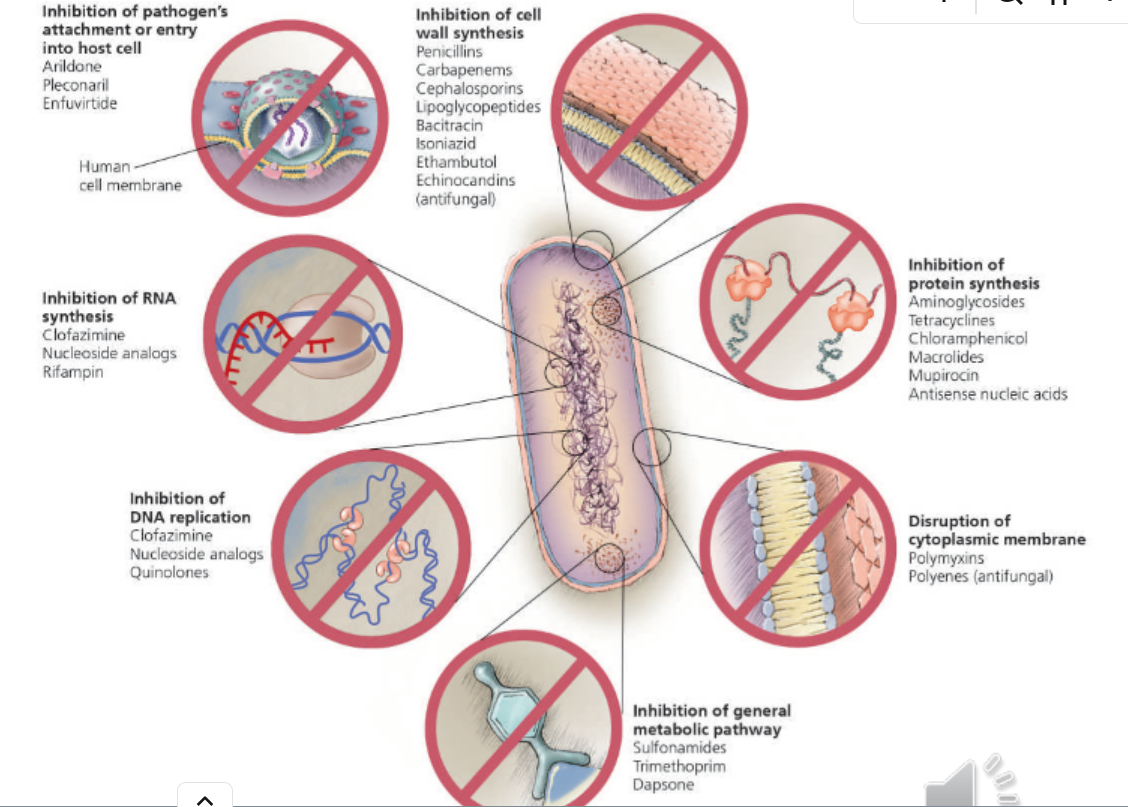
What are 6 general mechanisms by which antimicrobial drugs affect pathogens?
Inhibit cell wall synthesis(ex. penicillin)
Inhibit protein synthesis
Disrupt cell membrane
Inhibit metabolic pathways
Inhibit nucleic acid synthesis or DNA replication
Block pathogen recognition or attachment to host

What are the action and example of drugs in bacterial cell walls?
Know that this drug interfere with the bacterial cell wall and their mechanism of action from Quiz
Antibacterial drugs target bacterial cell walls to inhibit their synthesis, weakening the structure and leading to cell lysis. An example is penicillin, which prevents the formation of peptidoglycan cross-links.
How do semisynthetic lactam drugs work?
Modified versions of natural penicillins that enhance their effectiveness against a broader range of bacteria by resisting degradation by certain beta-lactamases and improving their ability to penetrate the cell wall.
How do Vancomycin drugs work?
A non-lactam antibiotic that targets bacterial cell wall cross-linking by binding to the D-Ala–D-Ala peptide bridges in peptidoglycan. This action prevents the enzymes responsible for linking N-acetylmuramic acid (NAM) subunits, making it particularly effective against Gram-positive bacteria.
How do Cycloserine drugs work?
Inhibits synthesis of D-Ala-D-Ala dipeptides, depriving the cell of precursors needed for cell wall construction; commonly used against beta-lactam-resistant bacteria.
How do Bacitracin drugs work?
Blocks the transport of NAG and NAM precursors across the cytoplasmic membrane, preventing peptidoglycan assembly before the wall is built; used topically due to systemic toxicity(Common ingredient in triple antibiotic ointments(e.g., Neosporin®)
How do Isoniazid and ethambutol drugs work?
They target the waxy mycolic acid layer of the cell wall of Mycobacterium species: Isoniazid directly blocks mycolic acid synthesis, while ethambutol inhibits arabinogalactan polymerization, weakening the cell wall. Used to treat leprosy and TB in a multi-drug thearpy.
What are the limitations of Cell Wall Synthesis Inhibitors?
Drugs that inhibit cell wall synthesis only work during active growth. They are ineffective against dormant or slow-growing bacteria.
The ____________ is a defining characteristic of bacteria which is not found in eukaryotes and is therefore a good choice for chemotherapeutic agents
peptidoglycan cell wall
What are the action and example of drugs in fungal cell walls?
Antifungal drugs target fungal cell walls, disrupting their synthesis and compromising cell integrity. An example is echinocandins, which inhibit the enzyme responsible for glucan synthesis in the cell wall.
Many drugs that inhibit the synthesis of the cell wall act by blank?
preventing the cross-linkage of NAM subunits
The cytosol of bacteria contain ____________ which has/have components different from those of the functionally equivalent structure of eukaryote.
70S ribosomes
What is the difference between prokaryotic and eukaryotic ribosomes?
Prokaryotic ribosomes consist of a 50S large and a 30S small subunit, while eukaryotic ribosomes consist of a 60S large and a 40S small subunit.

All Beta-lactams contain a core blank, and their structure mimics the blank which binds inactive PBPs(penicillin-binding proteins). 3 examples of Beta-lactams antibiotics are?
Know that these drug interfere with bacterial cell wall and their mechanism of action from Quiz
B-lactam ring. D-Ala-D-Ala. Penicillin G, cephalothin, and methicillin

What are the 6 drugs that interfere with ribosomes to inhibit protein synthesis? Label each based on the picture.
Know that these are drugs that interfere with prokaryotic ribosomes and their mechanism of action for each from Quiz
A. Aminoglycosides
B. Tetracycline
C. Chloramphenicol
D. Lincosamides
E. Antisense Nucleic Acids
F. Oxazolidinones

What are the actions of Aminoglycosides in interfering with ribosome to inhibit protein synthesis?
Know that this drug interfere with prokaryotic ribosomes and their mechanism of action from Quiz
Binds to the 30S ribosome changing it’s shape to cause mRNA misreading. Ex.Streptomyosin

What are the actions of Tetracyclines in interfering with ribosome to inhibit protein synthesis?
Know that this drug interfere with prokaryotic ribosomes and their mechanism of action from Quiz
block tRNA binding to the 30s ribosome
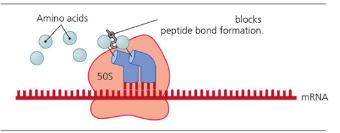
What are the actions of Chloramphenicol in interfering with ribosome to inhibit protein synthesis?
Know that this drug interfere with prokaryotic ribosomes and their mechanism of action from Quiz
blocks peptide bond formation at 50s ribosome prevents the formation of peptide bonds
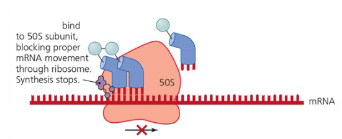
What are the actions of Macrolides and Lincosamides in interfering with ribosome to inhibit protein synthesis?
Know that this drug interfere with prokaryotic ribosomes and their mechanism of action from Quiz
blocks translocation at 50s ribosome and acts to stall a ribosome as it reads mRNA

What are the actions of Antisense nucleic acids in interfering with ribosome to inhibit protein synthesis?
Know that this drug interfere with prokaryotic ribosomes and their mechanism of action from Quiz
binds to mRNA preventing ribosome docking

What are the actions of in oxazolidinones interfering with ribosome to inhibit protein synthesis?
Know that this drug interfere with prokaryotic ribosomes and their mechanism of action from Quiz
blocks 70s ribosome assembly and prevents formation of the initiation complex.
Blank prevents rhinoviruses(common cold virus) from attaching to host cells by binding to a hydrophobic pocket on the viral capsid protein.
Know that this is a viral inhibitor and how it works from Quiz
Antiviral drugs such as Pleconaril
Blank interferes with viral replication by binding to viral capsid which prevents viral uncoating and shutdown of host protein synthesis.
Know that this is a viral inhibitor and how it works from Quiz
Arildone
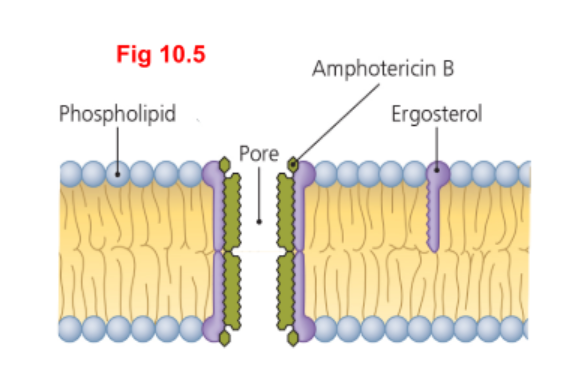
How does Amphotericin B drug work? Why does it have a lot of bad side effects in humans? What cell types are most and least susceptible to Amphotericin B drugs?
attaches to ergosterol to form channels/pores that damage cytoplasmic membrane integrity, leading to cell lysis and death. It harms humans because it targets the cell membrane, not the cell wall, and it can bind to cholesterol in human cells, causing toxicity. Most=fungal cells and Least=bacterial cells

How does Antimicrobial peptides drug work?
a potent alternative to antibiotic that inserts into microbial cell membranes and cause cell leakage.

How does Mupirocin halt translation by interfering with charging of tRNA molecule?
Inhibits bacterial protein synthesis by specifically selectively binding to bacterial isoleucyl-tRNA synthetase, preventing the charging of tRNA with isoleucine, which is crucial for translation. Only works in Gram-positive bacteria.

What are the 5 mechanisms for inhibition of nucleic acid synthesis?
1.Quinolone
2.Refampin
3.Anthracyclines
4.Nucleotide and nucleoside analogs
5.Reverse transcriptase inhibitors(RTIs)
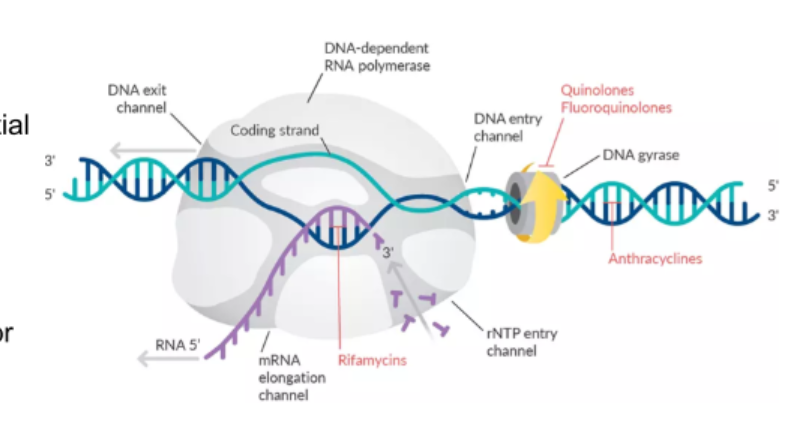
How does Quinolones work to inhibit nucleic acid synthesis?
block bacterial DNA gyrase, a type of topoisomerase, interfering with DNA replication.

How does Rifampin work to inhibit nucleic acid synthesis?
block bacterial RNA polymerase, preventing mRNA elongation, used against mycobacterium tuberculosis.
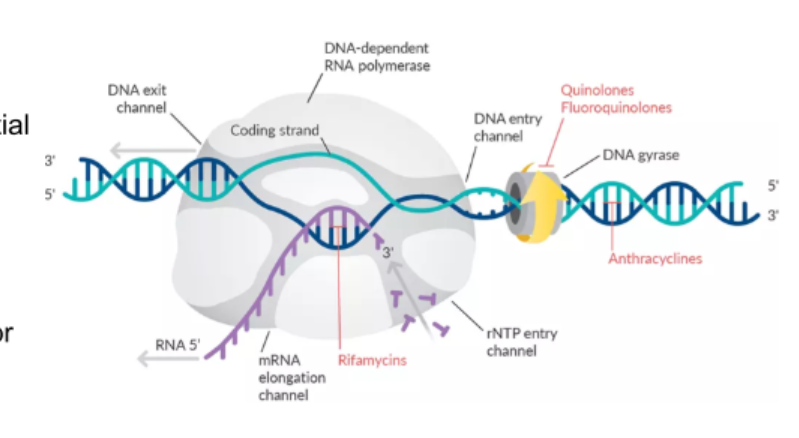
How does Anthracyclines work to inhibit nucleic acid synthesis?
interferes with DNA-related enzymes, including DNA polymerase.

How does Nucleotide and nucleoside analogs work to inhibit nucleic acid synthesis?
They mimic normal nucleic acid bases to disrupt replication and transcription by terminating chain elongation, causing mutations, or blocking polymerases.

How does Reverse transcriptase inhibitors (RTIs) work to inhibit nucleic acid synthesis?
blocks reverse transcriptase , preventing the conversion of viral RNA into DNA during the replication process. (ex. AZT blocks reverse transcriptase in retrovirus like HIV)
AZT (azidothymidine) is a thymidine analogue that works by selectively inhibiting human immunodeficiency virus (HIV)’s reverse transcriptase. Why are humans able to tolerate exposure to AZT while the virus cannot?
Humans do not naturally possess the reverse transcriptase enzyme.
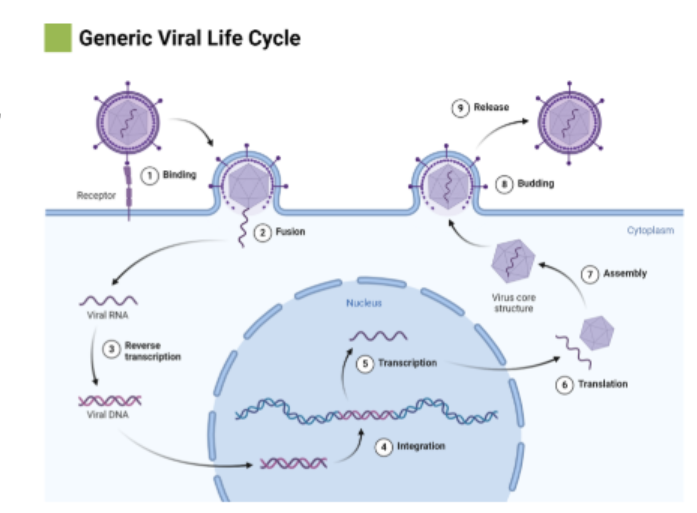
What are the actions of antimicrobial attachment antagonists and drugs that inhibit viral entry?
Attachment antagonists: Chemically block viral surface proteins from binding to complementary host cell receptor sites, preventing viral attachment and docking (e.g., Pleconaril binds capsid pockets to block attachment).
Entry and uncoating inhibitors: Inhibit membrane fusion between the viral envelope and host cell, or block capsid breakdown (uncoating) inside host cells, preventing the release of viral genetic material into the host cytoplasm (e.g., Amantadine and rimantadine).
Protease inhibitors: Inhibit viral protease enzymes responsible for cleaving inactive viral polyproteins into functional structural proteins and enzymes, halting maturation of infectious virions.
Viral nucleic acid inhibitors: Terminate or disrupt the synthesis of viral genomes by targeting viral polymerases or reverse transcriptase (ex.acyclovir).
Distinguish narrow-spectrum drugs from broad-spectrum drugs in terms of their targets and side-effects?
Narrow-spectrum drugs specifically target a limited range of microbes, often minimizing side effects by preserving beneficial flora, while broad-spectrum drugs can affect a wide variety of pathogens, which may increase the risk of side effects and disrupt normal flora.

The following describes which type of test?
A standardized method to measure the effectiveness of antibiotics against bacteria. It is inexpensive and tests multiple drugs at once, but does not provide MIC or an exact diagnosis.
Steps:
Antibiotic-impregnated disks are placed on an agar plate with bacterial culture and incubated.
Clear areas around the antibiotic disks where bacteria have not grown, called zones of inhibition (ZOI), are measured in millimeters (mm) and compared to a standard table.
Results of ZOI classify bacteria as sensitive, intermediate, or resistant to antibiotics.
Diffusion susceptibility test (Kirby-Bauer test)