arh 101: exam 1 study images
 Call Kai
 Learn
Learn Practice Test
 Spaced Repetition
 Match
Match Flashcards
 Knowt Play
1/29

There's no tags or description
Looks like no tags are added yet.
Name | Mastery | Learn | Test | Matching | Spaced | Call with Kai | Chat |
|---|
No analytics yet
Send a link to your students to track their progress
30 Terms

Lion-human, Stadel Cave, Germany, ca. 40,000 BCE, mammoth ivory, 12.25 x 2.875”

Woman of Willendorf, Austria, ca. 28,000 BCE, limestone, 11.1 cm high

Lion Panel, Chauvet Cave, France, ca. 32,000 BCE

Reconstruction image of architecture at the site of Çatal Hüyük, Turkey, original established ca. 7,500 BCE

Stonehenge, Salisbury Plain, Wiltshire, England, ca. 2100 BCE, circle dia. 97'

Plastered human skull from the site of Jericho, ca. 7500 BCE, human bone, plaster, w. 14.6 x h.17 cm


Twelve Votive Figures from the Square Temple at Eshnunna (Modern Tell
Asmar, Iraq) (Sumerian), ca. 2900-2600 BCE, limestone, alabaster, gypsum, h. 30”

Cylinder seal (and modern impression) of Queen Puabi from Puabi’s Tomb Chamber
at the site of Ur (Sumerian), ca. 2500 BCE, Lapis lazuli, D. 2.60 cm, H. 4.90 cm


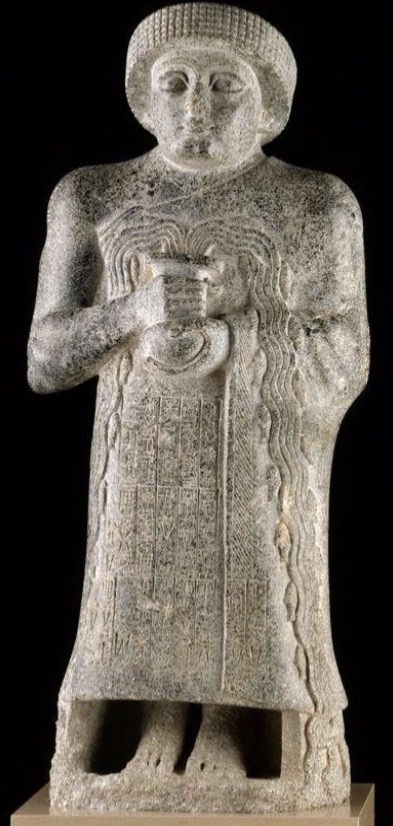
Votive Statue of Gudea (Neo-Sumerian), ca. 2090 BCE, diorite, h. 29“

Law Code Stele of Hammurabi (Babylonian), ca. 1750 BCE, basalt, h. 7’4“

Assurnasirpal II Killing Lions from the palace complex of Assurnasirpal II (Assyrian), ca. 875 BCE, alabaster, h. 39“


Great Pyramids, Giza, Fourth Dynasty c. 2575-2450 BCE, erected by Menkaure, Khafre and Kufu, limestone and granite, h. 450’ (Khufu

Khafre from Giza, valley temple of Khafre, fourth dynasty, c. 2520-2494 BCE, diorite, h. 5’6“

King Menkaure (Mycerinus) and queen, 2490–2472 B.C.E., greywacke, 142.2 x 57.1 x 55.2 cm
archaeology
the study of human activity and history. Archaeologists use remnants of jewelry, tools, architecture, votive objects, etc to make educated guesses about people and societies from the past. Archaeologists maps out areas for excavations.
naturalism
Is used to describe prehistoric art that realistically captures this gas that occur in natural, typically animals. Term is usually associated with the Paleolithic period to describe cave paintings. An example of naturalism is the Lion Panel within a cave in France that depicts lions usually details that can be observed naturally.
Neolithic Revolution
Describes the human transition from hunter-gatherer societies to more permanent communities. During this period people began to live in societies based on agriculture and domesticating animals, no longer moving periodically for survival. Archaeologists have found Çatalhöyük in Turkey which supports this.
megalithic architecture
Are large stone monuments and structures from the Neolithic period. These structures used very heavy and large stones and likely required the work of an organized and large group of labors. An example of this is Stonehenge which is a large stone structure in the UK, which some archeologists believe may have been a burial or religious site.
hieratic scale
Is an artistic style used to show a person or a figures importance within their background. Is artistic choice is mainly symbolic and used to demonstrate hierarchy to the viewers. This is often found in ancient Egyptian are early dynastic artifacts to illustrate the impact of kings, pharaohs, or deities within these periods.
stele
Is a a large carved stone structure. This often includes inscriptions and relief carvings. An example of this is the code of Hammurabi which depicts a relief carvings of Hammurabi as well as the rules/laws that were enforced during his rule.
Ziggurat
were large religious structures built in ancient Mesopotamia. They were often constructed using mud brick and built up on a platform. Stairs were included to go up to the temple and likely to also demonstrate their importance and divinity. Access was typically restricted to religious or royal officials.
Cuneiform
Was a writing system created in ancient Mesopotamia. It was used to allow for communication between people who spoke various languages. Archaeologists have found artifacts that use this system to communicate inventory, laws, literature, and correspondence among important officials.
mastaba
A type of tomb/burial structure common during ancient Egypt. Built using mud brick and constructed for early pharaoh and important royal officials. Mastabas often included a few chambers, one for the tomb and others for family to leave offerings.
stepped pyramid
A early form of pyramid from the old kingdom period in ancient Egypt. Often includes stacks of mastabas built of limestone. Constructed for royal figures.
pyramid
A large tomb structure from ancient Egypt. Typically constructed for royal figures and were built with many chambers and votive items to protect dead. Most notable example are the pyramids of Giza, built for pharaohs Menkaure, Khafre, and Khufu.
composite perspective
A artistic choice common in ancient Egypt. It depicts figures from multiple viewpoints. A common example is a face in profile while their body faces forward. It can often appear naturalistic from a quick glance but feature multiple viewpoints that cannot appear simultaneously in nature.